
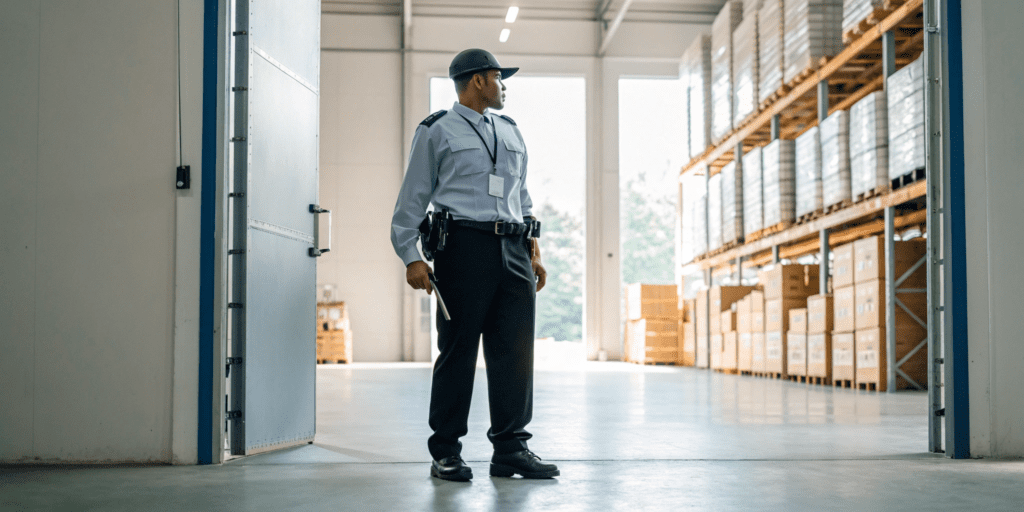
A security guard is often seen as just a uniform at the front gate, but that view misses the bigger picture. In a dynamic warehouse, they are your first responders, risk assessors, and access control managers—all rolled into one. Their role is proactive, not passive. They are trained to spot vulnerabilities in your warehouse security, de-escalate conflicts before they disrupt operations, and respond decisively during an emergency. This guide breaks down what truly defines professional warehouse security guards, exploring their training, the difference between armed and unarmed officers, and how to choose the right warehouse security guard services for your specific needs.
Key Takeaways
- Combine trained guards with technology: A truly secure warehouse uses a multi-layered approach where professional guards work with tools like CCTV, alarms, and access control systems to cover all vulnerabilities and deter threats proactively.
- Prioritize industry-specific training: A guard’s effectiveness depends on their training. Ensure your security partner provides officers with specialized skills in warehouse logistics, emergency response, and conflict de-escalation.
- Evaluate security partners on more than just price: The right security company is a strategic partner. Assess them based on their experience with industrial facilities, their technological capabilities, and their clear protocols for 24/7 response.
What Does a Warehouse Security Guard Do?
Think of a warehouse security guard as the first line of defense for your entire operation. They are more than just a uniform at the front gate; they are trained professionals responsible for protecting your facility, your valuable inventory, and, most importantly, your employees. Their primary role is to maintain a safe and secure environment, which is essential for keeping your supply chain moving without disruptions from theft, vandalism, or other threats.
A professional guard’s presence alone is a powerful deterrent, but their duties go far beyond simple observation. They actively manage access points, monitor for suspicious activity, and respond swiftly to any incidents that arise. By handling security, they allow your team to focus on productivity and operational goals, knowing the site is well-protected.
A Breakdown of Their Daily Duties
A warehouse guard’s daily routine is structured around vigilance and proactive measures. A key responsibility is managing access control—verifying credentials, signing in visitors, and ensuring only authorized individuals are on-site. They conduct routine mobile security patrols throughout the interior and exterior of the property, checking for vulnerabilities like unlocked doors or signs of tampering. Many guards also monitor live surveillance camera feeds to keep an eye on critical areas. In the event of an alarm or emergency, they are the first responders, trained to investigate the situation, coordinate with law enforcement or fire departments, and ensure everyone’s safety. They also maintain detailed activity logs and incident reports, which provide valuable documentation for your records.
Managing Vehicle and Foot Traffic
A busy warehouse is a complex environment with trucks, forklifts, and employees constantly on the move. During peak hours, a security guard’s role extends to directing this flow to maintain both safety and efficiency. They help manage the movement of vehicles at loading docks and entry gates, ensuring clear pathways and preventing dangerous bottlenecks. By enforcing site-specific traffic rules and keeping pedestrian walkways clear, they significantly reduce the risk of accidents. This active management of vehicle and foot traffic is a critical function that protects your staff and assets while supporting the smooth rhythm of your daily operations.
Assisting with Inventory and Visitor Escorts
Beyond the perimeter, a guard’s duties often involve protecting assets from the inside. They can be tasked with escorting visitors, contractors, or delivery drivers through the facility, ensuring these individuals stick to approved areas and don’t inadvertently access restricted zones. This prevents potential theft and protects visitors from workplace hazards. In some cases, guards may also assist with inventory checks or verify shipping manifests at access points, adding another layer of oversight to your loss prevention strategy. This level of integration makes them a trusted part of your operational team, safeguarding both people and products with professional diligence.
Proactively Recommending Security Improvements
A truly valuable security officer does more than just observe; they actively contribute to strengthening your security posture. Because they patrol the site daily, they are in the perfect position to spot vulnerabilities that others might miss, such as a broken fence, a poorly lit corner of the parking lot, or a blind spot in your camera coverage. A professional guard will document these issues and suggest practical improvements. This proactive feedback is a core component of a comprehensive corporate security strategy, turning your security presence into a dynamic and constantly improving asset for your facility.
Understanding the Different Types of Guards
Security solutions aren’t one-size-fits-all, and you can choose between armed and unarmed guards based on your facility’s specific risk level. Unarmed guards are an excellent visual deterrent and are highly skilled in observation, de-escalation, and access control. They are perfect for lower-risk environments where their primary role is to prevent unauthorized entry and maintain order. For warehouses storing high-value goods or operating in areas with higher crime rates, armed security guards offer an elevated level of protection. These officers undergo extensive training in firearm handling and crisis response, preparing them to handle more serious threats. Both types of guards are focused on deterring criminal activity, monitoring access points, and ensuring your property remains secure around the clock.
Contract Guards vs. In-House Security Teams
One of the first decisions you’ll face is whether to build an in-house security team or partner with a specialized agency. While an in-house team offers direct control over training and daily tasks, this approach comes with significant overhead. You become responsible for recruitment, extensive training, licensing, insurance, and ongoing management. Outsourcing to a professional firm is often more cost-effective and allows you to delegate risk. A dedicated security partner handles all the administrative burdens, providing you with vetted, highly trained private security guards ready to deploy. This lets your management team focus on core business operations, confident that your security is in the hands of experienced professionals who specialize in asset protection.
Uniformed vs. Plainclothes Officers
The uniform itself is a powerful security tool. A uniformed guard’s visible presence is one of the most effective deterrents against theft, vandalism, and unauthorized access. They are ideal for managing entry points, patrolling perimeters, and projecting a clear message of security and order. However, some situations call for a more discreet approach. Plainclothes, or undercover, officers are invaluable for addressing sensitive issues like internal theft or employee misconduct. By blending in with your staff, they can observe operations, gather information, and identify vulnerabilities without causing disruption or alerting potential wrongdoers. The right security strategy often involves a blend of both, using uniformed guards for deterrence and plainclothes officers for targeted surveillance.
Why Your Warehouse Needs Professional Security
A warehouse is more than just a storage space; it’s the heart of your supply chain. Every pallet, box, and piece of equipment represents a significant investment. Leaving that investment unprotected is a risk most businesses can’t afford to take. Professional security isn’t just about preventing theft—it’s about creating a stable, safe, and efficient environment where your business can thrive. A comprehensive security plan protects your physical assets, controls who has access to your facility, and ensures your team can do their jobs safely and without disruption. By bringing in trained professionals, you’re not just adding guards; you’re implementing a strategy that safeguards your entire operation from the ground up.
This proactive approach addresses vulnerabilities before they become costly problems. Whether it’s a highly visible guard presence deterring potential criminals or a team trained to handle emergencies, professional security provides peace of mind. It allows you and your management team to focus on core business activities like logistics and fulfillment, knowing that the facility’s safety is in capable hands. Ultimately, investing in security is investing in business continuity, protecting your inventory, your people, and your bottom line.
Protecting Your Inventory and Assets
Your warehouse holds some of your company’s most valuable assets, with inventory that could be worth millions. This makes it an obvious target for both internal and external theft, vandalism, and damage. Professional security guards act as a powerful deterrent, significantly reducing the likelihood of a break-in. Their presence alone signals that your facility is monitored and protected. Beyond preventing theft, a dedicated security team helps ensure that your assets are safe from other threats, like fire or water damage, by conducting regular patrols and identifying potential hazards before they escalate. A secure warehouse also fosters a safer work environment, which helps your employees feel valued and protected, often leading to higher morale and productivity.
Prevent Unauthorized Access
Controlling who comes and goes is fundamental to warehouse security. Without strict access control, your facility is vulnerable to theft, corporate espionage, and other disruptions. Professional security guards manage all entry and exit points, ensuring that only authorized personnel, verified visitors, and scheduled deliveries can get inside. They are trained to check IDs, manage visitor logs, and direct traffic, creating an organized and secure flow of people and vehicles. This oversight is critical for preventing unauthorized individuals from gaining access to sensitive areas, protecting not only your inventory but also proprietary company information. Implementing a solid access control plan with mobile security patrol support is one of the most effective steps you can take to secure your perimeter.
Keeping Your Team Safe and Compliant
A security guard’s role extends far beyond watching for intruders; they are also your first responders in an emergency. Trained to handle situations ranging from medical incidents to fires, they know how to coordinate with emergency services and assist with evacuations, ensuring your team’s safety. This level of preparedness is essential for maintaining a safe workplace and meeting compliance standards. Guards can also help enforce company safety policies, such as requiring personal protective equipment (PPE) in certain zones, which reduces accidents and liability. With 24/7 security services, you can be confident that your team and facility are protected around the clock, creating a culture of safety and accountability.
What Should You Expect From a Warehouse Security Service?
Hiring a professional security company is about more than just placing a guard at your entrance. It’s about partnering with a team that provides a comprehensive security solution tailored to the unique demands of your facility. A top-tier company acts as an extension of your own team, bringing expertise, technology, and a structured approach to protecting your people, products, and property. They should offer a clear plan that covers everything from controlling access points to responding to emergencies.
When you partner with a professional security firm, you should expect a proactive strategy, not just a reactive presence. This means they’ll work with you to identify vulnerabilities and implement procedures to mitigate them. Their role is to create a secure environment that deters threats before they happen. From regular patrols and detailed surveillance to meticulous record-keeping, their services provide a complete safety net. This allows you to focus on your core operations with the confidence that your facility is in capable hands, day and night. A reliable partner offers 24/7 security services that ensure constant vigilance and peace of mind.
Managing Access and Monitoring the Perimeter
One of the most fundamental jobs of a warehouse security team is managing who comes and goes. A professional guard will be stationed at key entry points to check IDs and verify that only authorized employees, vendors, and visitors can access the facility. This isn’t just about standing at a gate; it involves maintaining visitor logs, issuing badges, and ensuring that everyone on-site has a legitimate reason to be there. By establishing a firm but professional checkpoint, they prevent unauthorized individuals from ever stepping foot on your property, which is the first line of defense against theft and other security breaches.
On-Site Patrols and Active Surveillance
A security guard’s job is dynamic, involving much more than just watching a single door. You can expect them to conduct regular mobile security patrols around the entire property, both inside and out. During these rounds, they look for signs of suspicious activity, check that doors and windows are secure, and identify potential safety hazards like leaks or fire risks. In addition to physical patrols, they monitor security cameras to keep an eye on multiple areas at once. This combination of active patrolling and digital surveillance ensures that no corner of your warehouse is left unwatched, providing a powerful deterrent to potential threats.
Responding to Incidents and Emergencies
When an emergency happens, you need a team that can respond quickly and effectively. Professional security guards are trained to be the first responders in a crisis. Whether it’s a fire, a medical issue, or an unauthorized entry alarm, they know how to take immediate action. Their training prepares them to manage the situation, help evacuate personnel safely, and coordinate with emergency services like the police or fire department. This calm, decisive action can make all the difference in minimizing damage and ensuring the safety of your employees during a critical event.
Providing Clear Reports and Documentation
Communication is key to a successful security partnership. A professional security company will provide clear, consistent, and detailed reports about what’s happening at your facility. You should expect to receive daily activity logs, shift summaries, and immediate incident reports for anything out of the ordinary. These records document everything from patrol times to any security issues that were identified and resolved. This documentation is not only crucial for keeping you informed but also provides valuable data for security audits, insurance purposes, and continuously improving your overall safety protocols.
Armed vs. Unarmed Guards: Which Is Right for You?
Deciding between armed and unarmed security is one of the most critical choices you’ll make for your warehouse. There’s no single right answer—the best fit depends entirely on your facility’s specific risks, the value of your inventory, and the kind of environment you want to create for your team. Think of it less as a question of which is “better” and more about which provides the appropriate level of protection for your unique situation. Let’s walk through the key considerations to help you determine the right approach.
When Do Armed Guards Make Sense?
Opting for armed security is a strategic decision for facilities facing a higher risk profile. If your warehouse stores high-value goods like electronics or pharmaceuticals, the presence of an armed security guard serves as a powerful deterrent against serious threats. These officers are best suited for environments where the potential for violent crime is a significant concern. Their advanced training in threat assessment and response provides an essential layer of protection, offering peace of mind that your most valuable assets and your employees are safeguarded against worst-case scenarios.
When to Opt for Unarmed Guards
Unarmed guards are an excellent and effective solution for many warehouses. Their primary role is to maintain a secure environment through presence, observation, and communication. Unarmed officers are often seen as more approachable, which helps foster a positive atmosphere for employees and visitors. They are experts at managing access control, monitoring surveillance, and enforcing company policies. For facilities focused on preventing internal theft and maintaining general safety, unarmed guards provide a strong visual deterrent without escalating tension, handling most situations with professional de-escalation techniques.
Understanding Local Rules and Regulations
Before making a final decision, it’s crucial to understand the legal landscape. Hiring armed security involves a complex set of state and local regulations that govern licensing, training, and the use of force. Each jurisdiction has different requirements, and failing to comply can expose your business to significant liability. A reputable security partner will be well-versed in these laws and ensure any armed officer on your property meets all certification standards. This isn’t just a box to check; it’s a fundamental part of making a responsible and legally sound choice.
Top Security Challenges Every Warehouse Faces
Every warehouse manager knows the goal is to keep operations running smoothly, but several common security challenges can stand in the way. From internal issues to external threats, these vulnerabilities can lead to significant losses in inventory, time, and money. Recognizing where your facility is most at risk is the first step toward building a security plan that truly protects your assets, your property, and your people. Let’s walk through the four biggest hurdles you’re likely to face.
Dealing with Internal Theft and Misconduct
It’s an uncomfortable truth, but one of the biggest threats to your inventory can come from within. Studies show that employee theft can account for a staggering amount of inventory loss, sometimes as high as 60%. This isn’t just about someone pocketing a product; it can also include time theft, misuse of company equipment, or helping outside parties gain access. These actions often happen in areas with low supervision or where security protocols are lax. Having professional private security guards on-site can create a culture of accountability, monitor access points, and ensure procedures are followed, which deters misconduct before it starts.
Guarding Against External Threats and Break-Ins
Warehouses are often prime targets for external criminals. Filled with valuable goods and typically located in industrial parks that are quiet after hours, they present an appealing opportunity for theft, vandalism, and break-ins. A simple fence or a few cameras might not be enough to stop a determined intruder. The financial hit from stolen inventory is bad enough, but operational disruptions and property damage can make the situation even worse. A visible, active security presence is one of the most effective deterrents. Implementing 24/7 security services ensures your facility is protected around the clock, not just during business hours.
Addressing Tech Vulnerabilities and Cyber Risks
As warehouses become more automated, your security plan needs to extend beyond the physical floor. Your operation likely relies on warehouse management systems, inventory scanners, and other networked technology. This digital infrastructure is also a target. A cybersecurity breach could compromise sensitive shipping data, manipulate inventory counts to hide theft, or even shut down your entire operation. It’s crucial to have a security strategy that addresses both physical and digital weak points. Integrating your physical security with your IT protocols is a key part of modern corporate security services.
Finding and Fixing Coverage Gaps
Even with a network of cameras, your facility can have blind spots. These are areas where surveillance doesn’t quite reach, like distant corners of the parking lot, busy loading docks, or specific entry and exit points. These gaps create opportunities for theft and unauthorized access to go unnoticed. Relying solely on technology can leave you vulnerable, as static cameras can’t react to unusual situations or investigate a suspicious noise. This is where human oversight makes a difference. Regular mobile security patrols can cover these gaps, providing a dynamic presence that can adapt to changing conditions and actively monitor your entire property.
How Technology Strengthens Warehouse Security
While a skilled security guard is your first line of defense, technology acts as a powerful force multiplier. Think of it as giving your security team extra eyes and ears across your entire facility, 24/7. The right tech doesn’t replace professional guards; it makes them more effective, efficient, and proactive. By combining advanced tools with trained personnel, you create a comprehensive security strategy that covers all your bases, from the loading dock to the back office. This synergy between human expertise and technological precision is what sets a truly secure warehouse apart.
Modern security solutions integrate seamlessly to provide a layered defense. An alarm can trigger a camera feed, which is then analyzed by intelligent software and verified by a guard who can respond immediately. This approach allows your team to anticipate threats, respond faster to incidents, and maintain complete control over your facility. Investing in the right technology is an investment in a smarter, more resilient security posture that protects your assets around the clock. A professional partner can help you identify the right tools that work in concert with your existing operations, ensuring every component strengthens the others without disrupting your workflow.
Modern CCTV and Surveillance Systems
Closed-circuit television (CCTV) systems are a cornerstone of modern warehouse security. Strategically placed cameras give your security team real-time visibility over vast areas, both inside and out. They can monitor loading docks for suspicious activity, keep an eye on high-value inventory areas, and watch perimeter fences for potential breaches. Beyond live monitoring, recorded footage is an invaluable tool for investigating incidents like theft or accidents. The visible presence of cameras also acts as a powerful deterrent, making potential wrongdoers think twice before targeting your facility. When managed by a professional team, your 24/7 security services can keep watch even when you’re not there.
Using Motion Sensors and Alarms Effectively
Your warehouse has numerous entry points, from massive bay doors to small office windows. Securing all of them is critical. Motion sensors and door alarms create an invisible barrier that instantly detects unauthorized entry. When a sensor is tripped after hours, it can trigger audible alarms, flashing lights, and, most importantly, an immediate alert to your security team. This allows for a rapid response, whether it’s an on-site guard investigating the disturbance or a dispatched mobile security patrol. These systems are essential for protecting your facility during its most vulnerable times and ensuring that any breach is addressed the moment it happens.
Smarter Security with AI-Powered Detection
Artificial intelligence is taking surveillance to the next level. Instead of just recording footage, AI-powered systems can actively analyze it to identify potential threats. These smart systems can learn the normal patterns of your warehouse and flag unusual behavior, such as a vehicle loitering near a fence line or a person accessing a restricted area. This proactive detection helps filter out false alarms and allows your security guards to focus on genuine threats. By spotting anomalies that a human eye might miss, AI provides an extra layer of intelligence that helps prevent incidents before they escalate, turning your surveillance system from a passive recorder into an active observer.
Guard Accountability and Tour Verification Systems
Technology isn’t just for spotting threats; it’s also for ensuring your security team is performing at its best. Tour verification systems are a perfect example, providing concrete proof that guards are actively protecting your facility. Using tools like GPS or NFC tags placed at key checkpoints, these systems create a digital log of a guard’s route and timestamp each location they visit. This eliminates guesswork and holds everyone accountable, ensuring that regular mobile security patrols cover every critical area consistently, not just at the beginning of a shift. This level of transparency is a hallmark of a professional security partner, giving you peace of mind that you’re getting the diligent protection you’re paying for.
Integrating New Tech with Your Existing Systems
The true power of security technology is unlocked when all the pieces work together. A multi-layered approach that integrates CCTV, alarms, and AI with your on-site security personnel creates a formidable defense. For example, a motion sensor on a back door can trigger a nearby camera to start recording, while AI software analyzes the feed for threats and alerts the guard on duty. This seamless integration ensures that information flows quickly to the people who can act on it. A professional security partner can help you build an integrated system that closes coverage gaps and makes your entire operation more secure and efficient.
What Kind of Training Do Professional Guards Have?
When you hire a professional security guard, you’re not just getting a uniform and a presence. You’re bringing in a highly trained specialist whose skills go far beyond simply watching a door. The difference between a basic guard and an elite officer comes down to comprehensive, ongoing training. At ASAP Security, many of our officers have backgrounds in law enforcement or the military, giving them a solid foundation of discipline and situational awareness that can’t be taught in a textbook.
This rigorous preparation is what allows a guard to be a true asset to your facility. They learn to be proactive, not just reactive, by identifying potential risks before they become problems. Their training is multi-faceted, covering the core principles of security, the specific demands of your industry, and the critical actions needed in an emergency. Let’s break down what that training looks like.
Essential Qualities of an Effective Guard
Beyond the certifications, the most effective guards possess a unique blend of personal traits. They are exceptionally vigilant, with a proactive mindset that keeps them one step ahead of potential threats. This isn’t just about watching a camera feed; it’s about actively managing access points, recognizing unusual behavior, and addressing vulnerabilities before they can be exploited. Strong communication and de-escalation skills are also non-negotiable. A great guard can calmly handle a tense situation, preventing it from disrupting your operations. This combination of alertness, physical readiness, and clear judgment under pressure is what defines a truly professional officer. When you hire private security guards, you’re trusting them to be reliable, observant, and capable of making smart decisions in critical moments.
Foundational Security Skills and Training
Every professional guard starts with a foundation of core security skills. This is the bedrock of their effectiveness. Training covers essential duties like access control, surveillance techniques, and detailed report writing. Guards learn how to spot trouble before it escalates, using keen observation skills to notice anything out of the ordinary. A huge part of this training focuses on conflict resolution and de-escalation, ensuring they can handle tense situations calmly and professionally without resorting to force unless absolutely necessary. They are also trained in fire safety, basic first aid, and how to manage a scene until first responders arrive. These foundational skills are what make our private security guards capable of protecting your property and people effectively.
Specialized Training for Warehouse Environments
A warehouse isn’t a corporate office or a retail store, and its security plan shouldn’t be either. That’s why top-tier guards receive industry-specific training tailored to the unique environment of a logistics or manufacturing facility. They learn about the specific vulnerabilities of a warehouse, from unsecured loading docks to the potential for internal theft. This training emphasizes the importance of being highly observant, physically fit, and mentally alert to manage the constant flow of people, vehicles, and inventory. A guard trained for a warehouse understands how to monitor shipping and receiving logs, verify credentials at entry points, and conduct effective patrols across a large, complex site. This specialized knowledge is a key component of our corporate security services.
Key Certifications in First Aid and Emergency Response
When an emergency happens, every second counts. A professional security guard is trained to be the first line of defense. They are prepared to deal with a range of crises, including fires, medical emergencies, and natural disasters. This goes beyond just calling 911; they are trained to help people evacuate safely and coordinate directly with emergency services when they arrive on the scene. Most professional guards hold certifications in CPR, First Aid, and AED use, allowing them to provide immediate, life-saving care. This level of preparedness ensures that you have a capable responder on-site, ready to take decisive action. It’s a critical part of providing reliable 24/7 security services that you can count on, no matter what happens.
How to Choose the Right Warehouse Security Partner
Finding the right security partner for your warehouse isn’t just about hiring a guard; it’s about finding a team that understands the specific rhythm and risks of an industrial environment. The stakes are high—you’re protecting valuable inventory, complex machinery, and most importantly, your people. A generic security plan simply won’t cut it. You need a partner who can create a strategy tailored to your facility’s layout, operational hours, and unique vulnerabilities, from the loading dock to the server room.
Think of your security provider as an extension of your own management team. They should be proactive, professional, and completely transparent in their operations. The right partner will work with you to identify potential threats before they become problems, whether it’s preventing internal theft or securing the perimeter against external break-ins. As you evaluate your options, it’s crucial to look beyond the price tag and focus on a few key areas that demonstrate true expertise and reliability. This ensures you’re choosing a company that can truly safeguard your assets and support your operations without causing friction. Making the right choice means peace of mind, a safer workplace, and a stronger, more secure facility.
Look for Experience in Industrial Facilities
A warehouse isn’t a retail store or an office building, and its security plan shouldn’t be treated like one. When you’re vetting potential partners, lead with one question: “What’s your experience with industrial facilities like mine?” A company with a deep understanding of warehouse logistics will know the common security weak points, like shipping and receiving docks, perimeter fences, and employee access points. They can offer corporate security services that are designed to protect your profits by preventing loss and minimizing disruption. An experienced team won’t just react to alarms; they’ll help you build a proactive security posture that addresses risks before they escalate.
Verify All Training and Certifications
The effectiveness of your security program comes down to the people on the ground. A professional security guard is much more than a uniform; they are a trained first responder. Ask potential security companies about their training programs. Their guards should have specialized training in skills critical for a warehouse setting, including conflict de-escalation, emergency response, fire safety, and first aid. Don’t hesitate to ask for proof of certifications and ongoing training requirements. A well-trained guard force is better equipped to handle any situation with professionalism and efficiency, ensuring your facility remains safe and operational.
State Licensing, Bonding, and Insurance
Beyond training and experience, a security company’s legitimacy rests on its legal compliance. In California, any reputable security provider must hold a valid Private Patrol Operator (PPO) license issued by the Bureau of Security and Investigative Services (BSIS). This isn’t just paperwork; it’s your assurance that they meet the state’s strict operational and ethical standards. Equally important is their insurance coverage. A professional partner will carry comprehensive liability and workers’ compensation insurance, which protects your business from financial risk if an incident occurs on your property. Don’t be shy about asking for proof of both. A transparent and professional company will have these documents ready to share, confirming they are a responsible and trustworthy partner for your business.
Ask About Their Technology Integration
In modern security, people and technology work hand-in-hand. A forward-thinking security partner will know how to integrate their services with your existing technology to create a seamless and comprehensive security solution. Ask them how they utilize tools like CCTV surveillance, access control systems, and alarm monitoring. Can their guards operate your systems? Do their mobile security patrol teams use reporting software that gives you real-time updates? The goal is to create a layered defense that protects both your physical inventory and your digital assets, leaving no gaps for potential threats to exploit.
Confirm Their Response Times and Availability
Warehouses don’t always operate on a 9-to-5 schedule, and neither should your security. Your facility needs protection around the clock, especially during off-hours when it’s most vulnerable. Talk to potential partners about their availability and emergency response protocols. How quickly can they respond to an incident? What is their procedure for coordinating with local law enforcement and fire departments? A reliable partner will offer 24/7 security services and have a clear, efficient plan for handling emergencies. This constant presence not only deters criminals but also gives your employees a greater sense of safety.
Evaluate the Company’s Management and Local Expertise
The right security company is more than a vendor; they are a strategic partner in protecting your business. When you’re evaluating potential providers, look closely at their management team. Are they accessible? Do they have a deep understanding of the security challenges specific to industrial facilities in your area? A top-tier company acts as an extension of your own team, bringing expertise and a structured approach to protecting your people and property. You should assess them based on their direct experience with warehouses, their technological capabilities, and their clear protocols for a 24/7 response. This level of expertise ensures they can provide a security solution that truly fits your operational needs, not just a generic plan.
Inquire About Contract Flexibility
Your warehouse’s security needs might change over time, so it’s important to find a partner who can adapt with you. Before signing anything, ask about contract flexibility. A company that insists on locking you into a rigid, long-term agreement might not be confident in the quality of their service. Look for providers who offer more adaptable options, such as month-to-month contracts, which allow you to adjust your security plan as your business evolves. This flexibility gives you the freedom to ensure the partnership is a good fit without a lengthy commitment. When you request a consultation, make sure contract terms are part of the conversation.
What’s the Cost of Warehouse Security?
When you’re managing a warehouse, every line item on the budget matters. It’s easy to see security as just another expense, but it’s truly an investment in the stability and profitability of your entire operation. The cost of professional warehouse security isn’t a single, fixed number; it’s a flexible figure that depends entirely on your facility’s unique needs, risks, and goals. The price can range widely based on the level of protection you require, the size of your space, and the specific duties you need guards to perform.
Thinking about cost isn’t just about finding the lowest hourly rate. It’s about understanding what you’re getting for your money and how that service protects your bottom line. A small investment in preventative security can save you from catastrophic losses down the road, whether from theft, vandalism, or operational disruptions. To make an informed decision, you need to break down the pricing factors, know how to compare different service models, and clearly see the return you’ll get on your investment. This approach helps you find a solution that fits your budget while providing the robust protection your assets and employees deserve.
Understanding the Factors That Influence Cost
The final price tag for your warehouse security is shaped by a few key variables. The most significant factor is the type and extent of coverage you need. For instance, hiring highly trained armed security guards will cost more than unarmed guards due to their advanced qualifications and the higher level of risk they are prepared to handle. Similarly, securing your facility with 24/7 security services will be a larger investment than scheduling guards for overnight shifts only. Your warehouse’s location and size also play a major role; a sprawling complex in a high-crime area requires a more comprehensive—and therefore more expensive—security plan than a small facility in a low-risk neighborhood.
How Guard Compensation Impacts Service Rates
The quality of your security service is directly tied to the quality of the guards protecting your facility, and that often comes down to compensation. A security company that invests in its team by offering competitive wages is better positioned to attract and retain skilled, motivated professionals. When guards see a path for stable employment and strong earning potential, they are more likely to be dedicated, reliable, and proactive. Conversely, a service with unusually low rates may be cutting corners on guard pay, which can lead to high turnover and less dependable officers. Investing in a partner who values their employees means you’re getting a professional who is committed to their role and to keeping your warehouse secure.
The Role of Geographic Location
Where your warehouse is located plays a significant role in determining security costs. Just like any other service, rates are influenced by the local economy and cost of living. For instance, security services in major metropolitan areas across Southern California, like San Diego and Orange County, will naturally have higher rates than those in less populated regions. This is because the cost of living is higher, which means security companies must offer better wages to attract and retain qualified guards. This isn’t about price gouging; it’s a reflection of the local market and what it takes to employ a reliable professional who can afford to live in the area they are protecting.
Costs for Specialized or Management Roles
Not all security roles are created equal, and the cost will reflect the level of skill and responsibility required. A standard unarmed guard for access control will have a different rate than a highly trained armed security guard tasked with protecting high-value assets. Roles that involve greater risk, specialized training, or management duties—like a site supervisor who oversees the entire security team—will command a higher price. This premium accounts for the advanced certifications, extensive experience, and increased liability these positions entail. When you require a specialized service, you are paying for an elevated level of expertise and preparedness to handle more complex security challenges.
How to Compare Different Service Models
When you’re reviewing quotes from different security companies, it’s important to look beyond the hourly rate. A lower price might reflect less training, inadequate supervision, or a lack of essential insurance and liability coverage. Ask potential partners about their guard training programs, their protocol for supervision, and the technology they use. A quality provider will offer a customized security plan tailored to your facility’s specific layout and vulnerabilities. This might include a strategic combination of stationary guards at key access points and regular mobile security patrols to cover the entire perimeter. Look for a transparent proposal that clearly outlines all services and costs, ensuring you’re paying for effective protection, not just a presence.
Calculating the Return on Your Security Investment
Professional security is a function that protects your profits. The most obvious return on your investment (ROI) comes from loss prevention. Think about the value of the inventory you store—preventing even a single significant theft can often pay for months of security services. But the benefits go much further. A secure facility can lead to lower insurance premiums and reduces your liability in case of accidents or injuries. Beyond the direct financial gains, having professional private security guards creates a safer environment for your employees, which can improve morale and productivity. A secure, well-managed warehouse is a reliable one, minimizing disruptions and protecting your business’s reputation.
How to Measure Your Current Security’s Effectiveness
You have a security plan in place, but how do you know if it’s actually working? Measuring the effectiveness of your security isn’t just about counting incidents; it’s about understanding your vulnerabilities and making smart, continuous improvements. A great security strategy is a living one, adapting to new challenges and giving you a real return on your investment. By regularly evaluating your security measures, you can move from a reactive stance to a proactive one, stopping potential issues before they start and ensuring your facility, inventory, and team are truly protected.
Think of it like a regular health checkup for your warehouse. You need to know what’s working well, where the weak spots are, and what you can do to strengthen your defenses. This process helps you justify your security budget, hold your providers accountable, and create a safer, more efficient environment for everyone.
Key Metrics to Track for Security Success
To understand how well your security is performing, you need to track the right data. Key performance indicators (KPIs) are specific metrics that show you whether you’re hitting your security goals. Instead of guessing, you can use these numbers to get a clear picture. Start by tracking the number of security incidents per month, such as theft, vandalism, or unauthorized access. A downward trend is a great sign. Also, measure your team’s incident response time—how quickly are issues identified and resolved? Other important metrics include inventory shrinkage rates, the number of false alarms, and safety compliance records. These figures give you concrete evidence of what’s working and where you need to focus your efforts.
How to Find Vulnerabilities in Your Facility
Even the most robust security plans can have weak points. Finding them is the first step to fixing them. Start by conducting a physical walk-through of your facility at different times, including after hours. Look for common issues like coverage gaps where cameras don’t reach, such as loading docks or far corners of the property. Are all entry points, including windows and secondary doors, properly secured? Talk to your employees; they are on the front lines and often notice vulnerabilities you might miss. Beyond physical threats, consider insider risks and shipment security. A thorough assessment helps you identify these blind spots before they can be exploited by internal or external threats.
Simple Practices for Ongoing Improvement
Once you’ve identified your weak spots, it’s time to strengthen them. The best security plans use multiple layers of protection that combine technology, strict protocols, and skilled personnel. Start by implementing a clear access control policy that limits entry to sensitive areas. Regularly review and update your security plan to adapt to any changes in your operations or new threats. Integrating advanced technology like motion sensors and monitored alarms with professional mobile security patrols ensures constant vigilance. Ultimately, fostering a security-conscious culture among your staff and partnering with an experienced security provider are the most effective ways to maintain a safe and secure warehouse.
Related Articles
- Why San Diego Warehouses Rely on Security Guards | ASAP Security
- Why Warehouse Security Guards Are Important For Your Business – ASAP Security
- How to Increase Security and Prevent Theft with Warehouse Security | ASAP Security Guards
- Warehouse Security Guards in San Diego – ASAP Security Guards
- Types Of Security Guards And What Each Type Does | ASAP Security Guards
Frequently Asked Questions
How do I know if I really need armed guards? This is a big decision, and it comes down to a clear-eyed look at your specific risks. The need for armed security isn’t just about the dollar value of your inventory. You should seriously consider it if your facility is located in an area with a high crime rate, if you’ve experienced previous threats, or if the nature of your products makes you a high-profile target. An armed officer provides a level of deterrence and response capability that is necessary for handling serious, immediate threats to life and property.
How can a security guard help prevent employee theft without creating a tense work environment? This is a common concern, and it’s all about professionalism. A trained guard’s role isn’t to watch employees with suspicion but to consistently enforce procedures for everyone. They manage access control, verify shipping and receiving logs, and maintain a visible presence that naturally discourages misconduct. By focusing on process rather than people, they create a secure and accountable environment where honest employees feel safer and potential thieves are deterred.
My warehouse already has cameras. Isn’t that enough? Cameras are an excellent tool, but they primarily record what happens. A professional security guard can prevent incidents from happening in the first place and respond in real-time when they do. While a camera can capture footage of a break-in, a guard conducting patrols can spot a vulnerability and fix it before anyone tries to exploit it. They use your camera system as an extra set of eyes, allowing them to monitor multiple areas at once and investigate anything that looks out of place.
What’s the first step to creating a security plan for my warehouse? The process begins with a simple conversation and a thorough assessment. A professional security partner will walk through your facility with you to understand its layout, daily operations, and specific vulnerabilities. They’ll discuss your concerns and goals to develop a customized security strategy that fits your needs and budget. This isn’t about a one-size-fits-all solution; it’s about building a plan that truly protects your people and property.
Can I hire security just for nights and weekends? Absolutely. In fact, this is a very smart and common strategy. Your facility is often most vulnerable when it’s empty, making after-hours and weekends prime time for theft or vandalism. A reputable security company can create a flexible schedule that provides protection when you need it most, whether that’s overnight patrols, weekend coverage, or 24/7 service. A tailored plan ensures you get effective security that fits within your operational budget.