
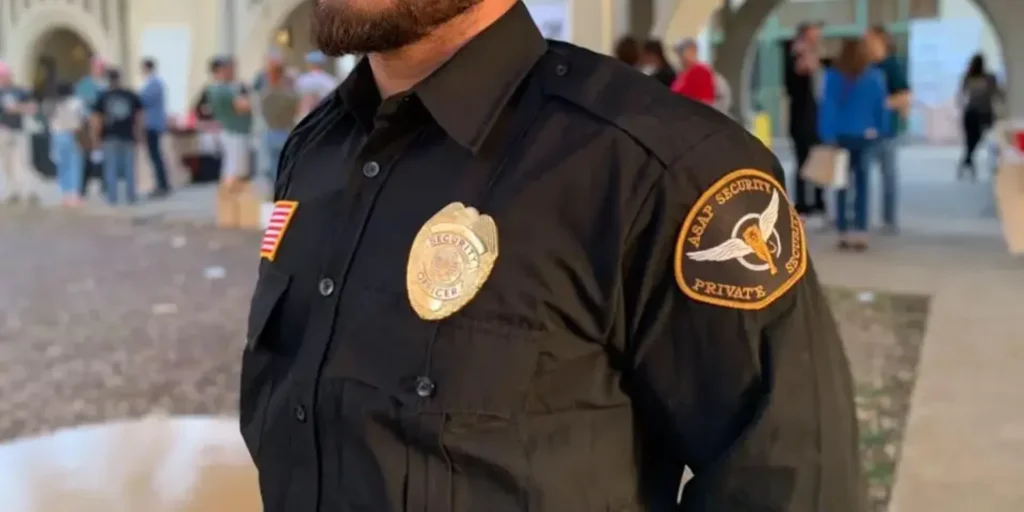
Shoplifting, organized theft, and customer conflicts drain time and profit from Southern California stores. The right security plan protects stock and people without making honest customers feel unwelcome. For retail managers weighing their options, an unarmed security presence offers the most practical balance of deterrence and customer goodwill across most store environments.
Secure your retail store today. Call (833) 272-7247 to schedule a free consultation with ASAP Security Guards.
An unarmed security guard retail officer gives stores a visible, customer-friendly way to deter theft, reduce shrinkage, and respond to safety concerns. Officers monitor entrances and high-risk areas, use calm communication to defuse disputes, and document incidents for management. This approach helps retail businesses protect employees and merchandise while keeping the shopping experience approachable and welcoming for legitimate customers.
For many stores, the best result comes from pairing a trained officer with practical loss-prevention procedures, clear escalation rules, and a reporting process that gives managers useful records they can act on. The sections below walk through the specific challenges SoCal retailers face and how a tailored unarmed guard program addresses each one.
The Growing Challenge of Retail Crime in Southern California
Retail crime affects both local storefronts and large chains across Los Angeles, Orange County, San Diego, Riverside, San Bernardino, and Ventura. Shoplifting, organized theft, and disruptive incidents can create stock loss, service interruptions, and safety concerns for staff and customers. Store owners report increasing losses from repeat offenders and organized retail crime groups that target stores with weak security coverage.
The cost of shrinkage
Retail shrinkage costs American businesses billions of dollars each year. For a small shop, a series of preventable losses can have an outsized effect on cash flow and product availability. A visible officer complements cameras, store policies, and loss prevention services by giving the store an active presence on the floor that cameras alone cannot provide.
When a store loses inventory to theft, those costs get passed on to paying customers or eat into already tight margins. An unarmed security guard retail program is one of the most cost-effective ways to interrupt this cycle before it becomes a recurring problem. Many store owners find that the return on investment from reduced shrinkage far exceeds the cost of the guard itself.
Safety is part of loss prevention
The issue is not only merchandise. NIOSH notes that retail workers face a higher risk of workplace violence than workers in other sectors. A trained security officer can observe a developing issue, call for support when needed, and help staff avoid unsafe confrontations. Employees who feel unsafe are more likely to leave, creating turnover costs that add to the financial burden. A consistent security presence signals to staff that their safety matters, which supports retention and morale.
Protecting the customer experience
Stores need controls that do not turn every shopper into a suspect. A professional, uniformed unarmed guard signals that the site is monitored while remaining accessible to customers who need help or directions. This balance is hard to achieve with cameras or armed officers alone. An unarmed guard can greet customers, answer questions, and provide directions all while maintaining a visible deterrent effect.
What Does an Unarmed Security Guard for Retail Do?
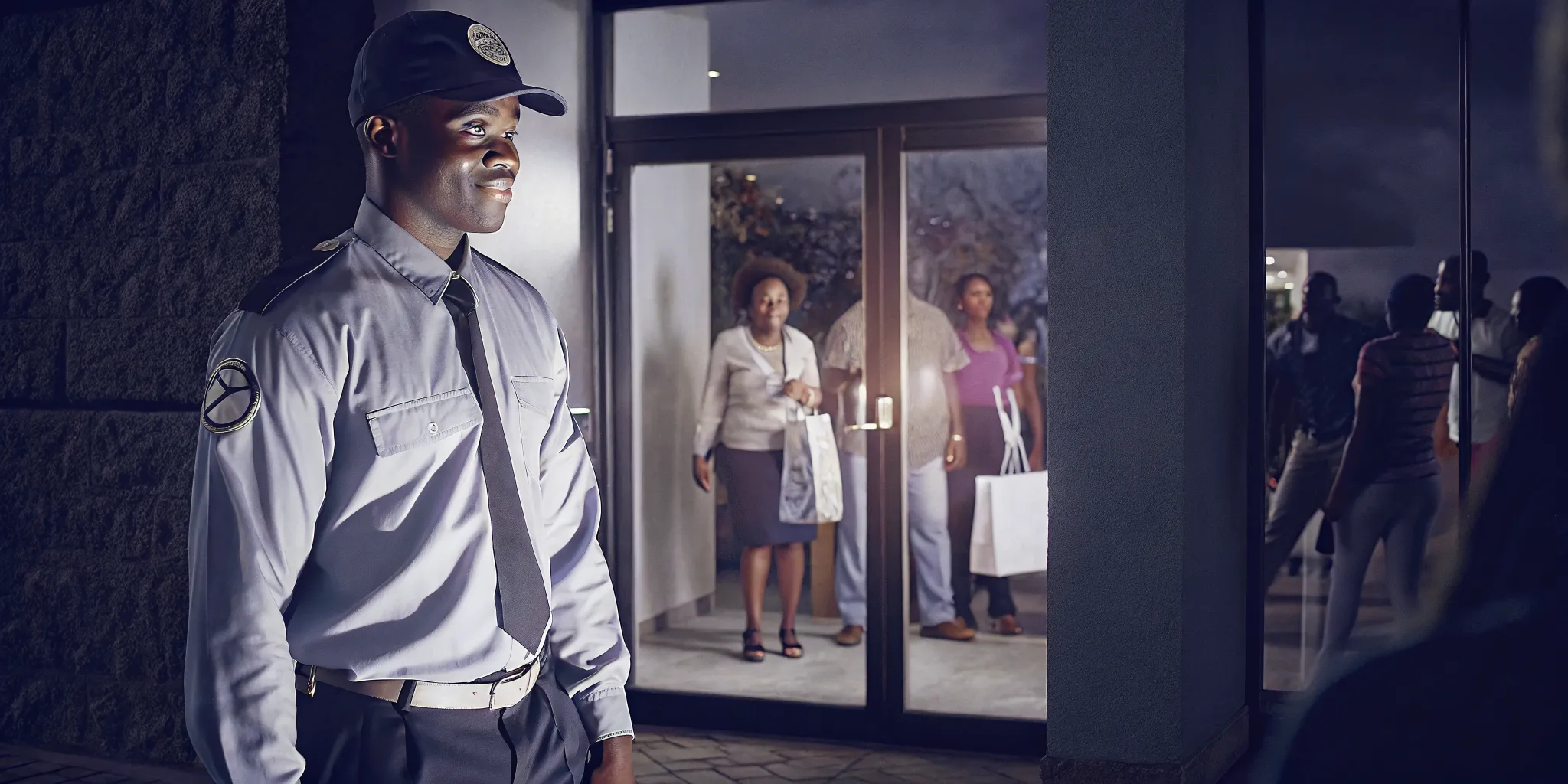
An unarmed retail guard works to prevent incidents before they become losses or emergencies. The role is broader than standing at a door. It combines observation, patrols, customer service, communication, and incident documentation. A well-designed unarmed security guard retail program adapts to the specific layout, traffic patterns, and hours of each store. The guard becomes an integrated part of the store operations rather than an external observer.
Deterring theft without disrupting sales
Officers monitor entrances, exits, aisles, fitting-room approaches, receiving areas, and other high-traffic locations identified in the site plan. Their visible presence can make opportunistic theft less attractive. See our guide to unarmed security guard duties for a broader look at the role across different property types. Guards are trained to be observant without being intrusive, maintaining what security professionals call a “professional presence” that deters misconduct without making shoppers feel scrutinized.
Supporting staff and customers
A guard can greet visitors, provide directions, watch for hazards, and serve as an immediate point of contact when employees are dealing with an upset customer. This support lets staff focus on sales and service instead of trying to manage security events alone. Many retail managers report that adding a uniformed officer lowers staff stress levels during busy hours and gives them confidence that someone trained is handling the security aspects of the operation.
Patrolling the full property
Depending on the site, duties may include parking-lot walks, checks of delivery and receiving areas, access control, and observation of queues or events. A good post order defines what the officer watches, when patrols occur, and who receives reports. Consistent patrols also help identify lighting issues, broken locks, or other safety hazards that cameras cannot detect. A guard covering the parking lot and perimeter can spot issues before they reach the store entrance.
Visible Deterrence: Why Unarmed Guards Work for Retail
Most retail sites need a security posture that is firm but not intimidating. An unarmed vs armed security decision should be based on the site risk, product value, operating hours, and the customer experience the business wants to maintain. For the majority of Southern California retail locations, unarmed officers deliver the best combination of safety and approachability.
A professional presence changes behavior
Uniformed officers create accountability at the entrance and on the sales floor. They can identify concerning activity, enforce site rules, and engage early with a calm, professional approach. This deterrence works alongside environmental measures such as lighting, sightlines, and controlled access. The mere awareness that a trained officer is present can discourage individuals who would otherwise take advantage of an unmonitored environment.
NIOSH reports that retail establishments using Crime Prevention Through Environmental Design programs have experienced robbery reductions of 30% to 84%. A guard is not a substitute for sound design, but can help make those controls active and consistent throughout operating hours. This combination of environmental design and human presence creates a layered security approach that is difficult for offenders to circumvent.
| Factor | Unarmed Security Guard | Armed Security Guard |
|---|---|---|
| Customer perception | Approachable and service-focused | More forceful visual posture |
| Primary deterrence | Visible observation and early intervention | Higher-threat response posture |
| Best fit | Most stores, supermarkets, and shopping centers | Sites with a documented elevated threat |
| Conflict approach | Communication and de-escalation first | May require specialized armed protocols |
| Retail atmosphere | Supports a welcoming environment | Can feel more restrictive to shoppers |
De-escalation and Customer Service: The Unarmed Guard Advantage
In a retail setting, the best security outcome is often the one that ends quietly. Unarmed guards use awareness, distance, clear communication, and escalation procedures to reduce the chance that a tense interaction becomes a larger event. This makes them a natural fit for stores where customer experience matters as much as loss prevention.
Calm intervention
An officer can listen to the concern, speak in plain language, avoid crowding the person, and request management or emergency assistance when the situation requires it. Staff should never be expected to confront a suspected thief or an angry customer on their own. The guard handles those interactions so employees can stay focused on sales. This division of responsibilities allows both the guard and the staff to operate within their areas of training.
A guard who can also help customers
Retail officers can greet customers, answer basic questions, and guide people to the right area. That service-oriented role makes the guard part of the store experience, not simply a reaction to crime. When shoppers see a guard as a helpful presence rather than an enforcer, the entire store atmosphere improves. This dual role of protector and helper is unique to unarmed security and one of its greatest strengths in retail settings.
Training matters
ASAP Security Guards emphasizes trained, BSIS-approved personnel and ongoing preparation through its online security training academy. Ask any provider how it trains guards for verbal de-escalation, site procedures, customer interaction, and documentation. The quality of the training program directly affects how well guards perform in real retail situations. BSIS (Bureau of Security and Investigative Services) sets the training standards for California security professionals, and working with a provider whose training meets or exceeds those standards ensures consistent performance.

Bilingual Security: A Critical Asset for SoCal Retail
Southern California retail locations serve customers and employees with many language backgrounds. Bilingual Spanish and English officers can make communication clearer during routine service, safety instructions, and time-sensitive incidents. This language capability is not a nice-to-have. It is a practical requirement for stores serving diverse communities across the region.
Clear communication reduces friction
A misunderstanding can make a minor concern harder to resolve. A bilingual guard can explain store rules, receive a customer concern, communicate with staff, and relay clear information to responders when necessary. When everyone involved can communicate in their preferred language, incidents get resolved faster and with less confusion. This is especially important during emergency situations where every second counts.
Service that reflects the community
For stores with Spanish-speaking customers, a bilingual greeting or explanation can help customers feel respected and comfortable asking for help. This is one reason to select professional security services that understand the local community. A guard who can switch between English and Spanish on the sales floor is a real asset for customer retention and safety. Many SoCal retailers specifically request bilingual officers because they serve neighborhoods where Spanish is the primary language for a significant portion of the customer base.
Emergency Response and Incident Reporting Protocols
Retail security should follow a defined process, not improvisation. Post orders should be tailored to the property, local emergency contacts, and the business’s policies. A clear protocol ensures that every incident is handled consistently regardless of which officer is on duty. Consistent documentation also creates a paper trail that can support insurance claims, legal proceedings, and staffing decisions.
- Assess and protect people. The officer observes the event, creates distance when appropriate, and focuses on immediate safety.
- Notify the right contact. The guard follows the site’s communication chain, including management, dispatch, emergency services, or law enforcement when needed.
- Control the scene within training. Officers direct customers away from hazards, preserve access routes, and avoid actions outside their authority or training.
- Record key facts promptly. A useful report documents the time, location, parties involved, actions taken, witnesses, and any follow-up required.
- Provide management with a clear record. ASAP’s real-time incident reporting systems help clients receive verifiable proof of activity and make informed follow-up decisions.
- Review and adjust. Repeated events can reveal a need to change patrol times, staffing levels, access procedures, or other corporate security services controls.
Choosing the Right Unarmed Security Partner for Your Retail Business
Choosing a provider is not only about the hourly rate. The partner should be able to understand your property, assign appropriately trained officers, and show how the program will be managed. A generic guard who has not worked in retail before may not know how to balance loss prevention with customer service. The difference between a security presence that helps your business and one that gets in the way often comes down to the quality of the provider’s training program.
Questions to ask before signing
- Is the company licensed and insured for the work it will perform?
- How are officers screened, trained, and supervised for retail assignments?
- Can the team provide bilingual officers when the site needs them?
- What incident-reporting system will management receive?
- How will post orders, patrol routes, and escalation procedures be tailored to the store?
- What is the plan for coverage changes, call-outs, and urgent incidents?
Look for a program, not a generic guard
The right program starts with a site assessment. It should identify the hours, locations, and activities that create the most risk, then match staffing to those patterns. Combining experienced officers with loss prevention services and clear reporting can help managers reduce risk while protecting the retail experience. A tailored program also adapts as the store’s needs change over time, scaling coverage up during high-risk periods and adjusting patrol routes as the store layout evolves.
Frequently Asked Questions
What does a retail security guard do?
A retail security guard helps deter theft, monitors high-risk areas, supports staff and customers, responds to incidents within training, and documents what happened for management. They serve as both a visible deterrent and a resource for shoppers and employees alike.
What is an unarmed security guard?
An unarmed security guard is a trained security professional who does not carry a firearm. They rely on presence, observation, communication, site procedures, and appropriate escalation to help protect people and property. This makes them well suited for environments where a welcoming atmosphere is as important as security.
What is security called in retail stores?
Retail security may be described as loss prevention, store security, retail asset protection, or retail security services. The exact duties vary by the store’s size, risk profile, and operating needs. Regardless of the title, the core function is protecting people, assets, and the customer experience.
Are unarmed guards effective for loss prevention?
They can be effective when they are part of a tailored plan that includes visible patrols, good lighting and sightlines, staff procedures, reporting, and defined escalation rules. The best results come from a program that is designed for the specific store environment and supported by a provider with strong training standards.
Protect Your Store With a Retail Security Plan
Every retail property has a different mix of inventory, traffic, hours, and safety concerns. ASAP Security Guards can help you build a professional unarmed guard program that protects your people, assets, and customer experience across Southern California. Our team works with store owners to create coverage plans that fit the specific needs of each location, from single-storefront boutiques to multi-location retail operations.
Schedule a free consultation or call (833) 272-7247 to discuss your retail security needs.
