
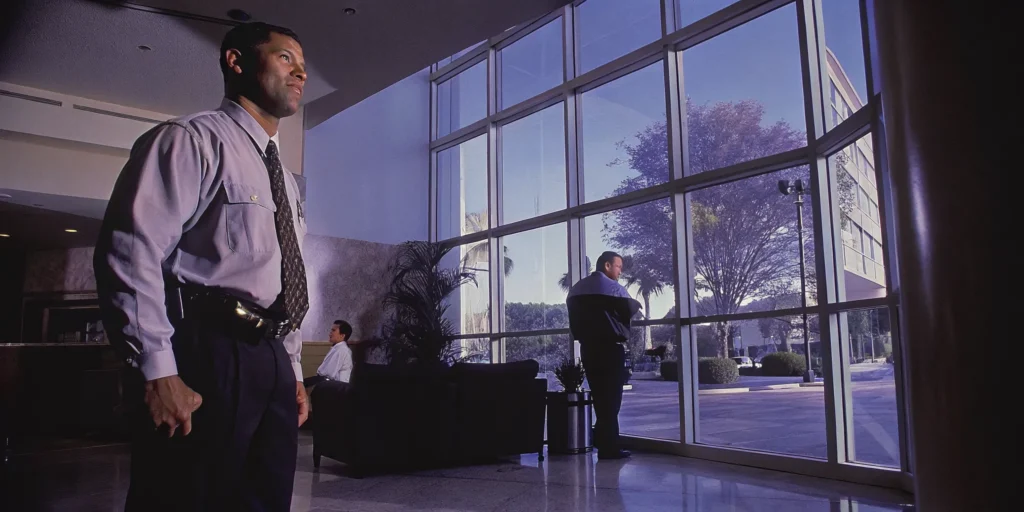
Professional security officers manage building access and watch over high-value commercial properties with precision. These experts provide a visible deterrent against unauthorized entry while maintaining a helpful presence for staff and guests.
Unarmed security guard duties focus on three primary goals: watching, finding, and reporting to ensure a safe work site. These professionals control building access, monitor alarm systems, and conduct regular patrols to stop theft or damage. As noted by the Bureau of Labor Statistics, guards must maintain order and protect property by enforcing site rules. In an office setting, this work includes checking visitor IDs and responding to medical calls. Guards also write down all daily activities in a digital log to ensure clear records for the client. By acting as a first line of defense, these officers manage risk and prevent crime without using guns. Their presence offers peace of mind for staff while keeping costs low for owners.
Understanding these roles helps you choose the right level of protection for your business or school campus. Core unarmed security guard duties provide the foundation for a reliable safety plan.
Core unarmed security guard duties
The main role of an unarmed guard is to protect people and property through a constant watch. While many focus on armed roles, there are different types of security guards who handle safety without weapons. These officers serve as the first line of defense for any site. Their work focuses on three key areas: finding risks, watching for trouble, and telling the right people when issues occur. By staying alert, they help stop theft and keep a safe space for staff and guests.
Most unarmed security officers perform the functions of observation, detection, and reporting to keep a site safe. They act as a visible warning that stops crime before it starts. This work is vital for mid-size firms and government sites that need high levels of safety without the use of weapons.
Managing site access
One of the most common tasks for these guards is to manage who enters and leaves a building. This duty often includes checking IDs and signing in guests. Guards make sure that only people with the right clearance can enter private zones. This task is key in office buildings, schools, and clinics where staff safety is a top priority.
According to the Bureau of Labor Statistics, security guards control building access for both workers and visitors. They may also watch over parking lots and loading docks to track deliveries. By keeping tight control over entry points, they lower the risk of barred people getting inside. This helps protect assets and keeps the site in line with local safety rules.
Conducting regular patrols
Guards must also walk or drive around a property to look for signs of trouble. These patrols help them find fire risks, unlocked doors, or leaks in a building. While on a shift, a guard will check all floors and exits to ensure the site is secure. Seeing a guard in uniform often stops bad actors from trying to break in or cause damage.
In many cases, these guards use tools to track their paths and note what they see. Regular patrols help find safety issues early so they do not turn into big problems. This is very helpful for commercial property security where large areas must be watched around the clock. Constant movement shows that the site is well-guarded and not an easy target for crime.
Monitoring and reporting
When an issue happens, the guard must act fast and record the details. They watch video feeds and alarm systems to catch odd behavior in real time. If they see a crime or a medical event, they call for help and guide first responders to the scene. Clear notes on what happened are key for insurance and law enforcement needs.
Modern guards use digital tools to send a daily report to the property manager. These reports often have time stamps and photos to show proof of work. This level of detail helps owners understand site risks and plan better safety moves. In the end, a good guard makes sure that all events are noted so the team can learn and stay safe.
How duties change by property type
The main tasks a guard performs change based on the site they protect. While most different types of security guards follow the same core rules, each site has its own needs. A guard in a high office building handles other risks than one on a large school site. To the Bureau of Labor Statistics, these guards work in many places like stores and work sites. Their main goal is always to protect people and property from harm.
Office and work sites
In a work setting, unarmed security guard duties often focus on the front desk. Guards control who enters and exits the building. They check badges and greet guests to keep the area safe. This role needs a high level of expert skill. Guards must be polite but firm when they enforce rules. They also watch alarm systems and video feeds for any odd acts. If a fire or health event happens, they are the first to help. Their presence gives staff a sense of peace all day.
These guards also walk through the floors after hours. They check that doors are locked and lights are off. By doing this, they stop theft and catch repair issues like leaks early. Every patrol is saved in a tech log. This tech system shows that the guard is doing their job well. It gives a clear record for the site lead to review.
School and large grounds
On a large site, the job needs more movement. Guards often patrol on foot or in cars to cover the whole area. They look for safety risks like broken gates or dark spots in lots. On a school site, they help with traffic during busy times. They also make sure that only students and staff are in private areas. Because these sites are big, contact is key. Guards use radios and GPS tools to stay in touch with a central team.
These sites often stay open all day and night. This means guards must work in shifts to provide full coverage. They act as a helpful point of contact for anyone who is lost or needs aid. Their role is to watch and report what they see. If they find a problem, they tell the right people right away. This quick action helps keep small issues from becoming big threats.
Work and home sites
At a commercial property security site, the focus is on asset protection. Guards check trucks and goods at loading docks. They make sure that no one takes items without okay. They also watch for fire risks in storage rooms. In a warehouse, a guard might spend a lot of time watching cameras. They look for signs of theft or safety slips by workers.
Home guards work at gated groups or flat blocks. They handle package drops and help people with lockouts. Their security guard responsibilities include keeping noise levels down and enforcing site rules. They check the IDs of all guests before they let them in. This keeps the area private and safe for all families. Their work helps build a strong bond with the local group.
| Property Type | Primary Focus | Priority Task | Key Contact |
|---|---|---|---|
| Office Buildings | Access Control | Checking Badges | Office Staff |
| Campuses | Area Watching | Mobile Patrols | Students/Guests |
| Work Sites | Asset Protection | Loading Dock Checks | Vendors/Drivers |
| Home Sites | Home Safety | Guest Screening | Residents |
When is an unarmed guard the right fit?
Choosing the right safety plan is a big step for any firm. Unarmed guards are a top choice for many sites. They offer a safe and expert feel to a building. These guards work best in places where the goal is to watch and help. Most firms use them in low-risk spots. This includes office lobbies, malls, and schools. They give people peace of mind without the look of a gun.
Finding your risk level
To start, you must look at your daily risks. Think about the nature of your site. Is it open to the public? Do you keep high-value items on the floor? Unarmed guards work well when you want to stop crime by being seen. They act as a visual check for people who enter. They also help guests and staff find their way around. If the risk of violent crime is low, an unarmed guard is often the best match.
Many firms find that a friendly face is better for their brand. In a retail shop, a guard who smiles and helps can boost sales. They still watch for theft, but they do it in a way that feels safe. This balance is key for many different types of security guards in the field. It keeps the tone light while still keeping assets safe from harm.
Core duties in low-risk settings
The main task for an unarmed guard is to keep a sharp eye on the area. For these roles, the focus is on three key steps. These are to watch, find, and report. According to the Virginia Department of Criminal Justice Services, these guards watch over people and property. They look for signs of trouble or illegal acts during their shift. They do not carry a gun, which helps keep the mood calm.
Common daily tasks include:
- Access control at doors and lobbies.
- Foot patrols to check for safety risks.
- Logging guests and staff who enter the site.
- Calling for help during an urgent event.
These unarmed security guard duties help keep a site safe and in order. Guards check IDs at the door and log guests to make sure only the right people get inside. They also walk the grounds to look for open doors or fire risks. If they find a problem, they call the police or first aid teams. They do not use force to stop a crime. Instead, they give clear facts to the local police once they get there.
When to upgrade to armed security
There are times when an unarmed guard may not be enough. You might need armed help if your site faces very high threats. This is most common at banks or places that hold lots of cash. If your site has a high risk of violent theft, armed guards add a strong layer of safety. They are trained to use a gun if a life is in danger. This is a very different role than a standard guard.
For most office sites, unarmed teams give the right level of care. They keep the tone expert and helpful for everyone. If you are not sure, a risk check can help you decide. Many firms start with unarmed guards and add more help only if the risk grows. This path saves money and keeps the site feeling open. It also makes sure you have the right fit for your unique needs.
How to define effective post orders
Post orders are the direct rules your security team must follow on the job. These written guides tell guards what to do, where to go, and how to act. Without clear orders, your different types of security guards might miss key tasks or react poorly to a crisis. Good post orders turn general safety goals into daily work habits.
Focus on site risks
Every property has its own weak spots. Your post orders should list the exact risks for your site, like open side doors or dark parking lots. For example, commercial property security needs differ from a simple office front desk. When guards know these risks, they can focus their 18 hours of core training on the areas that matter most. This helps them find and report threats fast, which is a key part of unarmed security guard duties in most states.
Set clear patrol routes
Guards need a map of where to walk and what to check. A good plan shows each stop on a patrol route and what to look for at every point. This ensures that security guards protect property from illegal acts by covering the whole site. At ASAP Security, we use GPS-tracked logs to prove these routes are walked on time. This tech adds a layer of proof that old paper logs cannot match.
The process for defining duties
Creating strong orders takes a step-by-step path. You must look at the site and think about what could go wrong before you write a single rule. Follow these steps to build a set of orders that work for your team:
- Find all access points like doors and gates that need to stay shut.
- List the exact times when guards must walk their patrol routes.
- Write down who the guard should call first if they find a fire or a break-in.
- Set rules for how to greet guests and check their ID at the front desk.
- Explain how to fill out daily logs so every event is tracked and saved.
- Review the orders once a year to make sure they still fit the site.
Reporting and reviews
Your orders must tell guards how to share what they see. Good reporting helps you see patterns and fix small problems before they grow. This is vital since unarmed security officers must detect and report issues to the right people. Regular reviews of these reports help you see if your guards are doing their job well. It also shows you if your post orders need a change to better protect your staff and assets.
How should property managers measure performance?
Property managers need clear data to know if their security plan works. A strong unarmed security program relies on more than just presence. You must look at how well the team handles daily tasks and new events. Since security guard responsibilities focus on lower risk, tracking data is the best way to keep your site safe.
Review daily activity reports
Daily reports are the main link between you and your security team. Good reports show that guards do their jobs. At ASAP Security, we use GPS-tracked Daily Activity Reporting (DAR) to give you proof of service. These reports should have time stamps and photos to show when and where guards were on patrol. High-quality reporting helps you find patterns in site activity and fix safety gaps before they lead to big issues.
Measuring report quality is key for any manager. Check if the notes are clear and short. Per the Bureau of Labor Statistics, security guards must protect property from illegal activity through constant monitoring. If reports are vague or missing, your team may not be watching the site as closely as needed. Frequent, well-documented reports prove that guards are actively checking doors, gates, and shared areas.
Monitor patrol and response times
Patrol completion is a top metric for unarmed security guard duties. Guards must walk or drive through specific zones to keep a site secure. You can track these rounds to see if the team is meeting the agreed patrol path. If a guard misses a check point, it could mean a lack of focus or a need for more training. Regular patrols help with the observation and detection of threats on the property.
Response time to events also tells you a lot about work quality. When a door alarm goes off or a tenant calls, how fast does the guard get there? Fast response times show that your team is alert and ready to help. You should also check how well the guard talks to local police or fire crews. Since guards act as a notification point for authorities, their ability to share quick, correct info can save lives and property during a crisis.
Assess communication and fit
The best security teams feel like a natural part of your site. You should judge how well the guards talk to your tenants, staff, and guests. Professionalism is vital because unarmed guards are often the first people guests see. A guard who is polite but firm creates a safe feel for the building. You can use tenant feedback to see if the guards are a good operational fit for your property.
Finally, look at how the security firm talks with you. Are they quick to answer your calls and emails? Do they offer 24/7 human dispatch for emergency help? A partner that is open and helpful will help you reach your safety goals. By looking at different types of security guards and their specific skills, you can find the right team to protect your high-value assets.
What should buyers expect from unarmed officers?
When you hire security help, you need to know what to look for. Good unarmed officers do more than just stand at a door. They are the eyes and ears of your building. You should expect them to be expert, well-trained, and ready to help.
Their main goal is to keep people and property safe without using weapons. This type of help is great for sites where the risk of crime is low. They provide a calm presence that makes staff and guests feel safe.
Core duties and training
Unarmed security officers focus on four main tasks: to see, find, report, and alert. They must watch the area and look for things that seem out of place. This is often called watching and finding by state rules. These guards act as a deterrent just by being there.
They often handle building access for staff and guests as well. You should expect your guards to have the right training for the job. Many states have rules about what guards must learn before they start. For example, some programs require 18 hours of core classes to teach basic skills.
A top firm will often go past these basic rules. They use an in-house school to teach extra skills like how to handle crowds or talk down a heated person. This makes sure the different types of security guards on your site can handle any task.
Reporting and communication
Clear reporting is a must for any security team. You should not have to guess if a guard is doing their work. Modern teams use tech to show they are on the job. Look for guards who use GPS to track their rounds.
This gives you a clear log with time stamps and photos. This level of detail helps with insurance and keeps everyone honest. Clear talk is also about how guards speak to people. Your security guard duties often include helping visitors or employees.
A guard is often the first face a guest sees. They should be polite but firm. They need to give clear directions and stay calm in a crisis. This mix of customer service and safety is key for office and retail sites.
Choosing a partner versus hiring staff
There is a big difference between hiring a guard and choosing a security firm. When you recruit for a job, you handle the background checks and training yourself. This takes a lot of time and money. It also puts the risk on your own company.
If a guard calls out sick, you have to find a fill-in fast. A skilled partner handles all those details for you. They vet the staff and make sure they meet state rules. They also give you a layer of management to watch over the site.
This means you get a full team, not just one person. You should look for a firm with deep roots in law enforcement or military work. This leads to a more disciplined team that knows how to follow orders and stay alert.
A good team will also have 24/7 dispatch. This helps with quick responses to alarms or calls for help. These tools are part of the unarmed security guard duties that many buyers forget to check. When you hire a firm, you are buying peace of mind.
Planning unarmed security for your property
Planning for unarmed security guard duties starts with a full look at your site. A good security provider will walk your property to find weak spots and entry points. This help ensures that every post has a clear goal and every guard knows where to look. According to federal data, security guards control building access for both staff and guests to keep areas safe.
Conducting a site assessment
Before guards start their work, an expert team must check your property. This site assessment maps out where guards should stand and how they should move. It helps find gaps in fences, dark spots with poor light, or doors that do not lock well. By knowing these risks, you can set up better guard posts to watch over your assets. Unarmed officers focus on observation and reporting to stop threats before they grow.
A clear plan also sets the rules for how guards act on your site. These rules include how to greet guests, how to check IDs, and how to handle mail. With these steps in place, security teams can work without getting in the way of your daily business. Most guards work in many settings, such as commercial property security sites and office parks, so the plan must fit your specific needs.
Building the guard schedule
Once the risks are known, the next step is to build a solid schedule. This plan covers when guards are on site and which paths they walk. It should also include a handoff process for when one guard finishes a shift and the next one starts. Clear handoffs make sure that no info is lost and that your property stays safe 24/7. Use of GPS tools can track guard paths to prove they are doing their jobs as planned.
Your plan must also list who to call if something goes wrong. This list of contacts ensures that guards can reach your team or the police quickly. Good security firms use live human dispatch to help with these calls. This link keeps the field team in touch with managers at all times. A clear chain of command helps the guards do their security guard responsibilities with skill and care.
Reviewing and adjusting the plan
A good security plan is not set in stone. You should meet with your provider often to talk about what is working and what is not. If your site grows or your needs change, the guard duties should change too. Monthly reports help you see patterns in security events so you can make smart choices. This ongoing look at your security helps keep your site safe as new risks show up.
Frequently Asked Questions
What are the primary duties of an unarmed security guard?
Unarmed security guards protect people and property by watching for threats. They control building entry for staff and guests. These officers focus on three main tasks: finding risks, seeing threats, and telling the right people about problems. Per the Virginia Department of Criminal Justice Services, their work includes spotting risks and telling local police or site managers when they find illegal acts.
What are the age and school rules for unarmed security guards?
Most states require security guards to be at least 18 years old. They mostly need a high school diploma or a similar paper to get a job. While some roles do not need past work, many firms prefer guards with six to twelve months of work in security or the military. Data from the Bureau of Labor Statistics shows that these rules help ensure guards can handle the tasks of the job.
What training is required for unarmed security guards?
Training for these roles varies by state but often covers core topics like laws and ethics. Guards learn how to handle emergencies and write clear reports. In some areas, an 18-hour course is the minimum for new hires. The DCJS notes that guards may work for a short time while they finish this training. They can do this if they have sent in their fingerprints for a check.
How long does it take to finish unarmed security training?
Most training programs for unarmed security roles take a few weeks to finish. The time depends on state laws and the needs of the job site. Some guards go through a school like the ASAP Security Guard Academy to gain more skills. This training ensures guards are ready to monitor campuses or offices. It also helps them learn to use GPS tools to track their daily work.
What skills does an unarmed security guard need?
Guards must be able to stay on their feet for long shifts. They often need to lift items that weigh up to 50 pounds. Good talk and watch skills are vital because unarmed guards do not carry guns. They must be able to speak clearly during emergencies and stay calm. These skills allow them to protect large areas like college campuses or office buildings without needing weapons.
Ready to request a security quote for your office or campus?
Leaving your office or campus without a clear safety plan can lead to high risks and costly thefts that hurt your business and your team. If you wait to hire guards, you may face large losses that damage your brand and your staff for a very long time to come. You can set up a safe place right now and give your team the peace of mind they need to work well and feel safe. A small step today will help you avoid big bills and bad news later when a crime occurs on your busy site or office campus.
Ready to request a security quote? Call 833-272-7247 to talk to a guard expert and start your plan.
