
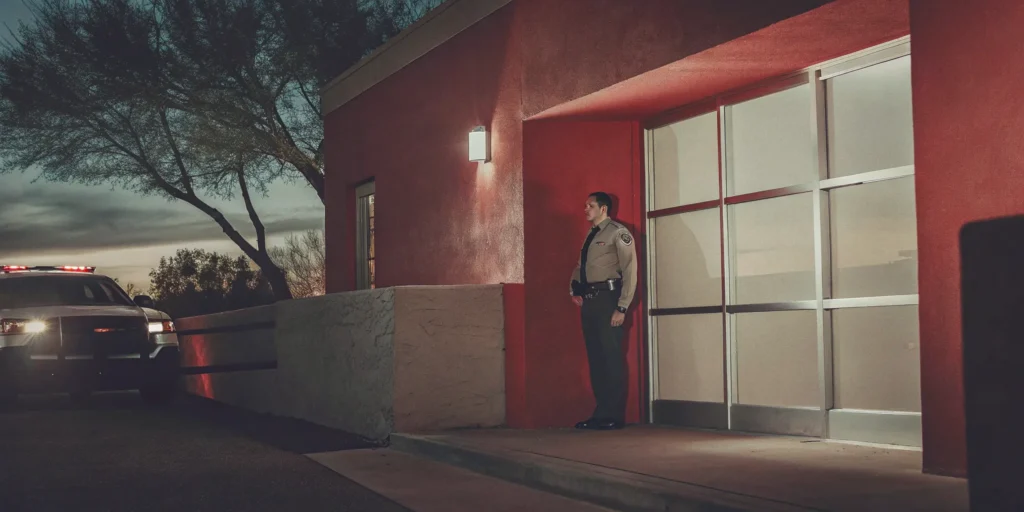
Rising crime rates in Southern California make site protection a critical part of doing business. Professional security services provide the trained human response that cameras alone cannot match.
Request a tailored security quote from ASAP Security for your Southern California property.
Professional security services provide a total shield for firms through a mix of on-site guards, mobile patrols, and real-time tools. These ways to stay safe help firms in Southern California by stopping theft and acting fast when threats arise. High-risk fields like retail stores often face more threats of violence than other trades, says the Centers for Disease Control and Prevention. To stop these risks, top teams use trained staff and GPS tech to track every patrol and incident. This care ensures that your land stays safe while giving you a clear log of all work. Whether you need help for a big show or a firm office, these services create a tight setting that keeps people and money safe.
Picking the right team means looking for more than just a person in a suit. To get the best value and safety, you must know what professional security services should include. A great plan for your site begins by first learning
What professional security services should include
A full safety plan for your business goes well beyond just having a person at the door. You need a setup that fits your specific risks and site layout. Most professional security services will offer a mix of physical guarding, mobile patrols, and high-tech tools to keep your site safe.
Trained guards and visible deterrence
The core of any security plan is the guard. High-quality services use officers who have passed deep training. These guards should be a visible sign that your site is protected. Just having a clear security presence can stop many crimes before they start. For those in the retail sector, this is vital since these workers face a high risk of violence (CDC, 2023).
Your security team must also be ready to act when an incident occurs. This means they need to know how to talk down a threat and when to call for help. Using an agency with its own security training academy ensures the guards on your site meet high standards. They should know how to handle everything from fire watch to complex site access rules.
Technology and real-time reporting
Good security companies use technology to prove they are doing their job. You should get a daily activity report that shows exactly when and where guards were on your property. Modern tools use GPS and photos to track patrols. This level of data helps you see patterns and fix gaps in your safety plan. It also gives you a clear audit trail for insurance or legal needs.
Beyond human guards, your service should help you set up tech like cameras and alarms. Experts suggest that security cameras should record with no blind spots to truly improve safety. Your provider can help place these tools so they work with your guards. Linking alarm systems to the local police can also speed up help during an emergency.
Supervision and risk-based planning
Every site has different needs. A hospital needs different care than a warehouse or a government office. Your security partner should look at your site and find where you are most at risk. They might use a method like site design to change how your site looks and feels to a criminal.
Finally, your service must include strong oversight. This means field bosses who check on the guards to ensure they follow your rules. For federal or high-stakes sites, you should look for a provider that meets GSA standards. These rules ensure high levels of accountability and compliance for both government and private clients.
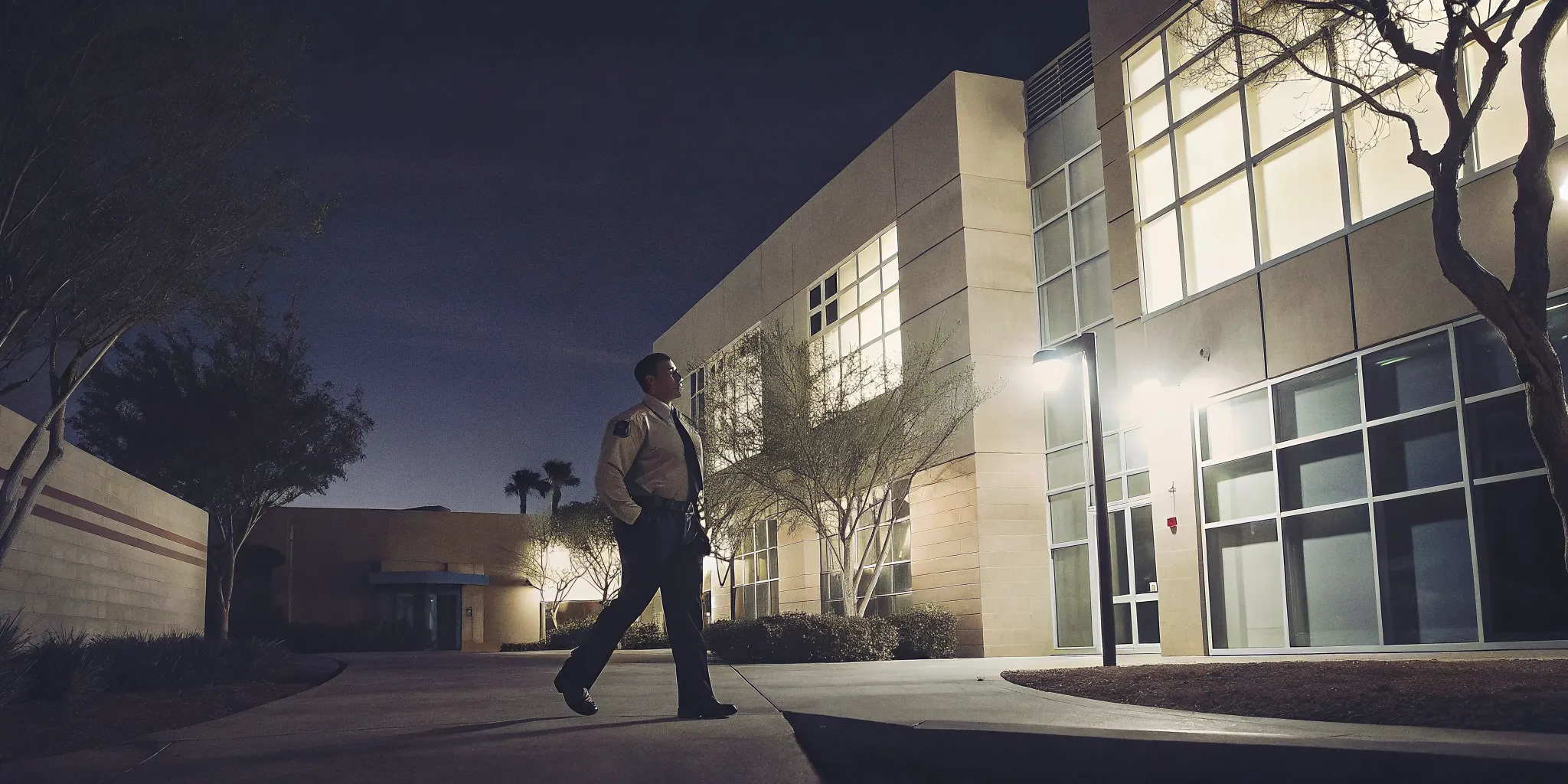
Standing guards vs. mobile patrol: which fits your property?
Standing guards are best for continuous access control and frequent interaction, while mobile patrols provide cost-effective checks across larger properties. Many businesses benefit from combining both according to risk and operating hours.
Choosing the right way to protect your site is a key part of risk management. Facility leaders must often decide between a fixed presence and a moving one. Both professional security services and mobile units provide safety, but they solve different problems. Your choice depends on the size of your site, your budget, and the specific risks you face each day.
The role of standing guards
Standing guards provide a steady presence at a single spot. They often man a front desk, a gate, or a high-traffic lobby. This model is best for sites that need constant access control or quick help for staff and guests. In retail, a fixed guard can help lower the risk of violence. Data shows that retail workers face a higher risk of homicide than people in many other jobs (CDC 2023).
A static guard acts as a strong deterrent. When a guard is always there, they can find and fix small issues before they grow into big ones. This is helpful for corporate offices or government sites where checking IDs is a top priority. These guards can also watch over key exits to ensure they stay clear for safety (CDC 2024).
Why use mobile patrols
Mobile patrols use vehicles or bikes to cover large areas. This model is ideal for big sites like car lots, parks, or housing groups. Professional mobile patrol services can check many spots in one shift. This helps deter crime by keeping a random and visible presence across the whole property.
A patrol unit can check doors and gates at set or random times. They use GPS to track their routes and report what they see in real time. This ensures you have proof of their work and any issues they find. Patrolling is a cost-effective way to monitor a large site that does not need a guard in one spot all day.
Comparing your security options
Finding the right fit may involve a mix of both models. You must look at the layout of your site and the value of what you protect. Small stores with less cash may need one set of tools, while big firms need others (CDC 2023). Use the table below to see which service fits your needs.
| Feature. | Standing Guards. | Mobile Patrol. |
|---|---|---|
| Best Use. | Lobbies and gates. | Large parking lots. |
| Cost Model. | Higher hourly rate. | Flat rate per check. |
| Site Size. | Small to medium. | Wide or multi-site. |
| Core Benefit. | Immediate response. | Broad area coverage. |
| Primary Goal. | Access control. | Crime deterrent. |
Security coverage for Southern California businesses
Protecting diverse commercial and industrial sites
Southern California businesses face many risks that vary by industry. From retail stores in San Diego to corporate parks in Orange County, each site needs a unique plan. Retail teams often deal with the most stress. Data shows that workers in the retail trade sector face a higher risk of violence than those in other fields. To help, our professional security services provide a strong presence. We watch shop floors and stock rooms to stop theft and keep staff safe. This support helps shops run well even during busy times.
Construction and industrial sites in Riverside and San Bernardino counties also need firm protection. These areas often have expensive tools and materials left out at night. We use a mix of fixed guard posts and mobile units to watch these zones. Guards check fences and gates to make sure no one enters without a permit. For large corporate hubs, we offer lobby staff who act as both a warm face and a sharp set of eyes. These guards manage guest lists and watch for any odd activity. By covering these sectors, we help local firms grow without the fear of loss or harm.
Custom post orders and buyer outcomes
A great security plan is more than just a person in a uniform. It starts with a set of clear rules called post orders. These rules tell our guards exactly what to do at your site. We sit down with property owners to learn their goals before we start. This way, we can match our work to the outcome you want. For multi-site firms, we use professional mobile patrol services to cover ground quickly. Our guards use GPS tools to log their routes and report any issues in real time. This tech gives you a full paper trail for every shift.
Security also means making sure your site is easy to navigate in a crisis. We follow federal advice to keep exit routes clear and easy to find. Our teams check that exits are not blocked by trash or goods. We also look for blind spots where cameras cannot see. These small steps make a big difference in how safe people feel at work. When staff know that exits are clear and guards are watching, they can focus on their jobs. This leads to better work and a happier team for any business owner.
Expert help for public and private sectors
We also help with events such as trade shows and music festivals. These sites need guards who can scale up or down as the crowd grows. Our in-house academy trains guards to handle large groups while staying calm. They learn how to spot risks in a sea of people and act fast if a threat pops up. This training makes us a top choice for firms that need more than just a basic guard. We offer a full partnership that solves risks and builds trust. From the first meeting to the final shift, we work to keep Southern California businesses safe.
How do event and corporate security needs differ?
Every business needs safety, but the way you get it depends on your goals. Choosing the right professional security services means knowing how your daily work differs from a one-time event. Corporate security focuses on steady, long-term safety for your staff and gear. In contrast, event security is built for quick scale and large crowds. Both require a sharp eye and clear plans, but the tools they use are not the same.
Managing crowds versus protecting assets
At a corporate site, the main goal is to keep things running well. Guards focus on who enters the building and make sure only the right people get in. They look for risks like theft or fire that could hurt the business over time. This work requires a deep grasp of the site’s layout and its people. Steady coverage helps find issues before they start, which protects the company’s value.
Events bring a different kind of pressure. Instead of a few hundred staff members, you may have thousands of guests. Security teams must manage these large crowds to prevent crushing or fights. They use tools like fences and bag checks to keep the peace. While corporate teams watch for quiet risks, event teams must be ready for loud and fast changes. Both teams must keep exit routes clear to make sure everyone can leave fast in a crisis.
Temporary scale versus long term safety
Corporate security is about a bond between the guard and the client. A professional security services team learns your office’s habits and faces. They stay for months or years to build a strong safety culture. This long-term view helps them find small gaps in safety that a new person might miss. It provides peace of mind for staff who see the same friendly guards every day.
Event security is fast and temporary. A team might grow from five to fifty guards in just one day. This requires a firm that can scale up without losing quality. They must set up borders and check points in a few hours. Once the event ends, the team moves on. This model works well for concerts or trade shows where the risk level peaks for a short time. You can learn more about these fast-paced options by looking at event security services.
Access control and visitor handling
How people move through a space defines its security needs. In a corporate office, most people have badges. They know the rules and where they can go. Security staff handle visitors by signing them in and giving them badges. This process is slow and steady. It keeps the workspace private and quiet so people can do their jobs without fear. If your site needs a fire watch, those guards must have special training to keep the site safe.
Public events do not have that level of control. Most guests are strangers who may not know the exits or the rules. Guards must guide them and watch for banned items. They use metal detectors or wand checks at the gate. This keeps the venue safe without slowing down the line too much. While corporate guards act as hosts, event guards act as traffic controllers. Both roles are vital for a safe and successful day.
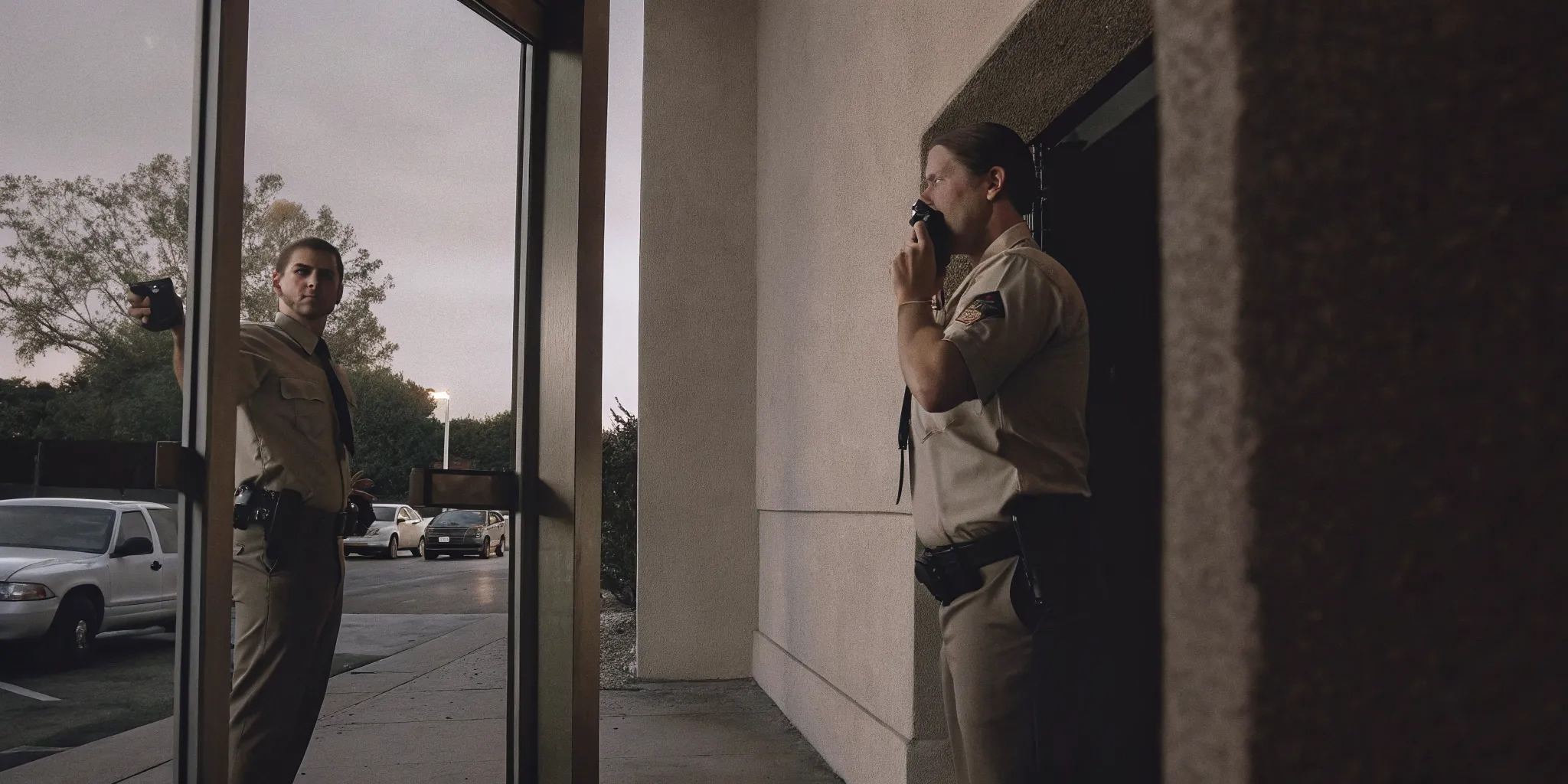
How to choose a professional security provider
Choose a professional security provider by verifying licensing, training, supervision, reporting practices, dispatch availability, and experience with properties like yours. The provider should begin with a risk assessment and clearly explain how performance will be measured.
Selecting a partner to protect your staff and assets is a big choice. Business leaders should look past simple patrol rounds to find a firm that acts as a true guide. A top provider will build a bridge between your risks and the field team tasked with stopping them. In Southern California, professional security services should offer local knowledge and strict rules for how they work.
Assessing site risks
Your first step is to find a provider that starts with a full risk study. This look at your site helps find weak points that you might miss. It is not enough to just have a guard stand at a door. The firm should look at your site layout to see if low shelves or clear windows can help stop crime. For example, some retail shops face a higher risk of violence than other industries, making site-specific safety plans a key need for your business.
Checking credentials and training
A provider is only as good as the team they hire and train. You should check that the guards get more than the basic lessons required by the state. Ask if the firm owns its own academy to keep high standards. High-tier firms often hold federal status, such as being a GSA contract holder. This status shows they meet tough rules for how they track work and follow laws. These federal standards help both government groups and private firms that need proof of quality.
A sequenced checklist for procurement
Use these steps to vet your next security partner and make sure they can meet your site needs.
- Conduct a site walk. Walk your property with the provider to find blind spots in camera views or blocked exit routes.
- Verify live dispatch. Make sure the firm has a live human dispatch center open all day and night to handle quick needs.
- Review reporting tech. Ask to see samples of GPS-tracked daily logs that prove guards are moving and checking your site in real time.
- Check supervisor ratios. Find out how many guards each supervisor manages to make sure your team has the help they need.
- Test the comms plan. Check how the team will talk to you during a crisis or after a serious event on your site.
- Review training records. Ask for proof that guards have learned how to handle specific threats like robberies or medical needs.
- Set clear goals. Define how you will measure success, such as the number of site checks or the speed of response times.
Measuring results through data
Accountability is the heart of a professional bond. You should not have to guess if a guard is doing their job. Modern professional mobile patrol services use digital tools to track work. These systems use GPS to log every check and can include photos of secure areas. This data gives you a clear trail for checks and shows that the provider is meeting the terms of your plan.
When should a business add professional security services?
Many firms start small and manage their own safety. But as a firm grows, simple locks and alarms may not be enough. You might reach a point where your site needs more care. Adding professional security services can help when risks start to rise. It is not just about stopping crime. It is about keeping your staff and your assets safe every day.
Signs of rising risk and crime
One clear sign to add help is a rise in local crime. If your site has had many thefts or broken glass, you should act fast. These events show that your current plan has holes. Some sectors face more risk than others. For example, retail workers have a higher risk of crime than those in most other jobs. This is based on data from the Centers for Disease Control and Prevention. When these events happen often, a human presence is the best way to stop them before they start.
Changes in your daily work
You may need help during big shifts in your work. Building phases often draw theft because of costly tools and gear on site. If you have after-hours work, your risk goes up when the sun goes down. In these cases, professional mobile patrol services can check your site at set times. This keeps eyes on your assets without the cost of a full-time guard at every door.
Another sign is when your fire alarms or water lines fail. In these cases, you must set up a fire watch to keep the site open. These officers must take a fire safety class. You can find these classes at the online academy. This keeps you in line with local laws while your systems get fixed.
Special events also need a new plan. If you host a trade show or a large meeting, you have more people to track. These times need a team that can manage crowds and check IDs. Moving risks like these into a clear scope helps you get the right level of care. A good partner will look at your site and find the best way to keep it safe during these busy times.
Meeting new standards and rules
Growth can also bring new rules you must follow. Some clients or insurance plans may need you to have a set level of safety. If you work with the government, you may need a team that meets high standards. Elite providers often use GPS tools to track all guard moves. This gives you a clear paper trail for audits or legal needs. Professional firms can help you meet these rules while keeping your site running smoothly.
What should security reporting and accountability look like?
Choosing the right partner for your property means looking beyond just physical presence. You need a team that provides proof of work and clear data. Modern professional security services use technology and human oversight to keep sites safe. This approach ensures that every guard is where they should be at the right time. It also gives you the data you need to manage your site with less stress.
GPS-enabled digital reporting
The best way to track performance is through digital activity logs. Instead of paper forms, guards use mobile tools to record their rounds. These systems often use GPS to verify a guard’s location during every patrol. This creates a clear digital trail that property managers can view in real time. Having this data on hand is helpful for insurance audits and internal safety checks.
When you use professional mobile patrol services, you should receive daily reports with photos and time stamps. These records help you find patterns in site activity and find risks. If a gate is left open or a light is out, the guard logs it with a photo. This level of detail makes it easy to check your security plan. You can make quick changes based on real facts from the field rather than guesses.
Live dispatch and human oversight
Accountability also needs a strong support system behind the scenes. A live dispatch center should monitor all field staff 24 hours a day. This ensures that guards can get help or report issues the moment they happen. It also means there is always a human point of contact for the client. When an incident occurs, the dispatch team follows clear escalation protocols to reach the right people fast.
Supervision is not just about catching mistakes. It is about keeping the site safe through better visibility. Experts at the National Institute for Occupational Safety and Health suggest using tools like cameras to improve visibility and deter incidents. High-quality security firms combine these tools with field supervisors who visit sites. These supervisors check that guards are following their post orders. This double layer of oversight keeps guards sharp and ready to respond to any threat.
Federal standards and program reviews
A high level of accountability is often tied to the firm’s formal credentials. For example, a GSA federal contractor must follow strict rules for training and records. These federal standards benefit private clients as well. They ensure the firm meets high bars for compliance and staff vetting. It also means the firm has proven protocols that have been tested at the highest levels of government.
You should also look for a provider that offers regular reviews of your security program. This is a helpful process where you meet with the team to discuss site data. During these meetings, you can look at trends and update site rules. These reviews ensure your security plan stays effective as your needs change over time. By looking at measurable results, you can see the true value of your security investment.
Key parts of a strong accountability plan include:
- GPS-tracked patrol logs with real-time access for clients and managers.
- Photo proof of all security risks, maintenance issues, and site incidents.
- A live 24/7 dispatch center to help with field work and emergency calls.
- In-person site visits by supervisors to check guard work and site safety.
- Monthly reviews of site data to update safety rules and post orders.
- Clear protocols for how to report and escalate any issues found on site.
Frequently Asked Questions
What does a professional security service cover for businesses?
Professional security services provide a wide range of safety options for business owners. These services often include armed and unarmed security guards, mobile patrols, and corporate protection plans. According to ASAP Security, these solutions cover physical guarding and specialized protection for work, office, and government sites. Choosing a GSA-listed provider also ensures that the service meets high federal rules for safety and trust.
Why choose professional security services over standard options?
Professional security firms offer better safety through deep skill and modern tools. These teams use staff with police and army backgrounds to build custom plans. High-quality services also use GPS tracking to show that guards are doing their jobs. This level of local knowledge and reliable staff ensures that your site is watched at all times. This path offers more than simple guarding by using data to keep your business safe.
What are the common types of professional security services?
Businesses can choose from many types of security services. Common options include armed or unarmed guards, mobile patrols, and event safety teams. Mobile patrols use cars or bikes to check large areas fast and keep them safe. Some firms also offer short-term security for trade shows and concerts. These teams provide protection for many places. This includes offices, work sites, and gated homes.
How do security services reduce workplace risks?
Security services help lower risks by using proven safety methods. For example, retail workers face a higher risk of crime than those in other jobs. According to the CDC, this crime can lead to stress and health issues for staff. Professional guards can manage these risks by checking site plans, keeping exits clear, and stopping intruders. These steps create a safer work place and help protect staff health.
What area do professional security services cover?
The main service area includes all of San Diego County and nearby spots. These teams also work in Orange, Riverside, and San Bernardino counties. This local focus allows for fast response times and deep area knowledge. Whether you need guard services in a busy city or a quiet suburb, these teams can reach your site quickly. This ensures that your business stays protected across the Southern California region.
Ready to request a security consultation?
Security coverage works best when it is based on your property, operating hours, people, assets, and known risks. ASAP Security can assess those factors and recommend an appropriate mix of guards, patrols, reporting, and supervision for your Southern California business.
Ready to request a security consultation? Call ASAP Security at (619) 274-1600 to discuss your property and request a tailored quote.
