

A construction site can be exposed to theft, vandalism, unauthorized entry, and fire hazards long before the finished project is ready for occupants. Open perimeters, valuable equipment, changing crews, and limited overnight activity create opportunities that can disrupt schedules and increase costs across Los Angeles, San Diego, Orange County, and the rest of Southern California.
Call (833) 272-7247 to discuss a construction site security assessment.
Construction site security combines trained guards, perimeter patrols, access control, overnight monitoring, and clear incident reporting to protect people, materials, equipment, and project continuity. Construction theft costs the U.S. industry approximately $1 billion in direct annual losses, according to an academic study from East Tennessee State University (source).
A practical plan starts by matching protection to the site’s layout, work stage, materials, and operating hours. Understanding why active projects attract criminals helps general contractors, developers, and project managers prioritize the right safeguards.
Why Every Construction Site Needs a Security Plan
Active construction sites are vulnerable by design. Perimeters may remain open for deliveries, tools and materials can sit in plain view, and a quiet site after working hours offers trespassers more time to act. Without a documented plan, security decisions often become reactive, leaving general contractors, developers, and project managers to address losses after they have already disrupted the job.
The financial exposure is substantial. Research hosted by East Tennessee State University reports that theft of construction materials, equipment, and tools costs the U.S. construction industry approximately $1 billion in direct losses each year. The same study found that contractors lose about $6,000 per theft incident. These figures do not account for every secondary cost, such as replacement lead times, labor interruptions, schedule delays, or the management time required to investigate an incident. Review the construction equipment theft study for the underlying findings.
The Cost of a Single Incident
One missing load of copper, a stolen generator, or unauthorized access to an unfinished structure can create consequences beyond the value of the property. A project may need to replace equipment, secure a damaged area, document what happened, and explain the loss to an owner or insurer. If an incident results in injury, property damage, or an allegation that reasonable precautions were not taken, the site’s liability concerns can become more complex.
A security plan gives the project team a consistent framework for controlling access, documenting visitors and deliveries, inspecting vulnerable areas, and escalating incidents. It also helps demonstrate that security risks were identified and addressed as part of normal project management. Insurance requirements vary by policy and project. So contractors and developers should confirm applicable conditions with their broker and carrier rather than assume that a guard presence alone satisfies coverage requirements.
Effective measures can include defined entry points, lighting, fencing, scheduled patrols, incident reporting, and a clear response process. Professional construction site security services can help align those layers with the site’s phase, location, staffing schedule, and highest-value assets, whether the project is in Los Angeles, San Diego, Orange County, Riverside, or the Inland Empire.
The Biggest Construction Site Security Risks in Southern California
Construction sites across Los Angeles, San Diego, Orange County, and the Inland Empire face a changing risk profile as projects move from excavation to finishing work. An open perimeter, valuable materials, parked vehicles, and limited overnight activity can create opportunities for both organized theft and casual trespassing. The most effective risk assessment considers what can be removed, what can be damaged, and what happens if an unauthorized person is injured on the property.
Copper and Material Theft
Copper wiring, piping, fixtures, lumber, tools, and other materials can be targeted before they are installed. Copper is particularly attractive because it is compact, valuable, and easy to conceal. Tool theft can also disrupt several crews at once, creating replacement costs and lost production time. An academic study of construction theft found that contractors lose an average of about $6,000 per theft incident, while theft of construction equipment, materials, and tools produces approximately $1 billion in direct annual losses across the U.S. construction industry. The study’s findings show why basic fencing alone is not a complete deterrent.
Vandalism can compound the loss. Damaged wiring, broken windows, disabled equipment, and graffiti may require rework, delay inspections, or push back a handover date. A visible guard presence, controlled deliveries, lighting, and documented access procedures can make unauthorized removal more difficult and create an accountable record of who entered the site.
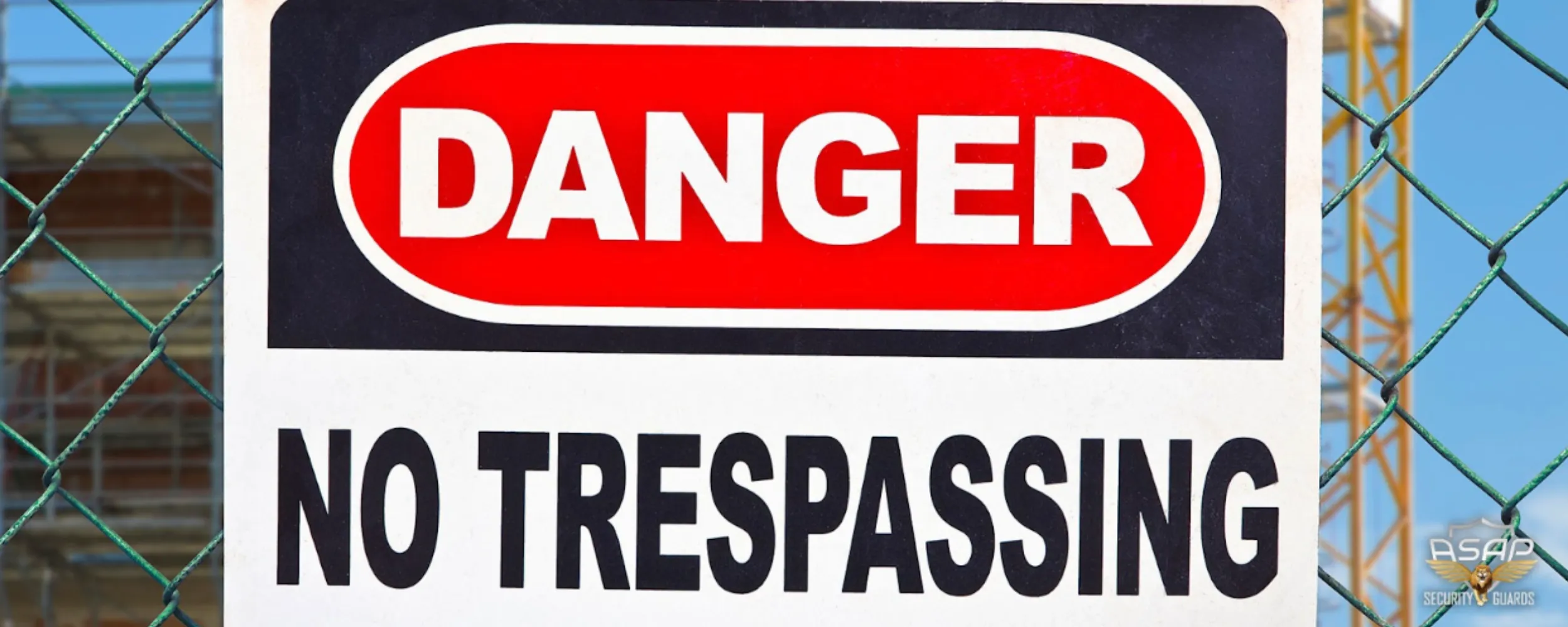
Equipment Theft and Recovery
Heavy equipment and vehicles create a larger financial exposure than most hand tools. Trucks were identified as the most expensive theft targets in the study, with an average loss of approximately $42,000 per incident. They were also the most likely stolen item to be recovered, but only 55% of the time. Marking, tracking, and surveillance can support recovery. But prevention remains the stronger outcome because a recovered truck may still leave a project without transportation or equipment during a critical phase.
Trespassing presents a separate concern. Curious visitors, unauthorized subcontractors, and people seeking shelter can enter through an unfinished section of fencing or an unsecured gate. If someone is injured by an excavation, stored material, moving vehicle, or incomplete structure, the contractor or property owner may face costly disputes and liability questions. Perimeter patrols, gate control, visitor verification, and prompt incident reporting help address both the security risk and the documentation needed after an event.
How Should Security Change by Construction Phase?
Security should change as the site layout, access points, materials, and work schedule change. A phase-based plan helps project teams place standing coverage, mobile patrols, access control, fire watch, and reporting where each stage creates the greatest exposure.
Site setup and early excavation
Early work often leaves the perimeter open while fencing, gates, lighting, and temporary utilities are being established. Focus on controlling the usable entrances, checking fence lines and excavation areas, and documenting deliveries and subcontractor access. Mobile patrols can help cover a broad or changing site, while a standing post may be appropriate at a busy entrance or material drop point.
Active construction and material staging
As equipment, copper, tools, fuel, and building materials accumulate, access control and after-hours checks become more important. Match patrol routes to storage areas, equipment yards, blind spots, and the current delivery pattern. If hot work or temporary fire-system impairments create additional exposure, coordinate fire watch duties with the project’s safety plan and document the handoff.
Finishing, testing, and turnover
Finishing work can create new risks as fixtures, appliances, wiring, and installed equipment become targets, while multiple trades and visitors move through the property. Keep visitor and delivery procedures current, inspect doors and perimeter openings, and use incident reporting to track unresolved issues through turnover. The coverage mix should be reviewed again before the site changes from active construction to occupancy or handoff.
Call (833) 272-7247 to map security coverage to your project’s phase and risk profile.
What Should an Overnight Construction Security Plan Include?
An overnight plan should define who checks the perimeter, how gates and deliveries are handled, which assets receive attention, and how an unauthorized entry or hazard is escalated. Standing guards provide continuous presence at a designated location, while mobile patrols provide scheduled or randomized checks across a broader site.
- Perimeter and fence checks: Inspect fence lines, gates, locks, excavation edges, and less visible areas for damage or unauthorized access.
- Gate and delivery controls: Confirm approved deliveries, secure inactive entrances, and document visitors, vendors, and vehicles according to the project’s procedures.
- Equipment and material lockup: Check high-value tools, fuel, vehicles, generators, copper, and staged materials, then note anything left exposed or moved.
- Lighting and blind spots: Record failed lights, blocked sightlines, and areas that need a route or control change.
- Unauthorized-entry escalation: Follow the site’s contact and escalation plan, prioritize safety, and document observations and action taken.
- End-of-shift documentation: Provide patrol findings, access activity, incidents, photographs or GPS records when available, and open follow-up items.
Large or dispersed properties may benefit from a combination of a standing guard and mobile checks. Compare the tradeoffs in mobile patrols versus standing guards before choosing coverage.
How Construction Site Security Guards Prevent Theft and Vandalism
Effective protection begins before an incident occurs. Guards establish a visible, consistent presence around the property, then combine patrols, controlled entry, and prompt reporting to reduce opportunities for theft, vandalism, and unauthorized access.
What Guards Do During a Typical Shift
- Patrol the perimeter: Officers walk or drive the fence line, gates, storage areas, and less visible sections of the property. Patrols can identify cut fencing, damaged locks, unusual activity, or equipment that has been moved without authorization. Varying patrol timing makes it harder for trespassers to predict when an area will be unattended.
- Control access: Guards check workers, vendors, deliveries, and visitors against the project’s approved access procedures. Visitor logging creates a usable record of who entered, why they were on site, and when they left. Clear gate procedures also help prevent tailgating and keep unauthorized vehicles away from materials and machinery.
- Deter and enforce: Uniformed visibility, lighting checks, and professional interaction discourage opportunistic theft. When someone enters without permission, the officer follows the site’s escalation procedures, contacts supervisors or law enforcement when appropriate, and avoids turning a security concern into an unsafe confrontation.
- Respond and report: If an incident occurs, the guard documents observations, preserves relevant details, notifies designated contacts, and supports the next response. Real-time incident reporting gives project managers a current record of security events, patrol findings, and access concerns instead of relying on incomplete end-of-shift recollections.
These responsibilities require more than a uniform. Construction security personnel should be trained in threat assessment, theft deterrence, and access control, as identified in ASAP Security Guards’ site-security guidance. The company also emphasizes BSIS-approved coursework through its own training academy, helping officers prepare for varied risks across Southern California projects.
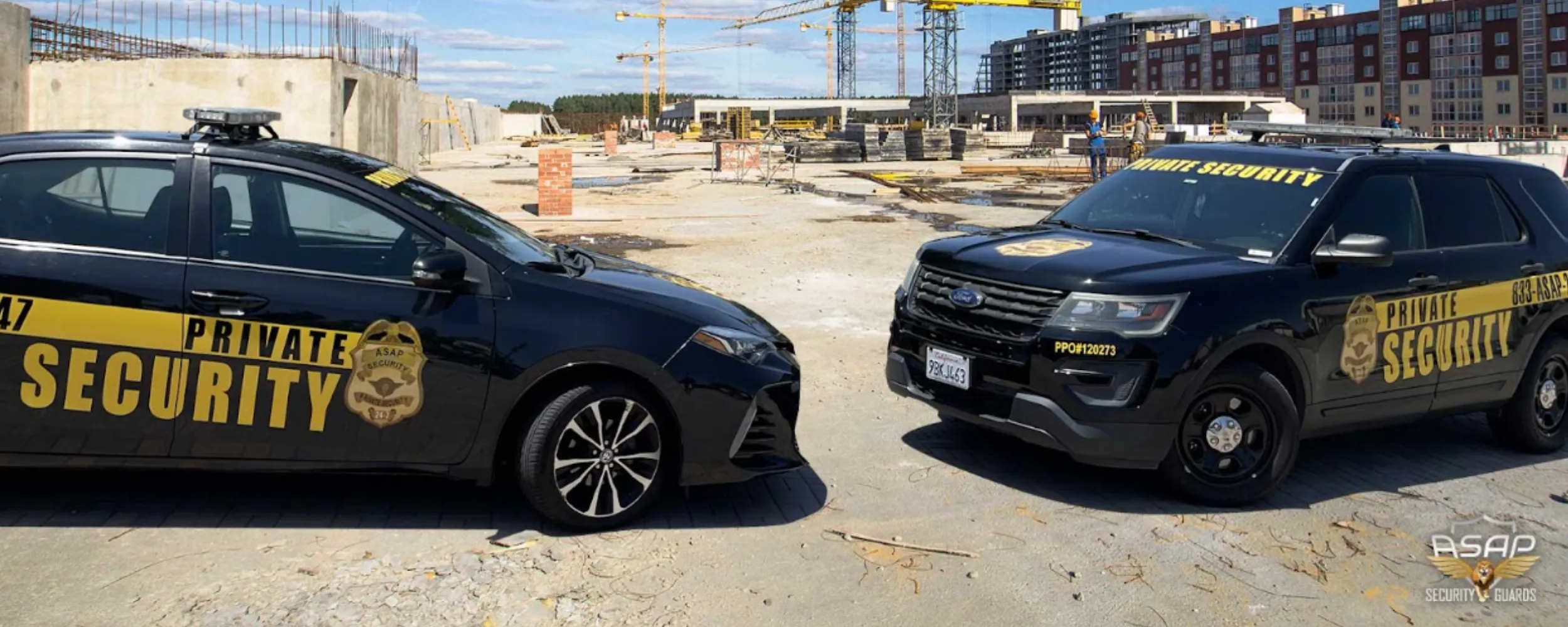
Depending on the property, schedule, and threat profile, a project may use an unarmed security guard for access control and routine patrols. Or the project may add armed security when the risk assessment supports that level of protection. The right plan matches officer duties to the site’s actual conditions, rather than applying the same coverage everywhere.
Fire Watch Requirements for Construction Projects
Construction phases often create temporary fire hazards before permanent safety systems are ready. Fire watch services are especially important when a building’s fire suppression system is not yet active or functional, as documented in the project’s security guidance. A designated officer can maintain a visible presence, identify developing hazards, and alert the site team quickly while permanent protections are being installed or repaired. Review ASAP’s fire watch guide for related planning considerations.
Hot work requires active fire prevention
Welding, cutting, brazing, and other hot work can create sparks or heat that ignite nearby materials. OSHA’s construction standard requires employers to take precautions against fire during these operations, including removing combustible materials where practical and providing suitable fire protection. Review the requirements in OSHA 1926.352. OSHA’s fire watch guidance also describes the need for a competent person to monitor the work area, recognize hazards, and respond promptly if a fire starts.
On an active project, that means the fire watch should remain attentive during hot work and for the required post-work monitoring period established by the site’s safety plan. The officer should know the location of extinguishers, alarm points, access routes, and emergency contacts. They should also coordinate with the general contractor and subcontractors instead of treating fire watch as a passive observation post.
Suppression and egress conditions matter
Fire watch coverage may also be necessary when sprinklers, alarms, standpipes, or other suppression and detection systems are temporarily impaired. Document the impairment, restrict unsafe work where needed, and establish a clear escalation process. If construction blocks or alters escape routes, review the applicable OSHA requirements for impaired egress, including OSHA 1915.504. The exact controls depend on the project layout and work being performed, so the fire watch plan should be coordinated with the site’s competent safety personnel.
Fire watch officers must take a fire safety class before performing these duties. ASAP Security Guards provides BSIS-approved training through its online academy. For a broader overview of fire watch requirements for construction sites, review the related guide and confirm that coverage, reporting, and handoff procedures match the project’s current conditions.
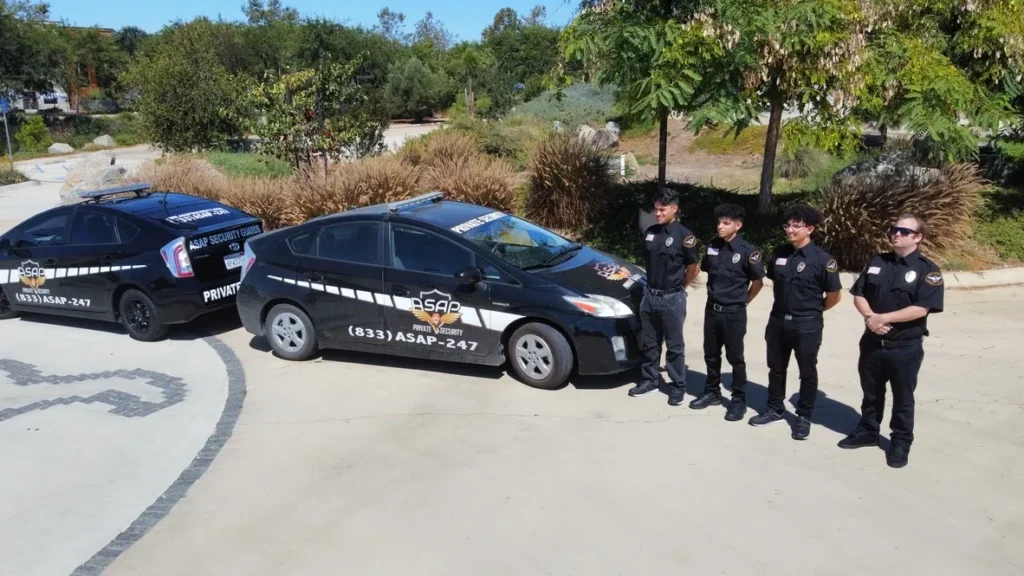
Building a Complete Construction Site Security Plan
A reliable plan uses overlapping controls rather than relying on one guard or one camera. Start with a site assessment that maps entry points, material storage, equipment yards, blind spots, lighting gaps, and work phases. Then combine trained personnel with physical and electronic measures so a weakness in one layer does not expose the entire project.
Use layered controls across the site
- Personnel: Standing guards can verify credentials, manage deliveries, monitor visitors, and respond immediately at a primary entrance. Mobile patrols add visible perimeter checks across larger or changing sites.
- Technology: CCTV can extend awareness between patrols, while marking and tracking systems help identify expensive equipment and support recovery. An academic study identifies surveillance and advanced marking and tracking as best practices for reducing construction theft and improving recovery rates (research findings on construction-site theft prevention).
- Physical barriers: Fencing, controlled gates, sturdy locks, and well-positioned lighting make unauthorized access more difficult. Keep high-value materials away from the perimeter and revise controls as the site layout changes.
- Documentation: Access control logs should record workers, vendors, deliveries, and unusual activity. Real-time incident reporting gives project managers a clear record for escalation, insurance, and corrective action.
Standing Guard vs. Mobile Patrol
The right deployment depends on the site’s footprint, traffic pattern, operating hours, and risk concentration. Use this comparison when evaluating mobile patrols vs standing guards:
| Factor | Standing Guard | Mobile Patrol |
|---|---|---|
| Presence | Continuous, visible presence at a designated post or entrance. | Scheduled or randomized vehicle and foot checks across the property. |
| Coverage | Strongest at gates, offices, delivery areas, and other fixed points. | Extends coverage across broad perimeters, equipment yards, and multiple access points. |
| Cost profile | Higher ongoing staffing cost, but immediate response at the post. | Often more flexible for periodic coverage, depending on route, frequency, and site size. |
| Best fit | Busy projects with frequent deliveries, credential checks, or concentrated risk. | Large, dispersed, lower-traffic, or after-hours sites needing repeated perimeter checks. |
Many projects combine both models: a guard at the busiest entrance during active hours and mobile patrols during nights or low-traffic periods. Pair that deployment with fencing, lighting, CCTV, access logs, and documented escalation procedures. For a coordinated approach, review ASAP’s construction site security services and match coverage to each phase of the build.
- Assess the site: Map entry points, material storage, equipment yards, lighting gaps, and work phases before selecting coverage.
- Layer the controls: Combine trained guards, mobile patrols, CCTV, fencing, lighting, and access logs so no single layer carries the entire risk.
- Assign coverage by phase: Schedule standing posts, patrols, or armed coverage around deliveries, night work, and the highest-value assets on site.
- Document and escalate: Use access logs and real-time incident reporting so security events reach the project team and feed corrective action.
When to Hire Armed Guards for Your Construction Site
Armed protection is not necessary for every project. It can be appropriate when the potential loss or threat level exceeds what a standard unarmed post can reasonably manage. General contractors and developers should evaluate the site, the assets, the operating schedule, and the history of incidents before selecting the deployment.
High-value materials and equipment
Consider armed coverage when a project stores expensive heavy equipment, work trucks, generators, copper, or other materials that can be quickly removed and resold. A construction site with several high-value assets may present a more serious target than its temporary fencing suggests. An academic study found that construction theft costs the U.S. industry approximately $1 billion annually, while contractors lose about $6,000 per theft incident. Trucks were identified as the most expensive theft targets, with an average loss of approximately $42,000 per incident (academic construction theft research).
Remote locations, night work, and prior incidents
Armed guards may make sense when a project is isolated or located in an area with elevated crime concerns. They may also be appropriate during overnight hours when fewer workers and supervisors are present. A documented history of trespassing, theft, threats, or repeated vandalism is another strong signal. The decision should account for how quickly law enforcement or project leadership could respond if an officer reports a developing threat. In some cases, a blended plan using controlled access, perimeter patrols, lighting, cameras, and armed coverage during the highest-risk hours provides more practical protection than a single guard post.
Verify licensing and training
California armed security personnel must be registered with the Bureau of Security and Investigative Services (BSIS) and hold the appropriate firearms permit for their assignment. Verify those credentials before placing an officer on site by reviewing the state’s BSIS security guard requirements. ASAP Security Guards uses BSIS-approved coursework to prepare officers for site risks, including threat assessment, theft deterrence, and access control. Review the company’s armed security guards service details, and compare the benefits of construction site security guards before finalizing coverage.
What Should a Construction Security Report Document?
A construction security report should give the project manager a usable record of what happened, where it happened, what the officer observed, and what follow-up remains. A Daily Activity Report (DAR) summarizes routine patrols, access activity, checks, and notable observations. An incident report documents a specific event in greater detail, including the response and escalation.
- Date and time of each patrol, access event, or incident.
- Location, gate, work area, equipment yard, or perimeter segment involved.
- Officer observations, including damage, hazards, unauthorized activity, or unusual conditions.
- Access or patrol activity, including deliveries, visitors, checks, and lockup observations.
- Action taken, designated contacts notified, and any escalation to supervisors or emergency services.
- Photographs or GPS records when available and appropriate to the assignment.
- Open follow-up items, responsible contacts, and conditions that need correction.
This documentation helps owners, general contractors, and site managers spot recurring gaps instead of relying on incomplete recollections. Reporting details depend on the assignment, but GPS-enabled Daily Activity Reports and 24/7 human dispatch can provide useful operational visibility when included in the service plan. For additional context, review unarmed security guard duties and reporting.
Call (833) 272-7247 to plan overnight patrols and documented reporting for your project.
Frequently Asked Questions
What security is needed on a construction site?
Most sites need layered protection: controlled entry points, perimeter checks, adequate lighting, equipment and material controls, and documented incident reporting. Overnight patrols or a standing guard can deter trespassing and theft when the crew has left. The right mix depends on the site’s location, phase, value of stored materials, access points, and exposure to vandalism.
Should construction sites have security overnight?
Yes, overnight coverage is often the most useful when a site is unattended, poorly lit, remote, or storing tools, fuel, vehicles, and building materials. A guard can patrol the perimeter, check gates, challenge unauthorized people, and escalate incidents before they disrupt the next workday. Mobile patrols may suit a lower-risk site, while a standing post offers continuous presence at a high-risk location.
When does a construction project need fire watch?
Fire watch is especially important during hot work and whenever a project’s fire suppression systems are not yet active or functional. The contractor should define the watch area, assign trained personnel, maintain communication, and follow the applicable fire-prevention requirements for the work being performed. Fire watch officers should also complete a fire safety class before assignment.
How do I choose security guards for a construction site?
Choose personnel trained for threat assessment, theft deterrence, access control, patrol documentation, and emergency escalation. Confirm that the provider is licensed and insured, then ask how officers will communicate incidents in real time and coordinate with the project team. For Southern California projects, bilingual Spanish-English capability can also improve communication with workers, vendors, and visitors.
Can cameras replace construction site security guards?
Cameras can extend visibility and help document activity, but they do not physically control a gate, deter an intruder through presence, or respond immediately to a developing incident. Combining surveillance with fencing, lighting, access procedures, and trained officers creates a stronger security plan than relying on any single measure.
Request a Construction Site Security Quote
A site-specific assessment can help identify gaps in perimeter control, overnight coverage, fire watch planning, and visitor management before they become operational problems. Request a construction site security quote to align guard coverage and reporting procedures with your site conditions, schedule, and risk profile.
