
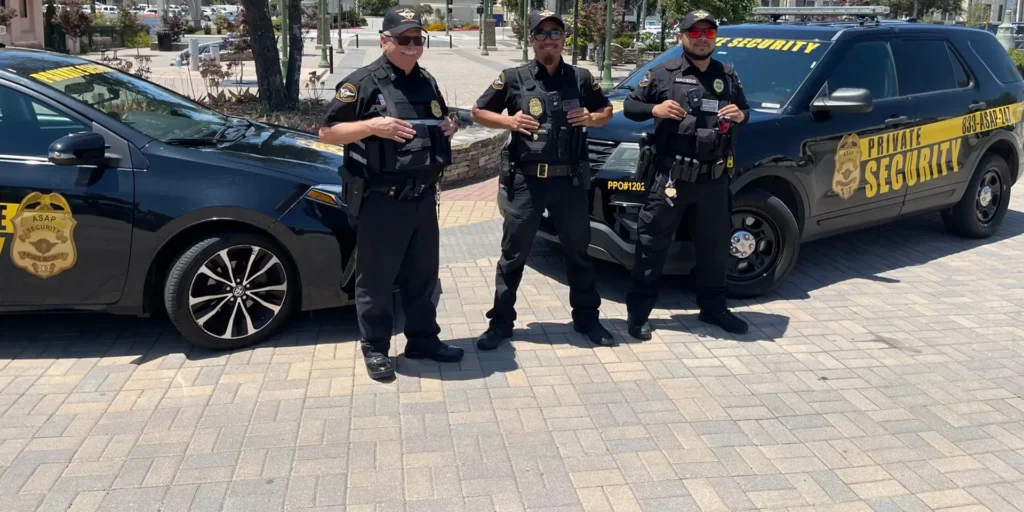
Commercial building emergency preparedness security means deciding the officer’s job before anything happens. Someone has to control the doors, call the right person, help people move, and write down what occurred. A fire alarm, a medical emergency, a severe-weather closure, or a threat at the entrance all ask the same question. Does the officer already know the role, or is the building inventing one in the moment?
Property managers in San Diego County, Orange County, and Riverside County usually already have a written plan somewhere. The gap is operational. The plan names a floor warden or a facilities lead, then leaves the lobby officer to guess. This guide is for managers of occupied office buildings, campuses, and other commercial properties who want the security post written into the plan. It is not a recovery-site manual and it is not legal advice. Confirm current workplace requirements with the California Division of Occupational Safety and Health for your own organization.
Call (833) 272-7247 to review your building’s emergency roles.
Commercial building emergency preparedness security starts with the post
Start with the building as it actually runs. Note the public entrance, the after-hours door, the loading dock, the parking entry, the stairwells, and the rooms that should stay locked. Then name one decision owner for each of those points. A multi-tenant property may have a property manager, a tenant contact, a facilities technician, and a lobby officer all on site at once. If the plan does not say who can hold a door, who can clear a floor, and who calls 911, those people will overlap or freeze.
ASAP Security builds commercial building security around that kind of site-specific post, not a generic officer dropped at a desk. Lobby and reception coverage, credential checks, campus patrol, and workplace-violence response are already part of the corporate service. Emergency preparedness is the extra step of writing those duties into the building’s own plan.
California Labor Code section 6401.9 requires covered employers to keep a workplace violence prevention plan with procedures for emergencies, communication, and a violent-incident log. The Cal/OSHA workplace violence prevention FAQ points employers to those plan elements. A security company does not replace the employer’s plan. Officers can support the procedures the property has already assigned, and they should be told when a duty is outside their post.
Put four roles in the written plan
Four jobs cover most of what a commercial building asks of security during an emergency. Write each one as a post order, with the hours it applies and the person the officer calls if the situation changes.
| Role | What the officer does | What the officer does not decide |
|---|---|---|
| Access control | Holds or releases assigned doors, checks credentials, and keeps a simple entry note. | Whether the building is safe to re-enter. That call stays with the property lead or public safety. |
| Communication | Uses the posted call list, reaches the property contact, and relays only confirmed facts. | Tenant-wide announcements that management has not authorized. |
| Evacuation support | Points people to the posted route and assembly area and reports who still needs help. | A search of the building, unless the plan and training specifically assign it. |
| Incident documentation | Records time, location, people notified, and actions taken while the details are fresh. | Cause, fault, or a medical diagnosis. |
Approved hourly ranges for planning a post are $28 to $45 for unarmed officers and $35 to $65 for armed officers. The right post depends on the building, the hours, and the risk, not on a single rate. A lobby that mainly checks badges is a different assignment from a site that has asked for an armed officer.
Access control during the incident
Access control is the first place a plan fails in public view. Visitors keep arriving while employees are trying to leave. Delivery drivers do not know the alarm is real. A well-meaning tenant props a stair door because their usual path is crowded.
Write the door plan in plain language. For a fire alarm, which doors must stay available for exit, and which doors should not be used as a way back in? For a threat outside, who is allowed to direct people away from the entrance? For after-hours work, which credentials still work, and who can override them? Officers assigned to access control and badging can verify credentials and hold a controlled entry. They should not invent a new rule at the desk.
ASAP Security officers work from post orders and report what they see. On a corporate campus, mobile patrol can also watch the perimeter, the parking structure, and doors that the lobby post cannot see. That patrol is support for the plan. It is not a promise that every door in a multi-building site is staffed.
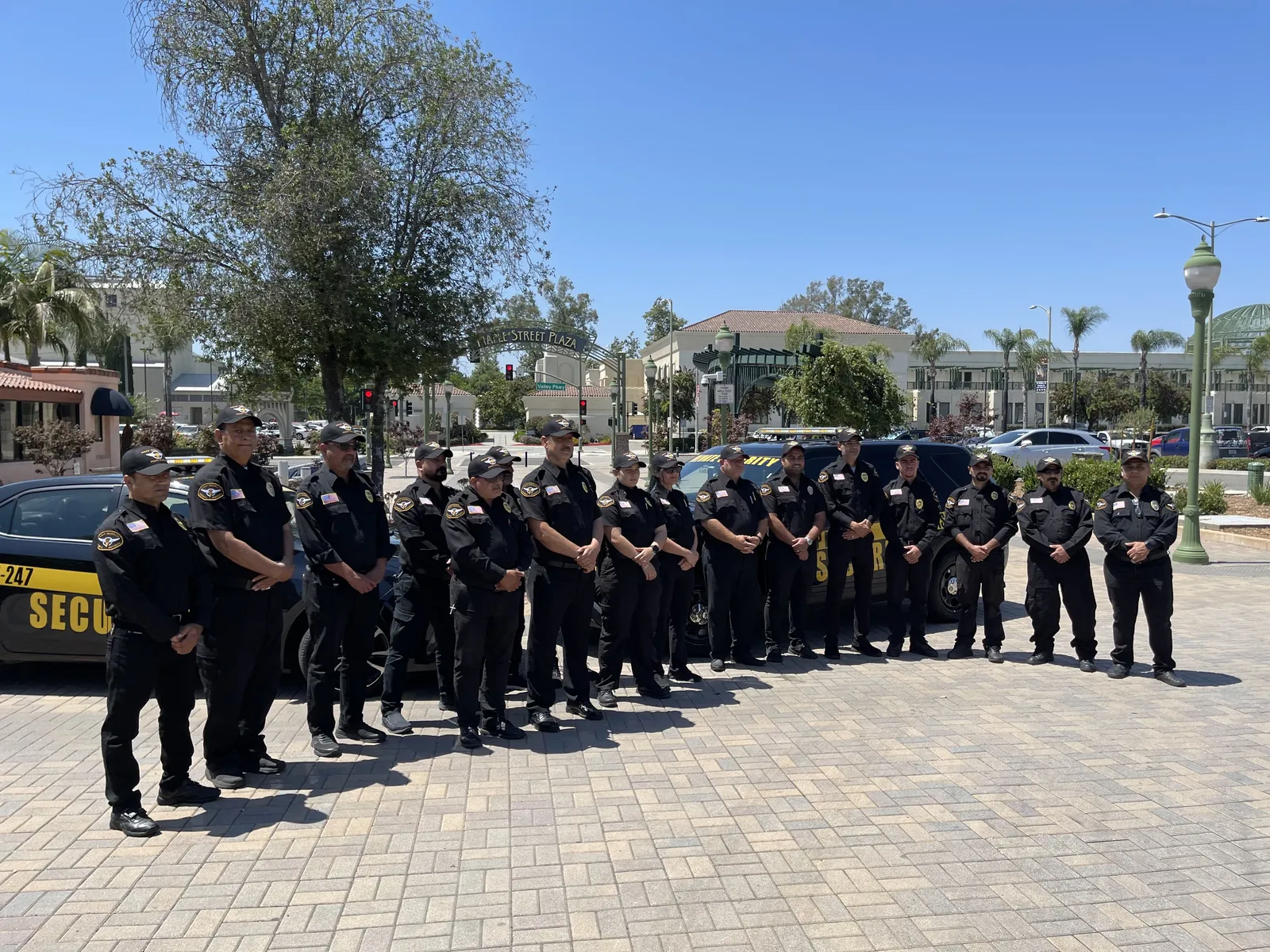
If the building uses badges, visitors passes, or a vendor log, say so in the post order. An officer can check the credential the property issues. The property still owns the badge system, the exception list, and the decision to reopen.
Communication and the call list
People lose time when the officer has a radio and nobody agreed on the message. A usable call list fits on one page: property manager, after-hours backup, facilities, the alarm company if the property uses one, and the public-safety number. Each line needs a name or a role, a number, and the hours that contact is the right one.
Tell the officer which facts to send and which guesses to leave out. Time, location, what was observed, who was notified, and what the officer did are enough for the first call. Rumors about a cause, a weapon, or an injury should stay out unless the officer saw them. That same restraint belongs in any message to tenants.
ASAP Security keeps a 24/7 human dispatch center, separate from office hours. Office coverage is Monday through Friday, 9 am to 5 pm, while security services and live dispatch run around the clock. For a commercial site, that means an officer can reach a person, not an automated queue, when the property contact does not pick up. Dispatch does not replace 911, and it does not replace the property manager’s own notification tree.
Call (833) 272-7247 if you want the post orders and the call list reviewed together.
Evacuation support without taking over the drill
Evacuation support is guidance, not command of the fire department. The property’s plan should already name the route, the assembly area, and the person who accounts for employees. The officer’s job is to know that page and use it.
In practice, that looks like standing at an assigned point, directing people toward the posted exit, and telling the property lead which stair or lobby is blocked. It can also mean staying with a visitor who does not know the building. It should not mean sending officers into an uncleared area because someone is worried about a laptop. If the plan wants a floor check before exit, that duty has to be trained and written down. Otherwise the officer holds the assigned post.
Multi-tenant buildings need one extra sentence in the plan: tenants follow their own employee procedures, and the property officer follows the building post. Those two can share an assembly area without sharing a command. ASAP Security can staff the building post. The tenant still owns its internal headcount.
Severe weather and planned closures are easier to rehearse than a fire alarm, and they reveal the same holes. Who tells the garage attendant? Who keeps the loading dock from becoming a second entrance? A short walk-through with the officer on duty answers those questions better than another paragraph in a binder.
Incident documentation the property can use
A report written an hour later from memory is how small facts disappear. The preparedness plan should say when the officer starts the note: at the first call, not after the lobby is quiet. GPS-tracked reports with photos and notes give the property a time and a location tied to what the officer recorded. That record supports the property manager. It does not decide liability.
Keep the note factual. What time did the alarm sound, which door was held, who was called, and what did the officer see? Leave cause and blame out. For the format a manager should expect, use our guide to the security guard incident report. If the event is a violent incident, the employer’s own log under its workplace violence plan is a separate record. The officer’s report can feed that log. It does not replace it.
After the event, the useful review is short. Did the door plan work? Did the call list have a dead number? Did people go to the right assembly area? Change the post order from those answers, then have the next shift read it. A plan that is never updated becomes a souvenir.
Day-to-day office coverage is a different article. Managers comparing lobby, visitor, and parking routines can read office building security in Riverside or the broader commercial property security guide. Security after the building is already damaged, including perimeter control at a recovery site, belongs on the disaster site security page, not in this preparedness plan.
What to hand the officer on day one
Give the assigned officer a packet they can use on a night shift, not a 40-page manual. Walk through these steps once with the officer and once with the property contact:
- List every public door, after-hours door, garage entry, and loading dock.
- Write what happens to each door during an alarm, a threat outside, and a planned closure.
- Put the call list on one page, with an after-hours backup for each role.
- Mark the evacuation route, the assembly area, and the post the officer must hold.
- Name who can authorize re-entry, and say what the officer must not decide.
- Set the report format, including where photos go and how soon the note is due.
If the officer and the property contact describe a stairwell differently, fix the page before you file it. A packet that only one of them has read will fail on the first real alarm.
ASAP Security guard services are licensed under California private patrol operator license 120273. Armed and unarmed posts are assigned only after the property’s risk is discussed, and a quote is specific to the site. Many officers come through the in-house academy, and posts can include former military or law enforcement experience where the property asks for it. That background does not change the post order. The written role still governs what happens at the door.
Use a short quarterly check, not a new policy project. Read the call list out loud, walk one exit, and ask the officer to point to the assembly area without looking at the packet. Update any number that failed. If a tenant has changed its after-hours vendor list, put the new names on the door page the same week. Preparedness that lives only in a shared drive will not help the person standing in the lobby.
A consultation is the right next step when the packet does not exist yet. It is also the right step when the current post only says to assist as needed. Bring the floor plan, the current call list, and the hours the desk is staffed. ASAP Security can match a standing post, an after-hours patrol, or both, within San Diego County, Orange County, and Riverside County. The conversation should end with named duties, not a vague promise of more presence.
Commercial building emergency preparedness security works when the officer’s role is decided in advance. Access, communication, evacuation support, and documentation are manageable duties. They fail when they are left as “use good judgment” at 2 am.
Call (833) 272-7247 to talk through a preparedness post for your property.
Frequently asked questions
Does a security officer replace our emergency plan?
No. The property or employer owns the plan, including any workplace violence prevention plan required for that workplace. Officers follow the duties written into their post orders and support the people the plan already names.
Should the lobby officer lead an evacuation?
Only if the plan says so, and only for the post they were given. Most officers are more useful holding an exit, directing people to the assembly area, and reporting what they can see. Fire and medical command stay with public safety.
What belongs in the first incident note?
Time, location, what the officer observed, who was notified, and what action the officer took. Leave out guesses about cause or fault. A fuller format is covered in our incident-report guide.
Can one officer cover access control and evacuation?
Sometimes, on a small single entrance, if the plan says which duty comes first. A campus or a building with a separate garage usually needs the duties split, or a patrol assigned to the doors the lobby cannot see.
Do you staff commercial buildings outside Southern California?
Public-facing guard coverage from this plan is for San Diego County, Orange County, and Riverside County. If a property sits outside those counties, ask before assuming a post is available.
