
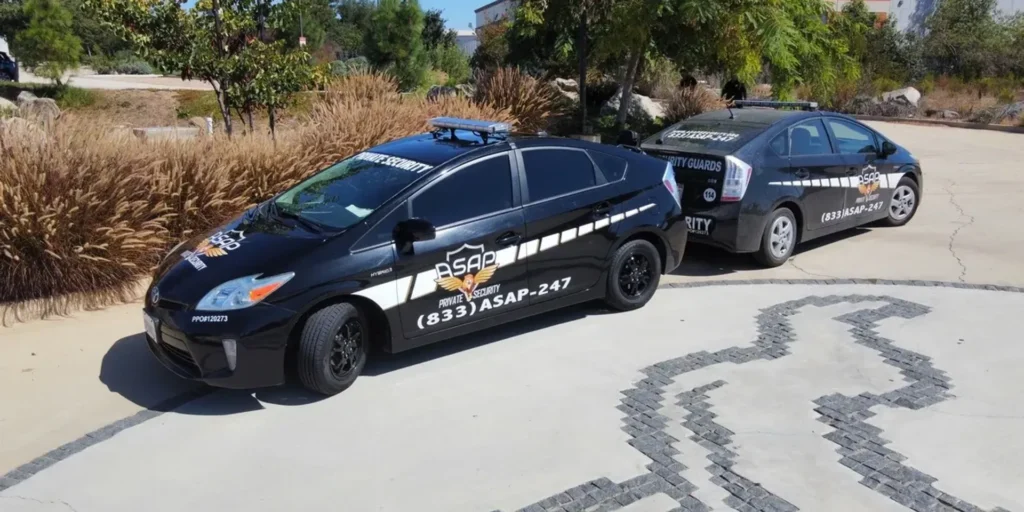
A commercial property can look secure during business hours and still become vulnerable after the last employee leaves. Unoccupied suites, open parking areas, damaged fencing, unauthorized entry, theft, and vandalism create different challenges for Riverside property managers. The difficulty grows when one site is part of a larger portfolio.
Effective commercial property security in Riverside combines trained armed or unarmed guards, mobile patrols, controlled access, and responsive dispatch. GPS-tracked Daily Activity Reports add time-stamped, photo-supported accountability, while a 24/7 human dispatch center helps coordinate response when conditions change.
ASAP Security Guards brings military and law-enforcement leadership, regional coverage, and technology-enabled oversight to commercial properties across Riverside County, including service areas from Corona to Palm Desert. The right plan starts by identifying where a property is most exposed, then matching coverage to the risks present at each location.
Call (833) 272-7247 now for a free commercial property security assessment in Riverside.
Why Commercial Property Security in Riverside Needs a Real Threat Assessment
Riverside County commercial properties face a mix of routine and opportunistic threats. Inland Southern California’s wide service area, busy corridors, and changing occupancy patterns create uneven security demands.
Theft and vandalism remain persistent concerns for businesses. Findings from the Commercial Victimisation Survey reinforce why property managers need proactive protection instead of relying only on incident response.
Theft does not stop at the front entrance
Retail centers, warehouses, offices, and service businesses all present different opportunities for theft. Exterior equipment, delivery areas, tenant inventory, and parked vehicles can attract attention when visibility is limited.
Industrial centers may have multiple loading points and broad perimeters. Shopping centers often have several tenant entrances, shared parking areas, and traffic throughout the day. These conditions make it difficult for one employee or a camera system to monitor every exposure.
Property managers should also consider internal risks. Contractors, vendors, tenants, and visitors may need access to different areas. Without clear procedures, unauthorized movement can go unnoticed until equipment, materials, or personal property disappears.
Vandalism and vagrancy create visible damage
Vandalism can damage doors, windows, walls, lighting, signage, and tenant spaces. Even when the repair bill is manageable, visible damage can make a property appear neglected. That impression may affect tenant confidence and discourage prospective occupants.
Vagrancy adds another layer of complexity, particularly around vacant storefronts, unused suites, parking structures, and rear service areas. Loitering can lead to trespassing, property damage, discarded materials, or unsafe encounters between occupants and unauthorized individuals.
These problems often intensify after business hours. A vacant unit may have no staff to notice an unlocked door, broken window, or forced entry. A small issue can then remain unresolved overnight and become a larger security or maintenance problem.
Vacancy changes the risk profile
Vacant commercial space needs deliberate attention because normal tenant activity is absent. Empty units can provide concealment, attract trespassers, and create uncertainty about who should be present.
Riverside County also requires geographic coordination. ASAP Security Guards provides coverage from Corona to Palm Desert, supporting properties across a broad inland market. That reach matters for managers overseeing separate buildings, shopping centers, or industrial locations.
A practical commercial property security plan should account for occupancy, access points, parking, lighting, delivery schedules, and after-hours activity. It should also identify which conditions require a guard presence, patrol checks, or rapid escalation.
When property managers understand how theft, vandalism, vagrancy, and vacancy interact, they can build coverage around actual exposure. The goal is not identical protection at every location. It is consistent visibility and a response plan suited to each Riverside property.
Access Control: Locking Down Entry Points and Unauthorized Traffic
Access control begins before someone reaches a sensitive room, loading area, tenant suite, or vacant commercial unit. It governs who enters, why they enter, and where they can go.
The CISA Interagency Security Committee describes facility access control as a complete process. It starts with employee and visitor entry, continues through security screening, and ends at the first authentication point for nonpublic space. This federal best-practice guidance supports treating the entry sequence as one connected security function.
Control the first point of contact
For Riverside commercial properties, the first control point may be a lobby, vehicle gate, reception desk, service entrance, or shared parking area. Each location needs a defined procedure.
Employees should use assigned credentials or another approved authentication method. Visitors should have a stated purpose, a host, and a clear destination. Contractors may need identification checks, appointment confirmation, and restricted access to specific work areas.
These steps reduce opportunities for tailgating, unauthorized deliveries, theft, and disputes about who was permitted on site. They also create a consistent standard for staff, tenants, vendors, and guests.
Pair screening with a visible guard presence
Technology can identify a credential, but it cannot always interpret behavior. A person may use a valid badge while entering an area outside their assignment. A vehicle may arrive after hours with an unclear reason.
A trained security guard can verify visitors, question unusual activity, monitor cameras, and escalate concerns before they become incidents. Guards can also manage access during tenant move-ins, construction, special events, and delivery windows.
Physical presence matters at properties where theft or vandalism risks increase after business hours. It gives employees and authorized visitors a clear point of contact. It also signals that access rules receive active enforcement.
Connect access control to the broader security plan
Access control works best when it connects with patrols, surveillance, lighting, incident reporting, and emergency response. A guard should know which doors require checks, which tenants need special procedures, and who can authorize access.
ASAP Security Guards combines physical guard coverage with technology-enabled accountability. GPS-tracked Daily Activity Reporting can provide time-stamped records and photos of completed activities. This helps property managers review access-related concerns and confirm that assigned checks occurred.
Managers should review access permissions when tenants change, employees leave, contractors finish work, or a space becomes vacant. Clear procedures make commercial property security in Riverside more consistent, measurable, and easier to improve.
Armed vs Unarmed Guards: Matching Coverage to Your Risk Level
The right guard assignment depends on the property, the people onsite, and the consequences of a security incident. Riverside commercial properties do not all face the same exposure. A medical facility, cash-intensive operation, or high-value warehouse may require a different presence than a professional office or retail center.
ASAP Security Guards provides both armed and unarmed guards, supported by extensive background screening processes. That range allows property managers to build coverage around the actual risk profile instead of choosing a one-size-fits-all service.
| Factor | Armed guards | Unarmed guards |
|---|---|---|
| Training and role | Provides an enhanced response capability within the assignment’s legal and operational requirements. | Focuses on observation, access control, patrols, visitor interaction, and incident reporting. |
| Deterrence | A visible armed presence can discourage threats where the perceived risk is elevated. | A professional uniformed presence can deter trespassing, theft, vandalism, and unauthorized activity. |
| Best fit | High-value assets, sensitive facilities, healthcare settings, and properties facing credible threats. | Office buildings, retail centers, routine commercial sites, and properties needing daily visibility. |
| Cost considerations | Typically requires a larger security budget because the assignment carries greater responsibility and specialized requirements. | Often offers a practical starting point for properties needing prevention, monitoring, and controlled access. |
When armed coverage may be appropriate
Armed coverage may make sense when an incident could create serious danger or substantial financial loss. Examples include facilities handling sensitive materials, high-value inventory, or vulnerable populations. It can also suit properties with documented threats, repeated serious incidents, or elevated concerns during specific operating hours.
The decision should follow a documented assessment. Property managers should consider asset value, occupancy, access points, prior incidents, neighborhood conditions, and the availability of local emergency support. An armed guard is not a substitute for clear post orders, communication procedures, or responsible access control.
When unarmed coverage may be the better fit
Unarmed guards can provide strong preventive coverage for many offices, retail properties, business parks, and mixed-use commercial sites. Their responsibilities may include monitoring entrances, checking visitors, conducting visible patrols, identifying hazards, and escalating incidents through established procedures.
This approach can support a calm customer and employee experience while maintaining a consistent security presence. It may also work well when the primary concerns involve unauthorized access, after-hours activity, theft prevention, or property damage rather than a credible violent threat.
For commercial property security in Riverside, the strongest plan matches personnel, hours, and post orders to the site’s specific exposure. A professional assessment can determine whether armed coverage, unarmed coverage, or a layered combination provides the most responsible balance of protection and cost.
Call (833) 272-7247 now for a free commercial property security assessment in Riverside.
Mobile Patrol and Vacant-Unit Protection Across Riverside County
Vacant suites, construction sites, and multi-site commercial properties need visible coverage even when no tenant or employee is present. A locked door may slow entry, but it cannot identify loitering, damage, or unusual activity around the property.
ASAP Security Guards provides 24/7 mobile patrol services by vehicle, bike, and foot. That flexibility allows patrol teams to match the method to the property, access points, and surrounding environment. Vehicle patrols can cover broad commercial campuses and multiple locations. Bike and foot patrols can inspect tighter areas, walk building perimeters, and check spaces that vehicles cannot reach.
For property managers, mobile security patrols can create a practical layer of protection across separate sites. A scheduled route can cover retail centers, office buildings, industrial properties, and vacant units without requiring a dedicated guard at every entrance. Patrol frequency can also be adjusted as occupancy, construction activity, or threat conditions change.
Why vacant units need active patrol coverage
Vacant units often have fewer natural observers. There may be no staff to notice forced entry, broken windows, unauthorized occupancy, or damage to mechanical systems. Empty properties can also attract trespassing and nuisance activity that becomes more expensive when discovered late.
Regular patrols place trained personnel near the property at defined intervals. Guards can inspect exterior doors, gates, parking areas, loading zones, and other vulnerable points. They can identify conditions that require a manager, maintenance team, law enforcement contact, or emergency response.
This approach is especially useful across Riverside County, where commercial properties extend from Corona to Palm Desert. A regional coverage plan can support consistent standards across locations while accounting for each site’s layout and operating schedule.
A visible deterrent across multiple properties
Mobile patrols are a cost-effective, high-visibility deterrent against criminal activity at diverse commercial premises. The patrol vehicle, uniformed presence, and recurring property checks signal that the site is being monitored. That visibility can help discourage opportunistic theft, vandalism, and unauthorized access.
Patrol coverage does not replace every security measure. It works best alongside controlled access, lighting, cameras, and clear escalation procedures. For properties requiring a staffed overnight presence, overnight security guards in Riverside can provide continuous on-site coverage during the highest-risk hours. A security assessment can determine whether a property needs mobile patrols, overnight guards, or a combination of both.
How GPS-Tracked Reporting and 24/7 Dispatch Set Your Security Apart
For property managers, visible security matters, but reliable documentation matters just as much. A patrol that cannot be verified leaves gaps in oversight, communication, and follow-up.
ASAP Security Guards uses GPS-tracked Daily Activity Reporting (DAR) to create real-time accountability during security operations. Reports include photos and time stamps, giving managers a clearer record of activity at the property.
Turn patrol activity into a usable audit trail
A time-stamped report helps show what happened, where it happened, and when the observation occurred. GPS tracking adds location context to routine patrols, inspections, and documented incidents.
That record supports practical management decisions. Property teams can review recurring concerns, confirm that assigned areas received attention, and identify conditions that require maintenance or additional controls.
It also gives owners and managers stronger documentation when they need to discuss an incident with an insurer, ownership group, tenant, or law enforcement agency. DAR does not replace an investigation, but it creates a clearer operational record for the people responsible for next steps.
This level of transparency is especially useful across multi-building properties or sites with changing occupancy. Managers can review activity without relying only on verbal updates or paper-based logs.
Keep emergency response connected to a human team
Technology is most useful when it supports responsive people. ASAP Security Guards operates a 24/7 human dispatch center that manages deployments and emergency responses.
When a concern develops after business hours, property managers need more than a voicemail or an unattended alert. Human dispatch gives the response process a point of coordination, helping route requests and support rapid deployment.
This can matter during trespassing concerns, property damage, access problems, or other incidents requiring immediate attention. The specific response depends on the situation, site instructions, and available resources.
For Riverside County properties, local coverage extends across a broad area from Corona to Palm Desert. A coordinated dispatch process helps connect site needs with the appropriate security response across that service footprint.
Build accountability into commercial property security
Property managers evaluating commercial property security should ask how the provider verifies patrol activity and handles urgent requests.
GPS-tracked DAR and 24/7 human dispatch address both sides of that question. Reporting supports accountability after an event, while human coordination supports action as an event unfolds.
Together, these capabilities give managers better visibility, stronger documentation, and a more dependable operating partner. They also make it easier to evaluate whether the security plan is working across occupied, high-traffic, and vulnerable commercial spaces.
Building a Riverside Security Plan That Fits Your Budget
Property managers in Riverside County balance security needs against payroll, maintenance, vacancy, and operating costs. A practical plan protects the highest-risk areas first, then expands coverage where site conditions justify it.
Start with a property-level risk review. Map entrances, loading areas, parking lots, vacant suites, after-hours businesses, and locations with repeated trespassing or vandalism. Review incident reports, tenant concerns, lighting, camera coverage, and access procedures. This creates a defensible basis for choosing coverage instead of paying for a standard package.
Use layers instead of one expensive security measure
Layered security can combine access control, lighting, cameras, mobile patrols, and scheduled guard presence. Each layer addresses a different weakness. Access control limits unauthorized entry, while patrols create visible deterrence and identify problems before they grow.
For example, a property manager may use scheduled patrols for a multi-building site, then assign a stationary guard during the busiest tenant or delivery periods. A vacant unit may need more attention after dark, while a staffed office building may require stronger entry screening during business hours. This approach directs spending toward the times and locations that carry the greatest exposure.
Compare mobile patrols with 24/7 static guards
Mobile patrols are often a cost-effective option when a property needs recurring visibility without a continuously staffed post. Vehicle, bike, and foot patrols can check multiple buildings, parking areas, gates, and vacant spaces. ASAP Security Guards offers 24/7 mobile patrol services tailored to commercial properties.
Static guards make more sense when the site needs a constant human presence. High visitor volume, sensitive operations, frequent access disputes, or serious incident history may justify coverage at a fixed post. A hybrid schedule can also work. Managers can pair daytime access control with overnight patrols, or increase guard hours during move-ins, construction, or seasonal activity.
Right-size coverage as property risk changes
Security budgets should be reviewed after major changes. New tenants, construction, vacancies, lighting upgrades, camera installations, and incident patterns can all change the appropriate coverage level. Ask for measurable reporting, including patrol times, observations, photos, and unresolved issues.
GPS-tracked reporting helps managers confirm that scheduled activity occurred and gives ownership a clearer record of conditions. Documented patrols and access control also support stronger risk management. Review commercial building security liability considerations before finalizing a plan.
The best commercial property security in Riverside is not necessarily the largest package. It is a documented, adaptable system that matches personnel, technology, and patrol frequency to the property’s actual risk.
Call (833) 272-7247 now for a free commercial property security assessment in Riverside.
Frequently Asked Questions
What security measures help protect a vacant commercial unit in Riverside?
Start with controlled access, documented inspections, and a visible patrol presence. Secure doors, gates, loading areas, and other entry points, then use scheduled vehicle, bike. Or foot patrols to identify trespassing, vandalism, water damage, and other problems before they grow. A response plan should also define who receives alerts and how contractors, tenants, and emergency personnel are verified. Access control guidance from the U.S. Cybersecurity and Infrastructure Security Agency covers visitor entry, screening, and authentication into nonpublic areas (CISA facility access control guidance).
Should a Riverside commercial property use armed or unarmed guards?
The right choice depends on the property’s threat profile, occupants, hours, assets, and response requirements. Unarmed guards may fit access control, visitor management, inspections, and visible deterrence. Armed coverage may be considered for higher-risk sites or situations where the client and security provider determine that additional response capability is appropriate. Any assignment should follow applicable law, site procedures, and documented post orders. ASAP offers both armed and unarmed guards and reports extensive background screening processes.
How does mobile patrol work for multiple commercial properties?
A mobile patrol team visits designated locations according to an agreed schedule or responds when a property needs attention. Vehicle, bike, and foot patrols can be combined based on the site layout, traffic patterns, and time of day. This approach can provide high-visibility deterrence across several properties without requiring a continuously posted guard at every location. It is especially useful for vacant units, parking areas, construction zones, and after-hours checks.
What should a property manager expect from security reporting?
Reporting should show what happened, where it happened, when it happened, and what action followed. GPS-tracked Daily Activity Reports can add time-stamped photos and location-based accountability to routine patrol records. A 24/7 human dispatch center can also coordinate deployments and emergency responses when conditions change. Ask for a sample report and confirm how incident notifications, escalation, and follow-up are handled before selecting a provider.
Ready to strengthen your Riverside property security?
A tailored assessment can help identify practical coverage for your entrances, vacant units, and shared areas. Call (833) 272-7247 to schedule a free commercial property security assessment in Riverside and discuss the right combination of guards, patrols, and access controls for your site.
