
Office properties rarely have one security concern. A receptionist may need a consistent visitor process. A facility manager is also responsible for employee access, parking, deliveries, tenant communication, and conditions after the last staff member leaves. Treating each issue separately can create gaps between posts, shifts, and responsibilities.
Call (833) 272-7247 to discuss your Riverside office security needs.
Effective office building security in Riverside starts with a site-specific plan that coordinates lobby procedures, access control, parking and perimeter patrols, incident documentation, tenant communication, and after-hours coverage. The right mix depends on the building’s layout, operating hours, tenant needs, and documented risk assessment.
For Riverside managers, the practical goal is accountable coverage that supports normal office operations without unnecessary disruption. That means clear post orders, trained personnel, reliable reporting, and an escalation process that keeps clients and emergency services informed when needed. Start by identifying which parts of the property and daily routine require the closest attention.
What Should Office Building Security in Riverside Cover First?
Start with the points where office operations can lose visibility: the main entrance, shared corridors, employee-only areas, parking access, and the handoff between business hours and closing. A Riverside office may have several tenants, different schedules, visiting vendors, and employees arriving before daylight or leaving after most suites are empty. The first security conversation should therefore map how the property actually functions, not begin with a generic list of equipment.
Build the plan around documented responsibilities
Before selecting a post or patrol schedule, identify who owns each decision. The property manager, tenant representatives, front-desk staff, facilities team, security personnel, and emergency contacts should know who receives a report. Clarify who can authorize access and who communicates with occupants after an incident. This avoids a common operational gap: everyone assumes someone else is monitoring a concern.
California’s workplace violence prevention requirements include written responsibilities, employee involvement, reporting, communication, emergency response, training, hazard correction, and post-incident investigation for covered employers. The California Division of Occupational Safety and Health should be consulted to confirm current applicability and requirements for each organization. A security plan can support those processes, but it does not replace the employer’s own responsibilities.
For practical implementation, translate the plan into post orders and daily routines. Define visitor check-in, delivery handling, access-control exceptions, opening and lock-up duties, patrol checkpoints, and the escalation path for suspicious activity or a medical emergency. Each tenant should receive the same core instructions, with property-specific details added where necessary.
Connect routine coverage with real accountability
Office security also needs a dependable communication layer when the assigned officer, property contact, or tenant representative needs help. ASAP’s 24/7 live dispatch provides human coordination among guards, clients, and emergency services. Its documented workflow includes dispatcher assessment, nearest-unit deployment, client updates, incident logging with photos, and follow-up reporting. That coordination is useful when an issue does not fit neatly into a standing post order. It should never be presented as a replacement for calling 911 during an active emergency.
For a local starting point, review the available Riverside security guard services and compare the property needs against business-hours, after-hours, event-specific, or continuous coverage. The right scope may be an approachable unarmed officer at the lobby, scheduled perimeter checks, or a coordinated combination. The decision should follow the site’s entry points, tenant needs, operating hours, prior incidents when available, and communication requirements.
How Should Lobby, Visitor, and Access Procedures Work?
A well-run office lobby should feel organized and welcoming while making unauthorized access difficult. The guard or reception team is not simply checking names at a desk. The process should establish the first authentication point between a public entrance and nonpublic workspace, then apply the same rules consistently for employees, visitors, vendors, and contractors.
Start by mapping every entry point, including the main lobby, delivery entrance, parking access, stairwells, and doors that connect shared areas to tenant suites. For each location, define who may enter, during which hours, and what happens when credentials are missing or a visitor arrives without a host. The CISA facility access guidance identifies identity checks, standardized communication, screening, escort procedures, and physical access systems as useful components of a coordinated access program.
Build a repeatable visitor workflow
A practical visitor procedure begins before arrival. Tenants should provide the visitor’s name, company, expected arrival window, host, and approved destination when advance notice is available. At check-in, staff verify identification according to the building’s policy, confirm the host, issue a visible temporary credential, and record the visit. Visitors should remain in approved public or escorted areas until the host accepts responsibility for them. Contractors may also need work-order confirmation, delivery instructions, or access limited to a defined area.
If a host cannot be reached, the visitor should wait in a designated area rather than being waved through. A calm, consistent explanation protects the tenant experience and gives staff a clear standard to follow. Lost badges, tailgating, propped doors, and attempts to bypass the lobby should be documented and escalated according to written post orders.
Use the lobby as an information and escalation point
Office building security in Riverside should also account for communication. Lobby personnel need current tenant contacts, emergency procedures, restricted-area maps, and instructions for deliveries and after-hours access. They should know when to contact building management, when to request a tenant representative, and when an immediate emergency requires calling 911. OSHA recommends assessing the workplace and using site-specific prevention measures rather than relying on a universal formula. Depending on the assessment, layers may include badges, electronic keys, lighting, alarms, guards, or video surveillance.
- Verify employee and visitor identity before granting nonpublic access.
- Record visitor, vendor, and contractor entries and exits.
- Issue temporary credentials and collect them at departure.
- Require escorts or host confirmation for restricted areas.
- Document denied access, door issues, unusual behavior, and policy exceptions.
- Review the procedure with tenants and update contacts when occupancy or operations change.

For Riverside offices, the strongest procedure is one that is professional enough for daily tenant interactions and specific enough to produce consistent decisions during an unusual event. A site assessment can determine which entries need staffed coverage, which can rely on electronic controls, and where documented patrol checks add another layer.
How Can Patrols Protect Parking Areas and Perimeters?
Parking areas and property edges are easy to overlook when attention stays inside the lobby. For a Riverside office campus or multi-tenant building, those areas are part of the daily operating environment. A practical patrol plan should define which garages, surface lots, loading areas, gates, walkways. And exterior doors require attention, then match the coverage pattern to the property’s layout and hours of activity.
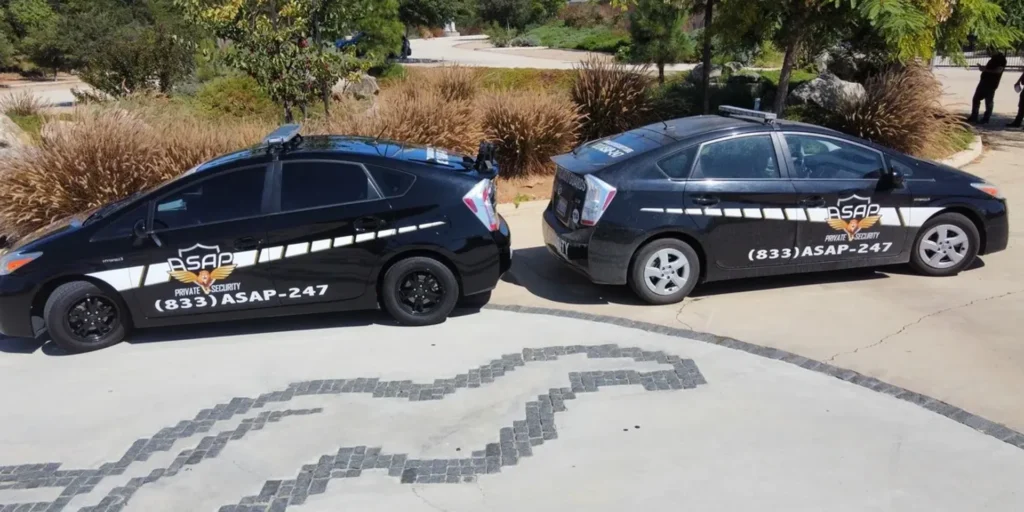
Mobile vehicle patrols are useful when one officer needs to cover a large campus or several nearby locations. Routes can be scheduled around known activity periods while still varying the timing of individual checks. That approach supports a visible, professional presence without treating every parking area as if it needs a permanent fixed post. ASAP describes mobile patrol operations that use GPS-tracked routes and photo-verified checkpoint visits with timestamps, creating a record that managers can review.
What should a parking patrol check?
Post orders should identify the conditions an officer is expected to observe and report. Depending on the site, a patrol may check for blocked access lanes, damaged gates. Unsecured exterior doors, unusual activity around parked vehicles, lighting concerns, abandoned property, or signs of trespassing. The officer should follow the property’s escalation instructions rather than improvising a response. If there is an active emergency or an immediate threat to life, building personnel should call 911 first. Private security personnel support site procedures and communication, but they do not replace emergency responders or law enforcement.
Parking oversight also benefits from clear communication with tenants and property staff. A report should identify the location, time, observed condition, action taken, and any photos or follow-up needed. GPS-enabled Daily Activity Reporting can help verify where scheduled checks occurred and preserve time-stamped operational records. This gives a facility manager something more useful than a general statement that the lot was patrolled.
How should perimeter checks fit the property?
Perimeter coverage should be designed during a site assessment. Map the boundaries, access points, blind spots, shared areas, and routes between buildings. For a multi-tenant property, clarify who receives notifications when a gate, door, vehicle, or exterior condition requires attention. The plan can then combine routine vehicle patrols with fixed coverage at higher-traffic entrances or during specific events.

Call (833) 272-7247 to review parking and perimeter coverage for your property.
For managers comparing mobile vehicle patrols with dedicated parking lot security guards, the right choice depends on geography, operating hours, tenant expectations, and documented risk. The goal is accountable coverage that fits the property, not a one-size-fits-all schedule.
What Belongs in an Office Security Incident Report?
A useful incident report gives the property team a clear record of what happened, what actions were taken, and what needs attention next. It should be factual, timely, and specific enough for a manager to review without relying on memory or informal conversations. Reports are not a substitute for emergency services. If there is an active threat or immediate danger, call 911 first, then follow the property’s escalation procedure.
- Record the basic facts. Note the date, time, exact location, people involved, type of incident, and how it was first observed or reported. Distinguish direct observations from statements made by witnesses. Include relevant conditions such as an open access point, damaged door, lighting issue, or unusual activity, but avoid speculation about motive or responsibility. A concise timeline is especially helpful when several guards, employees, tenants, or responding agencies were involved.
- Document notifications and immediate actions. Identify who received the initial report, when the property manager or designated contact was notified. And whether emergency services, law enforcement, building engineering, or a tenant representative was contacted. Describe actions taken to protect people and preserve normal operations, such as restricting access. Separating involved parties when safe, directing occupants away from an area, or arranging medical assistance. OSHA recommends that employees understand the reporting policy and that workplace violence claims be investigated and addressed promptly. See the OSHA workplace violence fact sheet for related guidance.
- Preserve and identify evidence. List available evidence without altering it. This may include photographs, video-surveillance timestamps, access-control records, visitor logs, damaged-property images, or witness contact information. Record who collected each item, when it was collected, where it was stored, and who received it. Follow the property’s privacy, retention, and chain-of-custody procedures. Do not publish sensitive names or images in a general tenant communication, and do not make a report more detailed by adding evidence that was not actually reviewed.
- Complete follow-up and corrective actions. Assign an owner and due date for each next step. Follow-up may include checking on affected employees, repairing a door or light, reviewing camera coverage, contacting a tenant, or scheduling a management review. California DIR guidance identifies reporting, emergency response, hazard correction, training, and post-incident investigation as elements that may belong in a covered Workplace Violence Prevention Plan. Review the California DIR workplace violence prevention guidance to confirm which requirements apply to your organization.
- Update the plan and close the record. Compare the incident with current post orders, access procedures, patrol routes, and tenant notification protocols. If the event exposed a gap, record the specific change, the person approving it, and how staff will be briefed. Close the report only after actions are verified, supporting evidence is secured, and the property contact has acknowledged the outcome. Consistent time-stamped reporting gives office managers a stronger basis for improving coverage and accountability over time.
How Do You Keep Tenants Informed Without Creating Alarm?
Tenant communication works best when it is planned, consistent, and tied to normal building operations. The goal is not to make every unusual observation feel like an emergency. It is to give tenants clear expectations about access, reporting, and response so they know what to do and whom to contact.
Start by agreeing on a communication framework with the landlord or property manager, tenant representatives, security personnel, and relevant public-safety contacts. OSHA recommends cooperation among landlords, lessees, local police, and other public-safety agencies to improve security in and around a worksite. That coordination can clarify who receives routine updates, who handles building-wide notices, and when an issue should be escalated. Read the OSHA workplace violence prevention guidance for additional planning considerations.
Use routine messages for routine procedures
Most tenant-facing communication should explain ordinary procedures before they are needed. Include visitor check-in expectations, badge or credential requirements, delivery instructions, parking or loading-area rules, after-hours entry, and the preferred method for reporting a concern. A short tenant orientation can also explain the role of an unarmed security officer in access control, visitor management, incident reporting, and visible deterrence. The language should be approachable and practical, not framed around worst-case scenarios.
Property teams can reinforce these expectations through onboarding materials, periodic email reminders, lobby signage, and brief meetings with tenant contacts. Keep the process consistent across suites whenever possible. CISA guidance emphasizes that access-control procedures should be developed and communicated consistently across a facility. Consistency reduces confusion for tenants and helps officers apply the same standard to employees, visitors, contractors, and deliveries.
Train for reporting, de-escalation, and escalation
Training should focus on observable actions. Tenants should know how to report a suspicious circumstance, disruptive behavior, a lost credential, or a policy concern without attempting to investigate it themselves. Site-specific training can address de-escalation and practical steps workers may take to protect themselves if de-escalation does not resolve the situation, as OSHA describes in its guidance.
California’s workplace violence requirements may apply differently depending on the employer and workplace. The California Department of Industrial Relations explains that covered employers may need a written Workplace Violence Prevention Plan addressing employee communication. Reporting, emergency response, training, hazard correction, and post-incident investigation. Review the California DIR workplace violence prevention resources with qualified compliance support rather than treating one template as universal.
.webp)
When an incident occurs, provide verified facts to the appropriate contacts, document what was reported, and avoid broadcasting speculation. Routine follow-up can explain what procedure was reviewed or changed without identifying private details. In an active emergency, tenants should call 911 first. Security personnel can support communication and coordination, but they do not replace emergency responders or law enforcement.
How Should After-Hours Coverage Be Planned?
After-hours planning should begin with the building’s actual operating pattern, not an automatic assumption that every Riverside office needs a full-time post. Document when employees, contractors, cleaners, and vendors arrive or leave, which entrances remain active. How access credentials are managed, and who is responsible for opening and locking the property. OSHA identifies late-night or early-morning work, along with working alone or in small groups, as factors that may increase risk for some workers. Use that guidance to examine your own site and establish practical check-in, escalation, and access procedures.
The plan should also account for quiet periods when a problem may go unnoticed. A guard at a primary entrance, scheduled patrols around parking and perimeter areas. Or a combination of both can give managers a documented presence without applying the same coverage model to every hour. ASAP structures scheduling around the property’s risk profile, operating hours, and coverage needs, with business-hours, after-hours, event-specific, and 24/7 options. A site assessment should determine which approach fits the building.
| Coverage model | Best fit | Planning considerations |
|---|---|---|
| Business-hours | Buildings with predictable daytime occupancy | Define lock-up duties, access rules, and escalation steps for incidents outside staffed hours. |
| Scheduled patrol | Properties needing periodic parking, perimeter, or exterior checks | Set checkpoint locations, vary routes when appropriate, and require time-stamped activity records and incident documentation. |
| 24/7 coverage | Sites with continuous occupancy, sensitive operations, or recurring after-hours activity | Coordinate post orders, relief coverage, live dispatch, client notifications, and emergency-service escalation. |
Scheduled patrols should be measurable rather than informal drive-bys. GPS-enabled Daily Activity Reporting can verify guard locations and create time-stamped operational records. For larger properties or multiple offices, GPS-tracked routes, randomized timing, and photo-verified checkpoint visits can help managers review whether the planned coverage occurred. Reports should note unusual activity, access concerns, lighting or door issues, and any notification made to management.
For a building that needs coordination at any hour, 24/7 security guard services include human dispatch coordination among guards, clients, and emergency services. Managers evaluating overnight staffing can also review overnight security guards in Riverside. The objective is a coverage plan that matches occupancy, exposure, and accountability requirements while keeping responsibilities clear for tenants, vendors, and the property team.
How Do You Choose a Riverside Office Security Plan?
Start with the building’s actual operating pattern, not a standard package. A plan for a single-tenant office with controlled reception hours may differ substantially from one for a multi-tenant property with several entrances. Shared parking, evening meetings, and vendors arriving before staff. The right approach to office building security in Riverside connects daily procedures to the property’s risk profile, operating hours, tenant expectations, and coverage requirements.
Begin with a site assessment
Ask the security provider to walk the property with the facility manager and document the details that will shape deployment. The assessment should review public and employee entrances, reception and visitor flow, loading or service access, parking areas, perimeter routes, lighting, tenant schedules, and after-hours activity. Include prior incident history when it is available, along with recurring concerns from tenants, employees, and building engineers.
This process turns general concerns into clear post orders. For example, a receptionist may need a defined visitor verification and escort procedure, while a parking area may need scheduled patrol checks and a documented escalation path. If the property has more than one building or a large perimeter, ask how routes, checkpoints, and coverage gaps will be managed. A plan should also identify who receives incident updates and how urgent matters are coordinated with emergency services. Guards support the property’s security operations, but they do not replace 911 or law enforcement during an active emergency.
Match coverage to the facility’s needs
Once the site requirements are documented, compare the proposed service model against the way the property operates. Trained unarmed officers may be appropriate for lobby presence, access control, visitor management, and incident reporting during business hours. Mobile vehicle patrols can add scheduled perimeter or parking checks for a large site or multiple locations. Business-hours, after-hours, event-specific, and 24/7 scheduling are distinct options, and the choice should follow the assessment rather than an assumed default.
Accountability should be part of the proposal. Ask how activity is recorded, how guard locations are verified, how incidents are escalated, and how managers receive reports. GPS-enabled Daily Activity Reporting can create time-stamped operational records, while a live dispatch team can coordinate communication among guards, clients, and emergency services. These details help you evaluate reliability without relying on broad promises.
Call (833) 272-7247 to request a tailored Riverside office security review.
Review Riverside security guard services for local coverage options, and see the corporate security services overview for broader business needs. Then request a custom office security consultation so the site assessment, schedule, responsibilities, and quote reflect your Riverside property.
Frequently Asked Questions
Do offices have security guards?
Many offices use unarmed security guards for visible presence, visitor management, access control, parking oversight, and incident reporting. The right schedule depends on the building’s layout, tenant activity, operating hours, and assessed risks.
How does a new Riverside office security plan get started?
Start with a site assessment that reviews entrances, lobby flow, parking areas, perimeter conditions, tenant needs, operating hours, and prior incidents. Those findings can inform post orders, patrol routes, reporting standards, and a schedule tailored to the property.
Can security personnel cover parking areas and building perimeters?
Yes. Mobile vehicle patrols can supplement an on-site officer by checking parking lots, access points, and other exterior areas. GPS tracking, randomized routes, photo verification, and time-stamped activity records help document completed patrols.
What should an office security incident report include?
A useful report records the date, time, location, people involved, observed facts, actions taken, notifications made, and any available photos or other evidence. Clear documentation supports follow-up and gives property managers a consistent record for internal review.
Can office security coverage continue after business hours?
Yes. Coverage can be scheduled for evenings, overnight periods, specific events, or 24/7 operations. A live dispatch center can coordinate guards, clients, and emergency services when an issue requires assessment or escalation.
Schedule a Riverside Office Security Consultation
A site-specific review can help align lobby procedures, patrol priorities, incident reporting, and after-hours coverage with your property’s daily operations. To discuss a practical plan for your facility, call (833) 272-7247 to request a tailored office security consultation with the ASAP Security Guards team.
