
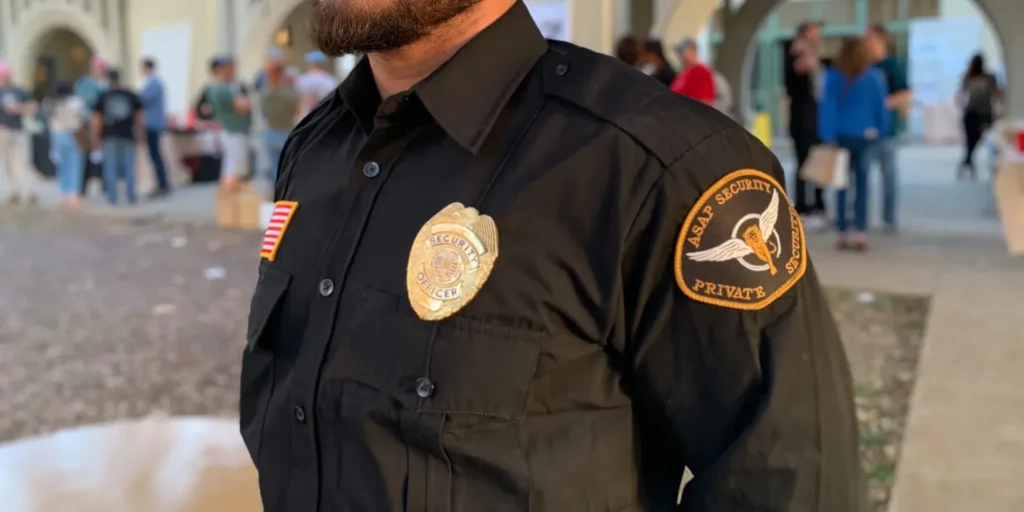
Choosing event security is not simply a decision between a visible uniform and a firearm. The right level of protection depends on the guest profile, likely threats, and the venue response plan.
Call (833) 272-7247 to discuss event security planning with ASAP Security Guards.
The best way to decide when to hire armed security for an event is to complete a documented risk assessment. Armed personnel may be appropriate when the assessment identifies a credible possibility of high-severity violence. Unarmed officers may be sufficient for access control, crowd management, and guest services. The protection plan should remain proportional to the assessed risk, not the event’s profile alone. CISA guidance emphasizes tailoring security to the venue, event type, and risk profile.
For Southern California organizers, that assessment should account for the venue’s layout, attendance, guest profile, access points, alcohol service, and coordination with local responders. Start by examining the conditions that change the risk calculation, then match staffing, training, and authority to the actual needs of the event.
When Should You Hire Armed Security for an Event?
Hire armed security when a documented event risk assessment identifies a credible possibility of a high-severity threat, such as armed violence. Trained armed personnel must also be proportionate to the risk. The decision should not be based on attendance alone. Review the venue, event type, guest profile, access conditions, prior incidents, crowd behavior, and current concerns before selecting a protection level.
The right question is not whether armed guards look more serious. It is whether the event’s identified risks require the deterrence and response capability that armed coverage can provide. The Cybersecurity and Infrastructure Security Agency advises tailoring security to the specific venue, event type, and risk profile. Its Mass Gathering Security Planning Tool supports scaling protection to the assessed risk.
Start with a documented risk assessment
Ask an experienced security provider to evaluate the event before recommending armed coverage. The assessment should consider the venue’s incident history, the type of gathering, expected crowd behavior. And how attendees, staff, performers, and vendors will enter and move through the property.
Armed coverage may be appropriate when the assessment identifies a credible threat of serious violence. A known security concern involving a guest or participant, or conditions that could make a critical incident especially difficult to contain. An open-access event may require a different protection plan from a closed, ticketed event because entry and perimeter control work differently.
Match the response to the risk
Armed personnel are not a substitute for a complete event plan. Unarmed guards may still be the appropriate choice for access control, guest services, observation, and crowd management when the assessment does not identify a high-severity threat. A blended team can place unarmed personnel in guest-facing roles while armed personnel cover defined protective responsibilities.
Document why the selected staffing model fits the assessment. Define each guard’s responsibilities. Coordinate the plan with venue management and first responders. The goal is a controlled, accountable plan that addresses the risks actually present at the event.
What Event Factors Raise the Need for Armed Coverage?
The need for armed coverage depends on the event’s combined risk profile, not on a single feature. A formal review should consider the people attending, the venue. How guests enter and move through the space, and the likelihood that a disturbance could become a serious threat. Federal event-planning resources recommend tailoring protection to the venue, event type, and assessed risk.
Guest profile and event visibility
Consider whether the event includes a public official, executive, celebrity, controversial speaker, public figure, or person who has received threats. A high-profile guest can change the risk picture even when the event is small. Review the guest’s arrival route, public schedule, and level of exposure.
Also consider the subject of the event. A politically sensitive program, contentious public meeting, or event connected to a recent dispute may need more deliberate perimeter control and response planning. Open venues and high-visibility gatherings can present different challenges from controlled, ticketed events.
Crowd size, density, and behavior
Attendance affects staffing, movement, emergency access, and the ability to identify a developing problem. Density matters as much as headcount. A smaller crowd packed into one entrance, hallway, or viewing area may create more pressure than a larger crowd spread across a managed site.
Alcohol service adds another planning consideration. Organizers should define who handles refusals, removals, medical concerns, and escalation. Crowd management remains essential even when armed personnel are present. Clear lanes, visible staff, and early intervention can prevent ordinary congestion from becoming a dangerous confrontation.
Venue history and access conditions
Review prior incidents at the venue, nearby activity, lighting, parking, service entrances, backstage areas, and perimeter gaps. Determine whether the site is open to the public or has controlled entry. Public parks, plazas, and outdoor areas often have more access points than a closed venue.
- Identify prior incidents, credible threats, and current concerns.
- Map entrances, exits, parking, loading areas, restricted zones, and emergency routes.
- Record how guests will be screened, credentialed, and redirected.
- Note where crowd density, alcohol service, or schedule changes could increase tension.
When several factors appear together, ask a qualified provider to document whether armed coverage, unarmed coverage, or a blended team is justified. Base the decision on the whole event rather than a single headline risk.
Armed vs Unarmed Event Security: Which Level Fits?
Armed security is not automatically better event security. The appropriate level depends on the threat profile, venue conditions, attendee experience, and response plan. Unarmed personnel often handle access control, crowd management, guest services, and early intervention. Armed personnel may be appropriate when a formal assessment identifies a credible possibility of a high-severity threat.
The protection level should scale with assessed risk. That approach helps organizers decide when to hire armed security for an event without allowing visible weapons to substitute for thoughtful planning. Review when to choose between armed vs unarmed security as part of the broader planning process.
| Consideration | Unarmed security | Armed security |
|---|---|---|
| Primary role | Manage entrances, credentials, lines, crowd movement, and guest concerns. | Provide an added protection and deterrence layer for serious, assessed threats. |
| Best fit | Events where order, visibility, access control, and guest service are the main needs. | Events with risk factors that justify a higher protection tier after documented assessment. |
| Attendee interaction | Frequent communication, de-escalation, wayfinding, and visible service. | Professional deterrence combined with calm communication and controlled intervention. |
| Planning priority | Screening, credential checks, crowd flow, and incident reporting. | Defined assignment, escalation, communication, and force protocols. |
Match the protection level to the objective
Unarmed personnel can prevent many problems before they become emergencies. They can identify unauthorized entry, redirect congested foot traffic, enforce venue rules, and address disputes while they are still manageable. Strong guest service matters because attendees are more likely to follow instructions from security professionals who are approachable, observant, and consistent.
Armed personnel add a visible deterrent and a response capability for critical incidents. A high-profile guest, controversial subject, open-access location, or documented threat may support armed coverage. None of those factors eliminates the need for access control, communication, guest-service coverage, or coordination with first responders.
Call (833) 272-7247 to review armed and unarmed event security options with ASAP Security Guards.
How to Plan Licensing, Compliance, and Communication
Once an event’s risk profile is understood, confirm that the security provider can deliver the assigned level of protection responsibly. This is an organizer’s due-diligence process, not a substitute for legal advice. Requirements can vary by assignment and jurisdiction, so verify current expectations with the appropriate authorities and venue representatives.
Ask for documentation showing that each guard has the appropriate credentials for the role. In California, confirm that personnel have applicable BSIS-approved training. Ask how the provider verifies ongoing qualifications for armed assignments. The company should also explain its screening process, including background checks and suitability reviews.
Verify the company behind the personnel
Review the provider’s insurance and bonding documentation. Confirm that coverage is appropriate for the venue, event format, and assigned duties. Ask for relevant experience with similar events, especially if the plan involves high-profile guests, alcohol service, open access, weapons screening, or an unfamiliar venue.
Training should extend beyond weapon handling. Armed personnel should demonstrate de-escalation, situational awareness, safe weapon retention, and disciplined decision-making. Those capabilities help guards distinguish between a developing conflict, a crowd-management issue, and a serious threat.
Put communication in writing before the event
Create a written plan that records the reason for the selected staffing and protection level. The duties assigned to armed and unarmed personnel, coverage zones, escalation procedures, and the person authorized to make operational changes. Documenting these decisions supports accountability and shows that staffing and force considerations were made deliberately.
Establish communication channels before doors open. Identify the event security lead, venue contact, emergency manager, and first-responder liaison. Confirm which radio channels or phone contacts each group will use, how an urgent message is escalated, and who can request law enforcement or medical assistance. Share the site map, access points, restricted areas, and emergency procedures with the people who need them.
Keep copies of credentials, insurance records, training confirmations, staffing decisions, contact assignments, and incident-reporting procedures with the event file. A clear paper trail gives organizers and venue partners a common operating picture.
Building the Event Security Plan and Timeline
A strong event security plan turns a general concern into specific responsibilities, locations, and communication steps. It should be tailored to the venue, event format, expected crowd, and assessed risk rather than copied from another production. Document the reasoning behind staffing and force decisions.
- Complete a site and event risk assessment. Walk the venue and surroundings, including entrances, exits, parking, service areas, backstage spaces, emergency routes, and crowd-concentration areas. Review event type, venue history, anticipated attendance, guest profile, alcohol service, and access conditions.
- Divide the venue into security zones. Assign public entry, perimeter, stage or VIP areas, parking, staff-only areas, and emergency routes. A zonal plan improves visibility and gives each team member a defined area of responsibility. Review professional event security protection for different event environments.
- Build the staffing and access-control plan. Scale staffing to attendance, venue size, crowd density, and assessed threat level. Document who controls each entry point, how credentials will be checked, where screening occurs, and how unauthorized access is handled.
- Coordinate the briefing and communications structure. Integrate the security plan into the broader emergency management plan. Establish supervisors, communication channels, emergency contacts, evacuation responsibilities, and a process for communicating with venue management and first responders.
- Run day-of dispatch and reporting. Hold a final briefing, confirm posts and access points, and have a supervisor track changes as conditions develop. Use standardized incident reports that record what happened, where and when it occurred, who responded, and what follow-up is required.
- Complete an after-action review. Review the plan with the organizer, venue, and security leadership after the event. Compare planned coverage with actual conditions, identify gaps, and record lessons for the next event.
This sequence gives decision-makers a documented basis for choosing the right level of protection and improving it over time.
What Should Organizers Ask a Security Company?
A strong security company should be able to explain its recommendations, not simply assign a number of guards. Ask questions that reveal how the team evaluates your venue, audience, schedule, access points, and potential disruptions. The goal is a plan that matches the event’s actual risk profile and can be adjusted as details change.
Experience, screening, and training
- What similar events have you supported? Ask about experience with your event type, venue layout, expected attendance, and audience profile.
- How do you screen and prepare assigned personnel? Ask whether background screening is completed for every guard, how credentials are verified, and what training applies to the assignment. For armed personnel, ask about de-escalation, situational awareness, weapon safety, and assigned duties.
Risk assessment and coverage plan
- How will you assess the event before recommending coverage? The company should ask about venue history, event format, crowd behavior, access control, alcohol service, high-profile guests, and open or restricted access.
- Where will personnel be positioned? Request a clear coverage plan for entrances, credential checkpoints, backstage or restricted areas, parking, high-density zones, and emergency access routes.
- How will the team coordinate with organizers and first responders? Clarify who leads on site, who can make operational decisions, which communication channels will be used, and how incidents will be escalated.
Reporting and plan updates
- What documentation will we receive? Ask for the written scope, post assignments, incident-reporting process, and supervisor contact information.
- How do you update the plan? Ask what happens if attendance, speakers, venue access, schedule, or threat information changes. Security plans should be reviewed and updated as conditions evolve.
For practical planning, review this guide to budgeting for event security guard hire without treating a general estimate as a substitute for an event-specific assessment.
Call (833) 272-7247 to discuss your event security questions and planning needs.
Frequently Asked Questions
When is armed security necessary for an event?
Armed coverage may be appropriate when a documented risk assessment identifies credible, high-severity threats, such as targeted violence, an armed attacker, or heightened risks involving a high-profile guest. The decision should reflect the venue, event type, crowd behavior, and access conditions, not a standard upgrade for every gathering.
Does a small or private event need security guards?
Attendance alone does not determine the answer. A small private event may still need coverage if it involves a controversial speaker, valuable property, alcohol service, an open-access location, or guests who may face elevated threats. Review the guest profile, site history, access points, and emergency plan before deciding.
What is the difference between armed and unarmed event security?
Unarmed personnel generally focus on access control, credential checks, crowd management, observation, and guest assistance. Armed personnel add a higher protection tier for serious threats and may provide a visible deterrent. Many events use both roles, assigning unarmed staff to routine guest-facing duties while reserving armed coverage for specifically assessed risks.
How should organizers verify an armed security company?
Ask for proof of appropriate state and local credentials, role-specific training, insurance, bonding, background screening, and experience with comparable events. Confirm that armed personnel understand de-escalation, situational awareness, and the venue’s emergency procedures, not only weapons handling. Document why the staffing and force level were selected.
Get Started With Event Security Planning
Every event has a different combination of venue conditions, attendance, access points, and potential risks. A focused conversation can help you evaluate whether armed coverage, unarmed personnel, or a coordinated combination fits your plan. Call (833) 272-7247 to discuss an event-specific risk assessment, coverage options, and practical planning support from ASAP Security Guards.
