
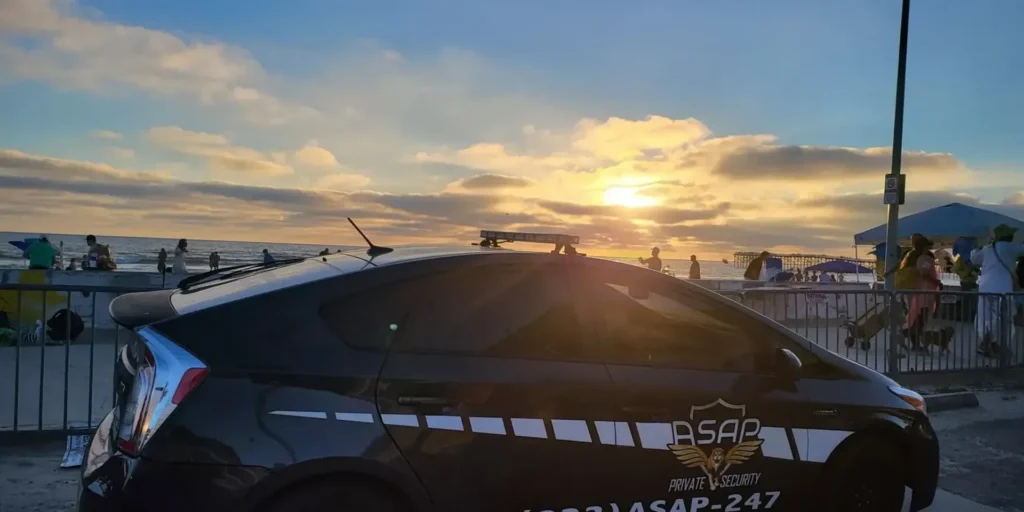
Large commercial properties, HOA communities, and multi-site portfolios can develop serious security gaps between buildings, parking areas, gates, loading zones, and shared amenities. A single employee, camera system, or stationary guard cannot watch every corner of an expansive site simultaneously, especially after hours when most intrusion attempts occur. A marked patrol vehicle helps close those gaps by creating a visible presence, checking multiple locations on a planned route, and documenting what happened during each visit.
Call (833) 272-7247 for a Riverside patrol coverage assessment.
For property owners and managers who want dependable coverage without stationing a full-time guard everywhere, vehicle patrols deliver a practical middle ground. They pair the deterrent value of a recognizable security presence with the reach to inspect areas that fixed posts cannot cover.
A vehicle security patrol in Riverside combines marked-vehicle deterrence, customized mobile routes, checkpoint logging, and responsive dispatch to help protect property after hours. GPS tracking and photo-documented activity reports give owners and managers clear proof that scheduled patrols occurred, while standing guards can provide a consistent on-site presence where needed.
The strongest plan matches patrol frequency and response expectations to the property’s layout, activity patterns, and risk points. That starts with understanding why a visible, accountable patrol presence can discourage unauthorized access and property damage in a Riverside commercial or residential setting.
Why Vehicle Security Patrol in Riverside Deters Crime
A marked patrol vehicle changes the way a property feels after dark. It signals that trained security personnel are actively watching access points, parking areas, buildings, and perimeter roads. That visible presence can discourage unauthorized access, theft, and vandalism before an incident develops. For commercial properties, apartment communities, and HOAs, the benefit is not simply having a vehicle on site. It is creating a consistent security presence across areas that may be too large for one stationary guard to cover.
In Riverside, mobile patrols can address recurring issues such as unauthorized parking, loitering, after-hours entry, and damage to common areas. The presence of a marked vehicle makes security activity easy for residents, employees, visitors, and potential offenders to recognize. Regular patrol attention can also help identify open gates, damaged fencing, suspicious activity, or other conditions that increase risk. By addressing those conditions early, a patrol team supports property managers who need to protect assets and maintain orderly operations.
Marked vehicles provide a clear, lawful security signal
Vehicle markings matter because they distinguish a private security patrol from an unmarked private vehicle. California Vehicle Code Section 25279 requires private security patrol vehicles operating on highways to display the words “PRIVATE SECURITY” or “SECURITY PATROL” on the rear and both sides. The lettering must be legible from at least 50 feet. California Vehicle Code Section 25279 provides the applicable state requirement.
That recognizable presentation supports deterrence without suggesting that the vehicle belongs to a government law enforcement agency. It tells people what the patrol is there to do: observe, document, report, and help protect the property. On private roads and larger sites, the marked vehicle also gives residents and staff a visible point of contact when they need to report a concern.
Coverage continues when the property is quiet
Many security problems occur when offices close, residents settle in for the night, or onsite personnel leave. After-hours patrols help protect against intrusion during those lower-visibility periods. A guard can check entrances, parking areas, perimeter lines, and other vulnerable locations while moving through the property instead of remaining fixed at one post. This approach is especially useful for multi-building communities and commercial sites with several access points.
For a locally planned security program, review security guard services in Riverside and consider how vehicle patrols can complement your existing access controls, lighting, cameras, and onsite personnel. The strongest deterrence comes from a visible patrol presence paired with clear procedures for documenting and escalating what guards observe.
How Mobile Patrol Routes Are Built for Riverside Properties
A reliable patrol route is not a simple drive around the perimeter. It is a planned security measure built around the property’s layout, operating hours, access points, and changing risks. For commercial properties, HOAs, and multi-site operators, the goal is to make every visit purposeful while avoiding a schedule that becomes easy to anticipate.
ASAP Security uses GPS-tracked routes with randomized timing to help prevent predictability. GPS tracking also creates concrete proof that assigned routes were carried out as planned, giving property managers a clear service record instead of relying only on paper logs. The route design process generally follows four steps:
- Complete a site audit. The security team reviews the property’s entrances, exits, parking areas, loading zones, blind spots, perimeter lines, and areas where incidents or unauthorized activity are more likely. The audit also considers how the property is used at different times, such as after business hours, during tenant turnover, or when HOA amenities close.
- Map checkpoints and priority zones. Key locations are converted into practical patrol checkpoints. These may include gates, garages, rear access points, isolated structures, equipment areas, and common spaces. Each checkpoint gives the officer a specific observation point and gives the client a consistent basis for reviewing patrol activity.
- Set a randomized schedule. Patrol frequency and timing are matched to the property’s risk profile, then varied within the approved service plan. Randomized timing helps ensure that a patrol does not become a predictable event that unauthorized individuals can simply work around. GPS tracking records the route and supports proof of service.
- Adjust the route as conditions change. A route should evolve when recent incident reports, crime trends, tenant concerns, or property changes identify a new priority. Mobile security patrol routes can be adjusted dynamically based on crime trends in a specific Riverside neighborhood. This keeps coverage relevant instead of preserving an outdated pattern.
This disciplined process helps turn vehicle security patrol in Riverside into measurable, adaptable coverage. For properties that need broader coordination, security patrol services can also be integrated with other guard and dispatch resources.
Checkpoint Logging and Real-Time Accountability
A patrol is only as useful as the evidence it produces. Paper logs can show that a guard wrote something down, but they do not always establish when a checkpoint was reached. What the guard observed, or whether an issue was reported promptly. Daily Activity Reporting, or DAR, creates a more complete record of each patrol.
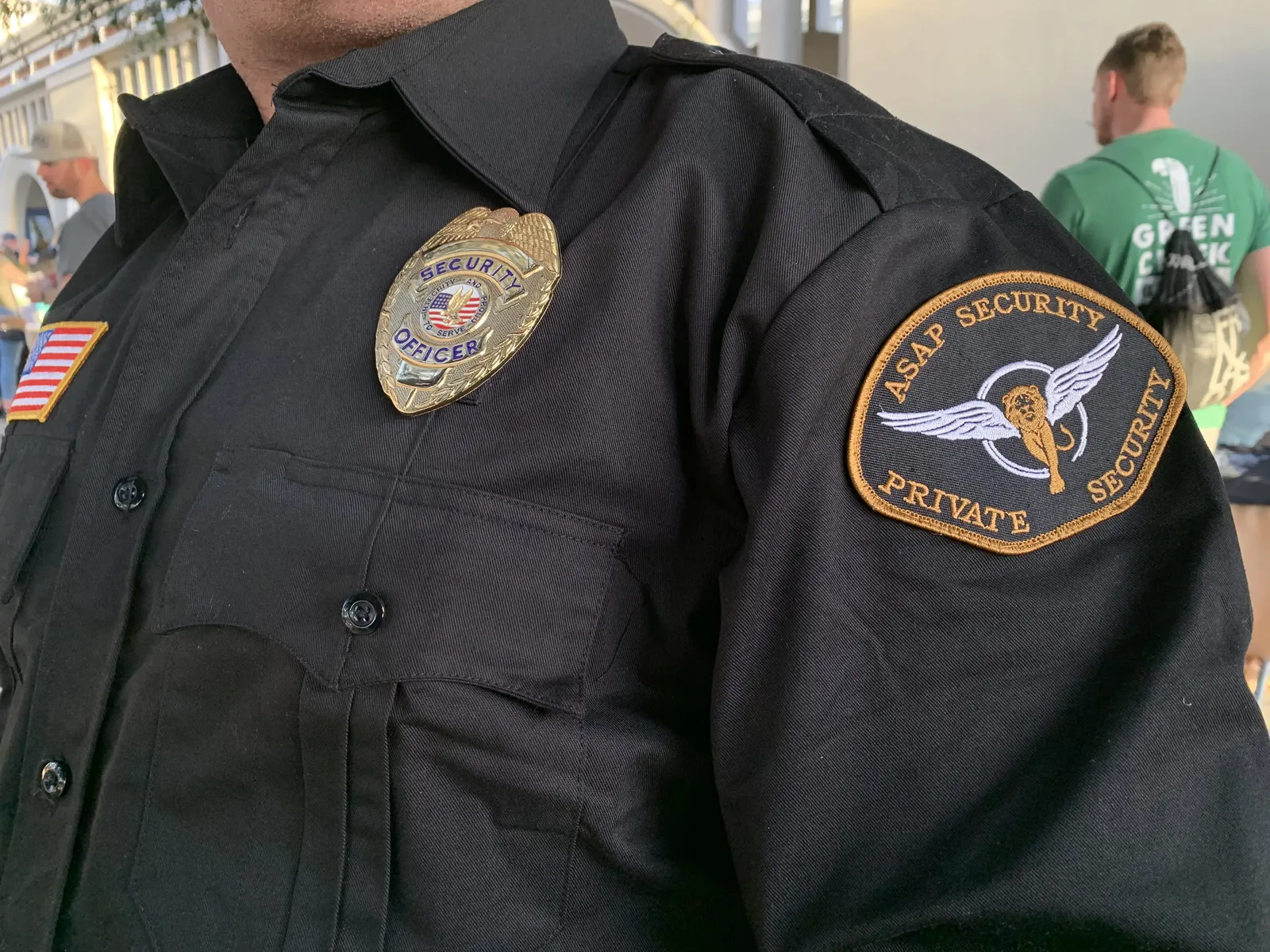
With DAR, mobile patrol checkpoints are photo-verified and time-stamped. That documentation gives property managers a practical audit trail for routine inspections, unusual activity, and follow-up actions. It also makes service easier to review. Instead of relying on a handwritten entry that may be vague or difficult to interpret. Managers can see when a checkpoint was completed and what the guard documented at the location.
What DAR documents during a patrol
A well-designed report connects the checkpoint to the condition of the property at that moment. During a vehicle security patrol in Riverside, guards can inspect parking areas, building perimeters, gates, loading zones, and other agreed locations. They are trained to identify conditions that may create safety or security problems, such as unlit areas, broken locks, unsecured access points, or other visible hazards.
These observations matter even when no crime has occurred. A failed light or damaged lock can become an opportunity for trespassing, theft, or property damage. Documenting the condition gives the property team a clearer basis for maintenance, corrective action, and later comparison. It also helps establish whether a recurring issue has been addressed.
From observation to immediate communication
Reporting should not wait until the end of a shift when an incident requires attention. Security vehicles are equipped with communication technology so guards can report directly to dispatch as soon as they identify a concern. That connection supports transparent, real-time reporting and allows the dispatch center to coordinate the next step. Whether that means notifying a designated contact, requesting additional support, or recording the issue for follow-up.
For commercial properties, HOAs, and multi-site operators, the result is accountability that extends beyond a visible patrol vehicle. The DAR record shows what was checked, when it was checked, and what the guard found. It gives decision-makers useful information without replacing professional judgment, and it provides a disciplined record for evaluating coverage over time. Learn more about security patrol services and how documented patrol activity can support a broader security plan.
Vehicle Patrol vs. Standing Guards: Which Fits Your Property
The right security model depends on how your property is laid out, where risk occurs, and how consistently you need a guard in one visible location. A standing guard offers continuous presence at a designated post, while a mobile patrol officer can inspect multiple areas during scheduled visits. For Riverside HOAs, commercial properties, and multi-site portfolios, the decision is often about matching coverage to the property rather than choosing one approach for every site.
| Criterion | Mobile vehicle patrol | On-site standing guards |
|---|---|---|
| Coverage area | Moves across parking areas, buildings, gates, amenities, and multiple properties. Mobile patrols cover more ground than a single stationary guard and are often preferred for large properties such as HOAs. | Provides continuous coverage at one assigned entrance, lobby, gatehouse, post, or other high-priority location. |
| Deterrence | A marked patrol vehicle creates a visible security presence while officers inspect changing conditions across the site. | A consistent, highly visible guard presence can control access, observe activity, and engage with visitors or residents at the assigned post. |
| Cost profile | Provides a cost-effective alternative to continuous on-site security for properties that need recurring checks without a full-time post. | Typically requires continuous staffing at the post, making it better suited to locations where uninterrupted human coverage is essential. |
| Best for | Large HOAs, distributed commercial sites, parking areas, multi-site portfolios, and properties needing flexible inspection frequency. | Busy entrances, sensitive facilities, gate operations, visitor screening, and sites that need an officer present throughout operating hours. |
When a combined approach makes more sense
Many Riverside properties benefit from using both models. A standing guard can manage a gatehouse or primary entrance while a patrol vehicle checks distant buildings, parking areas, pools, or perimeter roads. This approach extends visible coverage without requiring a standing post at every location. According to the company’s service guidance, mobile patrols can be combined with stationary standing guards for comprehensive multi-site coverage managed through a 24/7 live dispatch center.
Property managers should also compare service frequency, post hours, response expectations, and reporting requirements before evaluating price alone. For a deeper look at the cost of vehicle patrol in Riverside, review the factors that shape a patrol plan. The goal is a practical deployment that puts continuous staffing where it matters most and uses mobile coverage to close the gaps around it.
Patrol Response Times and Emergency Coverage in Riverside
Response time matters when an alarm, access issue, or property concern develops after normal business hours. A vehicle security patrol in Riverside gives property managers a mobile resource that can move between buildings. Parking areas, gates, and other priority locations instead of relying on a fixed post alone. Standard response in Riverside suburban and urban areas is typically 30 to 45 minutes, with expedited deployment available for emergency incidents.
That timeline is supported by planning before an incident occurs. Patrol routes can be organized around the property’s layout, known access points, and areas that require more frequent visibility. GPS-tracked routes help confirm that scheduled coverage was completed, while route timing can be varied to avoid creating a predictable pattern. When conditions change, dispatch can redirect coverage toward a location with a recent alarm, reported issue, or elevated risk.
How 24/7 dispatch supports faster coordination
A live dispatch center provides a continuous point of contact for guards and clients. Security vehicles should have communication technology that allows the officer to report an incident immediately and receive direction from dispatch. This reduces the delay that can occur when a property manager must locate the right contact or coordinate several sites independently.
Rapid response to alarms is one of the primary benefits of adding mobile patrols to a commercial security plan. Dispatch can communicate the alarm details, direct the nearest available patrol resource, and coordinate with on-site personnel when standing guards are also present. The officer can assess the visible conditions, document what was observed, and report the next action through the established chain of communication.
When expedited deployment applies
Expedited deployment is intended for emergency incidents rather than routine patrol requests. Examples may include an active alarm, suspected intrusion, serious property damage, or an immediate safety concern. Response speed still depends on the incident details, patrol availability, site access, and conditions on the road. A professional plan defines these expectations in advance, including who receives alerts, which areas receive priority, and when emergency services should be contacted.
For Riverside commercial properties and HOAs, this combination of planned routes, live dispatch. And clear escalation procedures creates dependable coverage without pretending that every call has the same urgency.
Pairing Vehicle Patrols with Standing Guards for Multi-Site Coverage
Multi-site properties rarely have the same security needs at every location. One site may need a visible guard at a main entrance, while another needs regular checks around parking areas, loading zones, or perimeter roads. Combining standing guards with vehicle patrols creates an integrated security solution for property managers overseeing several communities, commercial buildings, or facilities.
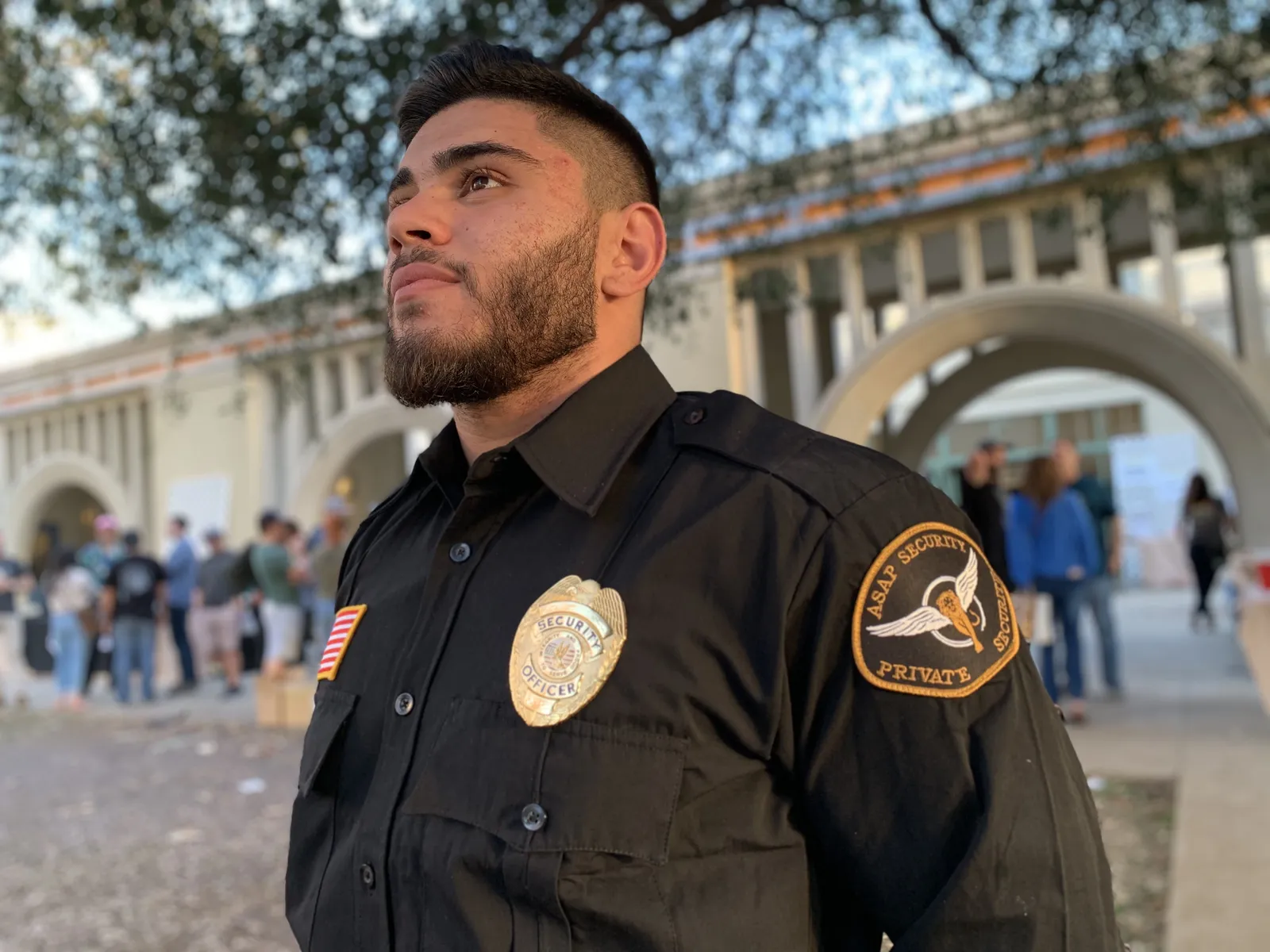
A standing guard provides a consistent presence where access control and personal interaction matter most. The officer can monitor an entrance, verify visitors, enforce site procedures, and coordinate with tenants or residents. A patrol officer extends coverage beyond that fixed post. Marked vehicle checks can move between buildings and locations, helping identify unusual activity, property damage. Unauthorized parking, or other concerns that may be missed when attention stays in one place. The two roles support each other rather than compete.
Consistent protocols across every location
For multi-site operators, consistency is a risk-control issue. When access control requirements, incident procedures, and reporting standards vary from one property to the next, gaps become harder to identify. A coordinated patrol and standing-guard plan helps keep those protocols consistent. It also gives property managers a clearer way to document whether required checks and responses were completed, which can help mitigate liability.
That coordination is supported by 24/7 live dispatch familiar with Southern California geography. Dispatch can direct communication between the standing guard, mobile patrol, and management team while maintaining visibility across the service area. For a closer look at the broader role of a vehicle security patrol, property managers can review the related service guide.
Adjust coverage as risk changes
An integrated plan should not remain fixed when the property changes. Patrol frequency can be customized around seasonal needs, construction, special events, recent incidents, or other periods of heightened risk. An HOA, for example, may schedule checks around pools, amenity areas, and gated access points, where resident activity and community-rule concerns can fluctuate. A commercial operator may increase patrols at locations with recurring after-hours issues while retaining a standing guard at the primary access point.
The result is coverage that matches the property instead of applying one staffing model everywhere. Standing guards protect critical points, while mobile teams add reach, flexibility, and an active security presence across the full portfolio.
How to Choose a Vehicle Security Patrol Service in Riverside
The right provider should understand more than patrol routes and marked vehicles. Riverside properties have different operating patterns, access points, tenant concerns, and neighborhood conditions. Look for a team whose guards are familiar with local geography and community-specific security needs, so patrol plans reflect the property instead of relying on a generic schedule.
Start by asking how the company defines coverage. A professional patrol service should offer a comprehensive approach, not just a visible vehicle presence. That may include scheduled and randomized checks, alarm response, access-point observation, communication with dispatch, and clear procedures for documenting incidents. For HOAs, the plan may also address parking, gates, pools, and other amenities. For commercial sites, it may focus on loading areas, vacant spaces, employee lots, and after-hours access.
Questions to Ask During the Selection Process
- How is local coverage planned? Ask whether supervisors review the property’s layout, surrounding activity, risk history, and priority locations before assigning routes. A provider should be able to explain how coverage can change when conditions or incident patterns change.
- How do you verify each patrol? GPS tracking, time-stamped checkpoint records, and photo verification give managers concrete proof that required areas were visited. They also create a usable record when a property issue needs follow-up.
- How are issues reported? Request a sample Daily Activity Report or incident report. Documentation should identify what the guard observed, when it occurred, what action was taken, and who received the information. Strong reporting helps management address recurring lighting, access, parking, or maintenance problems.
- Are the company and guards properly licensed? Confirm current California licensing, insurance, training standards, and supervisor availability. Ask how the provider handles relief coverage and quality control when an assigned guard is unavailable.
- Who answers after hours? A live communication process matters when a guard sees a problem or a manager needs an update. Clarify how patrol officers contact dispatch, how urgent events are escalated, and how property managers receive reports.
Cost should be evaluated alongside accountability and scope. Reviewing a guide to the cost of vehicle patrol in Riverside can help managers compare frequency, coverage areas, reporting, and response expectations rather than choosing on an hourly figure alone. The best fit is a provider that can explain what the patrol accomplishes, document that work, and adjust the program as the property’s needs change.
Frequently Asked Questions
What is a security patrol vehicle?
A security patrol vehicle is a marked vehicle used by trained security personnel to monitor and protect a defined property through mobile surveillance. Guards can inspect parking areas, access points, buildings, and other priority locations while documenting conditions for property management.
Can security guards search your vehicle?
Private security officers generally cannot search a vehicle without the driver’s consent or a property-based condition of entry. They can enforce clearly posted site rules, observe activity, report suspected violations, and contact law enforcement when circumstances warrant. Property owners should define search and access procedures in writing.
What services are included in Riverside vehicle security patrols?
Services can include marked-vehicle patrols, site inspections, checkpoint logging, documentation of hazards or property issues, and communication with a live dispatch center. GPS tracking and photo-verified, time-stamped checkpoints provide a practical audit trail for commercial properties, HOAs, and multi-site operators.
How do vehicle patrol response times work in Riverside?
Response depends on the incident, location, route, and available units. ASAP Security identifies a standard response of approximately 30 to 45 minutes for Riverside suburban and urban areas, with expedited deployment available for emergency incidents. Confirm the response plan, alarm procedures, and escalation contacts during onboarding.
How much does vehicle security patrol in Riverside cost?
Pricing depends on patrol frequency, the number of sites and checkpoints, coverage hours, property size, and the security risks being addressed. A provider should review the property and recommend a patrol schedule that fits the coverage goal instead of quoting a one-size-fits-all rate.
Schedule a Vehicle Security Patrol for Your Riverside Property
Riverside commercial properties, HOAs, and multi-site portfolios face different risks, so the right plan should match your layout, operating hours, and coverage needs. A tailored vehicle security patrol in Riverside can add marked-vehicle deterrence, GPS-tracked routes, photo-documented checkpoints, and responsive dispatch to your existing security program.
Call (833) 272-7247 to schedule a free security assessment for your Riverside property.
Tell our team about your property and coverage concerns, and we will recommend a patrol schedule that fits your site and your budget. Get the guidance you need to protect your assets, reduce risk, and keep your community secure.
