
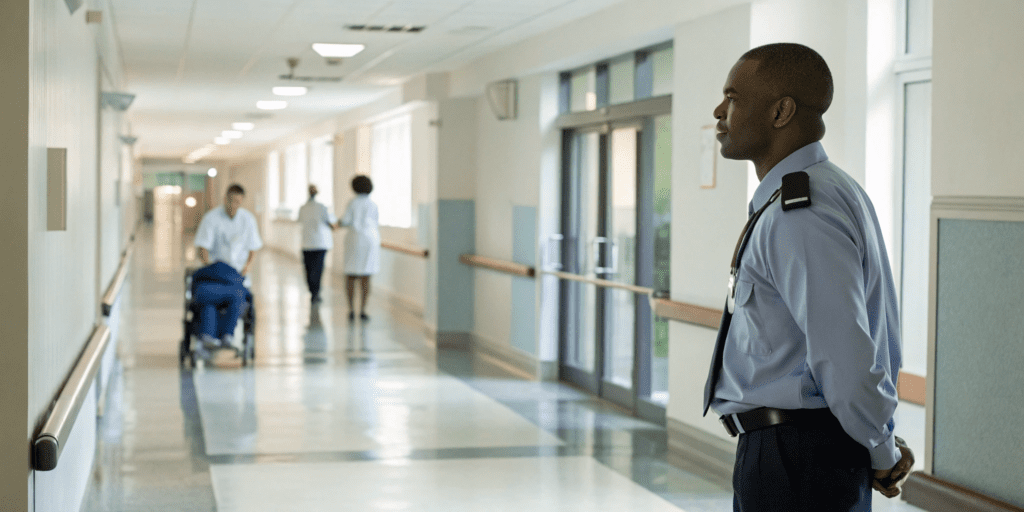
Forget the stoic guard you see in movies, standing watch by a door. The true security hospital meaning is about something much deeper: prevention. It’s about creating a calm, safe environment where healing can happen without interruption. Great hospital security is a blend of vigilance, communication, and compassion. These professionals are a critical part of the care team, ensuring hospital staff security and de-escalating issues before they start. Their quiet, constant work allows doctors and nurses to focus on what matters most: their patients.
Key Takeaways
- Security is Part of Patient Care: A hospital guard’s role is deeply integrated with the patient experience. Their ability to de-escalate tense situations with empathy and professionalism directly contributes to a safe and calm healing environment for everyone.
- Specialized Skills are Essential: Basic security training isn’t enough for a hospital. Guards need specific skills in crisis intervention, CPR, and hospital-specific emergency codes to effectively handle the unique challenges of a healthcare setting.
- A Proactive Presence Prevents Problems: The best hospital security doesn’t just react to incidents; it prevents them. A visible, professional team deters potential issues and maintains order, allowing medical staff to focus entirely on patient care.
What Are the Roles and Responsibilities of Hospital Security?
When you think of a hospital, you probably picture doctors and nurses. But there’s another team working around the clock to keep things running smoothly: the security guards. Their role goes far beyond simply watching a door. In a high-stress environment where emotions can run high, a hospital security guard is a unique blend of first responder, customer service agent, and safety expert. They are trained to handle the specific challenges of a healthcare setting, ensuring the facility remains a safe place for healing. From managing access points to responding to emergencies, their duties are critical to the hospital’s daily operations.
Your Top Priority: Patient and Visitor Safety
A hospital security guard’s primary responsibility is to create a secure environment for everyone who walks through the doors. This means protecting vulnerable patients, their visiting families, and the dedicated medical staff. Guards act as a visible deterrent, discouraging disruptive or criminal behavior simply by their professional presence. They are also trained in de-escalation techniques to calmly manage tense situations, whether it’s a distraught family member or an agitated patient. By patrolling the premises and being a friendly, approachable resource for directions or assistance, they help maintain a sense of order and calm, allowing medical professionals to focus on providing care.
Managing Who Comes and Goes
Hospitals are busy places with a constant flow of people, but not everyone should have access to every area. Security guards are essential for managing this flow. They monitor entrances and exits, manage visitor check-in systems, and ensure that only authorized personnel can enter sensitive areas like maternity wards, pharmacies, or surgical suites. A key part of their job involves using surveillance technology to keep an eye on the entire facility. This level of 24/7 security is crucial for preventing unauthorized access, protecting patient privacy, and ensuring that the hospital’s operations are not compromised by outside threats.
How They Respond When It Matters Most
When an alarm sounds or a crisis occurs, hospital security guards are often the first on the scene. They are trained to respond swiftly and effectively to a wide range of emergencies, from medical alerts and fire alarms to active threats. A critical part of their role is to coordinate with other emergency services. They clear pathways for paramedics, guide law enforcement to the correct location, and help manage evacuations when necessary. This quick, decisive action is vital for containing threats and ensuring a rapid response from medical or police personnel, minimizing harm and restoring safety as quickly as possible.
Guarding Hospital Property and Preventing Theft
Hospitals are filled with valuable and essential assets, including expensive medical equipment, controlled medications, and the personal belongings of patients and staff. These items can be targets for theft, which can disrupt patient care and lead to significant financial loss. Security guards protect these assets through regular mobile security patrols of the facility, especially in high-risk areas like pharmacies and storage rooms. They monitor for suspicious activity and investigate any potential security breaches. By securing the hospital’s physical assets, they ensure that doctors and nurses have the tools and resources they need to save lives.
Investigating Thefts and Other Incidents
Even with the best preventative measures, incidents still happen. When a theft or another security breach occurs, the security team’s role immediately shifts to investigation. This involves more than just filing a report. Guards are trained to investigate potential security breaches by carefully reviewing surveillance footage, speaking with witnesses, and documenting every detail of the event. This meticulous work is crucial for identifying what happened, who was involved, and how to prevent it from happening again. Whether it’s a case of stolen personal items or a more serious threat, their ability to conduct a thorough and professional initial investigation provides critical information for hospital administration and law enforcement, ensuring accountability and helping to reinforce security protocols for the future.
What Does It Take to Become a Hospital Security Guard?
Becoming a hospital security guard is a demanding yet rewarding career path that requires a unique combination of training, skill, and character. It’s about much more than just standing watch; it’s about becoming an integral part of a healthcare team dedicated to creating a safe and healing environment. If you’re considering this profession, or if you’re a hospital administrator looking to hire the right people, it’s crucial to understand the qualifications that separate a good guard from a great one. Here’s a look at the foundational requirements for the role.
What Education and Certifications Do You Need?
The journey typically begins with a high school diploma or GED, which serves as the educational baseline for most security positions. While a college degree isn’t usually required to get started, pursuing studies in fields like criminology or law enforcement can open doors to leadership roles and promotions down the line. Beyond formal education, every state has its own licensing requirements for security officers, which often involve specific training courses and passing an exam. These certifications ensure that every guard has the foundational knowledge needed to perform their duties effectively and legally, which is the first step in building a professional security career.
More Than Strength: Key People Skills
In a hospital, technical skills are only half the equation. The most effective security guards possess a strong set of soft skills tailored to the sensitive nature of a healthcare environment. Empathy is paramount—the ability to understand and share the feelings of patients and their families, who are often experiencing stress and anxiety. Clear communication and a calm, composed demeanor are critical for de-escalating tense situations before they escalate. Guards must also exercise discretion and professionalism at all times, respecting patient privacy and acting as a reassuring presence. These interpersonal abilities are what allow an officer to manage difficult interactions with compassion and authority.
Meeting the Physical and Health Requirements
A hospital security guard’s role can be physically demanding, requiring a solid level of fitness and health. The job often involves long hours on your feet, extensive patrols covering large hospital campuses, and the ability to respond to emergencies at a moment’s notice. This could mean anything from rushing to a different floor to, in rare cases, physically restraining an individual to prevent harm to themselves or others. For this reason, agencies look for candidates who are physically capable of handling the job’s rigors. Maintaining good health and stamina isn’t just a suggestion; it’s a core requirement for ensuring an officer can effectively protect the hospital community.
Age and Background Requirements
To become a hospital security guard, you generally need to be at least 18 or 21 years old, depending on state regulations and whether the position is armed. A high school diploma or GED is the standard educational requirement. Beyond these basics, a comprehensive background check is absolutely essential. Because guards have access to sensitive areas and are entrusted with the safety of vulnerable people, a clean record is non-negotiable. Any history of felonies or relevant misdemeanors will typically disqualify a candidate. Professional security firms understand that trust is the foundation of safety, which is why they adhere to strict state licensing requirements and vetting processes to ensure every officer is reliable and trustworthy.
Physical Fitness Standards
The role of a hospital security guard is far from sedentary and can be physically demanding. Officers spend long hours on their feet, conduct extensive patrols across large medical campuses, and must be able to respond to emergencies at a moment’s notice. This requires a solid level of fitness and health to handle the job’s rigors, which may include rushing to different floors or, in rare instances, physically restraining individuals to prevent harm. An officer’s physical capability is directly tied to their effectiveness in a crisis. Maintaining stamina and strength is crucial for staying alert and prepared throughout a shift, ensuring they can always provide an immediate response when it matters most.
What to Expect from the Screening Process
Trust is the cornerstone of hospital security, which is why every candidate undergoes a comprehensive screening process. This isn’t just a formality; it’s a critical step to ensure the safety of vulnerable patients and staff. The process includes a thorough background check that reviews criminal history and verifies personal information. A drug test is also standard procedure. Given the healthcare setting, candidates may also need to be up-to-date on specific medical vaccinations to protect the hospital’s population from potential health risks. This rigorous vetting ensures that only the most reliable and trustworthy individuals are tasked with the immense responsibility of securing a healthcare facility.
What Challenges Do Hospital Security Guards Face?
Working security in a hospital setting comes with a unique set of challenges that demand more than just a physical presence. Guards operate at the intersection of public safety and personal crisis, requiring a deep well of patience, empathy, and specialized skill. They aren’t just protecting a building; they are protecting people during some of the most stressful moments of their lives. This environment requires a thoughtful approach to security that is both effective and compassionate.
Handling High-Stress and Emotional Situations
Hospitals are inherently stressful environments. Patients are often in pain or anxious, and their families are under immense emotional strain. A key challenge for security guards is managing individuals who become aggressive or highly distressed. This isn’t about confrontation; it’s about de-escalation. Guards must remain calm and composed, even when faced with anger or fear, to address the situation without making it worse. It requires a high level of emotional intelligence and specialized training to recognize triggers and respond with empathy. The goal is always to ensure the safety of the individual, staff, and other patients, turning a volatile moment into a managed one.
Dealing with Unauthorized Visitors and Disputes
A hospital needs to be accessible, but not to everyone at all times. Guards are the first line of defense against unauthorized access, whether it’s someone trying to enter a restricted area or a visitor who has overstayed their welcome. They also frequently step into tense family disputes or deal with individuals under the influence. Handling these situations requires a delicate balance of assertiveness and compassion. A professional guard knows how to enforce rules firmly while respecting the difficult circumstances people may be facing. This is where experienced private security guards with training in conflict resolution become invaluable, ensuring disputes don’t disrupt the entire facility.
Supporting Patients in Mental Health Crises
One of the most delicate and critical challenges in a hospital is supporting patients experiencing a mental health crisis. This is where a security guard’s role transforms from enforcer to a key part of the care team. It requires a profound level of empathy and specialized training to navigate these situations with the care they deserve. Security professionals are often the first to interact with patients in the emergency room who are struggling, and their ability to respond with compassion can set the tone for the patient’s entire experience. Their primary goal is to ensure the safety of the patient, the medical staff, and others in the vicinity, all while preserving the patient’s dignity.
The Scope of Security’s Role in Mental Health Care
When a patient arrives at the emergency department with mental health concerns, the security team’s involvement is often immediate and multifaceted. Their responsibilities extend far beyond just observation. According to one study, their main duties include keeping both patients and staff safe, managing patients who may try to leave against medical advice, and handling sensitive legal matters. This can involve tasks like securing illegal substances found on a patient or carefully documenting personal belongings. They become a crucial support system for the clinical team, allowing doctors and nurses to focus on medical treatment while security manages the safety and procedural aspects of care.
De-escalation as a Primary Tool
The most valuable skill a hospital security guard can possess in a mental health crisis is not physical strength, but the ability to de-escalate. A calm and reassuring presence can prevent a volatile situation from spiraling. Security teams are a vital part of maintaining a safe environment for everyone, and their role is not limited to responding to aggression. They often assist with patient transportation and help with necessary paperwork, contributing to a smoother process for a patient in distress. By using communication and empathy as their primary tools, they help create a space where patients feel heard and respected, which is a fundamental part of effective care.
Handling Legal and Procedural Duties
While de-escalation is the goal, there are times when situations intensify, often due to a patient’s disagreement with their care plan or an involuntary admission. Research shows that physical aggression is the most common reason for security involvement in mental health cases. In these moments, guards must act decisively and professionally, following strict protocols to ensure everyone’s safety. Their training equips them to handle these encounters lawfully and with the minimum force necessary. This procedural expertise ensures that the rights of the patient are protected while the security of the hospital environment is maintained, providing a reliable framework for the clinical team to operate within.
Identifying and Mitigating Unique Hospital Threats
Hospitals face a unique spectrum of security risks that you won’t find in most other environments. From the vulnerability of newborns to the presence of controlled substances, the potential threats are complex and require a specialized security approach. A proactive security team is trained to identify and mitigate these specific dangers before they can cause harm. This involves more than just patrolling hallways; it requires a deep understanding of hospital operations and the ability to spot subtle signs of trouble. A well-trained team acts as the hospital’s immune system, constantly working to protect it from internal and external threats.
Preventing Infant Abductions
There is no threat more terrifying in a hospital than the abduction of an infant. While rare, it’s a possibility that security teams must always be prepared for. This requires extreme vigilance, particularly in maternity and neonatal units. Guards are trained to spot suspicious individuals, even those who may be disguised as hospital staff or visitors. They learn to recognize behaviors that are out of the ordinary, such as someone asking too many questions about procedures or carrying an oversized bag. By maintaining strict access control and a constant, observant presence, security officers provide a critical layer of protection for the hospital’s most vulnerable patients.
Spotting Intruders Disguised as Staff
Hospitals are busy places, and it can be easy for an intruder to try and blend in by wearing scrubs or a white coat. This is a serious threat, as someone posing as a staff member could gain access to sensitive areas, patient information, or controlled medications. Professional security guards are trained to address these specific challenges. They learn to recognize official hospital identification and are skilled at politely but firmly questioning anyone who seems out of place. This is where the expertise of a dedicated corporate security team becomes essential, as they implement and enforce protocols that ensure only authorized personnel have access to restricted zones.
Addressing Patient-on-Patient Violence
In a setting where patients are dealing with illness, pain, and emotional distress, conflicts can sometimes arise between them. Violence can be triggered when patients disagree with their care plan or feel a loss of control over their situation. Security guards must be prepared to intervene swiftly and safely to protect everyone involved. Their role is to separate the individuals, de-escalate the tension, and ensure that the conflict doesn’t disrupt the care of other patients. This requires not only physical readiness but also the ability to act as a neutral mediator, resolving the dispute with professionalism and ensuring the continued safety of the healing environment.
How to Balance Safety with Compassion
The primary mission of a hospital is healing, and security measures must support, not hinder, that mission. This is a constant balancing act. A security presence needs to be visible enough to deter threats but subtle enough not to create an intimidating or prison-like atmosphere for patients and their families. Guards protect people during their most vulnerable moments, and their actions must align with the hospital’s commitment to patient-centered care. Every security protocol, from access control to patrols, has to be implemented with the patient experience in mind, creating a safe space where people can focus on getting well.
Why Detailed Documentation Matters
One of the most critical, yet often overlooked, challenges is the meticulous documentation required. Every incident, from a minor verbal disagreement to a major security breach, must be recorded in a detailed report. This isn’t just paperwork; it’s a vital part of the job. These reports provide a clear record of events, which is essential for legal protection, insurance purposes, and internal reviews. Accurate documentation helps hospital administration identify patterns and improve safety protocols over time. This commitment to thorough reporting is a hallmark of a professional 24/7 security service, ensuring accountability and continuous improvement.
Ensuring Consistency Between Security and Medical Records
When a security guard interacts with a patient, especially during a crisis, their actions are a critical part of the patient’s care timeline. Research highlights that security teams are frequently involved in emergency mental health situations, often stepping in to manage physical aggression. A major challenge, however, is ensuring the security incident report and the patient’s medical chart tell the same cohesive story. It’s not uncommon for a guard’s de-escalation efforts to be left out of medical notes, creating an incomplete picture of the event. This gap can lead to legal vulnerabilities and hinder a full understanding of patient behavior. Professional security services bridge this divide by training officers to produce detailed, objective reports that complement medical records, ensuring every action is documented for a comprehensive view of patient care and safety.
A Day in the Life of a Hospital Security Guard
The environment of a hospital is unlike any other, blending moments of intense crisis with quiet vulnerability. For a security guard, this means every day is unpredictable. The role requires a unique combination of vigilance, physical readiness, technical skill, and interpersonal finesse. It’s about more than just watching doors; it’s about becoming an integral part of the healthcare team, ensuring the facility remains a safe place for healing.
What Are the Typical Shifts and Hours?
Hospitals never close, and neither can their security. Officers work in shifts to provide seamless, around-the-clock protection for patients, staff, and visitors. This constant presence is crucial for responding to incidents at a moment’s notice, whether it’s a medical emergency in the early morning hours or a dispute in a waiting room late at night. This level of responsibility is why professional 24/7 security services are non-negotiable in a healthcare setting, ensuring there are always trained eyes and ears on the ground.
Staying Active: Patrols and Physical Tasks
A hospital security guard is rarely stationary. The job is physically demanding, involving extensive patrols through long corridors, across multiple floors, and around the entire hospital campus. Officers spend most of their shift on their feet, actively looking for potential safety hazards, checking access points, and maintaining a visible presence to deter trouble. This constant movement is a key part of a proactive security strategy, similar to a dedicated mobile security patrol, but focused within the complex and sensitive environment of a single, large facility.
The Tech and Tools of the Trade
Modern hospital security relies on more than just manpower. Officers are trained to use a suite of technology, including surveillance camera systems, access control panels, and two-way radios for instant communication. They must be proficient in monitoring these systems to spot and respond to issues in real-time. Depending on the facility’s risk assessment, some officers may be unarmed, while specially trained armed security guards are equipped to handle more serious threats, with regular training to ensure they remain proficient with all their tools.
Working Alongside Doctors and Nurses
Effective security in a hospital is built on trust and clear communication. Guards work closely with doctors, nurses, and administrative staff, becoming a familiar and approachable part of the team. Building this rapport is essential for a coordinated response during emergencies and for managing tense situations with empathy. By fostering positive relationships, security officers help create a calm and secure atmosphere, allowing medical professionals to focus on patient care. This collaborative approach is a hallmark of effective corporate security services in any professional environment.
What Training Do Hospital Security Guards Need?
A security guard in a hospital setting needs much more than a uniform and a basic license. This role demands a unique blend of standard security protocols, medical preparedness, and advanced interpersonal skills. The training is intensive because the stakes are incredibly high. Officers must be prepared to handle everything from a medical emergency to a volatile family dispute, all while maintaining a calm, authoritative presence. It’s a specialized field where the right training makes all the difference in creating a safe space for patients to heal and staff to work. This comprehensive preparation ensures they can protect people and property effectively in one of the most dynamic environments imaginable.
Getting Your Basic Security License
Before a guard can work in a hospital, they must have the proper credentials. This starts with completing state-mandated Basic Security Officer Training and securing the necessary licenses. This foundational training covers essentials like patrol techniques, observation skills, and legal responsibilities. For a complex environment like a hospital, however, this is just the beginning. Top-tier security providers build on this foundation with extensive, site-specific training to prepare their private security guards for the unique challenges they will face in a healthcare setting, ensuring they are not just present, but truly prepared.
Why CPR and First Aid Skills Are a Must
In a hospital, a medical crisis can happen anywhere, not just in patient rooms. A security guard is often the first to arrive at an incident in a hallway, cafeteria, or parking garage. That’s why CPR and First Aid certifications are non-negotiable. Being able to provide immediate, life-saving assistance until medical professionals take over is a core part of the job. This training equips officers to respond confidently in high-stress medical situations, making them an active part of the hospital’s life-saving mission rather than just passive observers. It’s a skill that protects everyone on the premises.
Learning to De-escalate Tense Situations
Hospitals are filled with people experiencing stress, fear, and grief, which can sometimes lead to conflict. A key part of a hospital security guard’s training focuses on crisis intervention and verbal de-escalation. Officers learn to handle agitated patients, distressed family members, and unruly visitors with calm and respectful communication. The goal is always to defuse a tense situation before it escalates into a physical confrontation. This advanced training in communication is what separates a professional security officer from a simple deterrent, ensuring difficult encounters are managed with professionalism and empathy.
Mastering Hospital-Specific Safety Rules
Every hospital has its own set of rules, emergency codes, and operational procedures. An effective security team becomes an integrated part of the hospital’s ecosystem. This requires in-depth training on facility-specific protocols, from understanding emergency alerts (like a “Code Silver”) to knowing the building layout inside and out. Guards must also be trained on patient privacy regulations like HIPAA to protect sensitive information. This specialized knowledge allows them to work seamlessly with medical staff during emergencies and maintain the 24/7 security services that keep the facility running safely.
How to Build a Career in Hospital Security
A job in hospital security is more than just a position; it’s the start of a meaningful career path with significant room for growth. Unlike static roles, this field rewards dedication and continuous learning, offering a clear ladder for advancement. If you’re committed to protecting others and developing your skills, you’ll find plenty of opportunities to build a long-term career. The experience you gain in a healthcare setting is highly valued and can open doors to leadership roles, specialized positions, and even a transition into law enforcement.
Your journey begins with mastering the fundamentals, but it doesn’t stop there. By seeking out additional training and proving your reliability, you can move from an entry-level officer to a respected security leader. The key is to view every shift as a chance to learn and every challenge as an opportunity to demonstrate your capabilities. With the right mindset and a commitment to professional development, you can shape a successful and fulfilling career in the security industry.
Moving Up: From Guard to Supervisor
Hospital security offers a clear path for advancement. Many professionals start in entry-level roles and progress to senior positions like Security Supervisor or Program Manager. As you gain experience on the floor, you’ll have opportunities to take on more responsibility, from leading a shift to training new team members. Each step up the ladder typically comes with a pay increase that reflects your expanded duties.
To move into a leadership role, focus on demonstrating reliability, strong decision-making, and excellent communication skills. Companies value officers who can not only handle a crisis but also mentor others and contribute to a positive team environment. This kind of leadership is essential for effective corporate security services and is highly sought after in every sector.
Finding Your Niche in Specialized Security
Once you have a solid foundation, you can pursue specialized roles within the hospital environment. Healthcare facilities are complex, with unique security needs in different departments. You might specialize in areas like pediatric security, emergency department response, or securing a psychiatric unit. These positions require specific training and a deep understanding of the unique challenges each environment presents.
Many security companies provide advanced training tailored to these healthcare settings, making you a more competitive and valuable team member. Specializing not only enhances your skills but also opens doors to higher-paying roles that require a specific expertise. This focus on specialized skills is similar to the training required for high-stakes roles like executive security, where precision and specific knowledge are critical.
How to Keep Learning and Growing
Building a career in security starts with the right credentials. You’ll need to complete basic security officer training and obtain the proper state license to get started. But to truly advance, you should pursue additional certifications. Credentials in non-violent crisis intervention, advanced first aid, and management of aggressive behavior will set you apart and prepare you for more challenging situations.
Reputable security firms often provide or facilitate this type of ongoing education for their teams. Taking the initiative to earn these certifications shows a commitment to your profession and prepares you for leadership roles. Having a team of well-trained private security guards is a top priority for any quality security provider, and that training starts with individual dedication.
Using Hospital Security as a Stepping Stone
The experience you gain in hospital security is an excellent foundation for a future in law enforcement. The daily exposure to high-stress situations, de-escalation, and emergency response provides invaluable hands-on training that police academies value. Some college coursework in criminology or criminal justice can further strengthen your resume and ease the transition.
The skills are also highly transferable to other specialized security fields. The ability to manage crowds, control access, and coordinate with other emergency services is directly applicable to event security. Whether you aspire to join a police force or move into another area of private security, a background in a hospital setting makes you a capable and seasoned professional.
Understanding Compensation in Hospital Security
Let’s talk about compensation, because it’s an important part of any career decision. The pay for a hospital security guard often reflects the demanding nature of the role. It’s typically higher than what you might find in other security sectors because the responsibilities are greater and the environment is far more complex. Your salary will depend on several factors, including your level of experience, the specific hospital or healthcare system you work for, and your geographic location. As you gain more skills and take on leadership responsibilities, your earning potential increases significantly. This career path rewards dedication, offering a competitive wage that acknowledges the critical importance of keeping a healthcare facility safe.
Why Specialized Skills Command Higher Pay
The higher pay in hospital security comes down to one thing: this is a specialized field. Basic security training is just the starting point. To be effective, an officer needs specific skills in crisis intervention, CPR, and hospital-specific emergency codes. This isn’t just about watching a camera feed; it’s about being prepared to handle the unique challenges of a healthcare setting, from medical emergencies to highly emotional family situations. The training is intensive because the stakes are incredibly high. A well-trained officer is a vital part of the hospital’s operational team, and that level of expertise and responsibility is reflected in their compensation.
Debunking Common Myths About Hospital Security
When you picture a hospital security guard, what comes to mind? For many, it’s an image shaped by movies and TV shows—a stoic figure standing by a door, ready to react to trouble. But that picture barely scratches the surface of what these professionals do. The reality of hospital security is far more complex, demanding a unique blend of skill, compassion, and vigilance. Let’s clear up some common misconceptions and look at what this critical role truly involves.
More Than Muscle: The Professional Reality
One of the biggest myths is that hospital security is all about physical strength. While guards must be physically capable, their most valuable assets are their training, critical thinking, and communication skills. The job is less about confrontation and more about prevention and problem-solving in a high-stress environment. These professionals are trained to observe, assess, and de-escalate tense situations with composure. They are an integral part of the hospital’s operational team, working to ensure a safe and orderly atmosphere for everyone. A professional private security guard brings a level of expertise and calm that is essential for a healthcare setting, making them a far cry from the one-dimensional characters often seen on screen.
What Can a Hospital Guard Actually Do?
There’s often confusion about what a hospital security guard is authorized to do. While they are not police officers, they are empowered by the hospital to enforce its policies and procedures to protect patients, staff, and property. This includes controlling access to sensitive areas, managing unruly individuals, and responding to security alerts. Their primary goal is to maintain a secure environment where medical professionals can focus on patient care. By providing a constant and reliable presence, 24/7 security services ensure that safety protocols are followed around the clock, helping the entire facility run smoothly and safely for everyone who walks through its doors.
Is It About Prevention or Reaction?
A great security team doesn’t just react to problems—it prevents them from happening in the first place. Much of a hospital security guard’s day is spent on proactive measures. This includes conducting regular patrols, monitoring surveillance systems, and identifying potential vulnerabilities before they can be exploited. Their visible presence alone is a powerful deterrent to disruptive behavior and crime. By using keen observation and de-escalation techniques, guards can often resolve conflicts before they escalate. This focus on prevention is key to maintaining a peaceful atmosphere where healing can take place, turning a potentially chaotic environment into a controlled and safe one.
The Mental and Emotional Toll of the Job
Hospitals are places of intense emotion, and security guards are often on the front lines of human vulnerability. They interact with patients and families who are scared, grieving, or stressed, and they must do so with empathy and professionalism. This requires a high degree of emotional intelligence and resilience. Guards must remain calm and compassionate while handling everything from family disputes to individuals in mental health crises. They protect people during some of their most difficult moments, offering a quiet strength and reassurance. It’s a demanding and often thankless part of the job, but it’s also what makes their role so incredibly vital to the patient experience.
Why Your Hospital Needs Professional Security
Hospitals are centers for healing, but they also present a unique and complex set of security challenges. The constant flow of people, high-stress situations, and valuable equipment create an environment where a professional security presence isn’t just a good idea—it’s essential. A well-trained security team does more than just stand guard; they actively contribute to a safe, orderly, and healing atmosphere for everyone. By managing risks proactively, from de-escalating tense family disputes to securing sensitive areas, professional guards allow your medical staff to focus entirely on patient care. They are the calm, steady presence that ensures your facility remains a sanctuary for recovery, protecting your people, property, and reputation around the clock.
Creating a Safe Space for Vulnerable Patients
Hospitals are places where emotions run high. Patients are often in pain or anxious, and their families are under immense stress. In these vulnerable moments, a professional security officer is vital for maintaining a safe and calm environment. They are trained to be a reassuring presence, capable of handling difficult situations with empathy and firmness. Whether it’s managing a distraught family member or ensuring a patient feels safe in their room, security guards protect patients, visitors, and staff when they need it most. This specialized form of private security is about more than just watching doors; it’s about safeguarding people during some of the most challenging times of their lives.
Meeting Compliance and Safety Standards
Why Invest in Professional Hospital Security?
Hospitals are centers for healing, but they also present a unique and complex set of security challenges. The constant flow of people, high-stress situations, and valuable equipment create an environment where a professional security presence isn’t just a good idea—it’s essential. A well-trained security team does more than just stand guard; they actively contribute to a safe, orderly, and healing atmosphere for everyone. By managing risks proactively, from de-escalating tense family disputes to securing sensitive areas, professional guards allow your medical staff to focus entirely on patient care. They are the calm, steady presence that ensures your facility remains a sanctuary for recovery, protecting your people, property, and reputation around the clock.
Protecting Patients and Staff in Stressful Situations
Hospitals are places where emotions run high. Patients are often in pain or anxious, and their families are under immense stress. In these vulnerable moments, a professional security officer is vital for maintaining a safe and calm environment. They are trained to be a reassuring presence, capable of handling difficult situations with empathy and firmness. Whether it’s managing a distraught family member or ensuring a patient feels safe in their room, security guards protect patients, visitors, and staff when they need it most. This specialized form of private security is about more than just watching doors; it’s about safeguarding people during some of the most challenging times of their lives.
How Security Helps Maintain Compliance
Every hospital operates under strict safety standards and regulatory requirements. Professional security guards are instrumental in upholding these policies on the ground. They manage access control, enforce visiting hours, and ensure restricted areas remain secure, which is crucial for patient privacy and compliance with regulations like HIPAA. By keeping the peace and managing difficult behaviors, they help prevent incidents that could lead to liability issues or damage your hospital’s accreditation. A dedicated security team ensures that your facility’s safety protocols are consistently followed, creating a predictable and secure environment for everyone and allowing your administrative team to focus on broader operational goals.
Fostering a Secure Environment for Healing
A patient’s recovery is directly linked to their sense of safety and well-being. The visible presence of professional security guards acts as a powerful deterrent to potential threats, from theft to acts of aggression, fostering an atmosphere where healing can thrive. When medical staff aren’t worried about their own safety or managing disruptive individuals, they can dedicate their full attention to patient care. With 24/7 security services, you can guarantee this peace of mind around the clock. This constant protection ensures that your hospital remains a true sanctuary for recovery, where the primary focus is always on health and healing.
Managing the Unique Risks of a Healthcare Setting
Hospitals face security risks that are unlike any other environment. Guards must be prepared to deal with a wide range of difficult situations, including angry patients, upset families, and individuals under the influence. The risk of theft—of pharmaceuticals, personal belongings, or expensive medical equipment—is also a constant concern. Furthermore, the threat of workplace violence against healthcare professionals is a serious issue. Having highly trained armed security guards or unarmed officers with experience in de-escalation can make all the difference. They are equipped to handle these unique challenges calmly and effectively, neutralizing threats before they can disrupt hospital operations or cause harm.
What kind of specific training is needed for a hospital, beyond a standard security license? A basic license is just the starting point. Effective hospital security guards receive specialized training in CPR and First Aid, as they are often the first to respond to a medical event outside of a clinical area. They also complete courses in managing aggressive behavior and crisis intervention. Most importantly, they are trained on your hospital’s specific protocols, from emergency codes to patient privacy rules like HIPAA, so they can function as a true extension of your team.
Are armed guards really necessary in a hospital? Whether armed guards are necessary depends entirely on a facility’s specific risk assessment. For many hospitals, particularly those with busy emergency departments or in-house pharmacies, an armed guard provides a critical level of protection and deterrence against serious threats. The decision is always made collaboratively to ensure the security plan matches the real-world risks your staff and patients face.
How does a security team help with hospital compliance and liability? A professional security team is a key part of your risk management strategy. Guards enforce your hospital’s safety policies consistently, from managing visitor access to securing restricted areas. They also provide meticulous documentation of every incident, which is essential for liability protection and insurance purposes. By upholding safety standards, they help your facility meet regulatory requirements and maintain its accreditation.
Frequently Asked Questions
What kind of training makes a hospital guard different from a regular security guard? A basic security license is just the first step. For a hospital environment, guards need much more specific preparation. This includes certifications in CPR and First Aid, because they are often the first on the scene of a medical event in a public area. They also receive extensive training in crisis intervention and de-escalation to calmly manage highly emotional situations with patients or families. Finally, they learn the hospital’s unique emergency codes and privacy policies, so they can operate as a seamless part of your healthcare team.
How do security guards handle sensitive situations, like a patient in a mental health crisis, without making things worse? This is where specialized training in empathy and communication becomes critical. The goal is always to de-escalate, not confront. Guards are taught to use a calm and reassuring tone, listen actively, and respect the individual’s dignity. They act as a support system for the clinical staff, managing the safety aspects of the situation so doctors and nurses can focus on providing care. It’s about creating a safe space for the patient while protecting everyone involved.
Are armed guards always the right choice for a hospital? Not necessarily. The decision to use armed or unarmed guards depends entirely on a thorough risk assessment of your specific facility. A hospital with a busy emergency department or an on-site pharmacy might face different threats than a smaller clinic. The best approach is a collaborative one, where we work with you to understand your hospital’s unique vulnerabilities and create a security plan that provides the right level of protection without being excessive.
How does a visible security presence affect the patient experience? Won’t it feel intimidating? That’s a very valid concern, and it’s all about balance. A professional hospital guard is trained to be an approachable and reassuring presence, not an intimidating one. Their role is to offer help, provide directions, and maintain a sense of calm order. When patients and their families see a professional, composed officer, it often contributes to their sense of safety and well-being. The goal is to create an environment where people feel protected, allowing them to focus on healing.
Beyond responding to incidents, how does a security team proactively improve a hospital’s safety? The best security work is preventative. A great team spends most of its time stopping problems before they start. This involves conducting constant patrols to identify safety hazards, monitoring access points to prevent unauthorized entry, and maintaining a visible presence that deters disruptive behavior. They also provide detailed incident reports that help hospital administration spot patterns and strengthen safety protocols over time, creating a continuously safer environment.