
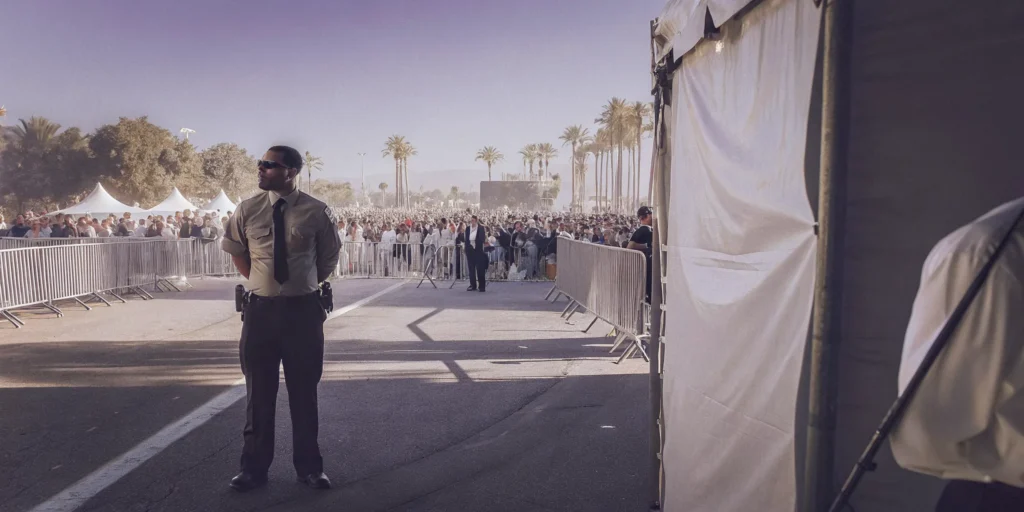
A single security incident can shut down a Southern California event and expose planners to massive liability. Keeping your guests safe starts with knowing local hourly rates and staffing needs.
Need professional crowd control for your next gathering? Call (833) 272-7247 to speak with ASAP Security Guards and secure your event today.
In Southern California, the average event security guard cost ranges from $30 to $60 per hour for unarmed guards. Armed guards cost between $45 and $80 per hour. According to local pricing data published by GNS Guard, rates change based on event size and staffing ratios. Most security firms also set a four-hour minimum booking for each guard. Last-minute bookings made within 48 hours of an event add a 10 to 15 percent fee. Overnight and holiday events carry a 10 to 20 percent premium. Planners should hire one guard for every 100 guests for basic crowd control. High-risk events with alcohol or many entry points will need more guards to ensure guest safety.
What Factors Affect Event Security Guard Cost?
Event security guard cost depends on several variables that every planner should understand before requesting a quote. The biggest factors include the type of guard you hire, the size and risk level of your event, and when you book your security team. Knowing these items helps you plan well and avoid extra costs.
Staffing type and guard selection
The type of guard you choose is the main factor in your event security guard cost. Unarmed guards cost less and work well for low-risk events like corporate meetings. According to Los Angeles event pricing data, unarmed guards cost about $30 to $60 per hour. Armed guards need more training and cost about $45 to $80 per hour. Choosing the right guard type ensures safety while keeping your event security guard cost within a fair range.
Top firms in Southern California often use a four-hour minimum booking per guard. This rule helps firms cover travel and keep good guards on staff. If your event lasts only two hours, you must still pay for the full four hours. Setting your team to match this minimum is a smart way to budget. It ensures you get the full value of the service without paying for unused hours.
Event schedule and timing premiums
The date and time of your event will also change your total event security guard cost. Standard day shifts during the week carry the lowest rates. But holding an event on a holiday or late at night often brings extra fees. Holiday events carry a 10 to 20 percent premium on top of normal rates. Late-night or overnight shifts can also add extra fees because they are harder to staff.
Booking your guards early is a great way to keep your event security guard cost low. If you book guards at the last minute, you will likely pay an extra fee. Last-minute bookings made within 48 hours of the event often add 10 to 15 percent to the base rate. Security firms charge this extra fee to find and schedule guards on short notice.
Venue size and risk factors
Your venue layout and event size play a big role in setting the total event security guard cost. Larger spaces with many entry points need more staff to watch the area. According to the University of Florida rules, key security factors include crowd size, entry points, and alcohol. If your event serves alcohol or has special guests, you will need more guards to keep people safe.
Large crowds also mean you need a higher ratio of guards to guests. While small groups may need only one or two guards, large shows need a big team. When you have more guards on site, you also need to budget for a leader to manage the team. This lead role keeps the team working well but adds to your hourly rate.
What Is the Right Guard-to-Attendee Ratio for Your Event?
You must match your guard count to your crowd size. Too few guards can lead to safety gaps. But too many guards will raise your total event security guard cost. Below is a simple ratio guide to help you plan.
| Event Type | Recommended Guard-to-Attendee Ratio | Typical Guard Count (100 attendees) | Notes |
|---|---|---|---|
| Corporate conference | 1:100 | 1 guard | Low-risk business environment |
| Music festival | 1:50 | 2 guards | Large space with dense crowds and movement |
| Trade show | 1:75 | 2 guards | Trade booths with high foot traffic |
| Gala/wedding | 1:75 | 2 guards | Social event with food and wine service |
| Concert | 1:50 | 2 guards | High-energy crowd with active stage presence |
Baseline staffing ratios for public events
Most low-risk events use a baseline of one security guard for every 100 attendees. This ratio works well for business conferences. You can read our event security checklist to plan these structured meetings.
Social events like weddings or galas often need more care. They need a tighter ratio of 1:75. This means you hire two guards for 150 guests to keep things moving and prevent small issues. If you host a trade show, this ratio is also your best choice.
But a music festival or a concert needs more guards. These events have dense crowds. People stand close together and move around. To keep people safe, you should hire one guard for every 50 guests. This tighter ratio helps prevent crowd surges and keeps entry points clear.
Key factors that increase security needs
You cannot rely only on guest count to choose your staffing levels. The University of Florida Police Department states that event planning must use clear facts. You must look at room size and entry points. The layout of your space has a major impact on how many guards you need.
For instance, a venue with three doors is harder to watch than a venue with one door. You will need to place a guard at each door. If your space has many rooms, you must hire more guards to cover every blind spot. This remains true even if your total guest count is low.
Serving beer or wine is a big risk. When guests drink, tensions can rise, and crowds can change quickly. Events with bars or open bars need more guards. You may also need extra guards if you host VIP guests. These factors will raise your total guard count and increase your event security guard cost.
Staffing roles and security cost impacts
Your budget depends on the officers you hire. You can use unarmed guards, armed guards, or sworn police officers. The University of California San Francisco uses many roles to secure their events. For instance, they use public safety ambassadors for lower-risk tasks and patrol officers for high-risk needs. Mixing these roles helps keep costs low.
Unarmed guards work well for checking bags or greeting guests. Armed guards are best for high-value areas like cash booths or main gates. Sworn officers deal with active threats and crowd control. By placing each person in the right spot, you get the best safety. You also avoid paying top rates for simple tasks, which helps you save money.
Choosing local security firms saves money. Local firms know the local venues and police rules. They can help you plan a smart mix of armed and unarmed staff. This keeps budgeting simple and guests safe.
Armed vs. Unarmed Event Security: Which Option Fits Your Budget?
When you plan a public or private event, choosing between armed and unarmed guards is a key step. This choice directly shapes your total event security guard cost. While unarmed officers work well for most business events, some high-risk venues need armed guards. Knowing the cost gap and needs for each type helps you build a safe, low-cost plan.
Hourly rate differences
On average, hiring armed guards costs about $15 to $25 more per hour than hiring unarmed staff. In Southern California, professional security services usually cost between $30 and $60 per hour for standard unarmed guards. If your event needs armed personnel, the rate rises to about $45 to $80 per hour.
For high-risk events with famous guests or large cash sales, you might need off-duty police. These elite guards offer deep protection but cost much more. Hiring active or off-duty police can cost between $60 and $100 per hour. Reputable firms in Los Angeles usually require a four-hour minimum booking per guard.
When to use unarmed guards
Most corporate conferences, trade shows, and community festivals use unarmed guards. These officers focus on crowd control, badge checks, and greeting guests. They are great for low-risk settings where you only need a calm, helpful security team.
At ASAP Security Guards, our teams undergo extensive training to earn BSIS (Bureau of Security and Investigative Services) certification. This program teaches crowd control, de-escalation techniques, and emergency response. This ensures our unarmed guards provide high-level safety for your event.
To ensure high quality, look for providers whose guards hold active licenses from the Bureau of Security and Investigative Services (BSIS). Guards should also complete special training related to your event type. For fire watch duties, guards must take a fire safety class. Readers can find these courses through our online security training academy portal.
When planning your security mix, you can use a combination of sworn officers and guards. Many event planners follow official university special event guidelines to match their team to the risk level. This keeps costs down while keeping guests safe.
When to choose armed security
Armed security is best for high-risk events or when your insurance policy needs it. Events with jewelry, fine art, or famous speakers often need armed protection. These guards are trained to handle extreme threats and protect high-value items.
Choosing the right guard type involves checking key event details. According to the University of Florida planning sheet, you must check event size, door count, and if alcohol is served. If your event serves alcohol or has many guests, your risk rises. In these cases, combining armed and unarmed guards is often the safest path.
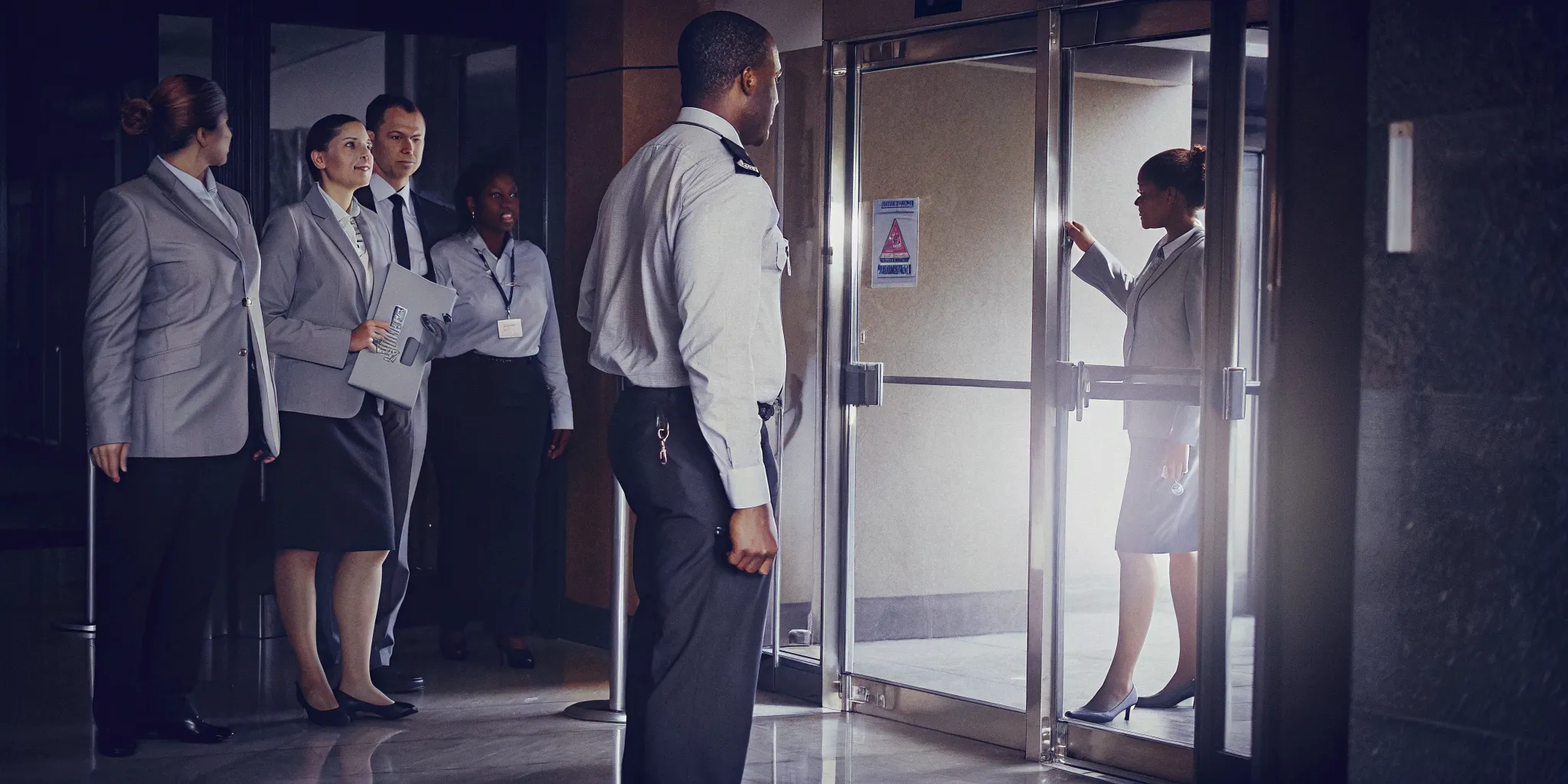
How Much Should You Budget for Event Security in Southern California?
Planning a safe gathering in Los Angeles or San Diego means looking at real numbers. While our general security cost guide shows broad rates for properties, event budgets need a local focus. Your venue and guest list will set your final fees.
Some venues also have distinct risk levels. An indoor business meeting at a hotel has different needs than a large outdoor festival. By matching your guards to the venue style, you can manage your event security guard cost without losing peace of mind.
Setting event security needs
Every host must check threats before hiring guards. Official rules from the University of California San Francisco show that smart planning depends on risk assessments. Staffing models often change based on guest counts, room layout, and alcohol sales. For instance, selling beer requires more eyes on the crowd.
In Southern California, local rules also play a large role. Cities like Los Angeles have strict fire codes that limit how many guests can fit in a space. Knowing these details early helps you find the right event security guard cost for your plan.
Four common event budgets
To help you map out your expenses, we have drafted four common examples. These setups use typical Southern California market rates. Unarmed guards cost $30 to $60 per hour, while armed options run from $45 to $80 per hour.
- Small private party or gathering: You will need 1 unarmed guard for 4 to 6 hours. This basic setup costs $120 to $360, which works well for a small home party.
- Mid-size business conference: This event uses 4 unarmed guards for 8 hours. The cost ranges from $960 to $1,920 to secure entrances and check guest badges.
- Large outdoor music festival: This setup needs a mix of 8 to 10 armed and unarmed guards for 10 to 12 hours. The budget runs from $3,500 to $7,000 or more.
- Wedding reception: You will need 2 unarmed guards for 6 hours. This coverage costs $360 to $720, giving you peace of mind during your big day.
Why actual quotes vary
Keep in mind that these cases are only basic examples. Your final price can change based on the date of your event, the threat level, and how quickly you need to book. For instance, last-minute bookings often carry a 10 to 15 percent premium, while holidays add 10 to 20 percent to the bill.
We also suggest checking shift limits before you sign a contract. Most security firms in Southern California require a four-hour minimum per guard. This means that even a short 2-hour event will be billed at the full four-hour rate. Planning your event timeline to match these shifts will help you get the most value from your security spend.
What Additional Costs Should Event Planners Expect?
Many event planners look only at the base rate when they hire guards. But extra fees can change the final sum. When planning your budget, looking at the base rate is just the first step to find your total event security guard cost. You should know what extra charges to expect.
Overtime and holiday extra costs
Late night shifts and holiday times often cost more than normal daytime hours. Late night and holiday events carry a 10 to 20 percent upcharge. Last-minute booking fees also apply. Deals made 48 hours or less before the event often add another 10 to 15 percent to base rates. Booking early helps you avoid these fees and get the best team.
Venue details and the presence of alcohol also change your event security requirements and staffing needs. For example, events with alcohol may need more guards per guest to manage risk. Night events also need careful planning to keep everyone safe.
Equipment and reporting tech fees
Some events need extra gear to keep the site secure. This gear can include two-way radios, traffic cones, or even patrol cars. While some firms charge extra for these items, ASAP Security Guards includes basic tools in our service. We give you real-time reporting tools at no extra cost. This tech gives you GPS-tracked proof of service and live updates during the event.
We also have Spanish and English bilingual guards. This helps you communicate with all guests and staff. Our guards hold active BSIS licenses and complete ongoing training to handle crowds professionally. Having bilingual staff on hand prevents miscommunication and makes sure your event runs smoothly. You can see how other planners rate our team in our client testimonials.
Contract minimums and cancel rules
Most known firms set a minimum booking time. This is often four to six hours per guard. If your event is short, you still must pay for the full minimum block. Be sure to check the minimum hours before you sign.
You should also check the cancel policy. If you call off the event late, you may have to pay a fee. Some firms charge a flat fee, while others charge the full rate of the shift. Make sure you read these security service contract details to avoid surprises.
Frequently Asked Questions
Do event security guards have a minimum hour requirement?
Yes, most expert security firms in Southern California use a minimum booking rule. According to local price data from GNS Guard, trusted agencies usually need a four to six-hour booking per guard. This rule helps firms cover travel costs and keep good guards on the schedule. Even if your event is short, you must still budget for this minimum block of time.
How much extra does last-minute event security cost?
Booking guards at the last minute will raise your total cost. If you book guards forty-eight hours or less before the event, expect to pay more. Most agencies add a ten to fifteen percent fee to their base rate for late bookings. According to rate sheets from GNS Guard, holiday or overnight events also add ten to twenty percent. To get the best rate, try to book your event guards at least three weeks in advance.
Does serving alcohol at an event increase security costs?
Yes, serving alcohol at your event will almost always increase your security costs. When alcohol is present, state rules or venue contracts often force you to hire more guards to keep guests safe. Industry guidelines, like those from the University of Florida Police Department, list alcohol as a key factor that raises event risk. To manage these costs, set clear entry points and limit where guests can drink.
How much does it cost to hire an off-duty police officer for security?
Hiring an off-duty police officer is the most expensive security choice. According to national cost data from Stone Security Service, off-duty police and elite guards cost between sixty and one hundred dollars per hour. These rates are high because of their advanced training and arrest powers. For most low-risk events, a mix of standard armed and unarmed guards is a more cost-effective option.
Ready to Budget for Your Southern California Event Security?
Failing to plan for proper event security guards can lead to costly crowd control problems, severe safety hazards, and expensive lawsuits for your business. Booking your guards early ensures you secure standard rates and avoid the high price hikes that come with late bookings close to your date. Setting up your guard team today gives you peace of mind so you can focus on running a safe, smooth, and successful local event.
Ready to secure your event? Call (833) 272-7247 to schedule a free security consultation. We will help you set up a custom plan that fits your budget and keeps your Southern California venue safe. Our licensed officers are ready to help.
