
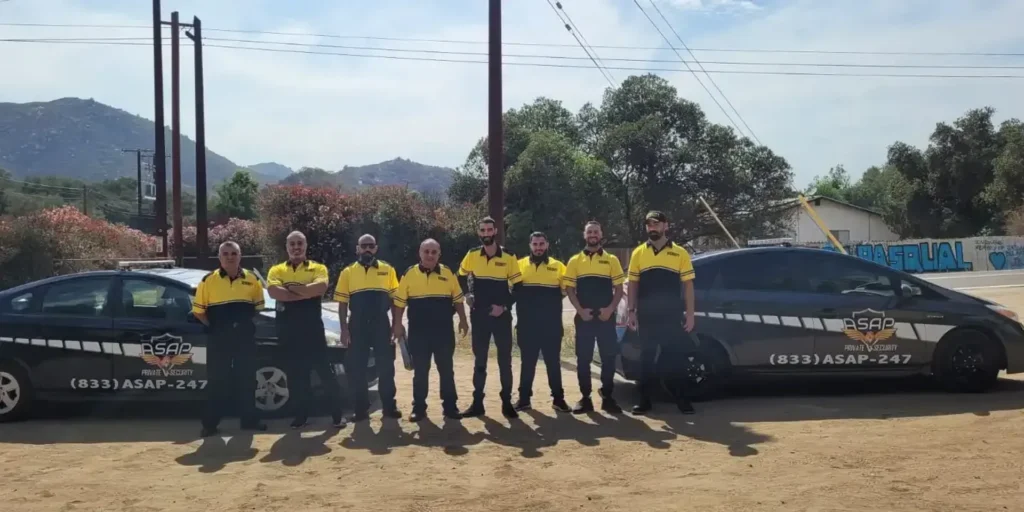
Security teams in Southern California work across properties and events where residents, employees, guests, and vendors may not all communicate in the same language. For facility managers, property managers, operations leaders, and event organizers, a guard who can communicate clearly with the people on site can support a more orderly and welcoming security program.
Call (833) 272-7247 to discuss bilingual security coverage.
Why Bilingual Security Guards Matter for Southern California
Bilingual security guards help improve safety, communication, and trust by explaining procedures, identifying concerns, and delivering urgent instructions in English or Spanish. In an emergency, reducing language barriers can help people understand evacuation directions faster and respond with less confusion.
Southern California is one of the most linguistically diverse regions in the country. An academic review reported that among its approximately 21 million residents, about half spoke a language other than English at home. That demographic reality affects how people receive instructions, report concerns, and respond when something unexpected happens. For property managers and business leaders, communication is part of a complete security plan, not an optional service feature.
That is why bilingual capability is increasingly a necessity rather than a nice-to-have. Research on multilingual customer service identifies bilingual communication as an important part of delivering better customer experiences. It also improves operational effectiveness in diverse environments. In a security setting, the same principle applies at the front desk, parking area, gate, lobby, and during routine patrols. A Spanish-speaking visitor, employee, resident, or vendor should be able to explain a concern and understand the officer’s response without relying on an untrained third party.
Language access also supports safer interactions. When a person is confused about access rules, upset about a restriction, or unsure where to go, a bilingual officer can clarify the situation in the person’s preferred language. Clear explanations can reduce frustration before it becomes a confrontation. In a tense moment, the ability to communicate directly can help an officer assess what is happening, give appropriate instructions, and de-escalate more effectively.
Professional communication shapes trust as well as immediate safety. Security personnel who can assist visitors, clients, and residents in more than one language are better positioned to provide consistent service to diverse communities. Industry guidance notes that this can strengthen an organization’s reputation and increase trust and satisfaction among clients with different language preferences. That matters for workplaces, residential communities, retail properties, and public-facing facilities where the security officer may be the first representative someone encounters.
Businesses seeking this capability can review unarmed security solutions and explore corporate security services designed for professional, customer-facing environments. The right staffing plan combines bilingual communication with trained observation, documented procedures, and the judgment to know when an issue requires escalation.
Sources: American Academy of Arts and Sciences research on bilingualism in Southern California; CX Today guidance on bilingual customer service.
Practical Communication Scenarios for Southern California Organizations
Bilingual capability is most useful when an officer needs to give a clear instruction, understand a concern, or explain what will happen next. The exact staffing plan depends on the property and schedule, but these are common situations for organizations to consider:
Commercial entrances, lobbies, and loading areas
An officer may welcome visitors, explain access procedures, direct vendors, or help employees understand a temporary restriction. Direct communication can make routine interactions easier to manage while keeping the same site rules for everyone.
Residential communities and shared spaces
At an apartment community, HOA, or gated property, residents and guests may need help with entry procedures, parking rules, deliveries, or a noise concern. A bilingual officer can explain the policy clearly and record the issue for the property team.
Schools, hotels, healthcare, and public-facing facilities
These environments receive visitors with different language preferences throughout the day. A bilingual officer can help direct people, identify the right point of contact, and communicate basic safety instructions without making a visitor search for a translator first.
Manufacturing, warehouses, and dealerships
Active sites often involve employees, contractors, drivers, and customers moving through different areas. Clear communication can support visitor check-in, restricted-area procedures, after-hours access, and the escalation of concerns to the responsible manager.
The goal is not simply to speak another language. It is to combine language ability with site-specific training, professional conduct, observation, documentation, and a clear escalation process.
How Do Bilingual Security Guards Improve Emergency Response?
During an emergency, a security officer must do more than identify a threat. The officer must communicate clear instructions and confirm that people understand them. They must also coordinate with first responders quickly. A bilingual officer bridges language gaps so vital information reaches clients, law enforcement, employees, and the public fast and accurately. Research on bilingual security officers identifies this communication role as a direct safety benefit.
Here are the key emergency situations where bilingual capability makes a measurable difference:
- Evacuations: Bilingual officers deliver directions in English and Spanish. This helps more occupants understand which exit to use, where to assemble, and which areas to avoid. They can also answer immediate questions without making people wait for a translator.
- Medical incidents: A bilingual officer gathers details from Spanish-speaking witnesses or victims. They relay information accurately to paramedics and emergency dispatchers. This reduces the risk that critical information is lost in translation.
- Law enforcement coordination: Officers who interview Spanish-speaking witnesses directly can provide responding officers with names, descriptions, timelines, and locations. They do not need to rely on a bystander to interpret.
- Lockdowns and shelter-in-place: Clear bilingual announcements ensure that every occupant understands the correct protective action to take, regardless of language preference.
Language barriers can create miscommunication during complex or stressful interactions. Those misunderstandings may escalate frustration and prolong the time it takes to resolve a problem, according to customer communication research. Reducing that friction can help an officer calm a person, explain what is happening, and gain cooperation before a situation becomes more serious.
Bilingual officers can also communicate with Spanish-speaking witnesses in the language they understand best. They then relay relevant details to supervisors, emergency responders, or law enforcement. This reduces the risk that names, descriptions, locations, or timelines will be misunderstood in the first account of an incident. A clear interview can also help an officer distinguish between what a witness saw, heard, or assumed.
For sites that face elevated risks, bilingual communication works alongside the broader capabilities provided by armed security services. The right staffing plan should match the property’s hazards, occupancy, operating hours, and relationship with local responders. Bilingual coverage is not a substitute for emergency procedures, but it makes those procedures more usable when people need them most.
Which Properties and Events Benefit Most from Bilingual Security Officers?
The right language capability can improve how security personnel interact with the people they protect. Below is a summary of how different settings gain practical value from bilingual security coverage.
| Property type | Common communication needs | Typical guard type |
|---|---|---|
| Commercial offices | Visitor registration, access control, emergency announcements | Unarmed |
| HOA communities | Gate access, parking enforcement, noise complaints, patrol reporting | Unarmed mobile patrol |
| Construction sites | Worker authorization, delivery coordination, safety zone enforcement | Unarmed |
| Public events | Crowd direction, bag checks, entry policies, lost-person assistance | Unarmed or armed |
| Healthcare facilities | Patient navigation, visitor screening, emergency coordination | Unarmed |
Commercial properties and healthcare facilities
Commercial buildings often bring together employees, contractors, customers, and visitors with different language preferences. Bilingual security personnel can facilitate smoother interactions between local and international staff, residents, and visitors. This is especially useful at busy entrances, reception areas, loading zones, and access-control points. It helps when an officer must explain identification requirements, visitor registration, restricted areas, or an emergency procedure.
Healthcare facilities have a similar need. Patients and visitors may already be stressed, unfamiliar with the building, or uncertain about where to go. Bilingual guards can help international patients navigate security protocols while supporting orderly movement through the facility. Security remains the officer’s responsibility, but clear communication makes routine assistance more efficient and reduces avoidable confusion.
HOAs and residential communities
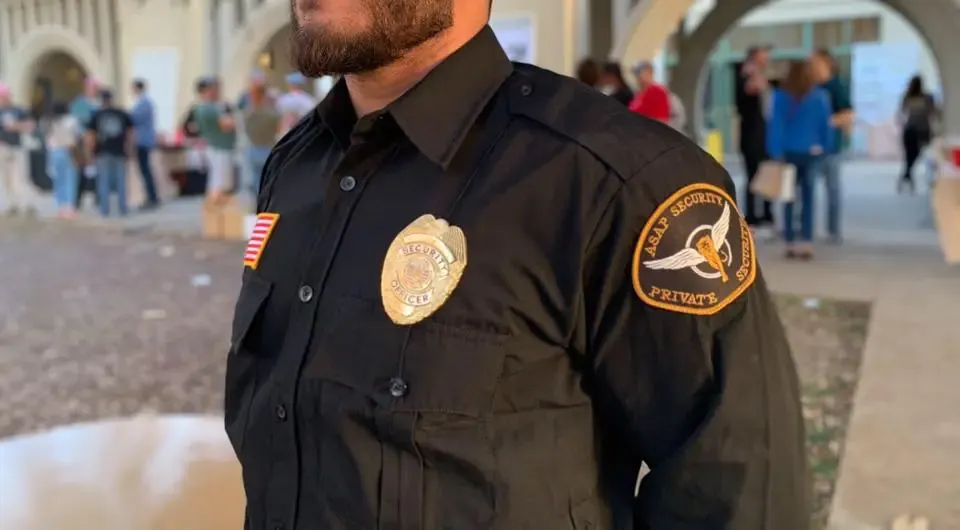
For HOAs and multifamily properties, mobile patrol officers may address parking disputes, gate access, noise complaints, trespassing concerns, and requests for assistance. A bilingual officer can speak directly with more residents instead of relying on a child, neighbor, or improvised translation. ASAP’s guidance on mobile patrols for HOA communities notes that bilingual officers can help resolve issues faster in diverse communities. That direct exchange can also produce a clearer incident report and a more respectful interaction.
Construction sites and active work zones
Construction sites depend on consistent communication among workers, subcontractors, delivery drivers, and site managers. Bilingual officers can reinforce entry rules, verify authorization, direct vehicles, and explain safety-related access restrictions. When a conflict or unfamiliar situation develops, communicating with workers in their preferred language may help the officer understand what happened before the issue grows. Security coverage can be coordinated with construction site security needs, including perimeter monitoring and controlled access.
Events with diverse guests and staff
Events create a concentrated mix of guests, vendors, employees, performers, and contractors. Officers may need to provide directions, manage lines, explain bag or entry policies, and respond to concerns quickly. ASAP’s event security guidance notes that bilingual guards help communicate with all guests and staff. For broader planning, review the company’s event security services.
For each setting, the goal is not simply to have another language available. It is to place capable officers where clear communication supports access control, customer service, issue resolution, and a calm response when conditions change.
Training Standards for Bilingual Security Guards
Bilingual capability is most valuable when it is paired with disciplined security training. A Spanish-speaking officer must be able to communicate clearly without losing sight of access control, observation, documentation, or emergency procedures. For clients in Southern California, that combination supports safer interactions with residents, employees, visitors, and responding agencies.
California Guard Card requirements come first
In California, security officers must meet the state requirements for a BSIS Guard Card. They must also complete the training required for their role. That foundation includes instruction in core responsibilities such as the lawful use of authority, observation, reporting, professional conduct, and response procedures. Bilingual ability does not replace these standards. It adds communication capacity on top of the training every qualified officer is expected to have.
Employers should also confirm that an officer’s training and assignment match the needs of the property. An officer assigned to a commercial building may need strong access-control and visitor-management skills, while an event assignment may place greater emphasis on crowd communication, queue management, and de-escalation. In either setting, language proficiency should support consistent enforcement of the same site procedures.
BSIS-approved instruction and practical communication
ASAP Security personnel train in-house through the company’s BSIS-approved Academy. This gives the company a structured way to reinforce state-mandated security fundamentals while preparing officers for the practical demands of client assignments. Training helps bilingual officers communicate instructions in English and Spanish, listen accurately to witnesses or occupants, and relay important details to supervisors and emergency responders.
That distinction matters during a stressful interaction. A bilingual officer should know when to switch languages. They should also know when to use a qualified interpreter and how to document the facts of an incident accurately. The goal is not simply to have another language available at the post. It is to combine professional judgment, clear reporting, and respectful communication so that language differences do not create an avoidable safety gap.
What Should an Organization Ask Before Hiring Bilingual Security Guards?
A useful consultation should connect language needs to the actual security assignment. Before selecting coverage, an organization can ask:
Which languages are needed, and during which shifts?
List the languages most often used by employees, residents, visitors, vendors, or guests. Then identify whether the need is concentrated at a front desk, during a particular shift, at events, or across multiple locations.
How will bilingual capability be matched to the assignment?
Ask how the provider will match language capability, site responsibilities, schedule, and professional expectations. A language match should support the assignment rather than stand alone as the only selection factor.
What training and licensing does each guard receive?
Ask about California guard registration, site orientation, emergency procedures, de-escalation, reporting, and any assignment-specific training. The right requirements depend on the duties and environment.
How will incidents and communication needs be documented?
Clarify who receives reports, how concerns are escalated, and how the organization can review recurring access, visitor, or safety issues. Clear documentation helps the security team and the client make consistent decisions.
Can the coverage plan change as the property changes?
Ask how the provider handles new locations, seasonal events, schedule changes, or a new access concern. The consultation should produce a practical plan rather than a generic staffing promise.
Call (833) 272-7247 to review your property, schedule, and communication needs.
Frequently Asked Questions
Why are bilingual security guards useful for organizations in Southern California?
They can help an organization communicate access procedures, directions, and safety information to more of the people who use the property. The best fit depends on the languages, shifts, duties, and site conditions identified during a consultation.
Do bilingual guards still need standard security training?
Yes. Language ability is one part of an assignment. The organization should also confirm the applicable California registration, site orientation, emergency procedures, reporting expectations, and any assignment-specific training.
Which properties can benefit from bilingual security services?
Commercial buildings, residential communities, schools, hotels, healthcare settings, manufacturing sites, warehouses, dealerships, and events may have a need. The right coverage depends on who uses the property and when communication support is most important.
How can an organization request a bilingual security consultation?
Share the property type, locations, schedule, languages most often needed, current concerns, and desired duties through the security consultation form or by calling (833) 272-7247.
Schedule Bilingual Security Support
If your organization serves employees, residents, visitors, vendors, or guests with different language preferences, a bilingual security plan may help make everyday communication more consistent. Start by sharing your property type, locations, coverage hours, languages most often needed, and the situations you want the officers to handle.
ASAP Security Guards can review those details and discuss a service approach for your organization.
Call (833) 272-7247 to schedule a bilingual security consultation.
For a written request, use the security consultation form.
Sources: American Academy of Arts and Sciences research on bilingualism in Southern California; California Bureau of Security and Investigative Services information on security guard registration.
