

What are the best remote video monitoring services for businesses? For a commercial property, the best one is the service that verifies a real event on camera, then hands that event to a person who can act. A cheap monthly fee is not the test. A property manager in San Diego County, Orange County, or Riverside County needs three answers. Who watches the cameras? What happens after an alert? How does the report reach the on-site team? The Riverside commercial property security guide covers the on-site side of that question.
Request a free security consultation or call (833) 272-7247 to scope guards and dispatch for the property.
Remote video monitoring means trained operators watch camera activity from a monitoring center, confirm what they see, and follow a written response plan. A recorder that only stores video is not the same service. Neither is an app that pings a manager’s phone at 2 a.m. and hopes someone is awake. The useful comparison is the work the provider will do on a live event, not the brand name on the proposal.
What the best remote video monitoring services do during a live event
A strong remote video monitoring service does five jobs on a commercial site. It watches the cameras that matter. It checks an alert before anyone is sent. It reaches the right person. It can hand the event to an on-site guard or a patrol. And it leaves a record the manager can read the next morning.
Treat those five jobs as questions, not as a description of any one company. Ask each finalist to walk a real event from the first alert to the last note in the report. If the answer stops at “we have a monitoring center,” you do not yet know what you are buying.
Write the walk-through in the order a night actually happens:
- What starts the look: a camera analytic, a door alarm, a scheduled check, or a call from the site?
- Who views the camera, and do they view it before a guard, a manager, or the police is contacted?
- Which contacts are called, in what order, and who can approve a guard dispatch?
- What gets written down before the next shift starts?
A provider should be able to answer those four steps for your building. If the answer is a generic script that never names your doors, your contacts, or your guards, keep asking.
Also separate office hours from coverage hours. A monitoring proposal should say both in plain words. Round-the-clock camera watch is not the same claim as a front desk that answers on weekdays. ASAP’s public statement keeps that split clear for its own guard operations: “24/7 security services and live dispatch. Office Mon-Fri 9 am-5 pm.” Use the same kind of split when you read a monitoring proposal. Ask which hours an operator is watching, and which hours a person answers the phone.
Start with the property, not the proposal
Two commercial buildings can need very different monitoring. A single-tenant office with a locked lobby is not a multi-tenant plaza with night deliveries. Write the site facts down before you score any vendor.
- Which doors, docks, parking areas, and perimeter gates need a live look, and which cameras only need recording.
- What already exists: camera count, recording system, network, and whether an outside firm can view those cameras.
- Who is on site after hours, including guards, cleaning crews, and vendors with keys.
- Which events matter first: after-hours entry, loitering at a door, a gate left open, or a person in a closed parking area.
- Who may be called, in what order, and who can approve a guard dispatch.
Compatibility with the cameras you already own is an open assessment question, not a promise. Ask each provider, in writing, which of your current cameras, recorders, and networks they can view, and which would need a change before monitoring can start. Put any equipment or configuration change in the assessment, not in a surprise invoice after you sign. If a provider cannot say whether your current cameras will work, that provider is not ready to quote.
Keep the geography honest. ASAP’s public service area for this kind of work is San Diego County, Orange County, and Riverside County. A national monitoring center can still watch cameras there. The local question is who can walk the site, meet a patrol, or stand a post when the camera view is not enough.
Compare verification before you compare price
Video verification is the step that separates a useful monitoring service from a noisy alarm. An operator looks at the live or recent view and decides whether the alert is a person, a vehicle, an animal, weather, or a real problem. Only then does the response plan start. Ask the provider to show you that step. Do not assume it happens because the brochure says “live monitoring.”
False alarms are a known drain on police time. In the U.S. Department of Justice COPS Office guide False Burglar Alarms, Rana Sampson reports that 94 to 98 percent of burglar alarm calls are false. The same guide says false alarms can account for 10 to 25 percent of all calls to police. A commercial manager should treat that as a reason to demand verification. It is not a promise that any one vendor will hit a specific false-alarm rate.
Ask each provider these questions, and write the answers next to each other:
- What starts the clock: a camera analytic, a door alarm, a manual look, or all three?
- Does a person view the camera before a guard, a manager, or the police is contacted?
- What is timed: time to view, time to call, or time until someone arrives? An average is not the same as a worst-case night.
- Which hours are covered, and what happens on a holiday or during a center outage?
- What is excluded: glare, a dirty lens, a camera that is offline, or a view the operator cannot use?
A response-time number with no start point and no end point is not a standard you can hold anyone to. Ask for a dated sample, the definition, and the exclusions. If the sample is from a different kind of site, do not treat it as yours.
What are the best remote video monitoring services for businesses on dispatch, uptime, and reporting?
Verification only helps if the next step is clear. The best remote video monitoring services tell you who gets the call, what that person is expected to do, and how you will see the record later. Use one table for every finalist so a low price cannot hide a missing step.
| What you are buying. | Ask for this evidence. | Pass looks like this. |
|---|---|---|
| Video verification | A written definition and a sample event | A person views the camera before anyone is dispatched. |
| Dispatch handoff | The call order and a sample script | Named contacts, then on-site staff or a guard, then emergency services if the plan says so. |
| Uptime and continuity | Coverage hours and the outage plan | You are told when a camera or the center is down, and who still answers. |
| Reporting | A sample morning report and an incident note | Time, camera, what was seen, who was called, and what happened next. |
| On-site integration | How a guard or patrol is requested | The same event can move from the operator to a person at the property. |
| Licensing | The contractor license and the guard PPO, in writing | The camera firm and the guard firm are each identified. Do not merge them into one license number. |
Uptime claims need the same care as response times. “24/7” can mean operators are present, or it can mean the software is on. Ask what you are notified of when a camera drops offline. A dark camera that nobody mentions is not monitoring.
Reporting should be readable by a property manager, not only by a technician. ASAP’s own guard reporting uses a GPS-enabled daily activity report with time stamps and photos. Clients can review those reports rather than wait for a paper log. A monitoring report does not have to copy that format. It does have to show when the event happened, what the operator saw, and who was contacted. If you also use on-site guards, the two records should be easy to line up after an incident.
For the monitoring center itself, ask whether it is listed to a published central-station standard. UL 827 is the UL Standard for Central-Station Alarm Services. UL Solutions lists managed video monitoring as one service category under that standard, and listed stations are audited. A listing is one piece of evidence. It does not replace a response plan written for your building.
Fit the service to the people already on the property
Remote video monitoring works best as one layer, not as a substitute for every other control. A commercial site may already have a lobby officer, a vehicle patrol, a key-holding arrangement, or a visitor desk. The monitoring company should know that, because the operator’s job changes when a guard is already on the clock.
Think through the handoff in both directions, and make the provider write it down. If the operator confirms a person at a closed dock, the plan might send the on-site officer first and call the manager second. If nobody is posted, the plan might request a patrol and notify the after-hours contact. Those are different services. Price them separately from the camera-watch fee. The example is a buying test. It is not a statement that any one company already runs that sequence on your site.
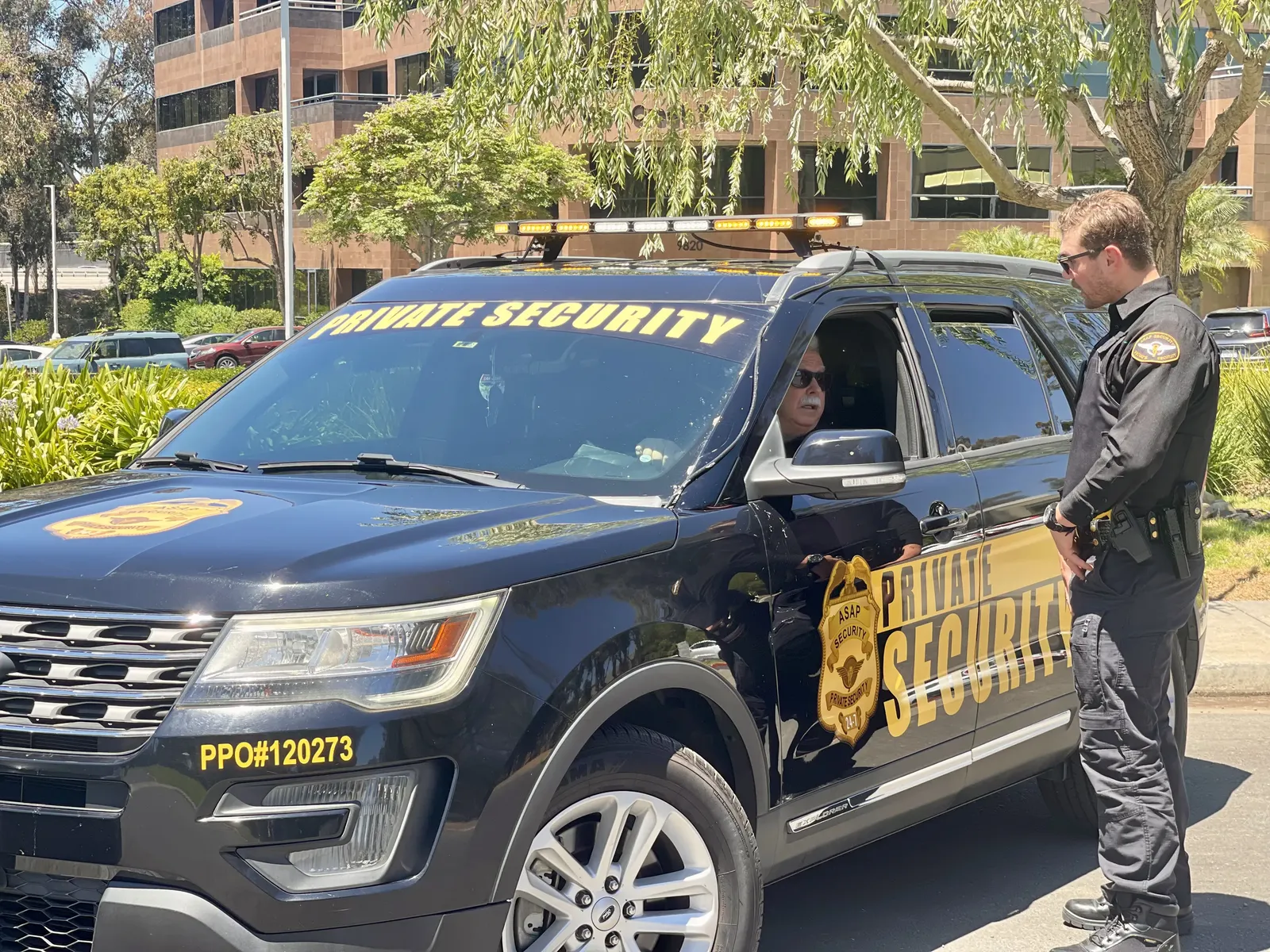
ASAP guards log activity on mobile devices, with GPS check-in and photo notes. A 24/7 human dispatch center supports the field team. That dispatch is for guard operations. It is not, by itself, proof of a video-alert workflow. When you buy monitoring and guards from related firms, ask how the monitoring operator reaches dispatch, and how the guard’s note gets back into the incident file. Get that answer in the proposal before you treat the two services as one system.
These pages cover the neighboring decisions. Use them instead of asking one monitoring proposal to do every job:
- Commercial property security in Riverside is the local coverage guide for managers who need people on the site, not only cameras.
- A commercial security request for proposal checklist is the wider score sheet if the buy also includes guards, posts, and patrols.
- How to write a CCTV monitoring procedure is the internal document you still need after you pick a provider.
- The security guard incident report guide shows what a useful field note contains once a person responds.
- Automated systems versus human dispatch explains why a live person should sit between an alert and a response.
Do not ask the monitoring firm to invent your guard posts. Do ask them to accept your post orders as an input. If they will not read the site’s contact list and escalation rules, the “integration” line on the proposal is only a slogan.
A short pilot beats a long feature list
Before you roll a service out to every building, run a short pilot on one representative property. Pick a site with a normal night, a known delivery, and at least one camera that sometimes fails. The pilot should include four tests. Use an ordinary event. Use an authorized person who should not trigger a dispatch. Take one camera offline on purpose. Call a primary contact who does not answer.
Score the pilot on the workflow, not on whether the week was quiet. A quiet week does not prove the service. Record what the operator saw, how long the view took, who was called, and whether the morning report matched the event. If audio, guard dispatch, or a client portal is part of the quote, test those too.
End the pilot with a decision. Name what must be fixed before a second site is added, and who owns that fix. Keep missing answers visible. A blank cell is more honest than a friendly score you cannot defend to an owner or a board.
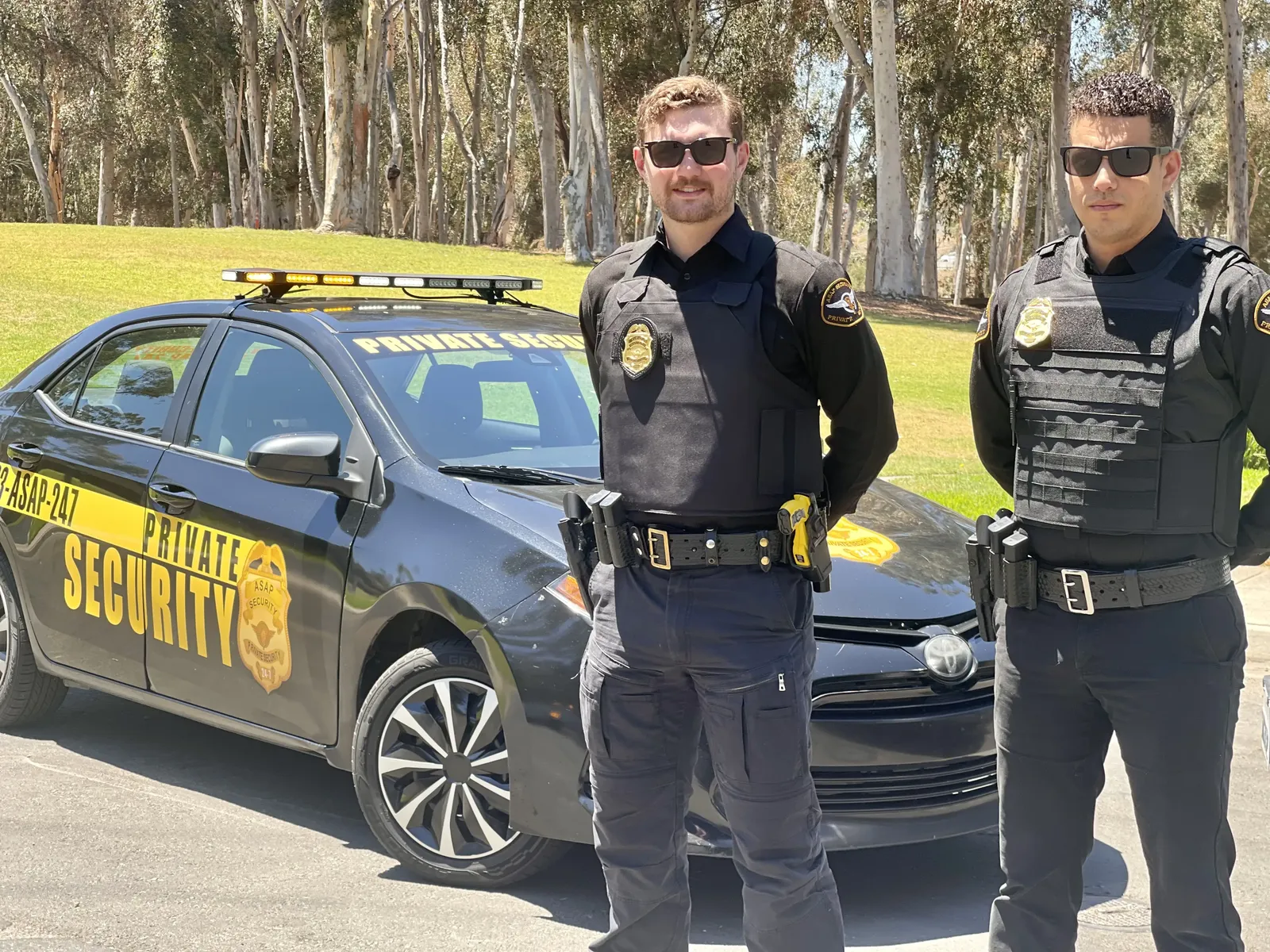
Use the same worksheet for every finalist. The questions are a buying framework. They are not a claim that any one provider has agreed to every term. They are also not a ranking of monitoring brands. ASAP does not publish a single monitoring rate. Guard coverage, if you add it, has its own range. Unarmed guards are $28 to $45 per hour, and armed guards are $35 to $65 per hour. Do not let a vendor fold those hourly rates into a monitoring fee so you cannot see either number.
Request a free security consultation or call (833) 272-7247 to scope the on-site side before the pilot starts.
What to leave out of the decision
Some questions feel related and still do not answer this one. Camera shopping, install design, and footage retention rules belong in their own reviews. So does a list of famous monitoring brands. A commercial manager in Southern California is choosing a service relationship for a specific property.
Skip these traps:
- A national “top 10” that never asks who answers your building.
- A software demo that shows analytics but no operator, no call order, and no sample report.
- A price per camera that excludes after-hours calls, guard dispatch, or a broken-camera notice.
- A license number you cannot match to the company doing the work. ASAP’s guard company PPO identifier is 120273. Camera installation in the partnership is Visbly CCTV System Inc., Contractor License No. 1157633. Those are different credentials. Ask which license covers monitoring, and do not treat either number as proof of a live video workflow.
- A promise of a specific crime reduction. Verification can cut needless dispatches. It cannot guarantee that a site will never have an incident.
If the property also needs a person at the door, a patrol between camera views, or help during an evacuation, scope that work on its own. The monitoring decision should stay narrow enough that you can tell, six months later, whether the operator did the job you hired.
Request a free security consultation or call (833) 272-7247 before you compare finalists.
Frequently asked questions
What are the best remote video monitoring services for a commercial property?
The best service for a commercial property is the one that verifies events on your cameras, follows your call list, and produces a report your manager can use. Compare verification, dispatch, uptime, reporting, and the handoff to on-site security. Do not choose from a brand list that has never seen the site.
How is remote video monitoring different from a camera system that only records?
A recorder stores video for later review. Remote video monitoring adds operators who watch activity, confirm what they see, and follow a response plan while the event is still happening. You still want recording. Recording alone does not call anyone.
Can monitoring work with the guards already on my property?
It can, if the response plan says so and the provider agrees to that handoff in writing. Ask when the operator calls the posted officer, when a patrol is requested, and when the manager is notified. A camera alert and a guard dispatch are related steps, not the same step. Confirm the handoff before you start service.
What should a monitoring report include the next morning?
Each event note should show the time, the camera or location, what the operator saw, who was contacted, and how the event ended. If a guard responded, the field note should be easy to match to that same event. A page of unexplained alerts is not a report.
Does a monitoring company need a California license?
Ask each firm to name the license that covers its part of the work, and check that the name on the proposal matches the name on the license. Guard services and camera installation are separate licensed activities. ASAP’s guard company PPO identifier is 120273. Camera installation in the partnership is Visbly CCTV System Inc., Contractor License No. 1157633. Neither number, on its own, proves how a live camera alert is handled.
Review your property before you sign a monitoring contract
Bring the camera list, the after-hours contact order, and any current guard posts to the first call. A useful provider will tell you which events deserve a live response, which cameras they can actually view, and how a confirmed event reaches a person. Ask those questions before you sign. ASAP can walk the on-site side of that scope for a commercial property in San Diego County, Orange County, or Riverside County. That means how guards and live dispatch sit next to a monitoring plan you are still comparing. It is not a claim that ASAP sells a standalone remote video monitoring service.
Request a free security consultation, or call (833) 272-7247.
