
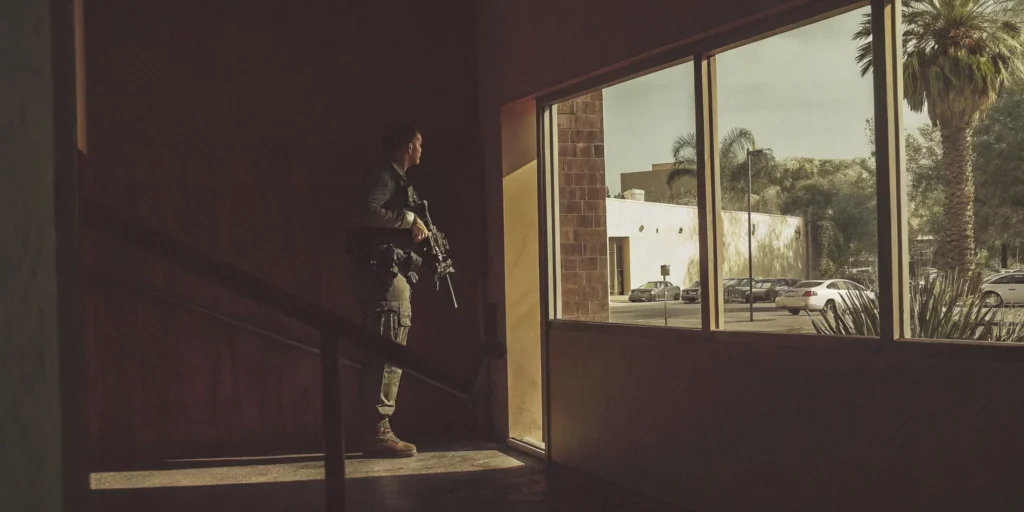
Armed guards at high-risk federal sites provide a visible shield against complex physical threats 24 hours a day.
Request an armed security assessment for your high-risk site.
These professionals follow strict tactical protocols to secure critical infrastructure and protect civilian lives. Their presence ensures that commercial and government facilities remain safe from unauthorized access.
Armed security guard responsibilities include protecting people and property, monitoring for breaches, and deterring crime through active patrols. At high-risk commercial and government sites, these officers must follow strict federal and state licensing rules while keeping a constant state of tactical readiness. According to CISA, armed contract security officers are responsible for the protection of employees and visitors in U.S. government-owned facilities. Beyond their presence, their duties involve using surveillance to find safety risks and being ready to intervene when legally permitted. They also provide real-time proof of work through digital reporting tools. This ensures all critical infrastructure remains secure against unauthorized access and potential threats at all hours of the day and night.
Commercial and government facility managers must understand the specific duties these professionals perform to keep high-value assets safe. Finding these tasks helps in picking a security partner with the right tactical expertise. Core armed security guard responsibilities at high-risk sites involve a deep commitment to safety, compliance, and rapid response. The path begins with
Core armed security guard responsibilities at high-risk sites
Armed guards play a vital role in keeping high-risk sites safe. These sites include government buildings, hospitals, and large trade shows. The main goal is to protect people and property from harm. Officers must stay alert and follow strict rules to manage threats before they grow. Their presence is a key part of a full security plan.
Protecting assets and people
The primary job of an armed officer is to keep chosen people and property safe. In government buildings, they protect federal workers and visitors from risk. These officers must meet strict licensing rules to work in such sensitive areas. They often stand at entry points to check IDs and scan for banned items. This helps ensure that only allowed people enter the site. High-risk sites that often require armed protection include:
- Federal and state government sites
- Critical systems like power plants
- Hospitals and 24/7 medical centers
- High-value retail and jewelry stores
Firms also need this high level of care. They use armed guards to stop theft and keep the peace. These guards are a visible sign that the area is secure. Their presence alone can stop a crime from happening. Many armed guards have past work in the military or law enforcement. This helps them stay calm and skilled in tough spots. Knowing the differences between armed and unarmed guards helps managers choose the right team for their site.
Active patrol and threat detection
Guards do more than just stand still at a post. They move around the site to look for safety risks and security gaps. Constant patrols help them find broken locks, open gates, or odd acts. They use tools like GPS to track their paths and report what they see in real time. This gives clients proof of their work and keeps guards on track during their shifts. Mobile patrols are key for large sites like factories or gated homes. These guards look for any sign of a security breach or illegal act. If they find a problem, they must report it to the client right away. They also watch for fire risks or other safety issues that could cause harm. This active role helps stop small problems from becoming big risks. Guards stay in touch with a 24/7 human-staffed hub to get help fast if an emergency occurs.
Incident response and de-escalation
When a threat occurs, armed guards must act fast to stop it. Their training helps them handle high-risk spots with care and precision. They carry weapons for defense and to help stop a fight before it gets worse. But their first tool is always words. They use calm talk to stop a fight and keep everyone safe. This is part of the moral and legal duty that comes with carrying a weapon. Using force is a last resort for any guard. Officers only use force when it is strictly needed and allowed by law. They must follow clear rules on how and when to act in a crisis. Every major event is noted with photos and clear notes for the record. This record is vital for legal reasons and for the peace of mind of the client. Armed guards must stay ready to respond to threats at any hour. Their focus on safety and quick action helps keep high-risk sites running without fear.
How do armed guards prevent and de-escalate threats?
Armed security guards use their presence to stop threats before they start. They wear clear uniforms. A steady walk shows that the site is safe. These guards watch for safety risks and stop bad acts just by being seen. This is one of the main how armed and unarmed guards differ when guarding a site. They walk the grounds to look for gaps like open doors or broken locks. A visible guard makes a site a hard target for crime.
Visible patrol and risk checks
Expert guards also use tools like GPS to track their work in real time. This keeps them on task. It also gives proof of their work to site owners. It helps ensure that every part of a site gets checked at the right time. In federal sites, guards must follow strict rules to protect staff and guests. These rules for armed guards help keep government buildings safe. By staying alert, guards can find and fix small issues before they grow into big risks. They check IDs at gates and watch video feeds to catch any wrong entry.
Guards also look for safety risks that could lead to accidents. This might be a spill on the floor or a light that is out. By fixing these things fast, they help the site run well. They act as the eyes and ears for the site manager. Their goal is to make sure nothing goes wrong on their watch. This early work is a big part of their daily life.
Keeping peace through talk
When a threat does appear, an armed guard first tries to calm the issue. They use clear talk and a firm tone to guide people away from a fight. This is part of how they help keep the peace in high-risk spots. A guard’s goal is to end a fight without using any force at all. They are trained to read how a person acts and find the best way to talk them down. This skill is vital in crowds or public spots.
Force is only used as a last resort when there is no other choice. Guards must follow tight rules that say when they can step in to stop a threat. Their training helps them stay calm under stress. This helps them make good calls. They use their skills to protect lives while keeping the law. This focus on peace is a key part of the skills for security response teams used in federal work. A good guard knows that their mind is as vital as their gear. They work to fix issues before they need a weapon.
Readiness for big threats
Armed guards must always be ready to act if a major threat happens. They go through a lot of training to keep their skills sharp and fresh. This includes learning how to handle their tools and knowing the law in full. They must pass tests to show they can use their gear safely and well. Being ready means more than just having tools. It means having a fast and smart plan for any case. They train for fire, health issues, and active threats.
These guards often work in spots like hospitals, tech sites, or government hubs. They must know the specific risks of each site to do their job well. A guard who knows the layout of a spot can react much faster in a pinch. Their fast response can stop a crime or save a life when seconds count. By staying fit and trained, armed guards give the best safety for any site they protect. They also write reports to track every event for the site manager. This work helps the manager make better safety choices for the future.
Armed vs. unarmed security responsibilities
Every site has its own safety needs. Choosing between armed and unarmed guards depends on your risk and budget. Both roles aim to keep people safe but use different ways to reach that goal.
Core duties of unarmed guards
Unarmed guards focus on low-risk spots like retail shops or office lobbies. Their main job is to watch and report. They provide a clear sight to stop small theft or bad acts. They often handle access tasks by checking IDs at a front desk.
These guards check video feeds and walk the halls to find safety risks. They use GPS tools to track their rounds in real time. If a crime happens, they call the police. They do not step in with force. Their work helps keep a calm and expert space for staff and guests.
These teams also handle fire watch duties. They must take a fire safety class to know how to spot risks like sparks or smoke. You can find more on these classes at our online training academy. This training ensures that every guard knows how to react if a fire starts.
High-risk armed security guard duties
Armed guards are best for high-threat zones like banks or government sites. Their professional armed security guard services help protect big assets from violent crime. They must stay ready to act if a threat shows up. Federal teams often set a high bar for security guard tasks and skills.
The armed security guard responsibilities at federal sites include guarding staff and people from harm. These guards often have military or law backgrounds. They go through deep checks like drug tests. Their training covers the rules for using a weapon and how to de-escalate a fight.
Guards also use tech to log every event. They create photo reports to show that your site is secure at all hours. This proof of service helps site managers stay in the loop. It builds trust through clear data and maps of guard paths.
Direct service comparison
Knowing the the appropriate officer type helps you pick the right plan. Armed guards act as a strong shield against theft. Unarmed guards are better for help and basic watch tasks. This table shows the main traits of each service.
| Service Feature | Unarmed Guards | Armed Guards |
|---|---|---|
| Risk Level | Low to moderate risk | High to extreme risk |
| Main Focus | Watch and report | Protect life and assets |
| Training | Basic safety and first aid | Guns and de-escalation |
| Best Use | Retail and office sites | Banks and government sites |
| Gear | Radio and flashlight | Firearm and tactical gear |
Picking the right guard level is a big choice. An expert view helps you find where risks are highest. This makes sure you spend your budget on the right tools for your site. You can get a custom plan for your site at any hour.
How responsibilities change by high-risk site
Every place has its own safety needs. An armed guard must adjust to the risks of each site. These armed security guard responsibilities shift when moving from a bank to a hospital or a power plant. The goal stays the same: keep people and property safe. But the daily tasks can vary a lot based on the setting.
Government and utility sites
Guards at federal sites face high stakes. Their main job is to protect federal workers and guests in state buildings. This is a top goal for the DHS. You can read more about security for federal sites and how teams must follow strict rules. These guards often work as part of a response force to handle big threats. They must know how to use their weapons and follow law rules at all times.
At power plants or water sites, the focus is on site safety. Guards monitor for illegal entry and safety risks. They use tools like GPS-tracked reports to show their work in real time. These reports give proof of service and help keep the site secure. Armed teams at these sites act as a warning to anyone who might try to cause harm.
Financial and commercial sites
Banks and high-end stores need sharp security. In these places, guards must look expert and act with care. They often stand at the front to greet people while watching for trouble. Their presence helps stop theft and keeps guests calm. The the site’s risk-based staffing choice show why high-value sites need more than just a watchman. Armed guards bring a higher level of safety to places with large amounts of cash or goods.
Corporate offices also need asset protection. Leaders look for teams that can work 24/7 without fail. Guards at these sites must be ready to respond to alarms or health calls. They patrol the grounds to find any weak spots in the fence or doors. This constant watch helps firms stay open and safe.
Healthcare and building areas
Hospitals are busy places that never close. Guards here must handle large crowds while keeping patients safe. They often work near entry points to check who comes in and out. Since healthcare sites deal with private data, guards must follow HIPAA rules. This means they protect the site while respecting the privacy of those inside. Their armed security guard responsibilities include stopping fights in waiting rooms or at desks.
Building sites face risks like theft of tools and gear. Since these sites are often open, they are easy targets for thieves. Guards use mobile patrols to cover large areas. They look for fire risks or signs of break-ins after hours. By watching the site all night, they prevent big losses for the team. These professional armed security guard services ensure that work can start the next day with no delay.
How to evaluate armed security guard responsibilities and performance
Picking a safety firm is a big choice for any site boss. You need a team that can handle high risks with skill and care. A good plan does more than just put a guard at a gate.
It sets clear goals and keeps staff on track with their work. To find the right fit, you must look at how the firm manages its armed security guard responsibilities.
Find risks and site needs
Every site has its own set of safety needs. A clinic needs a different plan than a state office. Before you hire a team, you should ask for a full risk check.
This check finds the weak spots in your current plan. It helps the firm know where to put guards and what tools they need.
You should also look at the differences between armed and unarmed guards. This helps you see which level of force fits your site. Some spots only need a watch, while others need a way to stop real threats.
Check for training and rules
Armed guards bring a high level of risk. They must have the right skills to use force only when it is truly needed. You should make sure a firm meets all state and local legal rules.
For US sites, the federal grooming and appearance standards help build trust. These rules make sure every guard looks and acts like a pro.
Ask to see proof of their school logs and how they test for gun skill. A firm that goes past the basic rules is often the safest choice for high-value spots.
- Check the risk check. Ask the firm to walk through your site. They should find blind spots in your cameras or gaps in your fences. A good firm will build a custom plan based on these real threats.
- Read the post orders. Post orders are the rules guards follow each day. They should cover how to check IDs and when to call for help. Make sure these rules match your site’s needs and legal rules.
- Review the training logs. Do not just take their word for it. Look for logs of gun training and how to calm a crowd. Guards should know how to end a fight before they ever reach for a tool.
- Test the dispatch center. Call the firm’s dispatch center at night. You want to see how fast they pick up and how they handle a mock crisis. A 24/7 human-staffed center is a must for a fast response.
- Look at reporting tools. Ask for a sample of a daily report. Modern firms use GPS and photo proof to show where guards go. This data gives you proof that the job is being done right.
- Set up regular reviews. Good safety is not a “set it and forget it” task. Plan to meet with the firm once a month. Use this time to look at reports and find ways to make the site even safer.
Maintain high levels of oversight
Watching guards is a key part of any good plan. You should know how the firm checks on its staff during their shifts. Random site visits and digital logs help keep staff alert.
When guards know they are being watched, they are more likely to stay on task. This level of care cuts the risk of errors and keeps your land safe at all times. By following these steps, you can build a plan that truly protects your people and your assets.
What reporting should clients expect from armed guards?
Clear sharing of info is a big part of armed security guard responsibilities. When you hire a team for high-risk sites, you need more than just a guard. You need proof that the team is doing its job. Good records give you a full look at daily work and any risks found on your site. This clarity helps you make better safety choices for your staff and assets.
Daily activity reports
Every shift should start and end with a daily activity report. These logs show what the guard did during their shift. They track when patrols started and which spots the guard checked. Modern teams use GPS tools to give you real-time proof of work. This tech shows the guard was in the right place at the right time. You can see expert armed security guard services use these tools to keep sites safe.
A daily log also lists safety risks like broken locks or blocked fire exits. It gives you a clear view of your site’s health. These records are vital for long-term safety plans. They show trends of risk that might need more help or new tools. By reading these daily logs, you can stay ahead of threats before they grow. This is why many groups look at the differences between armed and unarmed guards when they need high-level care.
Event reporting rules
If something goes wrong, you need a full event report right away. These reports must be clear and simple. They should list what happened, when it happened, and who was there. Photos and videos can add more proof to these files. A good report helps you deal with legal or claims needs. It also helps the guard team learn how to stop the same issue next time. You can find more on these rules in the ISC best practices for federal sites.
Armed guards must report any use of force or weapons. These are high-risk events that need full files. Every step the guard took must be listed to show they followed the law. Proper records protect the client and the guard firm. It shows that the guard acted in a way that was both legal and safe. This level of detail is a must for any team handling high-risk sites or big assets.
First responder teamwork
Armed guards often work with local police or fire crews. When a crime or fire happens, the guard is usually the first person there. They must give clear info to the emergency teams. This helps the police or fire crews do their jobs fast and safe. A good guard knows how to talk to these teams and give them the facts they need. This teamwork is key to keeping people safe during a crisis.
Guards also help by keeping the scene safe until the police arrive. They make sure no one else gets hurt or moves evidence. After the event, they write a full report for the client and the police. This link between private guards and public safety is a big part of protecting large sites. It ensures that everyone has the right data to handle the event well.
Training and readiness behind expert armed protection
High levels of safety do not happen by luck. They come from hard work and deep prep. Every guard must be ready to act at all times. This means they need the right tools and the right state of mind. Proper prep helps them keep people safe while following the law. It is the base of all legal training and requirements for armed guards. Guards who take their work to heart know that being ready can save lives. They focus on their skills each day to stay sharp and alert.
California permit rules and BSIS standards
In California, every guard must follow strict rules from the Bureau of Security and Investigative Services (BSIS). They need a guard card and a firearm permit to work. These rules make sure each guard knows how to handle a weapon. They also learn about the laws that govern their work. Following these federal and state permit needs keeps every site secure and legal. Guards must also pass deep checks of their past. This includes looking at their records and drug tests to ensure they are fit for the job.
ASAP Security uses an in-house academy that the state has approved. This helps guards learn in a place that knows the local needs. They do not just learn the basic rules. They also study how to keep a sharp eye on the site. Training at an approved security academy gives guards the skills to lead. It also builds trust with the clients they serve each day. When a guard learns from experts, they bring a higher level of care to their post. They are taught to be leaders who can handle any event with poise.
Site prep and sound judgment
Each site is different and needs a unique plan. A guard must know the layout of the place they protect. They look for weak spots where a breach might occur. This site prep is one of the main armed security guard responsibilities. It helps them spot risks before they turn into big problems. A well-prepared guard can stop a threat just by being there. They also use tools like GPS to track their routes and report what they see in real time.
Good judgment is just as vital as physical skill. Guards must know when to step in and when to wait. They learn how to calm a tense scene without using force. If they must act, they do so with care and within the law. The core skills for federal guards show how vital this mind set is. It keeps the public safe and keeps the guard out of legal trouble. A guard with sound judgment knows that force is always the last path taken.
Ongoing learning and mission readiness
The best guards never stop learning. They must keep their skills sharp through more classes and drills. Laws change and new risks show up every year. Guards who stay up to date can handle these new threats well. This ongoing work is key to the differences between armed and unarmed guards. One group needs extra focus on high-risk scenes. They must know how to use their gear in a safe and smart way. Always learning ensures that they never become lax on the job.
Readiness also means having the right look and gear. A clean look shows that the guard is an expert who can be trusted. It helps them keep control of a scene just by their look. They must check their gear every day to make sure it works. This focus on detail keeps them ready for any task. A guard who stays ready can stop a crime and save a life at any time. Their presence alone can stop someone from trying to break the rules. By staying ready, they fulfill their mission to protect and serve.
Frequently Asked Questions
What are the duties of an armed security guard?
Duties include walking areas to find safety risks and stopping crime. These guards watch for security breaks and report any odd events. Per ZipRecruiter, their main goal is to protect people and goods while keeping a sharp eye on closed spots. They must also stay ready to act if a threat shows up. This work helps keep high-risk sites like government buildings safe.
Is an armed security guard the same as a police officer?
No, they are not the same. Armed guards have other legal powers and work in fixed spots. While they can use force to defend a site, they do not have the same power to arrest people as police do. They work under strict federal and state rules that say what they can do. Most guards focus on private or government sites rather than whole cities.
Do armed security guards carry weapons for de-escalation?
Yes, having a weapon can help stop a fight before it starts. The sight of an armed guard often makes people think twice before they break the law. These guards use their tools for defense and to help calm down risky times. Per hiring guides, they only use force when it is the last choice allowed by law. Their training focus is on keeping all people safe without using their weapon.
What qualifications are needed to become an armed security guard?
To work in this field, guards must meet high standards. They need a state license and must pass a deep background check. Training is key and covers how to handle guns and follow the law. ASAP Security uses a BSIS-approved academy to train its team. Many guards also have past work in the military or law. These skills help them handle the stress of protecting high-risk business and government sites.
Request an armed security assessment
Responsible armed protection starts with a clear understanding of your site’s risks, operating environment, and response expectations. ASAP Security Guards helps Southern California organizations develop security coverage built around site-specific post orders, accountable reporting, and qualified protection professionals.
Talk with our team about your high-risk facility, current concerns, and coverage goals. Call (833) 272-7247 or request an armed security assessment to identify the right next step.
