
When does a hotel need overnight security? It needs that coverage when the night shift cannot watch the doors, answer a guest call, and handle a parking-lot problem at the same time. The gap shows up after the evening manager leaves. One person is at the desk. Housekeepers are on upper floors. A side door stays unlocked for late arrivals. Nobody’s only job is the property. If that is your night, a camera is not the question anymore. A person should be on site until morning management returns.
Call (833) 272-7247 to review overnight coverage for your hotel.
This guide is for general managers and night managers at hotels and motels in San Diego County, Orange County, and Riverside County. It covers the decision to add an overnight post. It does not replace a full duty manual or a property-wide security checklist. Those belong on their own pages, and we link them where they help.
What overnight coverage is, and what it is not
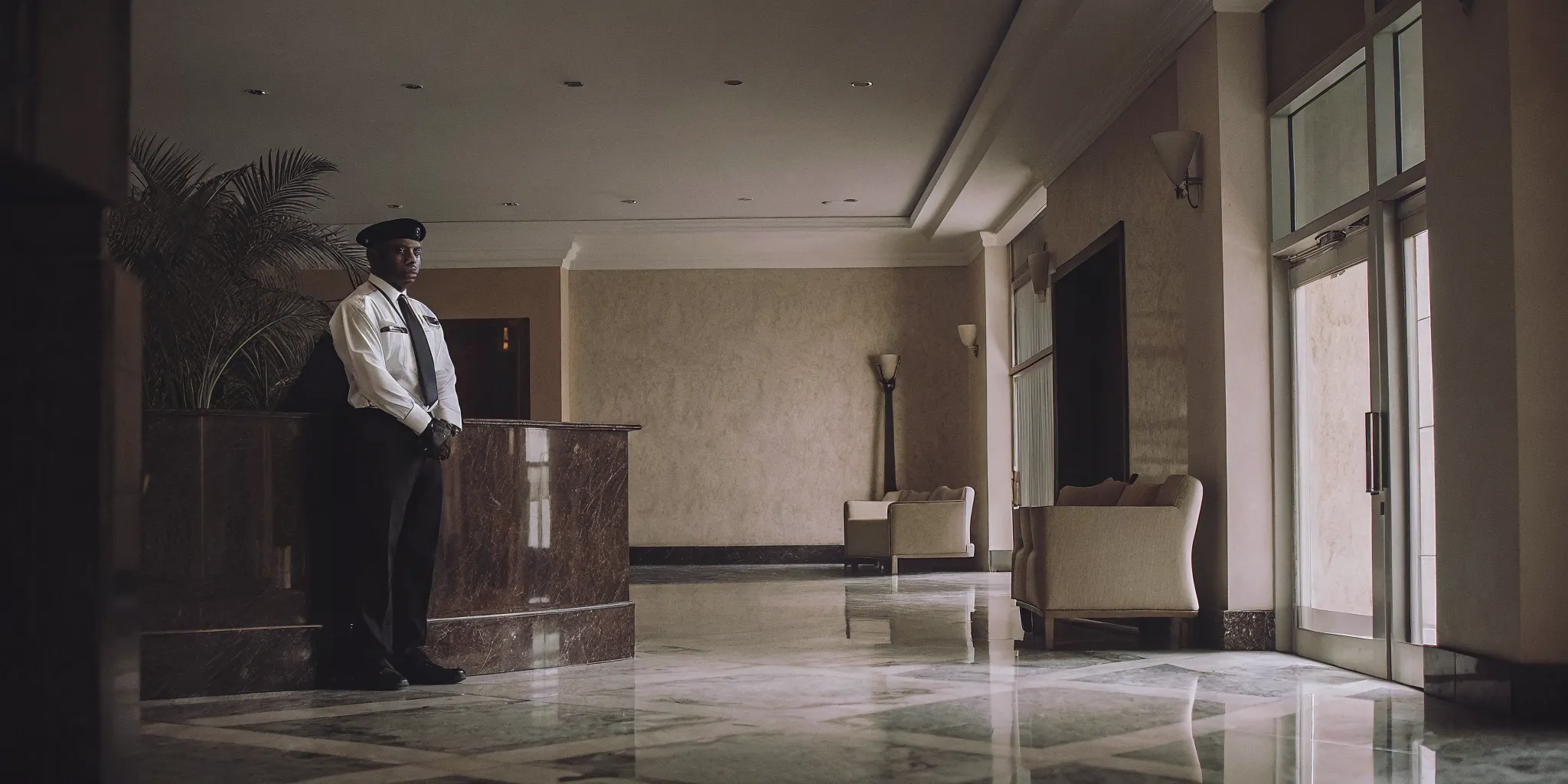
Overnight coverage means a licensed officer is on the property for the hours when your leadership team is off site. On a typical hotel that window runs from late evening through the morning shift change. The officer is not a replacement for the front desk, and not a roaming alarm that only shows up after a call. The point is a person who can see the lobby, walk the floors and the lot, and reach a night auditor or housekeeper who is working alone.
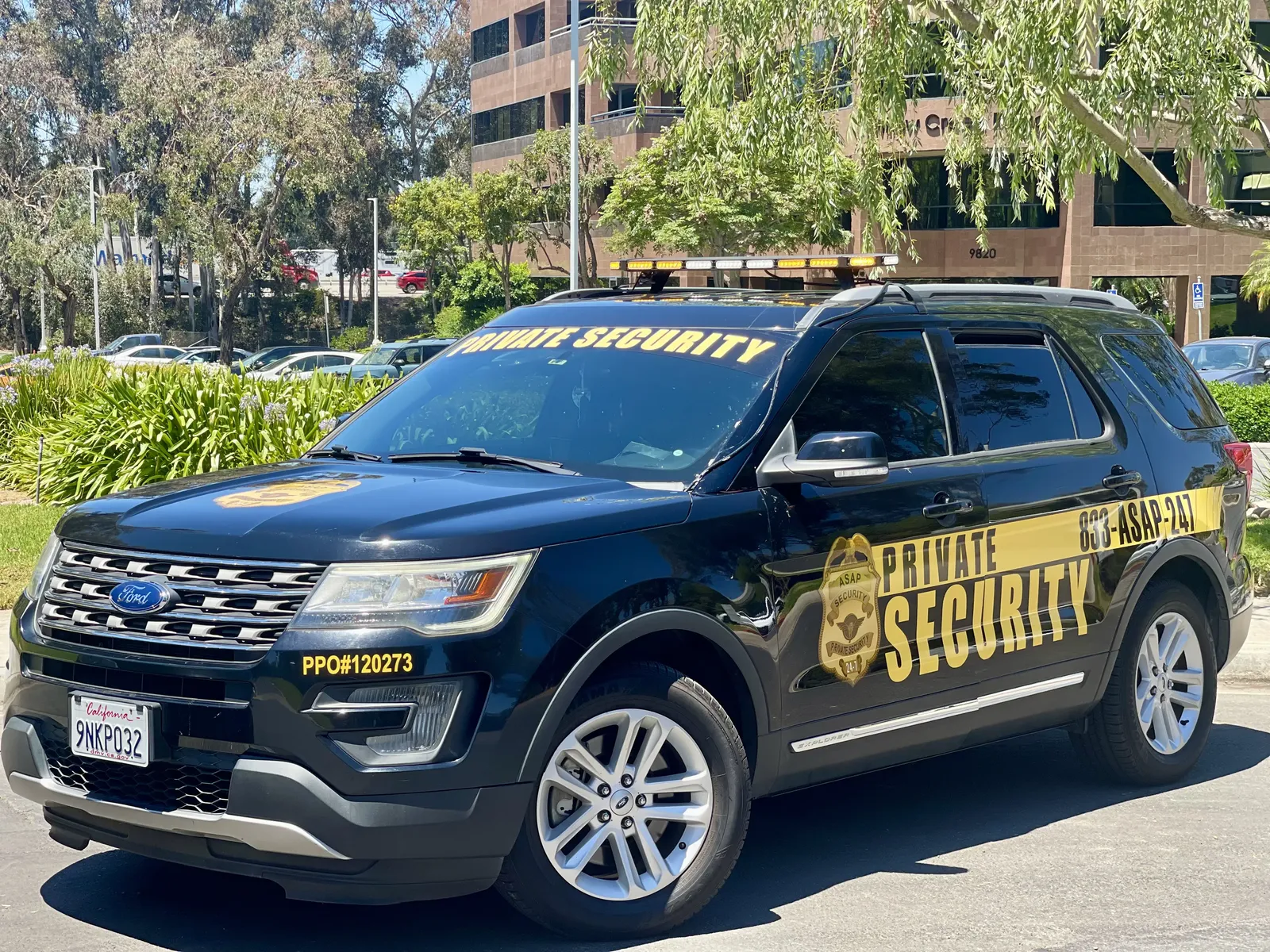
ASAP Security Guards staffs that kind of post from a live dispatch center that stays up all night. That is the overnight security coverage behind the officer in your lobby. Officers work under California Private Patrol Operator license 120273. Supervisors can see GPS-tracked Daily Activity Reports, so a night manager is not guessing whether the parking garage was actually walked. Office hours are Monday through Friday, 9 am to 5 pm. Security service and live dispatch run around the clock. The line we use is simple: 24/7 security services and live dispatch, office Mon-Fri 9 am-5 pm.
A camera system still matters. It does not walk a guest to a car, and it does not stand with a housekeeper who finds a room that should have been empty. If your night plan is “the camera will catch it,” you already have the first sign that a person belongs on the schedule.
When does a hotel need overnight security on the night shift?
You do not need a major incident to justify the post. You need a pattern. Walk the last 30 nights of your log and mark any of the following. Two or more, repeating, is usually enough to price a dedicated overnight officer instead of hoping the desk can absorb it.
- The desk is alone for long stretches. If the night auditor is checking in a late arrival and cannot leave the terminal, the lobby, the bar exit, and the phone are unattended at once.
- Housekeeping or engineering works without a partner. A single employee on a guest floor or in a basement shop has no fast help if a door opens behind them.
- More than one entrance stays usable after dark. A lobby, a side corridor to the pool, a parking-garage stair, and a loading door is four ways onto the property.
- Guest activity piles up after 10 pm. Bar close, a wedding reception, a sports crowd, or a run of early check-ins all land on the smallest crew of the day.
- The same complaint repeats. Loitering in the garage, noise on one floor, a vehicle that sits for days, or a guest who will not leave a public area is an operations problem, not a one-off.
Count the nights, not the drama. A quiet suburban motel with a single unlocked side door and one auditor can need an officer more than a busy lobby that already has two people and a locked garage. The test is whether someone whose job is the building can respond before morning.
Guest activity that changes the overnight decision
Hotels do not fail the same way. Match the post to the pattern you actually have.
Late lobby and bar traffic
A full-service hotel with a bar or a banquet room keeps strangers in the building after guest-room floors should be quiet. The officer’s job at that hour is presence and a calm handoff to the desk, not a confrontation in the hallway. If your bar closes and the crowd simply moves to the porte-cochere, that is a coverage hour, not a camera hour.
Early arrivals and airline crews
Properties near San Diego, Orange County, or Riverside travel corridors often check crews and red-eye arrivals in before the day team starts. Those guests need a clear lobby and a lot that has already been walked. An officer who starts before the first shuttle is more useful than one who starts at a round clock time copied from another hotel.
Extended-stay and weekly guests
Longer stays mean more people who know the side doors, the laundry room, and which stair avoids the desk. Overnight coverage here is about access habits, not a one-night event. If master keys, vendor doors, or in-room safes have been a topic in your morning meeting more than once this quarter, treat that as a staffing signal.
Events that outlast the event team
A wedding, a youth tournament, or a corporate dinner can leave the building loud after the event contract ends. Event security and overnight hotel security are different posts. If the event team clocks out at midnight and the noise complaints start at 12:30, you have a hole between two schedules. Close that hole on purpose.
For the shape of a normal shift once you decide to staff it, see hotel security guard duties. That page is about the work. This one is about whether the work needs its own person at night.
Staffing gaps that cameras do not close
Write down who is actually in the building between 11 pm and 6 am. Most hotels that struggle have the same short list. One night auditor is on duty. A housekeeper is on a floor, or already gone. An engineer is on call rather than on site. A manager is asleep with a phone. That can be a legal operation. It is also a building with no one assigned to look.
Ask three practical questions:
- If the auditor is on a long check-in, who watches the desk and the door?
- If a housekeeper radios for help on the fourth floor, who is close enough to arrive in a minute, not after a drive from off site?
- If two things happen at once, a noise complaint and a car alarm in the garage, which one waits?
A mobile patrol can cover the third question at some properties. It cannot cover the first two if the problem is inside and the officer is still on the road.
Dedicated overnight coverage fits when the answer is “nobody on the property.” Patrol still helps as a second layer for the lot. It also helps a sister property that does not justify its own post. ASAP runs standing posts and vehicle patrols in San Diego County, Orange County, and Riverside County. The quote can match the gap. We will not force a 24-hour lobby officer onto a site that only needs eyes from 10 pm to 6 am.
A staffed dispatch desk matters on the nights the on-site officer needs a supervisor, a relief, or a second officer. The desk is the backup, not a substitute for someone already in the lobby.
Access points that stay open after dark
Do a lap after 10 pm and count doors a guest, a vendor, or a stranger can still use. The usual list is longer than managers remember from the daytime walk.
- Lobby doors on automatic openers that never fully lock.
- Pool or fitness corridors propped for a late guest.
- Parking-garage stairs and elevators that bypass the desk.
- An employee entrance or loading dock with a shared code.
- Meeting-room doors left unlocked after setup.
- Stairwells back onto guest floors with no one watching the camera.
You do not need an officer for every door. You need a rule for each one, and a person if the rule fails when staff are thin. A propped pool door is a maintenance issue at 4 pm and an access issue at midnight. If your team “usually” resets doors at the end of the shift, read the incident log before you trust usually.
California also expects hotels, motels, and bed-and-breakfast inns to post a human-trafficking notice. Put it near the public entrance, or in another spot guests and employees actually see. The notice has to meet Civil Code section 52.6, including the size and hotline language in that section. The state Attorney General publishes the model notice and explains the posting rule.
An overnight officer is not the compliance program. The officer is often the person who will notice a missing notice or a side entrance with no sightline. The officer may also be the person who sees a situation the night auditor should not handle alone. Point your team at the model notice here: California Attorney General human trafficking model notice.
Separate from the poster, Government Code section 12950.3 requires hotels and motels to train certain staff on human trafficking. The training is at least 20 minutes, and it has to be interactive. It applies to employees who are likely to meet the public. That includes reception, housekeeping, staff who help guests with luggage, and staff who drive guests. New employees in those roles need it within six months. The training repeats every two years.
Your post orders should say what the officer does with a concern. They should also say the officer does not freelance a confrontation. The training rule is Government Code section 12950.3, summarized by the California Attorney General human trafficking model notice.
If you want the wider property review, doors, keys, cameras, and recreational areas, use the hotel security checklist. Use this article to decide whether the night needs a person, then use the checklist so that person is not inventing the rounds.
Who answers an incident before morning management
Write the first 10 minutes of a bad night before you buy the post. A guest refuses to leave the lobby. A housekeeper reports someone in a room that is supposed to be vacant. A car in the garage has a broken window. Those are different calls, and the desk should not be the only plan for all three.
A workable overnight post has four pieces:
- Post orders in the hotel’s words. Where to stand at peak arrival, which doors get a physical check, when to call the manager, and when to call police. Orders that say “use good judgment” are not orders.
- A radio or phone path to the night auditor. The officer and the desk should be able to reach each other without hunting for a cell number.
- A report the morning manager will actually read. GPS-backed activity notes and incident write-ups are how you find out the garage stair is the real problem, not the lobby.
- A supervisor who is awake. Live dispatch is what you call when the officer needs backup or a decision that should not wait for 8 am.
Armed and unarmed are a risk decision, not a default. Most hotel overnight posts in our counties are unarmed. The work is presence, access checks, and calm contact with guests. Armed coverage fits when the property has already documented a higher threat. Examples include repeated violent incidents, or a specific asset risk your insurer or counsel has flagged. It is not the right starting post for a noise complaint.
Approved public rates for planning are unarmed guards at $28 to $45 per hour and armed guards at $35 to $65 per hour. A quote still depends on hours and site conditions. It also depends on whether you need one officer or a relief plan so the post does not go dark for meals and days off.
Call (833) 272-7247 for a hotel overnight quote matched to your night shift.
How to match hours to the property
Start from the log, not from a 24-hour package. Many hotels need a person from late evening through breakfast setup, not a second officer at noon.
| Night pattern | What is usually uncovered | Coverage that fits |
|---|---|---|
| One night auditor, a locked garage, and few late arrivals. | The desk cannot leave for a floor call. | One unarmed officer for the lobby, with set interior and lot checks. |
| Open garage stairs and a pool corridor after dark. | Two public paths go around the desk. | One unarmed officer with set rounds, plus a rule that doors latch. |
| A bar, a banquet, or team travel after 10 pm. | The crowd outlasts the event staff. | Keep event coverage through close. Then use a dedicated overnight officer. |
| Repeated garage theft or a documented violent incident. | Presence alone has not changed the pattern. | Reassess with management. Use armed coverage only if the risk supports it. |
| Two smaller properties, neither busy enough for a full post. | Long gaps sit between look-ins. | Use a mobile patrol as a supplement. Do not treat it as a stand-in for a lone indoor worker. |
Relief matters as much as the start time. A post that disappears for an unpaid meal or a no-call is not overnight coverage. Ask, in the quote conversation, who covers breaks and who a manager calls at 2 am. That answer should be a dispatch desk, not a voicemail.
Hotels in Riverside County can read the local notes on hotel security services in Riverside. Properties in Orange County can start from Orange County security guard services. San Diego hotels can use security services in San Diego for the broader menu, then come back to the overnight hours this page covers.
If a site visit shows the real need is a daytime armed post or a special event, we will say so. We will not stretch this decision to cover a different job. Armed work in San Diego has its own page at armed security in San Diego.
A short way to decide this month
Pull 30 nights of the log. Circle every time the desk was alone or a door was found open. Circle every time a housekeeper or auditor asked for help. Also circle a complaint that keeps returning to the same public area. If you can circle two of those on a typical week, price a dedicated overnight officer for the hours the pattern actually happens.
If the log is quiet, and the building truly locks to one door with two people on duty, a patrol check may be enough for now. Either way, write the first 10 minutes of a bad night before the officer’s first shift. Keep the trafficking notice and the staff training on the manager’s list, not on the officer’s shoulders.
ASAP Security Guards builds that plan with you: on-site or patrol coverage, GPS-tracked daily reports, and a person on dispatch when the night does not go to script. We work with hotels across San Diego County, Orange County, and Riverside County, and we quote the hours you can defend to ownership.
FAQ: overnight security for hotels
When does a hotel need overnight security instead of cameras only?
When the night shift cannot watch the doors and answer an incident at the same time. A small property with two people on duty and a single locked entrance may do better with door rules and a patrol check. A lone auditor, open side doors, or the same late-night complaint every week usually means a person whose only job is the building.
Is a camera system enough after midnight?
Cameras record. They do not meet a housekeeper on a guest floor or walk a guest to a car. Use them to see which doors and which hours fail. Add an officer when someone has to act on that before morning management is in the building.
What hours should the overnight officer work?
Match the log. Many properties need coverage from late evening through breakfast setup, not a full 24-hour lobby post. Plan relief for breaks so the post does not go empty. If late arrivals or a bar crowd start earlier, start the officer then. Do not copy another hotel’s clock times.
Should the overnight hotel officer be armed?
Usually unarmed. The work is presence, access checks, and calm contact with guests and staff. Armed coverage is a separate decision for a documented higher threat, not the default for noise or a propped door. Planning ranges are $28 to $45 per hour unarmed and $35 to $65 per hour armed. The quote still depends on the site.
What should be ready before the first overnight shift?
Have post orders, a radio or phone path to the night auditor, a manager call list, and a report the morning team will read. Confirm the California trafficking notice is posted. Confirm guest-facing staff are on the training schedule in Government Code section 12950.3. The officer supports that program and does not replace it.
Call (833) 272-7247 and we will walk the overnight decision with you.
