
For an exhibitor, a trade show booth is a temporary storefront, filled with everything from product inventory to proprietary technology. For an attendee, it’s a place to learn and network. For a thief, it’s a target-rich environment. Protecting these distinct interests requires a multi-layered approach to trade show security. It’s not enough to simply have a guard at the main entrance. A truly effective plan involves risk assessment, access control, physical patrols, and specific protocols to safeguard individual booths. This article will explore how to build a robust security strategy that addresses the unique vulnerabilities of trade shows, ensuring a secure experience for all participants.
The Importance of Trade Show Security: Safeguarding Exhibitors and Attendees

Written by Rafi Kalliny Trade shows are essential events for businesses to showcase their products or services and connect with potential customers and partners. However, with the bustling atmosphere and valuable networking opportunities, trade shows can also pose security risks. Ensuring trade show security is of utmost importance, as it not only protects the exhibitors and attendees but also upholds the reputation and success of the event itself. We will delve into the various aspects of trade show security, the risks and threats involved, and the measures to safeguard both exhibitors and attendees.
 Understanding Trade Show Security
 Understanding Trade Show Security
Trade show security refers to the comprehensive set of measures put in place to maintain a safe and secure environment for all participants in an event. It encompasses a range of activities, from risk assessment and threat identification to implementing preventive measures and emergency response protocols. The primary goal of trade show security is to provide a secure setting that promotes engagement, networking, and business opportunities.
Why is Security So Important at Trade Shows?
The role of security at trade shows goes beyond just handling potential threats. Trade show security personnel play a crucial role in maintaining order and ensuring a smooth flow of activities. They assist with crowd management, enforce event rules and regulations, and provide guidance and assistance to exhibitors and attendees when needed. Additionally, trade show security guards work closely with event organizers, venue management, and local authorities to develop and execute effective security plans.
What Makes a Strong Security Plan?
Effective trade show security involves several key elements that work together to create a safe environment. These elements include access control procedures, physical security measures, video surveillance systems, emergency response plans, and well-trained security personnel. By integrating all these components, event organizers can mitigate potential risks, protect valuables and exhibitor assets, and ensure the safety and well-being of all attendees.
Controlling Event Access
Access control measures control who enters the event premises. This can include the use of badges, wristbands, or electronic access cards to ensure that only authorized individuals have access to the trade show area. By carefully managing access, trade show organizers can prevent unauthorized individuals from entering the event and potentially causing disruptions or security breaches.
Securing the Physical Space
Physical security measures are another crucial aspect of trade show security. These measures include the installation of barriers, such as fences or barricades, to control the flow of people and prevent unauthorized access to restricted areas. Additionally, trade show security may conduct regular patrols to monitor the event premises and identify any potential security vulnerabilities. By implementing physical security measures, trade show organizers can create a secure environment that deters potential threats and ensures the safety of everyone present.
Using Video Surveillance Effectively
Trade show security also relies on the use of video surveillance systems. These systems consist of strategically placed cameras that capture footage of the event area. The footage can be monitored in real-time by trade show security personnel, allowing them to quickly respond to any suspicious activity or potential security breaches. Video surveillance systems not only act as a deterrent but also provide valuable evidence in the event of an incident, aiding in investigations and ensuring accountability.
What Are the Biggest Security Risks at Trade Shows?
Trade shows can attract a diverse range of people, including exhibitors, attendees, vendors, and industry professionals. They are dynamic environments that bring together a multitude of stakeholders, creating a bustling atmosphere filled with innovation and excitement. Exhibitors showcase their latest products and services, attendees engage in meaningful conversations, and industry professionals exchange ideas to drive progress within their respective fields. The energy at trade shows is palpable, offering a unique opportunity for collaboration and growth. While trade shows provide a fantastic platform for networking and business opportunities, they can also attract individuals with malicious intent. Understanding the potential risks and threats is crucial to developing a robust security strategy.
Common Security Issues at Trade Shows
 Common Security Issues at Trade Shows
Preventing Unauthorized Entry
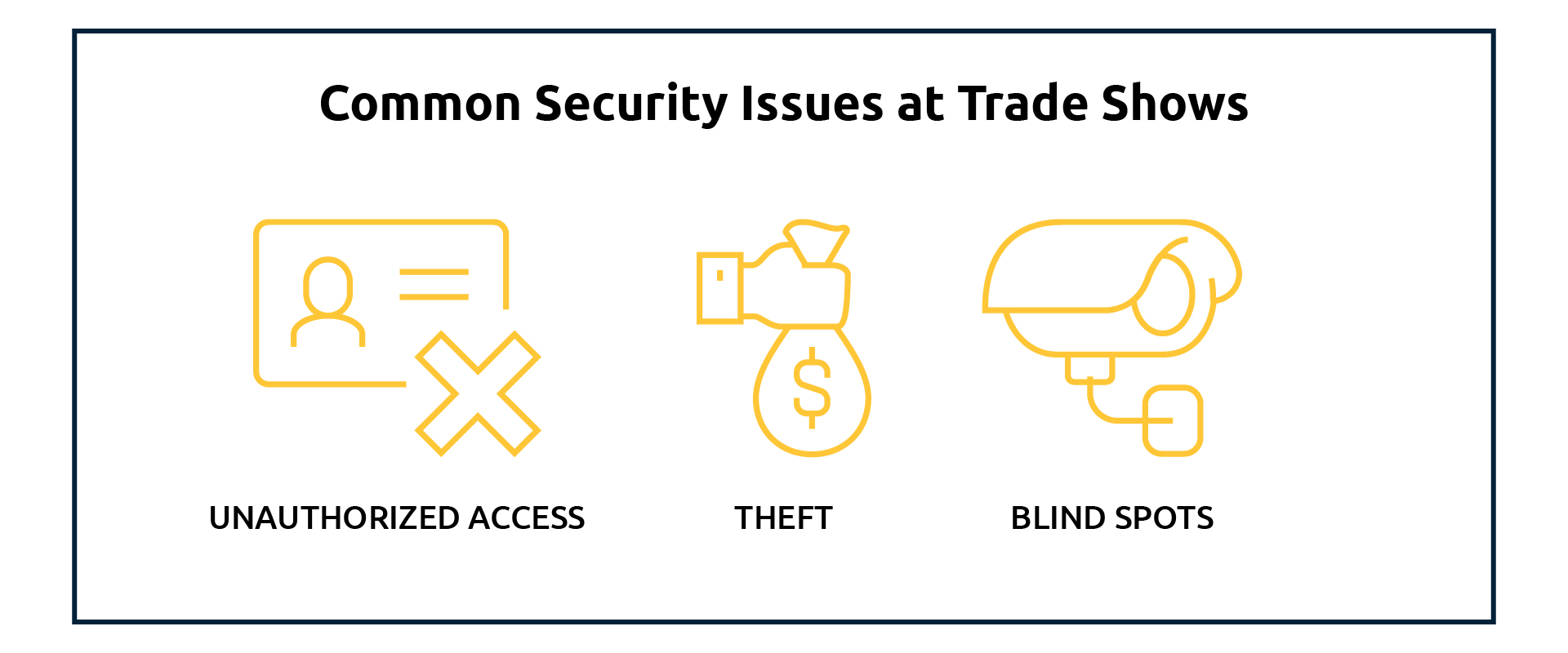
One of the common security issues at trade shows is unauthorized access. This can occur when individuals gain entry without proper credentials, posing a risk to the safety and security of the event.
Protecting Assets from Theft
Another significant concern is theft, as trade shows often feature expensive equipment, prototypes, and valuable merchandise. Vandalism and sabotage are also potential security issues that can disrupt the event and cause financial losses.
Managing Venue Blind Spots
Moreover, the open layout of trade show venues, with numerous booths and crowded aisles, can create blind spots that make it easier for malicious individuals to carry out their activities undetected. Trade show security personnel need to be vigilant and proactive in monitoring these areas to prevent any potential security breaches.
The High Cost of Inadequate Security
The consequences of inadequate security at trade shows can be severe. Incidents such as theft, vandalism, or physical altercations can harm the reputation of the event, leading to a loss of trust among exhibitors and attendees. Furthermore, injuries or accidents resulting from inadequate security can have legal ramifications and tarnish the image of the trade show organizer. Investing in robust trade show security measures is crucial for the success and sustainability of any trade show.
How to Safeguard Exhibitors at Trade Shows
 How to Safeguard Exhibitors at Trade Shows
Exhibitors invest significant resources in trade shows, including time, money, and effort, to promote their products or services. It is vital to provide them with a secure environment so they can focus on showcasing their offerings and interacting with potential customers. Implementing appropriate security measures not only protects exhibitors’ assets but also ensures their confidence and participation in future trade shows. Trade show organizers understand the importance of creating a safe and secure environment for exhibitors. One crucial aspect of safeguarding exhibitors is establishing stringent access control procedures. This involves verifying credentials and providing exhibitors with unique identification badges. By implementing these measures, organizers can ensure that only authorized individuals have access to the exhibition area, reducing the risk of theft or unauthorized activities. In addition to access control, physical security measures are equally important in protecting exhibitors’ valuable merchandise and equipment. Trade show organizers should consider providing lockable display cases and secure storage areas to exhibitors, allowing them to store their products safely during non-operational hours. Furthermore, installing alarm systems can act as a deterrent to potential criminals, providing exhibitors with an added layer of protection. While physical security measures are essential, proactive security measures are equally crucial in ensuring exhibitor confidence. Trade show organizers must effectively communicate their security measures to potential exhibitors, assuring them of the protection of their assets. Regular updates on security protocols, such as the presence of security patrols and CCTV surveillance, can instill confidence in exhibitors, knowing that their products and equipment are being monitored and protected. Moreover, trade show organizers can go the extra mile in ensuring exhibitor confidence by offering training opportunities on theft prevention and emergency response. By providing exhibitors with the knowledge and skills to handle potential security threats, organizers empower them to take an active role in safeguarding their assets. This not only enhances exhibitors’ confidence but also fosters a sense of partnership between exhibitors and organizers in maintaining a secure trade show environment. Open lines of communication between exhibitors and security personnel are also vital in building trust and confidence. Exhibitors should feel comfortable reporting any security concerns or suspicious activities to the designated security team. By establishing a responsive and supportive communication system, trade show organizers can address any security issues promptly, ensuring exhibitors’ peace of mind throughout the event. By implementing stringent access control procedures, providing physical security measures, and fostering confidence through effective communication and training, trade show organizers can create a secure environment that allows exhibitors to focus on what they do best – showcasing their products and services to potential customers.
Protecting Attendees at Trade Shows
 Protecting Attendees at Trade Shows
Attendee safety is a top priority when it comes to trade show security. Trade show organizers must take proactive measures to address potential risks and create a secure environment that allows attendees to engage in networking, educational sessions, and productive business interactions. Ensuring the safety of attendees involves a comprehensive approach that considers various aspects of security. From the moment attendees arrive at the trade show venue to the time they leave, every step must be taken to guarantee their well-being. This includes not only physical safety but also measures to address cybersecurity threats in this digital age.
Exhibitor-Specific Security Practices
While event organizers are responsible for the venue’s overall security, you, as an exhibitor, play a huge role in protecting your own assets. Think of it as a partnership. The event provides the framework, but you’re in charge of your specific space. Taking a few proactive steps can make all the difference in safeguarding your products, information, and team. It’s about being prepared and aware, from the moment you start packing for the show until you’re safely back in the office. Let’s walk through some practical security practices you can implement to ensure your trade show experience is successful and secure.
Secure Physical Items and Valuables
Your booth is likely filled with valuable items, from expensive electronics and product prototypes to merchandise. These are prime targets for theft, especially in a crowded and distracting environment. Make it a rule to never leave small, high-value items like tablets, phones, or proprietary devices unattended. At the end of the day, lock them up or take them back to your hotel room to store in a safe. For larger equipment that must be left overnight, consider hiring dedicated event security to watch over your booth. This provides a focused layer of protection that general venue security simply can’t offer, giving you peace of mind while you’re away.
Protect Digital Information
Physical theft isn’t the only risk; your digital assets are just as vulnerable. Protect your company’s and your customers’ data by using dedicated devices for the show. These laptops and tablets should be password-protected and have only the essential software installed. Avoid connecting to the public Wi-Fi, which can be insecure, and use a private, password-protected hotspot instead. If you need to transport sensitive files, don’t leave them on a laptop at the booth. Instead, use an encrypted USB drive that you keep on your person at all times. A little digital hygiene goes a long way in preventing a data breach that could have long-lasting consequences.
Maintain Booth Presence and Awareness
An empty booth is an open invitation for trouble. It’s crucial to have at least one team member present and attentive at your booth during all show hours. A staffed, organized booth is a natural deterrent to opportunistic thieves. Train your staff to be aware of their surroundings and to greet everyone who approaches the space. This not only makes for great customer service but also lets potential thieves know they’ve been seen. If you’re short-staffed or have a large booth, supplementing your team with a private security guard ensures a constant, professional presence focused solely on protecting your space, allowing your sales team to focus on engaging with attendees.
Practice Travel and Hotel Security
Your security mindset shouldn’t be limited to the trade show floor. It starts the moment you leave for the event. When traveling, always keep your luggage and personal belongings within your sight. At your hotel, be discreet when checking in and don’t announce your room number out loud. Once in your room, double-check that the locks on the door and windows are secure, and always use the deadbolt and security latch. Being mindful of your surroundings in transit and at your accommodations helps ensure that you and your valuable items arrive and remain safe throughout the entire event.
Why Attendee Safety is Your Top Priority
Attendees’ safety is crucial for their overall experience and satisfaction at a trade show. Feeling safe and secure enables them to focus on the event’s purpose and maximize their engagement. Trade show organizers should prioritize safety by implementing security measures that address potential threats and reassure attendees that their well-being is of utmost importance. Moreover, attendee safety is directly linked to the reputation of the trade show and its organizers. A successful event is not only measured by the number of attendees but also by their positive experience and feedback. By prioritizing safety, trade show organizers can build trust with attendees and create a conducive environment for fruitful interactions and business opportunities.
Actionable Strategies for Attendee Protection
Trade show security strategies for attendee protection may include visible security presence, well-lit and well-maintained venues, clearly marked emergency exits, and the provision of medical assistance if needed. Crowd management plans should also be in place to prevent overcrowding and ensure quick and orderly evacuation, if necessary. Regular communication regarding security protocols and emergency procedures can further enhance attendee safety. Additionally, leveraging technology can enhance security measures at trade shows. Utilizing tools such as access control systems, surveillance cameras, and threat detection software can provide real-time monitoring and response capabilities. These technological solutions not only improve security but also contribute to the overall efficiency of managing large-scale events.
Implementing Effective Trade Show Security
 Implementing Effective Trade Show Security
Implementing effective trade show security requires thorough planning, collaboration, and the use of appropriate technologies and resources. By focusing on prevention, preparedness, and response, trade show organizers can minimize risks and provide a secure environment for all participants. Trade shows are dynamic events that bring together a diverse range of exhibitors, attendees, and stakeholders. With this in mind, it is crucial for trade show organizers to consider not only physical security measures but also cybersecurity protocols to safeguard sensitive data and information shared during the event. Implementing encryption, secure networks, and data protection policies can help mitigate the risks of cyber threats and ensure a comprehensive approach to trade show security.
How to Plan and Prepare for Event Security
Trade show security planning starts well in advance of the event. It involves assessing the specific security needs of the venue, identifying potential risks and vulnerabilities, and developing a comprehensive security plan. This plan should incorporate access control procedures, crowd management strategies, emergency response protocols, and regular security drills and training exercises to ensure preparedness. Moreover, trade show organizers should consider the importance of communication and coordination among all stakeholders involved in the event. Establishing clear channels for reporting security concerns, implementing a unified command structure, and conducting regular meetings to review security protocols can streamline efforts and enhance overall preparedness for any security-related incidents that may arise.
Collaborative Security Planning
Great security is a team sport. It’s not just up to the event organizers; it requires a coordinated effort between the venue, exhibitors, and a professional security partner. A comprehensive plan protects everyone involved—from attendees to exhibitors—and safeguards the event’s reputation. This plan should cover all the bases, including strict access control to keep unauthorized individuals out, physical barriers to direct foot traffic, video surveillance to monitor the floor, and a team of well-trained security guards to provide a visible presence and rapid response. When all parties work together from the beginning, you create a security framework that is both effective and seamlessly integrated into the event experience.
Communicating with Event Participants
Keeping everyone in the loop is key to building confidence. When exhibitors and attendees know you’re taking their safety seriously, they can relax and focus on the event. Before the show, send out clear communications detailing the security protocols. Let exhibitors know about the presence of security patrols, CCTV surveillance, and after-hours booth monitoring. This transparency assures them that their valuable assets are protected. On-site, use clear signage for emergency exits and security stations. A well-informed participant is a more secure participant, and open communication fosters a sense of shared responsibility for maintaining a safe environment for everyone.
Practicing Emergency Plans
Having a plan on paper is one thing; knowing how to execute it under pressure is another. That’s why regular practice is non-negotiable. Create clear, straightforward emergency plans for various scenarios—like medical incidents, fires, or power outages—and drill them with your event staff and security team. These practice runs help identify any gaps in your strategy and build the muscle memory needed for a swift, coordinated response during a real crisis. When your team has rehearsed their roles, they can act decisively and calmly, ensuring the safety of everyone at the venue. This level of preparedness is the hallmark of professional event security.
Working with Trade Show Security Professionals
Trade show organizers should collaborate with trade show security professionals who have expertise in event security management. These professionals can provide valuable insights into the latest security technologies, industry best practices, and proven strategies for managing potential risks. By tapping into their knowledge and experience, trade show organizers can enhance security measures and create a safer environment for everyone involved. Additionally, leveraging the expertise of trade show security professionals can extend beyond the event itself. Post-event debriefings and evaluations with security experts can offer valuable insights for continuous improvement in future trade show security planning. By fostering an ongoing partnership with trade show security professionals, trade show organizers can adapt to evolving security threats and ensure the safety and success of their events.
Full Event Lifecycle Coverage
True event security isn’t just about having guards at the door on the day of the show. A professional security partner gets involved from the very beginning, covering the entire event lifecycle. This starts with creating a custom security plan tailored to your event’s specific layout, schedule, and potential risks. They’ll work with you during the planning phase, be present for setup and breakdown when valuable equipment is most vulnerable, and manage security throughout the live event. This comprehensive approach ensures that every stage is protected, giving you and your exhibitors peace of mind from start to finish.
Specialized Security Duties
Effective trade show security is a multi-layered strategy, not a single solution. Professional teams handle a wide range of specialized duties to create a secure environment. This includes managing access points to check credentials, setting up physical barriers to guide crowd flow, and monitoring video surveillance to keep an eye on the entire venue. Most importantly, they develop clear emergency plans and provide highly trained security guards who can de-escalate situations and respond decisively when needed. Each of these elements works together to deter potential threats and ensure a smooth, safe experience for everyone.
On-Demand and Flexible Services
Events are dynamic, and security needs can change in an instant. A key benefit of working with a professional security firm is their flexibility and ability to adapt. Whether you need to add extra guards for a high-profile speaker or require an immediate response to an unexpected situation, a reliable partner can provide on-demand services. Many top-tier security companies can deploy personnel within 24 hours for planned needs and can often have a rapid response team on-site in under an hour for emergencies. This adaptability ensures your event remains secure no matter what challenges arise.
What’s Next for Trade Show Security?
As technology continues to evolve, so does the landscape of trade show security. To keep pace with emerging threats and challenges, trade show organizers must embrace innovative security solutions that provide enhanced protection and improve overall event experiences.
Emerging Security Technologies for Trade Shows
 Emerging Security Technologies for Trade Shows
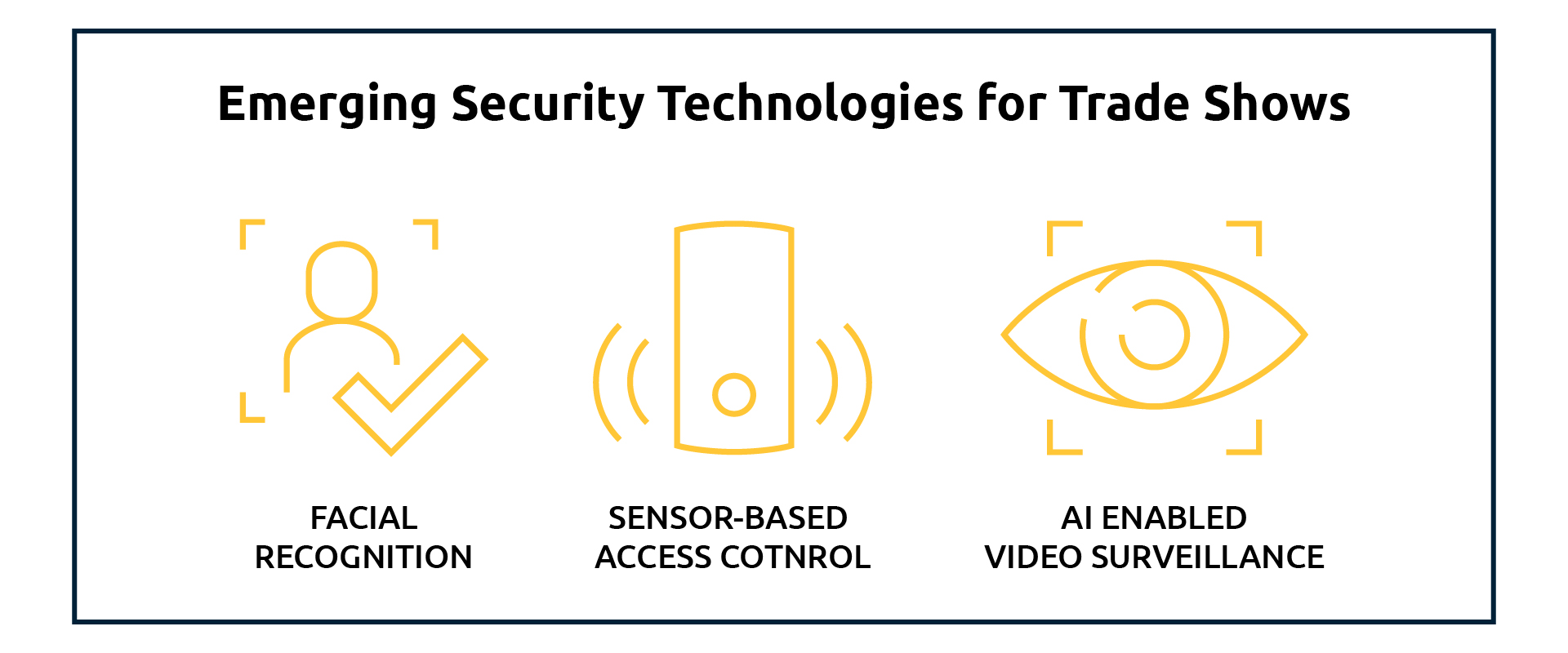
Advancements in technology offer numerous opportunities to strengthen trade show security. Facial recognition systems, sensor-based access control, and artificial intelligence (AI)-enabled video surveillance are some of the emerging technologies that can augment traditional security measures. These technologies can help in early threat detection, rapid response, and gathering valuable intelligence to prevent potential security incidents.
Facial Recognition Technology
Facial recognition systems have the capability to identify individuals in real-time, allowing security personnel to quickly identify potential threats or unauthorized individuals. This technology can be integrated with existing security systems, providing an additional layer of protection for trade show attendees and exhibitors.
Sensor-Based Access Control
Sensor-based access control is another innovative solution that is gaining popularity in the trade show industry. By using sensors to detect and monitor access points, trade show organizers can ensure that only authorized individuals are granted entry. This technology can also track the movement of individuals within the event space, providing valuable data for security analysis.
AI-Powered Video Surveillance
Artificial intelligence (AI)-enabled video surveillance systems are revolutionizing the way trade shows are secured. These systems use advanced algorithms to analyze video footage in real-time, detecting suspicious behavior or objects. By continuously monitoring the event space, AI-enabled video surveillance can provide early warning of potential security threats, allowing security personnel to take immediate action.
Adapting to Evolving Security Needs
With the evolving nature of security threats, trade show organizers must continuously assess and adapt their security plans to address new challenges. This includes staying updated on the latest security trends, engaging in regular risk assessments, and embracing innovative solutions that integrate seamlessly into overall security strategies. By constantly evaluating and improving security measures, trade show organizers can ensure the highest level of safety for exhibitors and attendees alike.
The Growing Importance of Cybersecurity
One of the key aspects of evolving security needs in the trade show industry is the importance of cybersecurity. As trade shows become more digitally connected, there is an increased risk of cyber attacks. Trade show organizers must prioritize cybersecurity measures to protect sensitive data, prevent unauthorized access, and ensure the smooth operation of digital systems.
Integrating Physical and Digital Defenses
Another evolving security need is the integration of physical and digital security measures. Trade show organizers must find ways to seamlessly integrate traditional security measures, such as physical barriers and security personnel, with emerging technologies like facial recognition and AI-enabled video surveillance. This integration ensures a comprehensive security approach that covers both physical and digital threats. In conclusion, trade show security plays a vital role in safeguarding exhibitors and attendees, maintaining a positive event experience, and upholding the reputation of the trade show industry. By understanding the importance of trade show security, identifying potential risks, implementing effective security strategies, and embracing emerging technologies, trade show organizers can create a secure environment that fosters productive business interactions and promotes the growth and success of the industry as a whole. 
Ready to Secure Your Event? Let’s Talk.
We are proud of our stellar customer service record, so check our website for all the testimonials from our various satisfied customers. Call ASAP Security at 1-833-272-7247
About the author: Rafi Kalliny is the CEO of ASAP Security and has worked in the security guard industry since 2013. He leads the company with a focus on professionalism, training, and client trust, making ASAP one of San Diego’s most respected security guard providers.
Frequently Asked Questions
Why can’t I just rely on the security provided by the trade show venue? Think of venue security as the foundation of a house; it’s essential, but it isn’t the whole structure. The venue’s team is responsible for the entire property, focusing on perimeter control, main entrances, and general safety. A dedicated event security plan, however, is tailored specifically to your show’s unique layout, schedule, and risks. It adds crucial layers, like access control for the show floor, patrols for exhibitor areas, and specific protocols for your event, creating a comprehensive safety net that venue security alone can’t provide.
As an exhibitor, what are the most critical security practices for my booth? Your most effective tool is consistent awareness. Always have at least one team member present and attentive at your booth, as an empty space is an easy target. Be diligent about securing small, high-value items like tablets, prototypes, or phones, especially at the end of the day. It’s also vital to protect your digital information by using a private, password-protected hotspot instead of public Wi-Fi and ensuring all devices are locked when not in use.
When is the right time to bring in a professional security partner for an event? The best time to engage a security partner is during the initial planning stages, long before the event date is announced. Integrating security from the start ensures that safety protocols are built into the event’s design, not just added on as an afterthought. This early collaboration allows for a thorough risk assessment and the creation of a seamless plan that works in harmony with the venue, your staff, and your exhibitors.
My booth is small. Is a dedicated security guard really worth the investment? The value of a dedicated guard isn’t just about the size of your booth, it’s about the value of your assets and your team’s focus. A professional guard serves as a powerful visual deterrent to opportunistic thieves. More importantly, their presence allows your sales team to engage fully with potential clients without having to divide their attention. This ensures your products are protected and your staff can concentrate on what they do best: building relationships and making sales.
Beyond physical theft, what other security risks should I be aware of at a trade show? While theft of physical products is a major concern, digital security is just as important. Unsecured public Wi-Fi networks can expose your company to data breaches, so protecting your digital assets is critical. You should also be mindful of unauthorized access, where individuals without proper credentials might try to enter the show floor or restricted areas. A comprehensive security plan addresses these less obvious, but equally significant, threats to keep your information and event secure.
Key Takeaways
- Adopt a multi-layered security strategy: A truly secure trade show relies on more than just a guard at the door; it requires a complete plan that combines access control, visible patrols, video monitoring, and well-rehearsed emergency responses.
- Take ownership of your booth’s safety: Event security provides the framework, but you are the first line of defense for your own space. Actively protect your assets by locking up valuables, using secure Wi-Fi, and always having an alert team member present.
- Partner with security experts early: Don’t treat security as an afterthought. Involving a professional team in the planning process ensures a customized strategy that covers every phase of your event, from initial setup to final breakdown.
Related Articles
- Trade Show Security Guard Services for Events | ASAP Security Guards
- Trade Show Security Services | ASAP Security Guards