
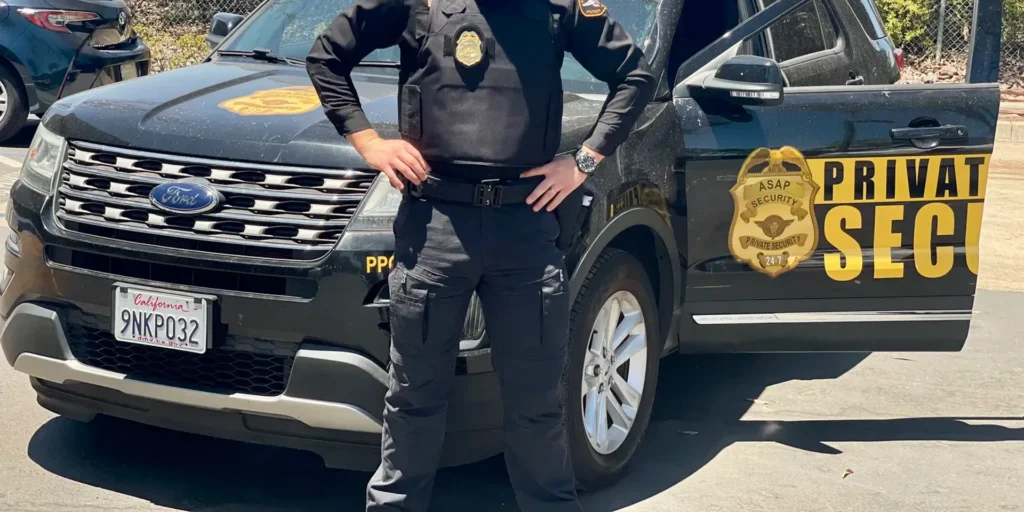
Theme park security guards can help venue operators manage visible coverage, entry procedures, guest movement, and incident communication across a complex site. The strongest plan is not simply a count of posts. It connects each guard’s location and responsibilities to the park’s layout, operating schedule, guest-service standards, and emergency procedures.
Discuss security coverage for your venue
Call (833) 272-7247 to discuss park coverage
This guide is for venue operators and managers planning physical, on-site guarding. It focuses on practical coordination—not policing powers. Guards should operate within applicable law, their assigned duties, venue policy, and the direction of public emergency responders. A written plan should make clear who handles decisions, who contacts responders, and how staff communicate when an incident exceeds the guard team’s role.
What should a theme park security plan accomplish?
A park plan should help people find assistance, guide routine movement, protect controlled areas, and give employees a reliable way to raise concerns. It should also account for the fact that the site changes throughout the day. A quiet opening period, a busy afternoon, a special event, and closing time may each require different post locations and communication priorities.
Start by identifying the outcomes the operation needs. For example, managers may want a visible presence at public entrances, a clear process for restricting access to staff-only areas, consistent escalation when a guest needs help, and reliable records of completed patrols or reported incidents. These are operational objectives. They do not replace fire, medical, law-enforcement, or other emergency plans.
Define what success looks like in observable terms. “Watch the midway” is hard to verify. “Maintain a visible position at the east-side junction during the afternoon peak, keep the service lane clear, and notify the operations lead about a developing obstruction” gives a guard and supervisor a more useful assignment. The detail should be tailored to the site rather than copied from another venue.
How should managers map posts and routes?
Use a current site map to mark public entrances, ticketing or admission areas, guest-service points, ride and attraction boundaries, staff-only doors, loading areas, parking transitions, first-aid locations, and emergency access routes. Add the names or radio identifiers used by venue staff. A map that uses different names from the radio protocol can slow communication when people are trying to coordinate.
Then consider where a guard can see, how guests approach the area, and what happens when foot traffic builds. A post at a junction may help staff observe several routes, but it can also become ineffective if a queue blocks the view. A mobile route may cover more ground, but it should not leave a critical access point unattended if that point needs continuous observation.
- Fixed posts: Assign them to locations where a consistent presence or access check is needed.
- Mobile patrols: Set a defined route, reporting method, and check-in expectation; avoid vague instructions to “walk the property.”
- Relief and handoff: Identify who covers a post during breaks, shift changes, or short operational requests.
- Peak-period adjustments: State when a post moves or additional coverage begins, and who authorizes that change.
For each position, document the purpose, hours, boundaries, nearby contacts, and escalation path. Review the layout with park operations before service begins and whenever an attraction, entrance, event footprint, or guest route changes. A current post-order planning guide can help managers think through the instructions each assignment should contain.
What should visible guarding look like?
Visible guarding means a guard is easy to identify and available to direct a guest to the appropriate venue resource, while remaining attentive to the assigned area. Visibility should not become an excuse for confrontational behavior or unsupported promises. A calm greeting, clear directions, and prompt communication with park staff can be more useful than a guard attempting to resolve every guest concern alone.
Agree on basic guest interactions before opening. Determine how guards should respond to requests for directions, lost-property questions, a separated party, an accessibility concern, or a guest who wants to report a problem. The answer may be to direct the person to a designated service point, notify a supervisor, or request assistance from another venue team. Give guards the correct contact method and location names.
Visibility also depends on posture and placement. A post hidden behind a temporary queue structure may not reassure guests or let staff see that coverage is present. On the other hand, placing a guard in the middle of a narrow walkway can add to congestion. Walk the location during representative operating conditions and adjust the position so the guard is noticeable without obstructing guest flow.
Clarify boundaries around guest interactions. Guards should follow the venue’s approved procedures for requests to leave an area, suspected rule violations, disputes, or refusal to follow instructions. The plan should identify when to call a supervisor or public emergency services rather than improvising. Venue policy and the applicable law govern what the guard may do; a uniform does not grant public-policing authority.
How can access control protect staff-only areas?
Theme parks have spaces with different access needs: public guest areas, controlled operational zones, and restricted areas for staff, contractors, deliveries, or maintenance. The operator should decide who is authorized to enter each space and how that authorization is checked. Security staff can support the process when their role and the venue’s approval rules are explicit.
For each controlled entrance, document the accepted credential or confirmation method, who can approve an exception, and where to direct a person whose access cannot be confirmed. Include a process for doors that must remain available for operational or emergency reasons. Guards should not create informal shortcuts, lend credentials, or make access decisions outside their instructions.
| Coverage approach | Best fit | Plan to define | Operational trade-off |
|---|---|---|---|
| Fixed visible post | Public entrance, key junction, or controlled doorway | Post purpose, hours, access procedure, relief, escalation contact | Consistent presence, but limited reach beyond the assigned area |
| Mobile patrol route | Multiple separated locations needing periodic observation | Route, check-in points, reporting method, response priorities | Broader coverage, but a location is not continuously staffed |
| Peak-period surge post | Known attendance peaks, scheduled performances, or special events | Activation trigger, deployment time, supervisor, end-of-shift handoff | More coverage at busy times, requiring timely coordination |
| Combined coverage | Large or changing layouts with both fixed and mobile needs | Who monitors each area, radio channel, backup and relief plan | Flexible arrangement, but responsibilities must not overlap or leave gaps |
Access control works best when it complements venue processes rather than replacing them. Confirm how park employees communicate a change in authorized access, how deliveries are handled, and how guards verify the person who can approve an exception. If a camera system is part of the site’s wider security setup, managers can review CCTV system options and decide how technology and on-site personnel should coordinate without assuming either one replaces the other.
How should guards support crowd movement?
Guards can help staff observe developing congestion, keep designated routes clear, and direct guests toward the appropriate venue resource. The park should set the movement plan: which routes are open, where queues may form, what areas must remain unobstructed, and which manager can authorize a change. Guards should not independently redesign crowd routes or make capacity decisions unless those duties are expressly assigned and supported by the venue’s operating procedures.
Walk the site at the times and conditions that matter. Look at entry lines, the points where guest paths cross, popular attraction approaches, food or merchandise queues, performance areas, and transitions between indoor and outdoor spaces. Note where temporary barriers, signs, furniture, or vendor setups could narrow a path. Include the people responsible for operations and guest services in this review; they understand how the space is actually used.
For each likely bottleneck, agree on a simple escalation sequence. A guard may observe that movement is slowing, notify the designated operations contact, and follow instructions to direct guests to an approved route. If the situation presents an immediate emergency, the venue’s emergency plan and public responder instructions take priority. Use plain, consistent radio language and avoid codes that temporary staff or relief personnel may not understand.
Coordination with event operations matters when the park schedules a parade, concert, seasonal activation, or other program that temporarily changes foot traffic. ASAP provides event security guard services, and managers can also review event security planning considerations when thinking about an event footprint within a larger venue. The park’s own operator remains responsible for defining its guest-flow rules and coordinating the event plan.
Call (833) 272-7247 to discuss peak-period guard coverage
What should incident communication and documentation include?
Consistent records help venue managers understand what was reported, what action followed, and whether a procedure needs review. Before coverage starts, agree on the reporting method, the person who receives urgent notifications, and the distinction between a routine observation and an event that requires immediate escalation. Keep the process compatible with the park’s incident-reporting and privacy requirements.
A useful report typically captures the time and location, the nature of the observation or request, people or departments notified, actions taken within the guard’s assignment, and the status at handoff. Record observable facts in neutral language. Avoid speculation, unnecessary personal details, or conclusions that the writer is not authorized or qualified to make. If the venue has a required form, terminology, or retention rule, communicate it before the first shift.
Managers should also decide how routine activity is documented. For example, the park may want evidence that assigned patrol points were checked, a door issue was reported, or a temporary post was opened and closed as directed. GPS-tracked Daily Activity Reporting is one approach to documenting guard activity; the format and access to records should be agreed with the service provider and aligned with the venue’s policies. See this overview of digital activity reports and guard logs for questions to consider.
One research record available for this article describes a study of the unique challenges, responsibilities, and experiences of security guards serving in schools. It is not a theme-park study, so it should not be treated as evidence about park operations. Its subject is a useful reminder to plan around the actual site and assignment rather than assuming that one environment’s procedures fit another: Experiences of Security Guards Serving in Schools.
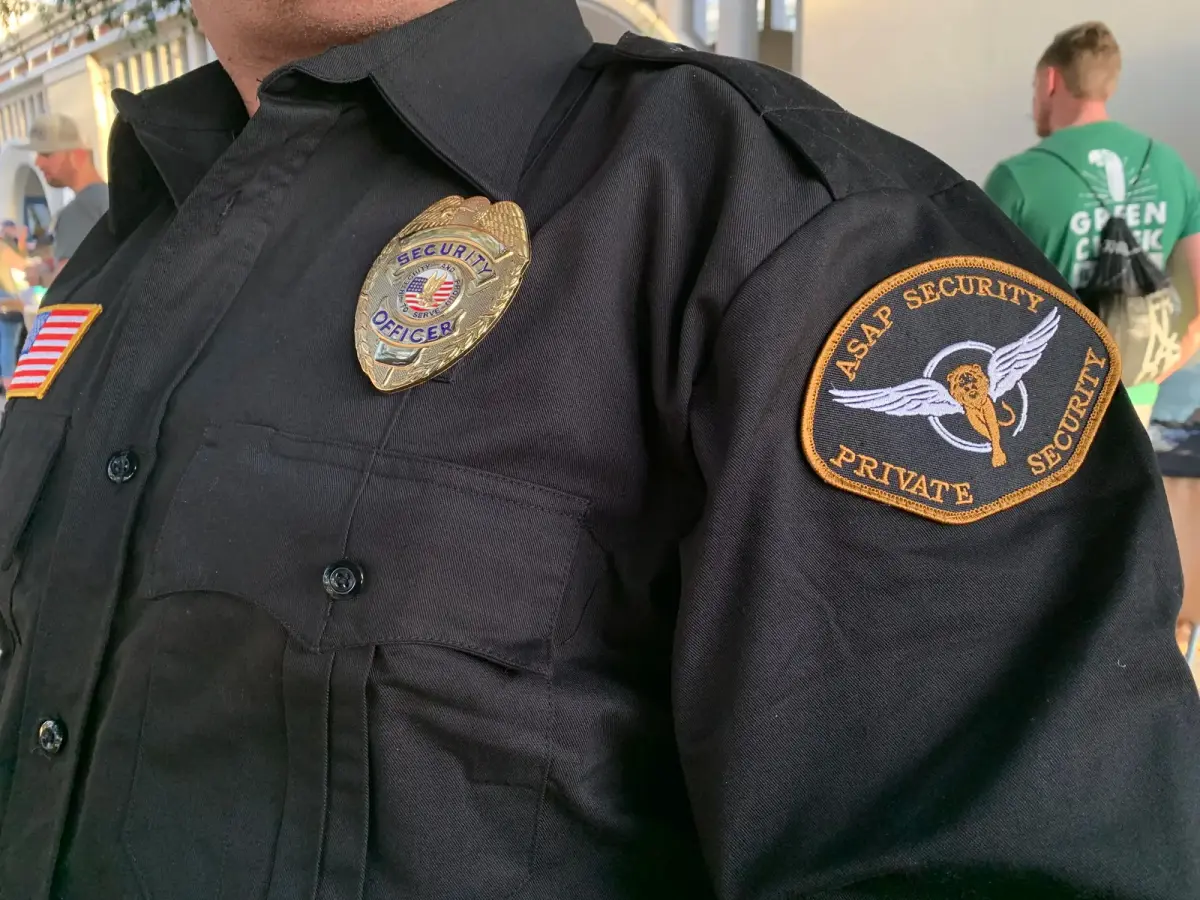
How should staffing adjust for seasonal and event surges?
A standing schedule may cover ordinary operations but fail to account for seasonal attendance, school breaks, holiday programs, private events, or extended hours. Build a calendar of known demand changes and identify the parts of the site affected. The point is not to guess attendance precisely; it is to establish in advance how the park will decide whether additional coverage is needed and who can authorize it.
Write down the activation trigger and the practical steps that follow. The trigger might be a scheduled operating change or a venue-defined condition observed by the operations lead. Specify how much notice is needed to request additional staff, where they report, who briefs them, which radio channel they use, and which post or route they take. Also define what happens when the event ends or the need changes sooner than expected.
Temporary coverage should receive a focused briefing. Review the current site map, assignment boundaries, names of contacts, access rules, guest-service approach, emergency communications, report expectations, and any temporary closures or reroutes. Do not assume that someone who knows one part of the venue automatically knows a changed event footprint.
Operators evaluating a broader 24/7 guard coverage model should separate continuous needs from time-limited surge assignments. Continuous coverage calls for a documented rotation, relief, and handoff process. Surge coverage needs clear start and end conditions. Either arrangement should specify who supervises the work and how changes are approved.
How should the park measure whether coverage is working?
Review both the service process and the operational fit. Start with whether assigned posts were covered, patrol or check-in expectations were completed, required reports were submitted, and urgent messages reached the agreed contact. Then ask whether the locations and hours still match the park’s operating needs.
- Were the post instructions clear enough for guards to follow without guesswork?
- Did managers know whom to contact and receive updates through the agreed channel?
- Were access questions and guest requests directed to the right venue team?
- Did the planned positions support movement, or did queues and structures block visibility?
- Were schedule adjustments communicated before they created a coverage gap?
- Do reports document useful facts and follow-up without unnecessary personal information?
Use regular service reviews to examine patterns, not just isolated records. If the same walkway repeatedly becomes congested, ask whether the post, route, queue layout, or operations communication needs adjustment. If a restricted door generates repeated questions, check whether the access instructions or employee communication are clear. Agree on an owner and next step for each change, then confirm later whether it helped.
Operators comparing a plan with other venue needs may find the broader security guard services overview useful. For service-area questions or a tailored discussion, use the Southern California coverage information or contact the provider directly. Coverage details should be confirmed for the specific location and assignment.
What should managers confirm before service begins?
A short kickoff review can prevent misunderstandings on the first operating day. Confirm the site map version, post schedule, named venue contacts, communication equipment, relief plan, entry and access procedures, incident-reporting requirements, and the process for approving changes. Walk the priority locations together where practical.
- Scope: List the assigned posts, patrol routes, hours, and areas outside the assignment.
- Authority: State the actions guards may take under the assignment and when they must escalate.
- Communications: Confirm contact names, radio or phone method, urgent notification steps, and backup contacts.
- Guest support: Identify where guards should direct common requests and who handles follow-up.
- Surges: Set the request process, lead time, briefing owner, and schedule-change approval.
- Records: Agree on report content, delivery, review, and applicable privacy and retention rules.
- Review: Schedule an early check-in after operations begin and recurring reviews as needed.
For a prospective plan, a security service consultation can help define the site, requested hours, and coverage questions. Provide the park’s location, operating calendar, map, known peak periods, and any written procedures that the provider should consider. A clear scope makes it easier to discuss a workable deployment without assuming a fixed staffing formula applies to every venue.
How should guards coordinate with park departments?
Security coverage depends on clear working relationships with the people who operate the venue. Before service starts, identify the operations lead, guest services contact, facilities or maintenance contact, event coordinator, and the manager who can approve schedule or post changes. Use role titles and current contact methods in instructions so updates do not depend on knowing one individual by name.
Set simple handoff rules for common situations. A guest question may go to guest services; a damaged barrier may need facilities; a schedule change may require the operations lead; and an urgent safety concern may require immediate escalation through the park’s emergency process. The guard should know what to communicate, who takes ownership next, and whether the guard remains at the location while support arrives.
Radio protocol should be short, consistent, and practiced. Confirm the channel, call signs or location names, how to request a supervisor, and what to do if the primary channel fails. Avoid sending sensitive personal details over an open channel when a more appropriate reporting method is available. Venue staff should know how to reach the guard supervisor as well, including outside routine office hours if coverage is active.
Plan shift changes as operational handoffs, not just clock changes. The outgoing guard should pass along open issues, temporary instructions, and any approved post adjustments through the agreed process. The incoming guard should be briefed on what changed, confirm the assigned location, and know who to contact with questions. Supervisors should make sure relief is in place before a post is left unattended, when continuous presence is part of the assignment.
Finally, set a feedback loop. Venue staff should be able to report a missed check, unclear direction, or guest-flow concern promptly and factually. The service supervisor can review the information, confirm what is known, and coordinate a correction with the appropriate venue owner. This creates a practical way to improve the plan without treating every concern as proof of a larger failure.
How can managers test the plan before a busy day?
A short tabletop review can expose gaps without disrupting park operations. Bring together the venue contacts who would coordinate an incident and walk through a few realistic situations: a restricted door found open, a sudden queue obstructing an agreed route, a guest needing assistance, or an event schedule changing shortly before opening. Ask who receives the first notification, who makes the venue decision, what the guard is expected to do, and how the status reaches the next team.
Keep the exercise focused on communication and assigned responsibilities. It is not a substitute for the park’s formal emergency training, and it should not create new powers or procedures for guards. If an answer is unclear, assign an owner to update the relevant post instruction, contact list, map, or venue procedure. Then brief the people affected and confirm that the updated version is the one in use.
After a real operating period, review whether the plan worked as intended. Compare the schedule and reports with staff feedback, note any changed conditions, and distinguish confirmed information from assumptions. A small, documented correction—such as updating a radio location name or specifying who approves a temporary post move—can make the next shift easier to coordinate.
Call (833) 272-7247 to plan a venue security consultation
Frequently asked questions
Do theme park security guards replace public emergency responders?
No. Guards provide the physical guarding functions assigned to them and follow applicable law and venue procedures. The park should identify when to notify public emergency responders and make clear that their directions take priority during an emergency.
Should every entrance have a fixed guard post?
Not necessarily. The right arrangement depends on the park’s layout, access requirements, schedule, and the role of other venue staff and systems. Managers can compare fixed posts, mobile patrols, and surge coverage, then document any locations that need continuous attention.
What should be included in an incident report?
Follow the venue’s approved process. In general, agree in advance how to record the time, location, observable facts, notifications, actions taken within the assignment, and handoff status. Reports should be neutral and should not include unnecessary personal information or unsupported conclusions.
How can a park prepare for a sudden increase in attendance?
Define who can request extra coverage, how staff are briefed, where they report, which routes or posts they take, and how changes are communicated. Pair that staffing process with the venue’s guest-flow and emergency procedures; guards should not invent routes or capacity rules on their own.
How can you plan the next step?
Start with a map and a short list of operating priorities: where a visible presence matters, which spaces have controlled access, when crowds shift, who receives incident notifications, and what changes during events or peak periods. Turn those priorities into post instructions and a review schedule, then adjust the plan as the venue’s layout and operations change.
