
Solar farm security has to account for more than a fence around a large property. Remote locations, multiple access points, long perimeter lines, valuable equipment, and changing work activity can make it difficult to know what is happening across a site. A practical plan pairs clear access rules with visible guards, mobile patrols, useful reporting, and a response process that fits the facility.
Request a security consultation for your site
Call (833) 272-7247 to discuss solar farm coverage.
The right coverage depends on the site layout, operating schedule, current risks, and what the owner or operator needs to verify. This guide focuses on physical guarding and operating procedures. It does not replace engineering, electrical, or cybersecurity assessments.
Why does a solar farm need a site-specific security plan?
A solar farm may cover a broad area with panel rows, inverter locations, electrical enclosures, maintenance buildings, gates, and internal roads. Those areas do not all have the same exposure or need the same level of attention. An unattended gate may create an access problem, while a distant equipment area may require a different patrol route or reporting instruction.
Remote properties can also have fewer people present to notice unusual activity. The question is not simply whether the site has a fence. Managers need to know who is authorized to enter, how access is checked, which areas are restricted, how patrols are documented, and who receives an incident report.
Begin with the facility’s operating reality. Identify normal access hours, scheduled contractors, delivery patterns, maintenance work, and points where a guard should check in with a site representative. A plan based on actual routines is easier to apply than a list of generic rules.
What should a physical security review cover?
Walk or review the property map with someone who understands daily site operations. Mark the perimeter, public roads, gates, parking or staging areas, panel blocks, equipment locations, buildings, and any areas with special access requirements. Note where a guard can safely observe the property and where visibility is limited by distance, terrain, vegetation, or structures.
- Perimeter: Record the fence line, gate locations, visible damage, and places where a person or vehicle could approach without being noticed.
- Access points: List vehicle and pedestrian entrances, emergency access gates, and any temporary openings used during maintenance.
- People and vendors: Clarify how the site confirms authorized staff, contractors, visitors, and delivery drivers.
- Critical locations: Identify restricted equipment areas and define who may enter them and under what conditions.
- Communications: Confirm how guards contact site management, emergency services, or the designated on-call person.
- Reporting: Agree on what needs an immediate call, a written incident report, or a routine shift note.
This review is about security operations, not an engineering inspection. Guards can report visible conditions and follow site instructions, but they should not be asked to diagnose electrical equipment, repair infrastructure, or make technical judgments outside their training and assignment.
How should perimeter protection work on a large site?
A perimeter plan should combine deterrence, observation, and a clear way to report a concern. Fencing and gates define boundaries, but they do not tell managers whether the boundary is being checked. A guard post can provide a visible presence at a key entrance. Scheduled or mobile patrols can add observation along routes and at locations that a fixed post cannot see.
Divide the site into practical zones. For each zone, identify the route, observation points, expected check frequency, and any restrictions on where a guard may travel. A route should be realistic for the property and should not require unsafe shortcuts or access to areas without authorization. If the property is too large for one person to observe at once, make that limitation explicit when discussing coverage.
Patrol instructions should explain what to look for without encouraging a guard to confront a suspected intruder. Examples include a damaged or open gate, an unfamiliar vehicle in a restricted area, signs of attempted entry, or an unexpected person near a controlled location. The guard should observe from a safe position, follow the escalation protocol, and share accurate details with the appropriate contact.
For a broader discussion of patrol approaches, see our guide to security patrol services and their uses. The best patrol approach for a solar facility should be selected around the actual site map and operational priorities, not copied from another property.
When is a mobile patrol useful?
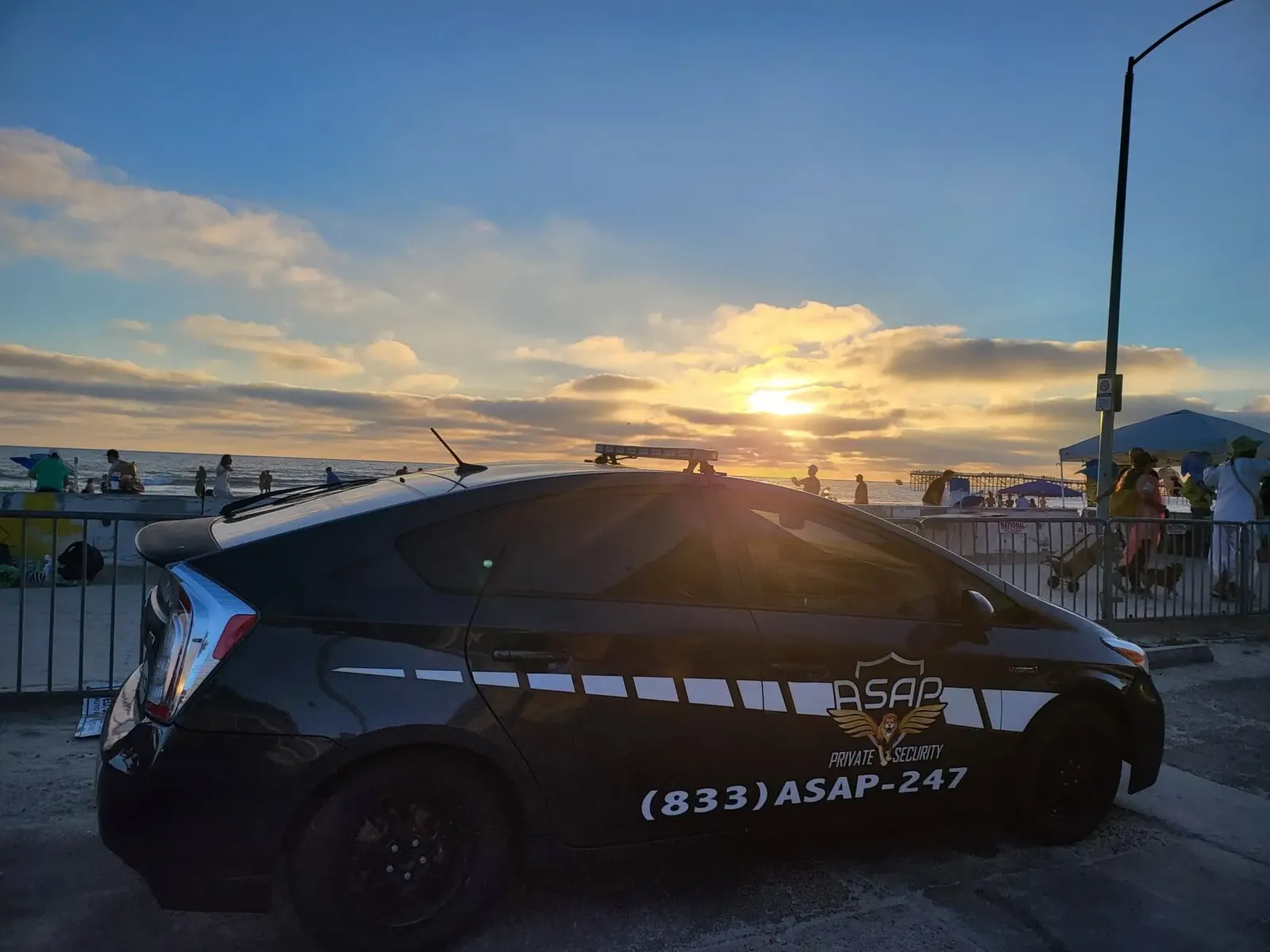
A mobile patrol can help cover multiple areas of a large or spread-out property. Instead of relying only on a guard stationed at one entrance, the patrol follows an assigned route, checks designated points, and records observations. This may be useful when a site has several gates, long boundaries, or equipment areas that are separated by internal roads.
Mobile coverage is not the same as uninterrupted observation of every point. A patrol visits locations at planned intervals; between visits, conditions can change. Managers should understand the patrol schedule, what it covers, and what remains outside the coverage window. If a site requires continuous attention at an entrance or other specific location, a fixed post may be more appropriate there.
Compare the two approaches using practical questions:
| Coverage option | Best fit | What it can provide | What to clarify |
|---|---|---|---|
| Fixed guard post | A designated gate or area needing a consistent presence | Visible presence, access checks, and observation at the assigned post | Post hours, duties, breaks, visitor process, and areas not observed |
| Mobile patrol | A site with separated zones or multiple points to check | Route-based checks and recorded observations across assigned areas | Route, timing, reporting points, and limits between visits |
| Combined coverage | A site needing an attended entrance plus wider property checks | A fixed presence paired with patrol activity in other zones | Staffing plan, handoffs, priority areas, and escalation contacts |
The table is a planning aid, not a promise that a given model will fit every facility. A manager should describe the site and desired duties before comparing proposals. For local context on custom security patrol coverage, review the service information and discuss which parts apply to the property.
How can access control reduce uncertainty?
Access control starts with a consistent process, not just a locked gate. Define which entrances are in use, who can approve access, what information a guard should verify, and how to handle an arrival that is not on the expected list. The process should be straightforward enough to use during a busy delivery period and clear enough to follow after normal office hours.
- Provide guards with current names or authorization criteria through an approved site contact.
- Set a procedure for confirming a visitor’s purpose and destination.
- Explain how to handle deliveries, service vehicles, and contractors with scheduled work.
- List restricted areas and the person who can authorize entry.
- Set a safe method for refusing or delaying access when authorization cannot be confirmed.
- Keep a record of access exceptions and notify the designated contact when the rules require it.
Do not ask a guard to invent access rules at the gate. Site management should define the policy and update it when vendors, schedules, or work areas change. A short written post order can help keep the process consistent across shifts. It should include emergency contacts, approved entry instructions, patrol expectations, and what information to record.
What should patrol and incident reports include?
Useful reporting gives managers a clear account of what was checked and what happened. A shift record can note the time and location of a patrol check, the condition observed, any access exception, and the person notified. If a concern occurs, the report should separate direct observations from assumptions.
For example, “west gate found open at 10:15 p.m.; no person observed; site contact notified by phone at 10:19 p.m.” is more useful than “someone tried to break in” when the guard did not see an attempt. Record facts such as time, location, description, direction of travel, actions taken, and notifications made, according to the site’s instructions.
Decide in advance which events require immediate escalation. An urgent safety issue may require an emergency response, while a routine maintenance observation may go to the site contact through the agreed reporting channel. A clear chain of communication helps avoid delays and conflicting instructions.
Technology can support visibility when it is part of the provider’s actual service. ASAP Security Guards uses GPS-tracked Daily Activity Reporting (DAR) and 24/7 live human dispatch. Learn more about digital guard activity reports and how documented patrol activity may fit a coverage plan. Reporting does not replace a site’s own records or incident procedures.
Call (833) 272-7247 to review patrol and reporting needs.
How do cameras fit with on-site guarding?
Cameras may provide another way to observe selected areas, but the site should define what the system covers, who monitors it, and how an alert is handled. Camera coverage and in-person guarding have different roles. A camera may show activity in its field of view; a guard can check access, observe conditions in person, communicate with people on site, and follow the approved response process.
Do not assume that a camera sees every boundary or that monitoring automatically dispatches a guard. Confirm camera locations, operating status, monitoring responsibilities, retention practices, and escalation contacts with the system provider and site management. ASAP’s CCTV system information and 24/7 CCTV monitoring service details describe related options; evaluate them separately from the physical guarding plan.
Solar facilities also use connected equipment and control systems. The U.S. Department of Energy notes that solar technologies can be vulnerable to cyberattack through inverters and control devices, which is a distinct risk area from physical access and patrols. See its solar cybersecurity basics. Research on photovoltaic cybersecurity also addresses inverter- and system-level concerns; see the University of Georgia project on multilevel cybersecurity for photovoltaic systems. Physical security staff should follow site protocols and report observed conditions, not claim to assess or resolve cyber vulnerabilities.
How should a site plan for incidents?
Write down the actions expected for common scenarios, such as an unauthorized person at a gate, a vehicle in a restricted area, suspected property damage, a medical emergency, or a fire or other hazard. The instructions should identify who to contact, when to call emergency services, what information to share, and where a guard should go or avoid going. Site-specific emergency procedures take precedence over a general security routine.
Use a simple escalation ladder. A low-priority observation may go in the shift report and be shared with the site contact. A more serious event may require an immediate call to a supervisor and property representative. An imminent threat or emergency may require emergency services, followed by notification to the designated site contact when it is safe to do so.
Managers should also define what happens after an incident: preserve relevant notes, provide a factual account, identify any access or communication gap, and assign a person to review follow-up actions. Avoid asking a guard to investigate technical failures or alter equipment. The goal is a timely, accurate report and a response consistent with the site’s procedures.
How do you turn a site review into useful guard instructions?
Convert observations from the site review into concise written instructions. A map can show where the guard is expected to go, while the post orders explain what to do at each point. Avoid vague directions such as “watch the whole property.” Name the gate, road, equipment zone, or building, and say what the guard should verify or report there.
Organize the instructions around a normal shift. State where the guard reports at the start, what communication method to use, which checks take priority, and where to record completed rounds. Explain whether the patrol route can change when a road is blocked or maintenance is underway. Identify who may approve a change and how the guard documents it.
Keep separate instructions for routine work and exceptions. Routine directions might cover checking a gate, noting a scheduled delivery, or recording a patrol checkpoint. Exception directions should describe whom to notify if a visitor is not authorized, a gate cannot be secured, or an incident interrupts the planned route. The guard should have a reachable contact rather than needing to guess how to proceed.
Review the instructions when the site changes. New panel areas, temporary access roads, construction or maintenance schedules, and changes in site contacts may affect coverage. A short update shared with the assigned security team can prevent an outdated map or phone list from undermining otherwise clear procedures. Keep one current version available at the designated post or in the approved reporting system.
What belongs in a shift handoff?
On a site with more than one shift, the handoff connects observations across time. The outgoing guard should pass on open issues, unusual access activity, incomplete checks, temporary instructions, and any contact already made with site management. The incoming guard should acknowledge the information and confirm that they understand the current priorities.
A practical handoff record can include the shift start and end times, the status of assigned access points, any patrol areas that could not be checked, and the reason for the exception. If a site representative has provided a one-time instruction, record who gave it, when it applies, and when it ends. This helps distinguish an approved temporary change from an unexpected deviation.
Managers should decide how quickly they expect to receive routine reports and how an urgent concern will be communicated. A written log is useful for a later review, but a time-sensitive issue should follow the immediate notification procedure rather than wait for a report to be read. Clear handoffs and escalation rules make a multi-shift plan easier to oversee.
How can managers test whether the plan is workable?
Before coverage begins, review the proposed route and instructions with the people who will use them. Walk the accessible portions of the route with a site representative where practical. Confirm that the names on the contact list are current, the guard can reach the designated person, and the reporting method works at the assigned locations. This is a process check, not a technical inspection of solar equipment.
Use ordinary scenarios to check whether the directions are clear. What should happen if a delivery arrives earlier than expected? Who can verify a contractor when the usual contact is unavailable? What should the guard do if a gate cannot be closed or a patrol route is blocked? How should a concern be escalated if the first contact does not answer? If the answer depends on an assumption, name the person who can resolve it and add the approved direction to the written instructions.
After service starts, review reports at an agreed interval. Look for recurring access exceptions, missed or delayed checks, unclear directions, and concerns that were sent to the wrong contact. Discuss patterns with the provider and site representative, then make a specific change if needed, such as updating the route, contact list, or visitor procedure. Changes should be communicated to everyone affected and recorded so the next shift does not rely on an informal conversation.
Set expectations for a periodic review even when no significant incident occurs. A change in operating hours, new work area, temporary contractor activity, or changed emergency contact can make an old plan less useful. A brief review helps keep the assignment aligned with how the property is currently used.
How do you choose the right coverage model?
Start by writing down the outcome you need. Is the priority an attended gate, regular checks around the perimeter, after-hours presence, access logging, or a combination? State the hours, zones, known access points, expected visitors or contractors, and the reporting format you want. Be candid about the size of the site and the distance between locations.
Then compare proposals on scope rather than on a single label. Ask whether a guard is stationed or mobile, which locations are included, how patrol activity is recorded, who answers after-hours calls, and how schedule changes are communicated. Clarify what is excluded, including technical inspections, equipment repair, or services outside physical guarding.
- Does the coverage plan match the actual map and access points?
- Are duties and restricted areas written in a post order?
- How are patrol checks and exceptions documented?
- Who receives an urgent call and who is the backup contact?
- How will the site notify the provider about maintenance schedules or temporary access changes?
- What is the process for reviewing incidents and adjusting the plan?
For more information about security guard services and Southern California service areas, review the relevant service pages. ASAP Security Guards provides physical, manned guarding; a consultation can help clarify whether the requested duties align with that scope.
ASAP Security Guards offers a free security consultation. Share the site type, county, access schedule, and coverage goals so the discussion can focus on the facility’s needs. The security services FAQ can also help with common questions about coverage.
Call (833) 272-7247 to discuss a solar farm security plan.
Frequently asked questions
Can one guard cover an entire solar farm?
It depends on the site’s size, layout, operating hours, and required duties. A single post cannot provide simultaneous observation of every location across a large property. Define the priority areas and discuss whether fixed coverage, mobile patrol, or a combination is appropriate.
Is mobile patrol the same as continuous site coverage?
No. Mobile patrol involves checks along an assigned route, while continuous coverage generally means a guard remains assigned to a designated post or area for the scheduled period. Ask which locations are visited, when checks occur, and what areas are not continuously observed.
Can a security guard inspect or repair solar equipment?
Not as part of ordinary physical guarding. A guard can follow site instructions, observe and report visible conditions, and contact the appropriate site representative. Equipment inspection, diagnosis, and repair should be handled by qualified personnel assigned to those tasks.
What should a solar farm security request include?
Include the property location, a site map or description, operating hours, gates and access rules, priority zones, expected visitor or contractor activity, known concerns, and reporting contacts. Also explain whether you are considering a fixed post, patrols, or both.
A strong solar farm security plan connects the property’s layout to specific guard duties, patrol routes, access rules, and reporting steps. Clear expectations help site managers evaluate coverage and give security personnel a consistent process to follow.
