

Choosing security staffing services is not simply a matter of deciding how many guards to schedule. Southern California businesses need a plan matched to site risks, operating hours, visitor flow, and the oversight they expect. A clear scope helps buyers compare proposals on more than headcount and gives security staff usable direction from the first shift.
Request a security coverage consultation
Call (833) 272-7247 to discuss site coverage
What should a security staffing plan cover?
A staffing plan turns a property’s needs into duties, hours, locations, and reporting expectations. Begin with the outcomes you need. They may include managing an entrance, observing activity, documenting unusual conditions, helping visitors find the right contact, or maintaining a visible presence during selected hours. Keep the description practical: staff need to know what to do, where to do it, and whom to contact when circumstances change.
Separate required duties from preferences. At a construction site, essential work might include observing vehicle and pedestrian access, checking designated areas, and recording unusual activity. A residential community may emphasize a professional, approachable presence, established visitor procedures, and communication with management. A hotel may need attention at public entrances and coordination with the property’s staff, while an event may need coverage at entry points and areas where attendee movement changes over time. The setting changes the details. The plan should state them rather than assume one generic post fits every property.
Describe the physical site, too. List entrances, loading areas, restricted spaces, public-facing areas, and places where visibility is limited. Note operating hours and the periods when traffic changes. Identify the person who can authorize changes to instructions and the people who need prompt notification. For multi-tenant properties or residential communities, distinguish client areas from shared spaces and state how staff should handle requests outside their assigned authority.
A useful starting brief can fit on a page: site purpose, proposed coverage window, key tasks, known concerns, contacts, and the preferred reporting method. It is not a substitute for detailed post instructions. It gives a provider enough context to ask informed follow-up questions and explain the proposed scope.
How do you assess a site’s risk and complexity?
Walk the property at the times coverage would operate. A daytime visit may not reveal after-hours access patterns, delivery activity, lighting conditions, quiet periods, or sightlines. Include people who know daily operations, such as a property manager, facilities lead, event organizer, or construction supervisor. Ask what changes during a normal shift, not only what is visible during the walk-through.
- Access: List gates, lobbies, loading areas, side doors, and vehicle entrances. Note which are public, controlled, or normally closed.
- Activity: Map visitor peaks, deliveries, resident needs, event phases, vendor arrivals, and quiet periods.
- Visibility: Identify blind spots, long perimeters, lighting gaps, and locations that may need periodic checks.
- People and property: Consider who uses the site and which equipment, operations, or shared spaces need attention.
- Response: Decide who receives incident notifications and what escalation route staff should follow.
- Change: Record upcoming construction, access changes, seasonal activity, or tenant turnover that could affect instructions.
Turn observations into questions rather than assumptions. If a gate is often left open, find out why and who controls the procedure. If a parking area is quiet at night, establish whether the priority is a visible presence, periodic observation, or access management. If a property has several buildings, clarify whether coverage is expected to remain at one post or move among them. For an event, identify the moments when attendee flow shifts: doors opening, a scheduled intermission, or the move toward an exit.
Use a simple site map during the walk-through. Mark posts, patrol areas, entrances, contact points, and any location staff should not enter without direction. Add notes about locked gates or access procedures that could affect a route. This map is especially useful when a buyer and provider use different names for the same building or entrance. Confirm the labels together before using them in post instructions.
Risk assessment is a planning exercise, not a promise that incidents will not occur. Use operating history and site observations to set priorities, then revisit the plan when conditions change. A new entrance, a construction phase, a special event, or a revised schedule can alter the assignment. Buyers can review security guard service options and Southern California service areas while defining the scope.

How many hours and posts are needed?
Match scheduled coverage to exposure and operations. A fixed post may be appropriate when a particular entrance needs continuous attention. Mobile patrols can provide scheduled checks across a wider site, but they are not the same as a guard continuously stationed at an entrance. Some properties combine approaches, with a staffed point during busy periods and patrols at other times. The schedule should reflect the work required, not simply use a label such as “overnight coverage.”
Write down start and end times, days of the week, holidays, and seasonal or event variations. State whether coverage includes setup, closing, shift changes, or delivery windows. For multiple posts, identify each location and its duties, and explain how staff should coordinate when one post is temporarily unattended. Ask how breaks and handoffs are addressed so the written scope matches what the property expects to be covered.
Consider a commercial property with a busy lobby by day and a quiet parking area overnight. The lobby may need visitor direction and communication with building staff, while nighttime duties may focus on observation and scheduled checks. A single description that says “one guard, all day” leaves unanswered whether tasks and locations are meant to change. Divide the schedule into operating periods, then specify the duty and location for each period.
An event presents a different timing problem. The invitation time is not necessarily the start of the assignment. Setup, vendor access, guest arrival, the event itself, and breakdown can each create distinct requirements. For a construction site, work phases and equipment deliveries may shift access patterns. Build the schedule around those operational milestones and state which party will communicate changes.
It can help to sketch a coverage calendar for a representative week. Mark normal operating hours, known high-activity windows, planned closures, and special dates. Then ask whether each hour requires a fixed post, a scheduled check, or no on-site coverage under the proposed plan. This exercise makes gaps and overlaps visible. It also prevents a one-day event schedule from being mistaken for the routine schedule that applies the rest of the month.
Which staffing approach fits the assignment?
Compare coverage models by what they can and cannot do. A stationed guard offers a consistent point of contact at a specific location. Patrol coverage can make periodic checks across a wider area, but the route and intervals should be defined. Event staffing follows the venue layout, attendance pattern, and operating plan. A combined plan may pair a fixed post with patrols or additional coverage during selected hours.
| Approach | Best suited to | Details to define |
|---|---|---|
| Fixed post | An entrance, lobby, or work area needs a consistent presence. | Post duties, location, shift handoff, and what happens during breaks. |
| Mobile patrol | Several areas need periodic checks without a continuously staffed point at each one. | Route, check intervals, areas included, and how completed checks are recorded. |
| Event coverage | Coverage needs follow an event schedule and attendee flow. | Entrances, event phases, coordination contact, and process for schedule changes. |
| Combined plan | A site needs a fixed contact point plus checks or extra coverage at selected times. | How posts communicate, who oversees the assignment, and which duties take priority. |
The right model depends on the site and assigned tasks, not the label alone. Ask a provider to connect its proposed post count and hours to observations from the walk-through. If cameras are part of the plan, define how human coverage and monitoring responsibilities fit together. ASAP Security Guards offers a separate 24/7 CCTV monitoring option; clarify the responsibilities associated with each service rather than assuming one replaces the other.
It may help to write a short scenario before choosing. For example: “At 6 p.m., the delivery entrance closes, but the main lobby remains open until 8 p.m. The guard should confirm the delivery area is secured, remain available at the lobby, and notify the property contact if the schedule changes.” This reveals whether a fixed post, patrol, or handoff is more consistent with the requested duties.
Ask how the model would work during an ordinary difficult moment, not just on a typical day. If a visitor arrives at a controlled entrance while the guard is conducting a scheduled perimeter check, what procedure applies? If an event ends later than planned, who can approve an extension? The answer may be that the client contact decides, the provider adjusts the schedule, or the post instructions set a specific interim action. Whatever the arrangement, write it down before service begins.
Call (833) 272-7247 to compare coverage approaches
What should post instructions say?
Post instructions turn a service plan into repeatable actions. Keep them readable, specific, and appropriate to the assignment. They should state where the guard is assigned, what routine tasks are expected, which rules govern access, and how to report an unusual condition. Avoid vague directions such as “keep an eye on the property.” Identify the areas and actions that phrase is intended to cover.
- Identify the post location, scheduled hours, and authorized client contact.
- Explain visitor, contractor, resident, and delivery procedures that apply to the assignment.
- Describe patrol areas and check frequency where relevant, including boundaries.
- Set the limits of the guard’s role and when to contact management or emergency services.
- State how to document routine checks, unusual observations, and incidents.
- Provide handoff steps and a way to communicate changes in site conditions.
Instructions should distinguish routine decisions from matters that require escalation. Staff may be expected to follow an established visitor procedure, for example, while a dispute over an exception may need a manager’s direction. Clarify who is authorized to make that decision and how the guard should proceed while waiting for a response. This reduces uncertainty without asking staff to create policy on the spot.
Make instructions specific enough to guide action without trying to anticipate every possible situation. A practical entry procedure might explain which entrance to use, who may authorize an exception, and how to record a question that cannot be resolved at the post. For a patrol, list the route and check points in an order that makes sense on the ground. If the route changes when a gate is locked, state who should be notified and how the adjustment is documented.
Agree on a version-control process. If the property changes an access rule or adds a work area, identify who updates the instructions, how the revision is approved, and how it reaches each person assigned to the site. Keep an accessible current copy and retire outdated versions. A brief review after a meaningful change helps confirm that the document reflects actual operations.
How should supervision and reporting work?
Coverage needs a clear accountability loop. Determine who reviews activity, how the client can reach the provider after hours, what information an incident report should contain, and how unresolved issues are followed up. A reporting process is useful when both sides agree on what should be recorded and who will review it. Otherwise, records can exist without answering a manager’s practical questions.
Ask whether routine activity records show when checks occurred, what areas were covered, and whether follow-up is needed. For an incident, decide what basic facts the client needs: time, location, people involved when appropriate, observations, notifications, and actions taken. Do not wait for an incident to decide who should receive a report or how urgent concerns should be escalated.
ASAP Security Guards uses GPS-tracked Daily Activity Reporting (DAR) and provides 24/7 live human dispatch. Confirm which reports and contact procedures apply to the specific assignment, how they will be shared, and which client representative will review them. Dispatch availability and on-site staffing are separate parts of a plan; specify scheduled posts and hours in writing. For more background, review the company’s information about digital activity reporting.
Agree on a reporting rhythm that fits the assignment. A client may want routine records available for review and prompt contact for urgent issues, while a special event may require coordination during defined phases. State who receives each type of communication and what to do if that person cannot be reached. These details prevent a report from being sent to an unattended inbox or an operational question from waiting until the next business day.
The U.S. Bureau of Labor Statistics provides a map of security guard employment by state. It is broad workforce context, not a measure of the coverage a particular property needs. For a buyer’s decision, the site conditions, scope, and proposed supervision are more directly useful.
How can buyers compare proposals fairly?
Give each provider the same site description, schedule, and requested duties. Ask for a written response that names the assumptions behind the proposal and identifies exclusions. Then compare responses against equivalent criteria rather than focusing only on the number of guards or a headline price.
- Are all requested posts, days, and hours included?
- Do written duties match the locations and operating periods described?
- Who supervises the assignment, and how can the client reach dispatch?
- How are schedule changes, call-outs, and shift handoffs handled?
- What information appears in routine activity records and incident reports?
- How are instructions updated and communicated?
- What site changes or recurring observations would prompt a review?
Compare like with like. One proposal may include a continuously staffed entrance, while another describes periodic checks; those are different services even if both are called coverage. If a provider recommends another approach, ask how it addresses the site conditions. Ask what the client must provide, too, such as access procedures, contacts, or advance notice of special schedules.
A simple comparison sheet makes the decision more transparent. Use one row for each requirement—coverage hours, post locations, duties, reporting, supervision, schedule changes, and exclusions—and note whether each proposal answers it. Mark unresolved items for clarification instead of treating silence as agreement. The finished sheet gives decision-makers a record of why a model was selected and what remains to be confirmed before service begins.
For instance, imagine two proposals for a residential community. The first offers a guard at the main entrance for the requested evening period but does not say how visitor questions are handled. The second describes scheduled patrols and an escalation contact but no fixed entrance post. Neither is automatically the better fit. Compare both against the community’s actual priorities: continuous presence at the entry, checks of shared areas, or a combination. Then ask each provider to clarify any missing duty before comparing the final scope.
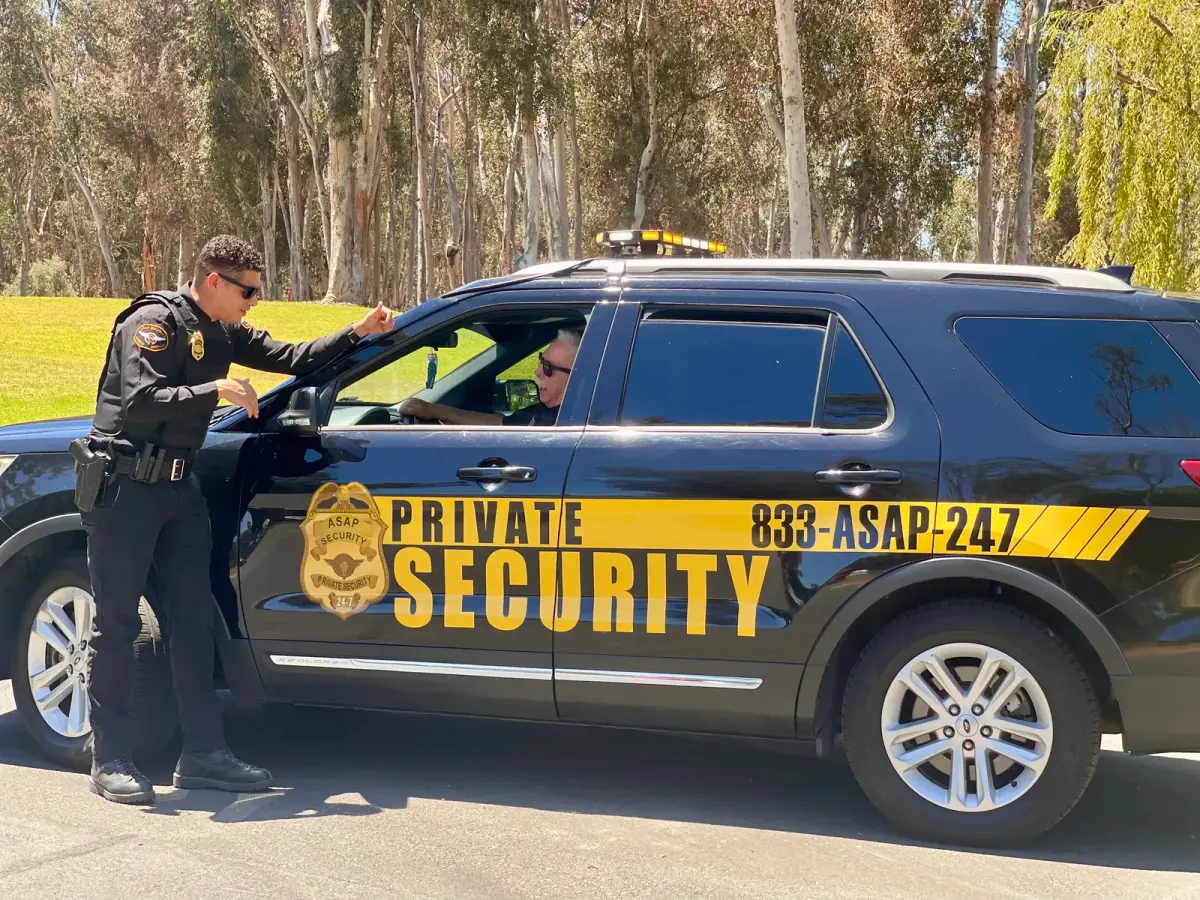
ASAP Security Guards provides physical, manned guarding for commercial properties, construction, HOAs and residential communities, and events in Southern California. Buyers can review its security services overview, frequently asked questions, and contact options while preparing questions for a provider.
What should the first weeks of coverage include?
Use the start of an assignment to check that the written plan matches actual operations. Before the first shift, confirm access procedures, client contacts, reporting preferences, post locations, and escalation steps. Make sure the people responsible for site decisions know how to communicate a change and who is expected to acknowledge it.
After coverage begins, review whether the schedule fits real activity. Are visitor peaks happening at the expected times? Are patrol routes practical given gates and the site layout? Do reports contain useful details? Are notifications reaching the intended person? These are operational checks, not a reason to change the plan based on one isolated observation. Look for recurring gaps or a material change in conditions.
Document agreed adjustments with an owner and effective date. If an event schedule changes, distribute the revision to the provider and relevant site contacts. If a new access point opens, update instructions and confirm that staff understand the change. A short, regular review can prevent informal arrangements from becoming inconsistent expectations.
Providers and clients should close the loop on questions. If a report identifies a recurring issue, establish who will investigate the site-side cause and who will communicate the result. If a task is no longer needed, revise the scope rather than leaving it in instructions that no longer fit. The aim is a plan that remains understandable to the people carrying it out.
Before each review, gather a few concrete examples: a schedule change, a report that prompted a question, or a recurring access issue. Discuss what happened, whether the instructions were clear, and whether a change is warranted. Record the decision even if the answer is to keep the current plan. This makes later reviews more useful because the team can distinguish an intentional choice from an overlooked detail.
Call (833) 272-7247 to plan security coverage
Frequently asked questions
Can a staffing plan include both a fixed post and patrols?
Yes. A plan can combine a staffed location with periodic patrols when both fit the site’s needs. Define each post’s duties, route, timing, and reporting method so expectations are clear and coverage can be reviewed.
Does 24/7 dispatch mean a guard is always at my property?
No. Dispatch availability and on-site staffing are separate. Confirm the specific posts and scheduled hours in writing, and ask how to contact dispatch outside normal office hours.
What should I provide before requesting a coverage plan?
Share the site location, operating hours, access points, major activity periods, relevant site concerns, desired duties, and the person who will manage the assignment. Note upcoming changes such as a construction phase, a special event, or revised access procedures.
When should a security staffing plan be reviewed?
Review it when site operations, access, hours, or concerns change, and agree on routine check-ins with the provider. A review can confirm that duties and reporting still fit the assignment and identify outdated instructions.
How can you plan the next step?
Gather the site map, operating schedule, access procedures, and questions about duties and reporting before requesting a proposal. A clear brief helps a provider explain how its proposed coverage fits the property and gives your team a practical basis for comparing options.
