
What are the duties of an overnight security guard in the first hour? They are the checks that happen before the building goes quiet. The officer confirms keys and the radio, reads the last note, walks the site once, writes that walk down, and tells dispatch the post is covered. Hotels, HOAs, jobsites, offices, and events all need that hour. The rest of the night is a different article.
Call (833) 272-7247 to review the first hour on your overnight post.
A manager who only hears “I’m here” has not confirmed coverage. The first hour is the part you can check the next morning without guessing. If those five steps are in the record, the shift started. If they are missing, the later notes do not prove much.
What Are the Duties of an Overnight Security Guard at Arrival?
Arrival is not the same as the rest of the shift. The officer is taking a live post from another person, or from an empty site. Either way, the job in that hour is to learn the current state and write it down. It is not to retell every duty that will happen at 2 a.m. Use the order below. It is short on purpose, because a long list gets skipped when the officer is also unlocking a door.
- Confirm the post, the keys, and the radio or phone before you leave the handoff point.
- Read the last note, including anything still open from the prior shift.
- Walk the site once and compare what you see with that note.
- Write the first patrol entry with time, place, and condition.
- Tell live dispatch, or the site contact, that the post is covered and name anything still open.
That is the first-hour job. Patrol style, alarm response, and access rules for the rest of the night belong on the existing page about what overnight security guards do. This page stays with the opening hour only.
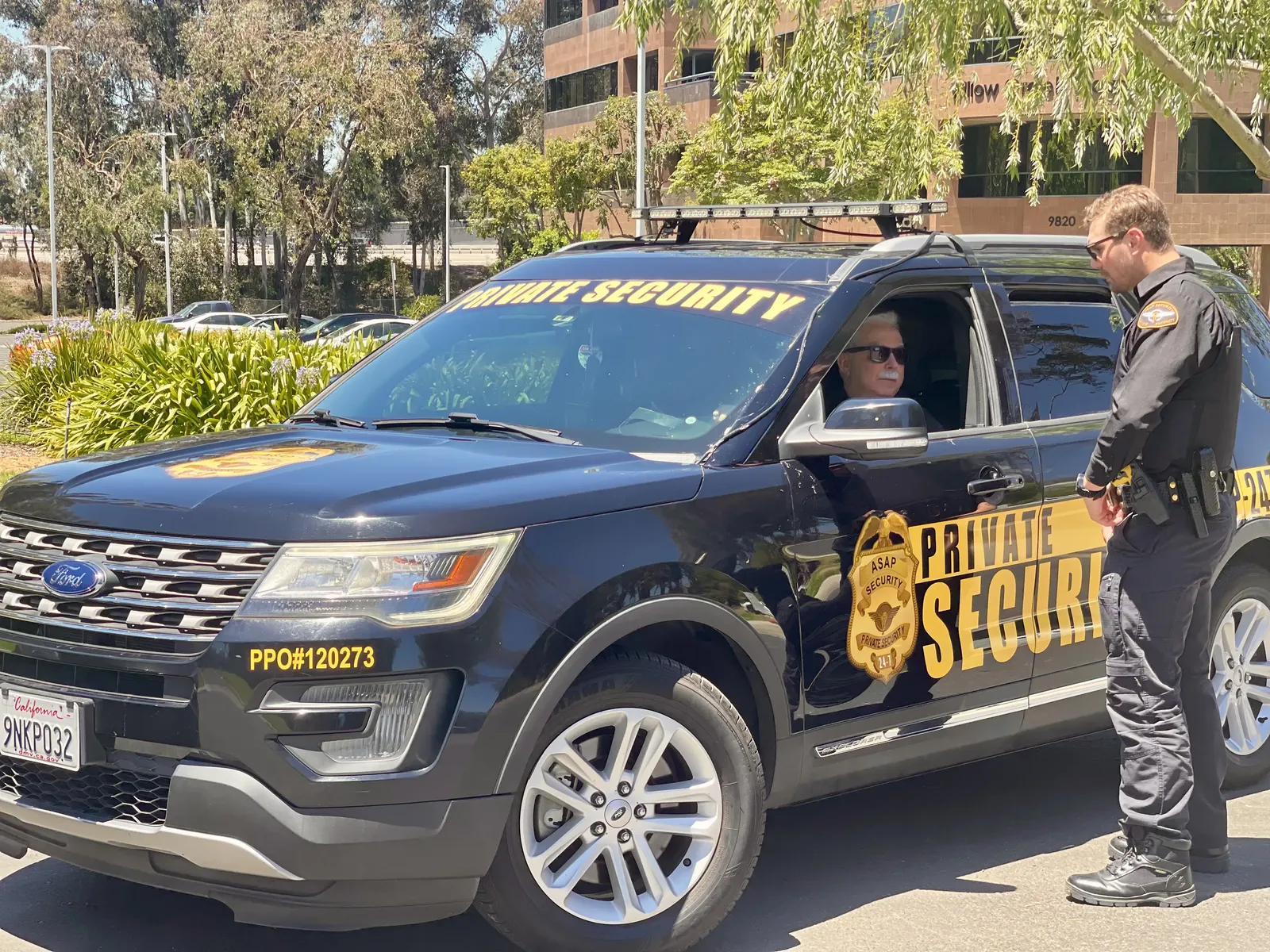
ASAP Security’s PPO number is 120273. Officers work under that license. The first-hour steps above are a site routine, not a state form. California’s security guard registration fact sheet says a guard is employed to protect people or property or to prevent theft. It also requires the employer to keep training records. Those records are not the arrival note. Keep them in the personnel file.
Why the First Hour Is a Separate Duty
Most overnight problems that surprise a manager were already true at handoff. A propped door, a dark lot row, a missing key, or a vendor still on site does not start at midnight. It starts when the prior shift left it unsaid.
The first hour is the only time both the old state and the new officer are in the same place. After that, the prior officer is gone. A note written at 3 a.m. cannot recover a fact nobody passed on. Treat the moments in the table as different jobs, and do not mix them in one line.
| Moment | What the officer is doing | What the manager should see later |
|---|---|---|
| First 10 minutes | Keys, radio, and the last written note. | A line that names the officer and the open items. |
| Confirmation walk | One loop that checks the note against the site. | Time, place, and condition, including “secured” where that is true. |
| Rest of the shift | The rounds and responses in the post orders. | Later entries. Do not look for them in the arrival note. |
| True incident | A separate report once the scene is stable. | Its own file, not a paragraph inside the arrival note. |
If your current notes jump from “on duty” to “all clear” at the end of the night, the first hour never got written. That is the gap this checklist closes.
Step 1: Keys, Radio, and the Last Note
Start with the tools, not the tour. An officer who walks off without the gate key or a working radio will discover that at the far end of the property. That is a bad time to learn it. Check three things before the first step outside.
- Keys or cards for the doors this shift must open, and a count that matches the key log.
- Radio or phone contact with dispatch, including a short test call if the post requires one.
- The last note from the prior shift, read before anyone leaves.
The last note should name open items in plain words. “Watch the south stair” is not enough. A useful line says the south stair door was propped at 9:40 p.m. It also says the evening officer closed it. The new officer can check that fact. If the note says nothing is open, it should say that too. Silence is not the same as all clear.
How to write the orders behind that note is covered in security guard post orders. Who is scheduled to make the handoff is covered in security guard scheduling. Neither page walks the first hour itself.
On a solo post with no outgoing officer, the same step still applies. The incoming officer reads the last digital entry, checks the keys against the log, and does not invent a verbal handoff that did not happen.
Step 2: One Confirmation Walk
The confirmation walk is a single loop. It is not the night’s full patrol plan. The goal is to see whether the handoff note matches the property right now. Keep the loop short and named so the officer can finish it and still write it up inside the first hour. A two-hour “quick look” is just the first patrol with a new name. What you look at depends on the buyer, not on a generic loop.
- Hotels: lobby doors, the desk handoff, the pool or amenity gate, and the lot row the evening shift flagged.
- HOAs: the gate arm, the visitor lane, the pool or clubhouse lock, and any fire lane the note mentioned.
- Construction sites: the fence line, the equipment yard, trailers, and any light the superintendent called out.
- Commercial buildings: the lobby, the dock, the stair the tenants use after hours, and the alarm panel state.
- Events: the entry that just closed, credential desks that should be clear, and posts the outgoing lead named.
Guest names, resident disputes, and tenant stories do not belong in this walk. If something rises to a theft, a fight, or a medical call, it leaves this note and becomes an incident report. The confirmation walk only records the condition that was there at arrival.
Step 3: Write the First Entry Before the Site Goes Quiet
The walk does not count until it is written. Do that before the officer settles into the later rounds. A note written at the end of the shift about the start of the shift is a memory, not a record. The first entry needs four ties.
- Time: when the officer took the post and when the confirmation walk ended.
- Place: the doors, gates, or yards actually checked, named one by one.
- Observer: the officer on that post, not a shared login.
- Condition: what was seen, including secured and quiet where that is true.
ASAP’s daily activity reports log GPS location, checkpoint time, and photos. Use that on the first entry the same way you use it later. A photo of a closed gate, tied to the arrival time, beats a line that only says the site looked fine. A dark lot row deserves the same kind of frame.
“All clear” is acceptable only after the areas are named. If the walk found an open item, the entry should say who was told and at what time. That call is part of the duty, not a footnote.
Call (833) 272-7247 if your overnight notes skip the arrival entry.
Step 4: Tell Dispatch the Post Is Covered
The last step of the first hour is a person, not another checkbox. Someone off site should know the officer is there and should hear any open item before the property goes quiet. A written note that nobody else has seen is not the same as a covered post.
ASAP keeps 24/7 security services and live dispatch. Office hours are Monday through Friday, 9 am to 5 pm. Those are different facts. Overnight coverage does not mean the office is open. It means a dispatcher can take the arrival call when the office is closed.
The arrival call should be short. Stick to the facts below and skip the story of the whole night.
- Site name, post, and the officer’s name.
- Time the post was taken.
- Any open item from the note or the walk, with the location.
- A clear “nothing open” if that is the truth.
Dispatch acknowledgment on ASAP posts is expected in under one minute when a guard or client calls the live desk. The officer should log that the call was made. If nobody answers, the officer follows the backup contact in the post orders and writes that down too. A missed call with no backup note is a hole in the first hour.
Do not use this call to rehash the whole night plan. The dispatcher needs the open items. The post orders already hold the route.
What Changes by Property in That First Hour
The five steps stay the same. The things worth naming on the walk change with the property. Southern California coverage for these buyers should not share one generic arrival line.
Hotels
The first hour often overlaps the last guests and the night auditor. The officer should hear which floors had noise complaints, which doors were propped for a delivery, and whether the lot row by the side entrance was dark. Guest names stay out of the routine note. Hotel duty lists for the rest of the night are in hotel security guard duties.
HOAs and residential communities
Arrival at a gatehouse should include the gate arm, the visitor lane, and any amenity that was supposed to lock at dusk. If a resident argument is still active, it belongs in an incident report. The first-hour note only needs to say whether the gate and the locks match the evening entry. Broader community coverage sits on the gated community security guide.
Construction sites
The superintendent is usually gone. The first hour should confirm the fence, the equipment yard, and the trailer locks against the last note, then record any light or camera that is out. A missing tool becomes an incident report. The arrival note is the condition at takeover. The wider jobsite picture is in the construction site security guide.
Commercial properties
After the last tenant, the useful first-hour facts are which suites were dark, which stair door was propped, and whether the alarm panel was in a normal state. A late delivery is an exception with a time, not a story about the tenant. For the program around the building, see commercial property security guards in Southern California.
Events
Event coverage may start when the crowd is still leaving. The first hour should name the entries that are now closed, the posts the outgoing lead handed off, and any medical or ejection call already underway. That call is an incident. The arrival note should point to it, not retell it.
What to Fix When the First Hour Is Missing
Thin arrival notes are usually an instruction problem. If the orders say “patrol and report anything unusual,” the officer has nothing specific to record at handoff. Fix the opening in the order below before you rewrite the rest of the night.
- Add the five arrival steps to the post orders for the overnight shift only.
- Name the doors, gates, and lots that belong on the confirmation walk.
- Require time, place, observer, and condition on the first entry.
- Require one call to dispatch or the site contact before the first hour ends.
- Have a supervisor compare one week of arrival entries with the GPS track.
Stop if every arrival line is identical, or if the time on the first entry matches the end of the shift. Ask for a fresh note and a supervisor check. The rest of the night can be strong and the opening can still be false.
Keep pricing, provider selection, and the full duty list off this page. Those topics already live on the overnight guide linked above. Unarmed officer rates, when a post needs them, stay in the approved range of $28 to $45 per hour. Armed rates stay at $35 to $65 per hour. This checklist does not change either number.
Call (833) 272-7247 to set the first-hour steps for your site.
Frequently Asked Questions
What should an overnight officer do in the first hour?
Confirm keys and the radio, read the last note, walk the site once, write that walk with time and place, and tell dispatch the post is covered. Leave the later rounds and any incident story out of that first entry.
Is the first hour the same as the night-shift logbook?
No. The logbook is the running record for the whole shift. The first hour is only the opening: the handoff, one confirmation walk, and the first call. Read the overnight duties page for what the rest of the book should hold.
What if there is no outgoing officer on site?
Read the last digital entry, check the keys against the log, and walk the site yourself. Do not write that a verbal handoff happened. Note that the post was taken from an empty site and record what you actually saw.
Does California require a special arrival form?
No. The Bureau of Security and Investigative Services does not publish one statewide arrival form. Your post orders should define the five steps, and the employer still keeps the separate training records the fact sheet describes.
Where do incidents found at arrival go?
Into an incident report once the scene is stable. The arrival note should name the time, the place, and the fact that an incident report was opened. It should not try to be that report.
Start the Overnight Shift With a Record You Can Check
What are the duties of an overnight security guard in the first hour? They come down to five checks. Those checks are the tools, the last note, one walk, a written entry, and a call to dispatch. Hotels, HOAs, construction sites, offices, and events can share those steps. Each site still names checkpoints that match the property. The rest of the night stays on the overnight duties page.
Call (833) 272-7247 to talk through overnight arrival on your property.
