
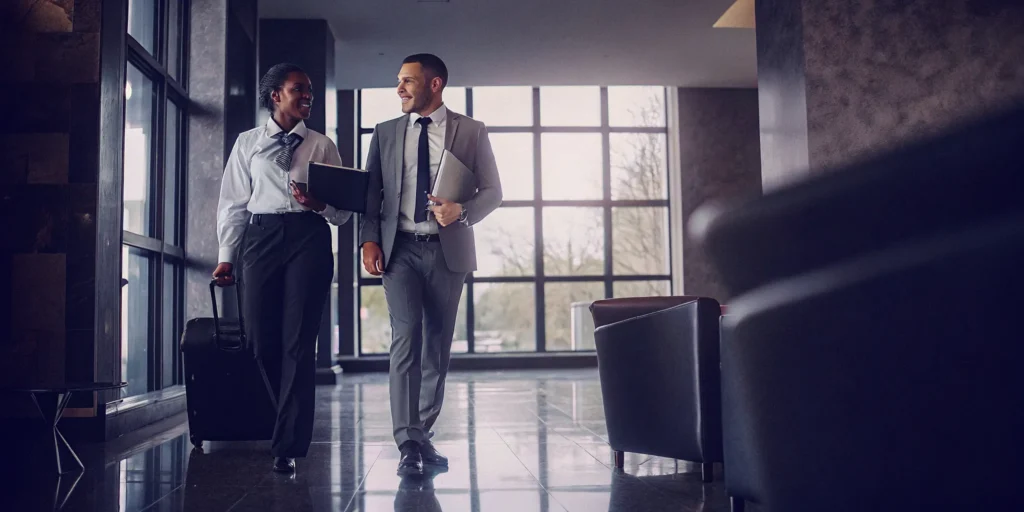
Security for Hotels: What Managers Need From a Guard Partner
A single security failure can dismantle years of hard work spent building a hotel’s reputation. Effective security for hotels gives managers a trained, accountable team that protects guests while supporting hospitality operations.
Security for hotels must protect both the physical assets of the building and the fragile reputation of the brand. Choosing the right partner means finding a team that knows how to blend into a high-end space while keeping strict discipline. Managers need clear proof of service through tools like GPS-tracked Daily Activity Reporting (DAR) to ensure all areas are safe. This level of accountability is vital because safety risks in hotels are often hidden from plain view. For instance, research shows that 905 guests were poisoned by carbon monoxide in U.S. lodging facilities between 2005 and 2018. Strong security partners go beyond simple patrols to include fire safety training and specific emergency plans. This complete plan ensures that the guest experience stays smooth and safe without hurting day-to-day hotel operations.
Finding a team that provides this level of care can be difficult for a busy hotel manager. You need to know which specific services will keep your guests safe and your property secure. Learning about What effective security for hotels actually covers is the best way to start your search. The path begins with
What effective security for hotels actually covers
Good security for hotels must protect both the guest stay and the building’s real items. Managers need a plan that covers every area from the front desk to the loading docks. A strong team does more than just watch doors. They help keep the brand’s good name safe while they make sure guests feel welcome. This work uses both human skill and new tools to be a success.
Protecting guests and assets
Safe lodging needs a balance between a safe area and helpful service. Guards often act as the first point of contact for guests. They must be ready to help with needs while they watch for risks. This dual role helps keep high safety standards without making the hotel feel cold or closed off. It turns safety into a part of the guest service team.
Real safety also means watching for hidden risks like gas leaks or fire. For example, a study showed that carbon monoxide cases in U.S. lodging caused 905 poisonings and 22 deaths over a thirteen-year period. Right security for hotels has guards who know how to find these types of risks before they cause harm. They act as an extra set of eyes to catch issues that machines might miss.
Full coverage for all areas
Full safety spans from the lobby to the parking lot. Patrols should move through guest floors, stairs, and event spaces at all hours. They also need to watch back-of-house areas like kitchens and storage rooms. This full view helps stop theft and keeps staff safe during their shifts. It makes sure no part of the building is left without a watch.
Skill is key for guards to handle these hotel security guard duties well. Every officer should take a fire safety class and learn the layout of the property. This makes sure they can lead guests to safety during a crisis or fire. You can find more about these standards at the ASAP Security Guards Online Academy where guards learn best ways to work. Well-trained guards know how to act on local laws and property rules with speed.
Proof and reporting
Modern safety relies on clear data and proof of work. Managers should look for teams that use GPS tracking for their patrols. A Daily Record Tool provides time-stamped notes and photos of the site. These tools create a full record of what happened during each shift. They give hotel leaders a way to check that work is being done the right way.
Having a clear audit trail is key for legal needs and plans. If a case occurs, the hotel needs proof that guards were on site and active. Real-time reporting makes it easy to share this data with the team. This level of openness helps build trust between the safety firm and the hotel leader. It allows for quick changes if a new risk is found on the grounds.
Which hotel risks should a guard plan address?
A strong plan for professional hotel security services must map out every threat to your property. Managers should look at risks to guest safety and physical assets. These threats change based on your location and how many people visit. A clear risk map helps you find the best hotel security guard duties for your team.
Public access and trespass
Hotels are open to the public, which makes them easy to enter. This open nature leads to risks like theft. Guards must watch lobby areas and back doors to keep out people who do not belong. They also need to check parking lots for car break-ins or loitering. Professional guards use GPS-tracked tools to show they are checking these zones at all times.
Key and room security
Locks and keys are vital for guest safety. Hackers have found ways to beat some hotel room locks at big events. You must have a plan to check key card rules and lock hardware. Guards help by watching hallways and reporting any doors that do not shut right. This work protects guests from entry and keeps your brand name safe.
Safety and health risks
Some risks are not from people but from the building itself. Carbon monoxide is a big risk in hotels that use natural gas tools. From 2005 to 2018, over 900 guests were poisoned in U.S. lodging sites, and 22 people died per the NIH. Guards must be trained to spot these dangers. At our online academy, guards learn how to handle fire safety and other health crises to keep guests safe.
How should hotel managers evaluate a guard partner?
Choosing a firm for security for hotels is a big task for any lead staff. The right team protects your guests and your site at the same time. You need a partner that works as part of your core crew. A poor choice can hurt your name and put people at risk. You must look past the sales pitch and check the real work they do each day. The best firms will be open about their tools and how they hire their staff.
Check for proven training and trust
A top firm will show you proof of their skills. You should ask to see how they teach their staff. Some firms just meet the basic rules. Others, like those that use an online academy, go much further. High training levels help guards handle the fast pace of a busy hotel floor. They learn how to spot threats before they turn into crimes. This keeps your guests safe and your lobby calm during the night shifts.
You also need to check their legal standing and past work. A firm with federal GSA status has met high bars for trust. This shows they can handle the most complex tasks with ease. When you are vetting hotel security guard companies, these details help you find the best fit for your needs. Do not be afraid to ask for their license and proof of insurance before you sign a deal.
- Check all training logs. Ask for proof that guards have passed real classes. This should include BSIS training and extra skills like fire safety or first aid. Some top firms are led by staff with military or police backgrounds. Guards must know how to act during a crisis without losing their cool. A well-taught guard can save lives and stop fires from spreading.
- Inspect the reporting tools. Modern firms use GPS to track where guards go. Ask for a sample Daily Activity Report (DAR) that shows time stamps and photos. These tools give you a clear trail and prove the work is being done on your site. This data is also great for insurance audits or when you need to check a guest claim.
- Test the dispatch speed. A crisis does not wait for an email. Find a firm that uses 24/7 human dispatch. You need to know that a real person will answer the phone at any hour of the night. This link helps the guards on site get help fast when a guest has a medical need. It also lets your staff call for help without a long wait.
- Review safety rules. A good partner looks for hidden risks. For example, they should know that carbon monoxide poisoning is a major risk in many lodging sites. Your guards should know how to check for these issues during their walks. They should also know the plan for a gas leak, a power loss, or a flood.
- Ask about hotel-specific work. The needs of a hotel are not the same as a warehouse or a lot. Guards must be polite and helpful to guests while they stay alert for threats. Look for a team that has worked in the hotel field before. They should know how to blend in with your team while they keep the site safe.
Focus on technology and response
Paper logs are easy to fake and hard to read. You should insist on tech tools that show guard paths in real time. This keeps the team honest and gives you peace of mind. A good partner will share these reports with you every day so you can see every patrol. You should be able to see when they checked the pool, the gym, and the back doors. This level of detail shows that the firm takes your safety as a top goal.
Finally, look at how the firm talks to you. You need a partner that is open and clear. They should tell you about small issues before they turn into big problems. Good talk is the base of a strong safety plan. It helps you keep your site safe while you focus on giving your guests a great stay. When your guards and your staff talk well, you build a shield of safety around your whole site.
In-house vs. contracted hotel security
Choosing the right security for hotels is a big task for any manager. You must pick between hiring your own staff or using a private firm. Both paths aim to protect the guest stay and property assets. While one choice offers more direct control, the other brings expert skills and high-tech tools to the site. Each model has its own pros and cons for your business.
Direct staff control
In-house security teams are direct hotel employees. This model lets you set clear rules for how guards talk to guests. Since these guards are part of the staff, they often feel a strong bond with the hotel brand. But this path also adds a heavy load to your HR team. You must handle all hiring, background checks, and payroll yourself.
Training is another big factor for an in-house team. Every guard needs to meet state laws and safety rules. For example, staff must know how to spot risks from gas stoves and heaters to prevent leaks. If you run your own team, you must pay for all this training. You also take on all the legal risks if a mishap occurs on your property.
Expert help from outside
Hiring a private firm gives you access to guards who focus only on safety. These firms often have better training systems than a small hotel team. For instance, some top agencies run their own security academy to teach guards deep skills. This includes fire safety and crisis response. Using an outside firm also makes it easy to change your staff size based on guest numbers.
Contracted firms also use better tech than in-house teams. They use GPS-tracked logs to give you proof of every patrol. This data is helpful for audits and insurance needs. Modern tools track guard moves in real time to keep the team honest. When vetting hotel security firms, look for those with 24/7 human dispatch. This ensures you always have a person to help you during a crisis.
| Criteria | In-house Security | Contracted Security |
|---|---|---|
| Recruiting | Managed by hotel HR | Handled by the firm |
| Supervision | Direct hotel management | Firm manages the team |
| Scalability | Hard to change quickly | Easy to add or cut staff |
| Expertise | Varies by hotel budget | Deep industry focus |
| Reporting | Manual or basic tools | GPS-tracked digital logs |
| Accountability | Hotel takes full risk | Firm shares liability |
Shared risk and liability
Legal risk is a top concern for hotel owners. If a guest gets hurt, the hotel is often held liable. An in-house team means you carry all this risk on your own. But a private security firm shares this load with you. They often have their own insurance to cover claims. This gives property managers peace of mind and keeps the business safe.
You should check if a firm has high standards before you hire them. Some firms hold federal GSA status. This means they meet the same high rules as federal agencies. This level of care is great for hotels with many guests or high-profile events. It shows you take safety to a high level and use the best tools for the job.
Can guards protect guests without disrupting hospitality?
Security with a focus on service
Many hotel managers worry that a strong security presence might make guests feel uneasy. But security for hotels works best when it blends into the daily rhythm of the property. Professional officers act as a helpful part of your team. They stay calm and polite while they watch over the site. This helps guests feel safe without making them feel like they are in a high-risk place.
A big part of this work is training. At the ASAP Security Guards Online Academy, guards learn to handle people with care. They focus on hotel security guard duties that put guest safety first. By using military-grade discipline, guards can stop threats before they grow. They do this without causing a scene or bothering your guests.
Quiet presence and clear roles
Elite teams know how to be seen when needed and stay in the background when not. For example, guards work with the front desk to manage who enters the building. This helps keep check-in smooth while they make sure only allowed people reach guest rooms. Guards also follow property rules to stay in their roles. This keeps them from getting in the way of guest privacy.
Professional guards take a fire safety class to be ready for any emergency. This is vital because risks like gas leaks can cause great harm. According to the National Institutes of Health, 905 guests were hurt by gas poisoning in U.S. hotels from 2005 to 2018. A trained guard knows how to spot these dangers during walks. They can check for risks without being a bother to the people staying there.
Using tech for silent safety
New tools help guards do their jobs without being in the way. Using a GPS-tracked report system lets hotel managers see proof of every patrol. You get a full record of safety checks without a guard having to talk to the front desk every hour. This keeps the work clear and open while the focus stays on guest comfort. Top standards, like those in federal GSA contracts, ensure every guard does great work and acts with grace.
What reporting proves the security program is working?
Hotel managers need clear proof that their safety plan works. Trust is not enough when it comes to the safety of guests and staff. You should expect data that shows exactly what guards do on your property. Good reporting gives you a full trail of all guard actions and patrol stops. This check is a key part of security for hotels today. It helps you sleep better knowing your site is safe.
GPS-tracked daily activity reports
One of the best ways to see guard work is through a Daily Activity Report (DAR). A strong DAR system uses GPS to track every patrol in real time. This ensures that guards visit every check point on your hotel grounds. Reports should include time-stamped notes and photos for proof of service. These records help you stay ready for any safety audits. They also prove that guard rounds happened exactly as planned.
- GPS maps of every guard round.
- Photos of open doors or safety risks.
- Time-stamped notes of all guard stops.
Digital tools make it easy to share these facts with your team or owners. You can use these logs to track guard movement and task status. This level of detail removes any doubt about guard presence. It is much better than old paper logs that lack hard proof. With GPS tracking, you get a full view of your site’s safety at all times. This type of reporting is a must when vetting hotel security guard companies that use modern tech. It shows a firm’s goal to be open and clear.
Event reporting and risk reviews
Event reports are vital for risk oversight in the lodging field. Every security event must be logged with full detail as soon as it happens. This includes the time, place, and people involved. Fast reporting helps managers spot trends and fix weak spots before they become big issues. Exact logs can also protect your hotel if there is a legal claim or safety check. You need a system that captures every small detail with speed.
Reliable data also covers safety checks that prevent serious harm. For example, reports should confirm that CO alarms and gas tools are in good shape. Data shows that carbon monoxide poisoning is a big risk in U.S. hotels that is easy to stop. From 2005 to 2018, over 900 guests were poisoned in such events, as noted by the National Institutes of Health. Detailed safety reports ensure these risks stay low through regular checks of all units.
Expert checks and site rules
Good reporting also includes proof of expert oversight. You should see records of expert checks on your guards. These checks ensure that guards follow your site rules. Site rules, also known as post orders, are the steps for how a guard should act on your site. They cover everything from lobby patrol to parking lot checks. Managers should also check if guards have the right training for their hotel security guard duties. This ensures a high level of service for every guest.
A top firm will offer 24/7 human dispatch for fast help during a crisis. This ensures that guards can get help or report a problem right away. You should also check if guards take a fire safety class. Verified training records and clear site rules show that your team is ready for any challenge. These checks prove that your guards meet the highest standards of safety and care.
Building a site-specific hotel security plan
Each hotel is one of a kind. A good plan for security for hotels must fit the site. It starts with a look at the risks. Southern California hotels face clear threats. These range from theft to bad events. A full check finds weak spots in the building and its tech. This helps keep both guests and items safe. A smart plan also keeps the mood friendly. You want guests to feel safe but at ease.
First site review
A team checks the entry points and common spots. They look at how people move through the lobby and halls. They check lights in the lot and locks on the doors. Guest safety is the main goal. For fact, some risks are hidden. Studies show that gas tools can cause carbon monoxide issues in lodging sites. Over 900 guests were hurt by this gas in a 13-year time. You can read more about guest safety risks in this study. A good plan finds these risks early.
Custom post orders
Guards need clear rules. These are called post orders. They must be for your site. Guards should know how to handle fires and health needs. At ASAP Security Guards, we make sure our team knows your site well. Guards must take a fire safety class before they start. They also learn about your mastering guest safety rules. This keeps the work steady and expert. It ensures no task is missed during a shift.
Clear rules also cover how to talk to guests. Guards must be polite and helpful. They act as the face of your hotel at night. Good post orders list the exact paths for rounds. They tell guards what to do if they find an open door or a leak. This level of detail protects the site and the brand.
Staffing and launch
Timing is key for hotel safety. You need the right number of guards at peak hours. This might include 24/7 human dispatch for quick help. Our team uses a GPS tool for daily reports. This gives you photo proof of their rounds. It creates an audit trail that leaders can trust. You can see how our guards learn these skills at the ASAP Security Guards Online Academy. This ensures every guard meets high standards.
The plan must also change as the site does. Leaders should check the reports each week. They look for patterns in the data. If one door is often left open, the plan should change to fix it. This cycle of review keeps the safety tight. It shows guests that their safety is always the first goal.
Frequently Asked Questions
What security do hotels need to protect guests?
Good security for hotels must protect both the guest stay and property assets. This involves watching for threats and handling safety risks. According to experts at the National Library of Medicine, over 900 guests were poisoned by carbon monoxide in U.S. lodging sites between 2005 and 2018. A strong security plan uses trained staff to watch for these hazards and keep visitors safe.
How can a manager secure a hotel well?
A manager can secure a hotel well by using both tools and trained staff. This includes checking key card access rules and background checks for all workers. Setting clear safety rules helps to protect the name of the business. According to business experts, it can take twenty years to build a good name but only five minutes to ruin it. Regular audits and guard patrols help keep the property safe.
What is the best hotel security tracking system?
The best tracking system uses GPS tools to watch security work in real time. This tool gives time-stamped and written proof of service for each shift. It helps create clear records that show when and where guards did their jobs. According to ASAP Security Guards, using these tools ensures high levels of trust. This honesty allows hotel owners to know that their property is being watched at all times.
Are professional security guards necessary in hotels?
Trained security guards are often needed to maintain a safe area. Unlike systems that work on their own, live guards can act during a crisis in real time. They should get high-level training from a BSIS-approved academy to meet high standards. Guards also must take a fire safety class to help guests during a fire. This human presence provides safety that cameras alone cannot give.
Ready to request a hotel security quote?
Each day you wait to fix security gaps puts your guests and brand at risk. A small gap in safety can lead to big costs and lost trust that takes years to rebuild. Setting up professional guard services now keeps your hotel safe and lets you focus on guest care. Our team provides the expert help you need to keep your lobby and rooms secure. Do not leave your property open to threats that you can stop today with a solid plan and trained guards.
Waiting too long can cause a crisis that hurts your bottom line. You get the peace of mind that comes with real-time logs and expert oversight when you act now. We help you stay ahead of risks so your team can work without worry.
Ready to request a hotel security quote to protect your hospitality business?
