

Port security guards can support the daily protection of port-adjacent and waterfront facilities by controlling entry, observing activity, and reporting concerns. Their role is distinct from the responsibilities of the Coast Guard, port authorities, law enforcement, and other government agencies. For property managers, the practical question is how contracted private security should fit into the facility’s procedures while staying within defined property and authority boundaries.
Call (833) 272-7247 to discuss facility security
What should port security guards accomplish?
Begin with the facility’s operating needs, not a generic list of guard duties. A private guard may support a commercial waterfront property, a logistics yard, a terminal-adjacent office, or another privately operated site. The assignment should be defined by the property boundary, access points, operating schedule, and the people authorized to make decisions. Those details shape the post orders, staffing approach, and escalation process.
Private guards can provide a visible presence, check credentials under facility rules, observe conditions, and notify designated contacts when something needs attention. They do not replace government agencies or port authority security programs. Before service begins, managers should identify the responsible party for each type of issue. A gate credential question may go to the facility lead; a safety issue in an operational zone may belong to an operations supervisor; an emergency may require emergency services or another public agency.
A clear assignment commonly includes four functions:
- Protect people and property within the contracted site and the approved post orders.
- Apply visitor and vehicle procedures consistently at the assigned entrances.
- Observe and report unusual activity, access problems, or visible property concerns without exceeding assigned authority.
- Communicate with facility contacts and emergency responders when directed or appropriate under the written procedures.
These functions do not mean a guard manages cargo, directs vessel movements, or controls public areas. A facility should write down where the guard’s duties stop, especially where private property meets a public road, shared terminal, or agency-controlled area. A map reviewed with the provider can turn an abstract boundary into a practical instruction: observe this gate and fence line; refer activity beyond the marked edge to the designated authority.
How should managers define private security boundaries?
Draw a clear line between the private assignment and public responsibilities. A guard’s role comes from the contract, the property rules, applicable law, and approved procedures. A contracted guard is not a Coast Guard officer, port authority official, customs agent, or law enforcement officer. Managers should use accurate role descriptions in post orders and avoid clothing, signs, or instructions that could cause visitors to mistake a private guard for a public official.
Federal regulations establish security responsibilities for regulated maritime facilities and vessel-facility coordination; they do not turn a privately contracted guard into a government official. Managers can consult the U.S. Coast Guard’s official website and coordinate with their facility security officer or responsible agency about site-specific obligations. The private assignment should support, not replace, the approved security plan or directions from the responsible authority.
Write down what guards may do, what they must not do, and who decides when a concern needs to go to a public agency. For example, a post order can direct a guard to observe a restricted entrance, notify a supervisor of an access concern, and follow the facility’s emergency call tree. It should not ask a guard to make a decision reserved for government personnel or to represent a private observation as an official determination.
Make the dividing line usable in real situations. If a person asks a guard to resolve a question outside the assigned site, the instruction might be to explain the private property boundary, avoid making commitments for the port or agency, and contact the facility lead if appropriate. If an incident crosses the boundary, the guard should report what was directly observed and use the established notification route. This lets the facility receive useful information without implying the guard has authority over neighboring property.
For commercial coverage information, managers can review the company’s security guard services and service-area information. The assignment itself should still be tailored to the actual site and its responsible decision-makers.
How should gate control work?
Gate procedures should match the site’s traffic, credential system, and hours. A guard may direct visitors to the correct check-in point, verify information against an approved list, issue or collect visitor credentials if authorized, and record entry according to facility policy. The facility should define how deliveries, contractors, scheduled visitors, and unexpected arrivals are handled. When procedures are consistent, staff and visitors can understand what to expect, and guards do not have to improvise access decisions.

Before the first shift, answer the practical questions that determine whether a gate process can work during a busy period:
- Which entrances are staffed, and which are controlled by a separate system or another organization?
- Who can approve access when a name is missing or a credential does not match?
- How are vehicles, scheduled deliveries, pedestrians, and contractors routed?
- Where can someone wait while the facility confirms access without obstructing a lane?
- Who is contacted if a gate, badge reader, radio, or communications device fails?
Guards should not invent exceptions at the gate. If a person cannot be verified, the post order should explain how to pause entry and contact the designated facility representative. That keeps access decisions with the authorized person while giving the guard a clear next step. Spell out what to do if the first contact does not answer: whether to try a backup, how long to wait, and whether access remains on hold until an authorized decision is received.
Write a decision path for routine and unusual arrivals
Separate routine approvals from exceptions. For a scheduled visitor, the guard checks the approved list, follows the identification steps the facility requires, records the arrival if directed, and issues the appropriate credential. If the name is missing, the guard contacts the host and directs the visitor to a designated waiting point. If the host cannot be reached, the written procedure should say whether entry remains on hold and which backup contact can make the decision. This prevents a busy arrival period from becoming a reason to bypass rules.
Vehicle flow deserves separate instructions. Identify where a driver can stop without blocking a public road or operating lane, how delivery appointments are confirmed, and how a delayed or declined vehicle can leave safely. The guard should not be expected to settle a shipment dispute, change a delivery schedule, or decide where cargo should be unloaded. Those choices belong to the facility’s logistics or operations contact. If a vehicle arrives at the wrong entrance, the instructions should specify whether it can be redirected, who confirms that route, and how the guard reports the exception.
Also plan for a system outage. A reader that stops working, an interrupted network connection, or an unavailable visitor list should trigger a defined temporary process—not an informal assumption that anyone may enter. State which manual verification method is approved, who can authorize its use, what information should be recorded, and who must be told when normal operation resumes. If no approved fallback exists, the post orders should direct the guard to hold entry and contact the facility representative.
What should visitor processing include?
Visitor processing works best when the host facility owns the approval rules and the guard follows a repeatable sequence. Confirm the visitor’s stated purpose, check approved appointment information, contact the host when required, and record only the information the facility directs the guard to collect. Respect privacy and follow the property’s data-handling instructions. A consistent process also helps explain why one visitor can proceed while another must wait for confirmation.
Plan for the ordinary exceptions that create pressure at a post. A visitor may arrive early, use a different entrance, lack an expected credential, or be unable to reach a host. A clear escalation contact and waiting location help avoid ad hoc decisions. If the site uses separate procedures for vendors, drivers, or after-hours visitors, put those steps in writing and brief each shift. If approval is limited to a particular work area, explain how the guard confirms the destination without giving access beyond what the host authorized.
Keep the process workable for groups and changing schedules. Specify whether a host can approve several visitors at once, what to do when a group arrives in separate vehicles, and how to handle a visitor who needs accessibility assistance. For a late arrival, define whether the appointment remains valid or needs renewed approval. If contractors are expected to check in at a different location, make sure the directions are accurate and that an alternate route is available if a gate is closed.
Where visitor information is recorded, explain which fields are necessary, who can access records, and how records are stored or submitted. A guard should not gather extra personal information simply because a form has space for it. Identify how to correct a mistaken entry and whom to notify if a record is lost or cannot be submitted. These are facility policy choices; the guard needs clear instructions rather than discretion to create new recordkeeping practices.
How should patrols and cargo-area observation be organized?
Define patrol routes around the actual private property rather than implying control over the entire port or harbor. A route may include exterior doors, fence lines, vehicle areas, lighting, and other locations identified by the facility. Set timing and reporting expectations, but allow a supervisor to adjust the plan when operations, weather, or access conditions change. A site map should distinguish areas a guard may enter from work zones that require permission, escort, or specialized safety procedures.
Cargo-area observation should focus on noticing and reporting conditions within the assigned area. A guard can look for an unsecured gate, visible fence damage, an unexpected person, or an apparent safety concern and notify the proper contact. Guards should not handle cargo, open containers, inspect shipments, or interfere with port operations unless the facility has expressly authorized a lawful task within the contract. When unsure, the safe default should be to keep a suitable distance, report the location and observation, and wait for the authorized response.
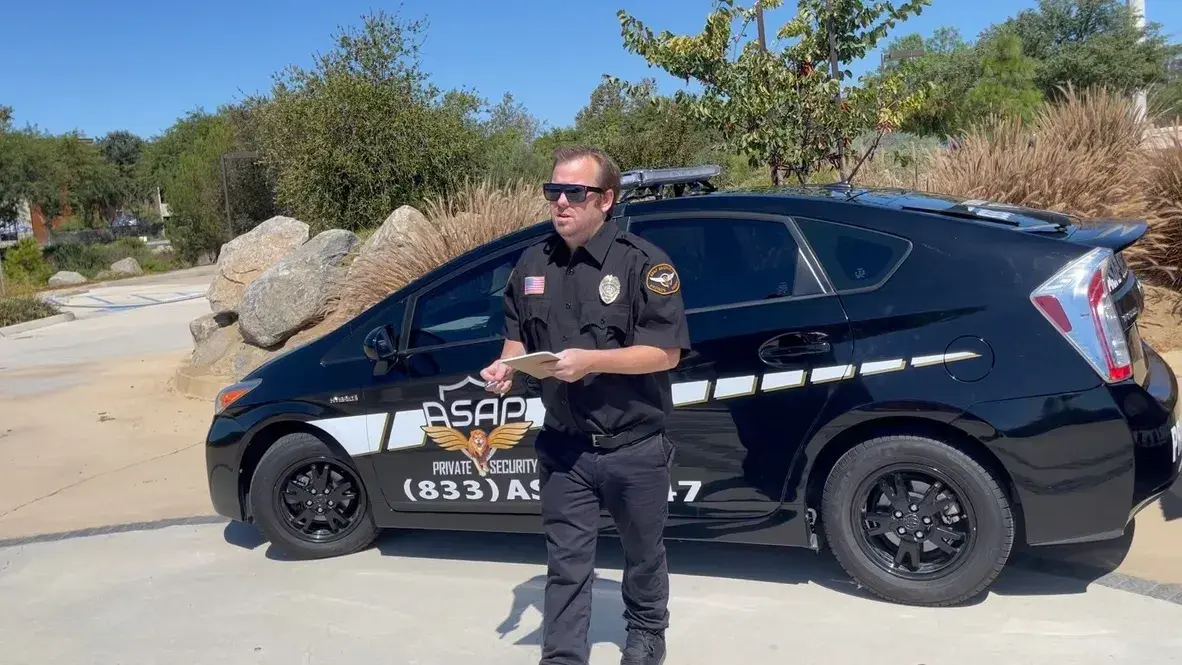
For a site with several entrances or active work periods, managers may coordinate a staffed post with mobile patrol coverage. The right approach depends on the site map, peak traffic, hours, and the facility’s risk review. Related planning considerations appear in the guide to security patrol services.
Make patrol observations specific and actionable
Use a route sheet or site map to identify precise locations to check, while avoiding instructions that require a guard to enter an unsafe work zone or disturb cargo. For each checkpoint, state what to observe: gate position, visible damage, access conditions, lighting, or an obstruction. The guard’s job is to report a condition and its location, not to diagnose its cause. If a location is inaccessible, the order should say whether to skip it and report the reason, rather than encouraging entry through an unsafe route.
Consider a late-shift example. A guard notices that a fence panel near a vehicle area appears displaced. The post order should say whether the guard stays at a safe distance, contacts the supervisor, requests a facility representative, or calls emergency services if there is immediate danger. It should also say how to record the time and observation. Clear thresholds help the facility respond without encouraging unapproved repairs or confrontation.
A second example is a gate that appears closed but does not latch. The report should identify the exact gate, what was checked from the assigned position, whether anyone was seen nearby, and which contact was notified. Unless repair is part of the authorized assignment and safe to perform, the guard reports the defect rather than attempting a fix. The facility can then assign maintenance or another responsible person and document when normal access control is restored.
Route planning should account for competing operational demands. A guard assigned to a fixed entrance cannot also be assumed to conduct a distant patrol at the same moment. Managers can list the checks that need continuous attention, the locations that need periodic observation, and the times when both tasks may conflict. That comparison shows whether a second post, a different patrol window, or facility staff support is needed. It is better to identify a coverage gap before launch than to write contradictory instructions into a single post.
Call (833) 272-7247 to discuss patrol coverage
How should communication and incident reporting work?
Before the first shift, identify who a guard contacts for routine questions, urgent concerns, and emergencies. Establish an order of calls and a backup contact. Clarify when to call emergency services, when to notify the facility, and how to keep access available for responders. Procedures should align with the facility’s emergency and security plans. If the facility has a control room or operations desk, state when the guard should contact it and what information it needs.
An incident report should separate direct observations from assumptions. A useful report typically captures:
- Date, time, and precise location.
- What the guard observed or was told, with the source distinguished.
- Actions taken under the post orders and notifications made, including times if available.
- Any immediate condition that remains unresolved and the follow-up needed from the facility or responsible authority.
- Relevant handoff information for the next shift, while protecting information the facility does not authorize for broad distribution.
For example, “At 22:14, the north vehicle gate was found open; no person was present. I notified the on-duty facility contact at 22:16 and remained at the assigned post” is more useful than “suspicious activity at the gate.” The first description records what was seen and what happened next without guessing why the gate was open. If a witness provides information, the report should identify that it came from the witness rather than presenting it as something the guard personally observed.
Managers should determine how quickly different reports are needed. An urgent condition may require a direct call before the written report; a routine maintenance observation may be submitted through a shift log. Define the notification channel, the recipient, and the expected confirmation. If a message is not acknowledged, the guard needs a backup route. Report expectations should be realistic for the post: extensive data entry should not distract a guard from a live access or safety duty.
When time-stamped activity records are required, specify the format, submission route, and review contact. ASAP Security Guards describes its security services and operational support on its site, and managers can review the security services FAQ for general questions. Facility-specific reporting requirements should be agreed in advance rather than assumed from a general description.
How should managers coordinate with facility teams?
Private security works best when connected to the people who run the property. Identify a facility lead for access decisions, an operations contact for delivery or work-area questions, and a backup for nights or weekends. Tell each department what the guard can resolve directly and what must be referred to staff. Make the contact list available at the post and keep a controlled current copy so an old phone number does not become the only route during an incident.
Use a shift briefing to communicate temporary changes, such as a closed gate, maintenance work, a changed delivery entrance, or a scheduled contractor. Keep the source and expiration of each change clear. A handwritten note without an owner or date can persist after it is no longer valid, creating inconsistent access decisions. Each temporary instruction should identify who approved it, when it takes effect, when it ends, and how the guard should confirm that it remains current.
During a handoff, the outgoing guard should pass on unresolved matters, equipment issues, expected visitors, and temporary instructions. The incoming guard should repeat back key changes and confirm how to reach the supervisor. This short exchange reduces the chance that a critical exception is lost between shifts. If the incoming guard has not received an update or cannot verify an instruction, the post orders should identify the safe default and who can confirm the change.
Coordination also means deciding who owns follow-up. If a guard reports a damaged light, someone at the facility should acknowledge the report and decide whether maintenance is needed. If an access list is wrong, the host or access administrator should correct it. A guard can document that the issue was reported, but should not be treated as the owner of repairs, visitor authorization, or operational decisions unless these duties are explicitly assigned and appropriate.
How can managers compare coverage approaches?
Compare options against the tasks and operating conditions, not just the number of posts. A staffed gate may suit frequent visitor processing. A roving patrol may fit a site where checks across a defined perimeter matter more than continuous interaction at one entrance. Some facilities may need both, together with after-hours escalation. A facility may also have an access system that controls entry while a guard observes the designated area and refers faults to staff.
| Coverage approach | Useful for | Planning points |
|---|---|---|
| Fixed access post | Consistent visitor or vehicle processing at a designated entrance | Define approval rules, hours, waiting location, and backup contacts |
| Mobile patrol | Periodic checks of assigned exterior areas | Map the route, safe boundaries, reporting points, and response steps |
| Combined post and patrol | Sites with active entry needs and broader property checks | Coordinate coverage windows, task priority, and handoffs |
| Facility-led access with guard observation | Properties where a separate system or staff member controls entry | Clarify what the guard monitors and who resolves system issues |
These are planning models, not a promise that one arrangement fits every waterfront property. Assess traffic, geography, hours, and operational constraints before selecting coverage. Start by listing recurring tasks, mapping when they occur, and identifying which require immediate action versus a report for later follow-up. Then look for simultaneous demands. For example, if visitor processing peaks during a delivery window that also requires an exterior check, the schedule should account for both rather than assuming one person can perform two duties at once.
Compare proposals using the same questions: What locations and hours are covered? Which visitor and vehicle procedures are included? How are patrols documented? What happens when the assigned guard is occupied with an incident? Who receives routine and urgent reports? What is the relief and handoff process? A comparison based on matching scope makes differences easier to understand than comparing a headline rate without knowing the duties and coverage behind it.
Published hourly ranges are $28–$45 for unarmed guards and $35–$65 for armed guards. The appropriate arrangement and quote depend on the assignment; pricing is not quoted by phone except by the owner. A manager comparing proposals should confirm what hours, posts, patrol routes, reporting, and relief coverage are included rather than comparing a rate in isolation. The task and location should drive the discussion, and an armed assignment should not be assumed where the facility has not established a need and appropriate procedures.
For a planning discussion, use the contact page or review the consultation information.
What should managers include in post orders?
Post orders translate the plan into instructions a guard can use without guessing. Keep them concise enough to consult during a shift, but specific enough to settle common questions. Include a dated site map, assigned boundary, access sequence, emergency contacts, reporting expectations, and prohibited tasks. Use plain language and organize the orders so the highest-priority directions are easy to find when something unexpected happens.
- Post location, work hours, relief process, and the person responsible for schedule changes.
- Authorized access rules, visitor and delivery procedures, and who may approve exceptions.
- Patrol locations, safe boundaries, observation priorities, and locations that require staff escort or are off limits.
- Contact order for routine, urgent, and emergency notifications, including backup contacts.
- Report format, delivery timing, required recipients, and facility review contact.
- Instructions for equipment failure, weather disruption, temporary changes, and unresolved conditions.
- Tasks the guard must not perform, including cargo handling or access decisions outside the assignment.
Assign an owner to update the orders when the facility changes an entrance, work zone, or escalation contact. Mark revisions with a date and distribute the current version to each relevant shift. Avoid contradictory copies at the post. When staff or operational plans change, confirm the update verbally and in writing. Remove obsolete copies using the facility’s document process so a former procedure is not mistaken for the current one.
Test the orders against realistic examples. What happens when a visitor is not on the list? What happens if a radio fails while a vehicle waits at the gate? What should a guard report after discovering an open gate near the end of a patrol? If the answer depends on a facility decision, identify the person who makes it and a backup. If the orders contain instructions that conflict, resolve the conflict with the facility owner before the post relies on them.
What should be confirmed before the first shift?
Walk the assigned areas with the security supervisor and confirm exactly where the private assignment starts and ends. Test communication methods, review access and visitor steps, identify escalation contacts, and agree on how reports will be delivered. Ask the facility lead to demonstrate any credential or visitor system the guard is expected to use. A walkthrough should include the normal route as well as the location of the waiting area, the handoff point, and any boundaries the guard must not cross.
Use a short readiness check:
- Confirm the post location, coverage hours, current site map, patrol limits, and approved access points.
- Review normal access, exceptions, visitor processing, delivery handling, and any temporary operating changes.
- Test radios or phones, verify primary and backup contacts, and confirm the response if equipment fails.
- Walk through a sample incident notification and report, including who receives urgent notice and how receipt is confirmed.
- Identify who can authorize changes, how guards receive them, and how outdated instructions are withdrawn.
- Confirm that the facility has provided safety and access information needed for the assigned areas, including any locations requiring staff direction.
Keep instructions current as traffic patterns, construction, or facility operations change. A pre-shift review is also the right time to identify tasks that should remain with facility staff or public authorities rather than being assigned to a guard. If the site’s conditions differ from the plan, pause and resolve the gap through the designated manager instead of treating an informal request as a permanent change.
Call (833) 272-7247 to plan coverage for your property
Frequently asked questions
Do private port security guards replace the Coast Guard or port authority?
No. Contracted guards support the private facility assignment described in their post orders. Government agencies and port authorities retain their own responsibilities and authority. The facility should direct questions about regulated maritime duties to its responsible security officer or agency.
Can a private guard control access to a waterfront property?
A guard can follow the property’s authorized access procedures at designated entrances. The facility should set credential rules, exceptions, waiting locations, and escalation contacts in writing, with a clear process for outages or missing approvals.
Can guards inspect cargo or shipments?
Not as an assumed part of a standard private security role. Any specific task must be authorized by the facility, lawful, and clearly included in the assignment. Guards can observe and report concerns within their assigned area without handling cargo or interfering with operations.
What information should an incident report contain?
Record the time, location, direct observations, source of information provided by others, steps taken, and notifications made. Keep conclusions separate from facts, and use the facility’s process for urgent notifications and follow-up.
What should a facility prepare before coverage begins?
Provide a site map, current post orders, contact list, access instructions, emergency procedures, reporting requirements, and a process for updating instructions when operations change. Walk through the post and test communication before relying on the plan.
How can managers review whether the plan is working?
Set a review date after launch and use concrete questions rather than impressions alone. Are access decisions consistent? Are reports arriving in the agreed format? Do contacts answer when escalation is needed? Are patrol findings tied to a location and useful follow-up? Are there recurring visitor or delivery exceptions that the written process does not address? Record gaps, assign an owner, and revise the post orders when procedures change.
Review should not mean asking guards to expand their authority. If a recurring problem requires a facility decision, identify that decision-maker and update the escalation path. If a patrol is repeatedly delayed by gate traffic, reconsider the task schedule or coverage design. If reports are missing key details, clarify the required format and provide a sample. Make each adjustment specific, date it, and communicate it to every affected shift.
A clear private security plan supports consistent observation and communication while respecting the distinct roles of facility staff, port authorities, and government agencies. Define the boundary, put the routine and exception paths in writing, and review how those procedures work against the facility’s actual operating conditions.
