

A personal security detail in Riverside is not simply a guard standing nearby. It is a coordinated protective plan built around a person’s movements, exposure, locations, and schedule. This guide explains what that kind of assignment can involve, when a dedicated detail may be appropriate, and how it differs from a fixed security post. One important note: ASAP Security provides manned security for properties and events; it does not provide personal, executive, or close-protection details.
Call (833) 272-7247 to discuss property or event security needs.
What does a personal security detail do?
A personal security detail is a protective arrangement organized around an individual or group, rather than a single entrance or facility. Depending on the assignment and provider, it may combine advance planning, movement coordination, close observation, and communication with people responsible for the locations being visited. The specific scope varies. It should be based on a documented assessment, not assumptions about status or a one-size-fits-all package.
The phrase can describe several different arrangements. One client may need discreet accompaniment between a hotel and a meeting. Another may need a team to review an event venue in advance and coordinate arrival and departure. In some cases, a client may need protection across a changing schedule and multiple locations. The provider should explain exactly what is included, who is responsible for each task, how changes are handled, and what is outside the assignment.
Close protection is also distinct from general site security. A guard assigned to a fixed post is primarily responsible for a defined area, such as an entrance, lobby, loading area, or event perimeter. A personal detail typically moves with the protected person and must plan around transitions between places. Some situations need one kind of coverage; some need both, delivered by providers with the appropriate scope.
When might someone consider a dedicated detail?
A detail may be worth evaluating when a person’s routine, visibility, or specific circumstances create a protection need that a fixed guard post cannot address. A risk review should examine the actual situation and the desired outcome. A public profile by itself does not determine the right level of coverage.
- Repeated public appearances: A speaker, executive, or guest may have a schedule that includes several venues, public arrivals, or interactions with attendees.
- Changing travel plans: A person who moves between offices, hotels, meetings, or event sites may need coordination across those transitions, rather than coverage at only one address.
- A specific, credible concern: Threatening communication, unwanted approaches, or a recent incident can warrant professional assessment. Preserve relevant information and consult appropriate authorities when necessary.
- High-visibility events: A host or invited guest may need a clearly assigned point of contact and an arrival-and-departure plan, in addition to broader venue security.
- Complex household or guest logistics: A family or principal may want a plan for visitors, access, and movements at a residence. Residential coverage should be carefully defined and coordinated with the people who live there.
These are reasons to assess the situation, not proof that a detail is necessary. Sometimes better access procedures, a staffed entry, or event perimeter coverage addresses the concern. If there is an immediate threat or emergency, contact law enforcement or emergency services; a private security provider is not a substitute for public emergency response.
What can a typical detail cover?
The work often begins before an arrival. Advance work means reviewing the places, timing, access points, and handoffs involved in the assignment. It may include coordinating with a host or venue contact, confirming where a vehicle can safely approach, identifying an alternate entrance, and agreeing on a communication method. The purpose is to reduce uncertainty and make responsibilities clear.
Route and movement planning
Route planning is more than choosing a line on a map. A provider may review the planned sequence of locations, timing, access, parking or drop-off arrangements, and practical alternatives if the schedule changes. The client and provider should agree how updates will be shared and who can authorize a change. Avoid treating a plan as a guarantee: traffic, closures, event operations, and other conditions can change.
Movement planning should be proportionate and privacy-conscious. Share personal itineraries only with people who need them for the assignment. Clarify whether the provider is responsible for transportation, accompaniment, or only coordination; these are not interchangeable responsibilities and should be stated in writing.
Advance work at a venue
Before a meeting or event, a detail may coordinate with the venue or organizer about arrival points, access rules, waiting areas, and who to contact if the plan shifts. A separate event-security team may manage general entry screening, crowd flow, or the broader perimeter. The two roles should not be assumed to overlap. Names, communication channels, and escalation steps should be agreed before the event begins.
Residential and event considerations
Residential security may focus on controlled access, visitor procedures, and coordination with household members or property management. Event coverage may focus on arrival, transitions between public and private areas, and coordination with organizers. A detail can discuss how these elements fit a person’s movements, but the provider should define the boundaries of its assignment and any relevant limitations.
For a venue that needs guards at a fixed entrance or across a defined event area, explore event security guard services. For a site that needs a standing guard or patrol, compare the relevant manned security services and set out the location-specific duties.
How does a mobile detail differ from a static guard post?
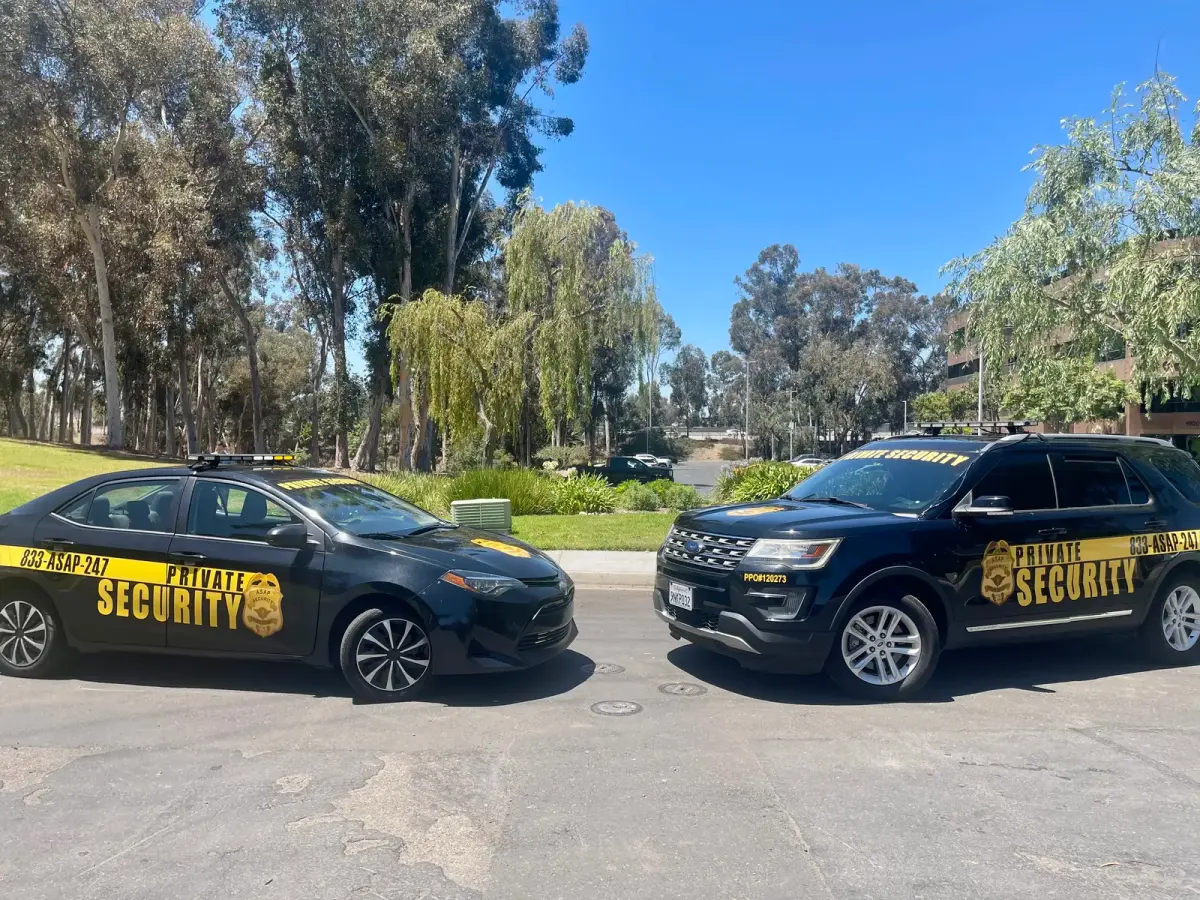
The core difference is the assignment’s anchor. A static post is responsible for a defined location and set of duties. A personal detail is organized around a person’s schedule and movement. Comparing the work by task can help a buyer avoid requesting coverage that does not match the problem.
| Coverage type | Primary focus | Typical planning questions |
|---|---|---|
| Static guard post | A defined entrance, lobby, property, or event area | What post orders apply? Which access points and hours are covered? Who receives incident updates? |
| Mobile patrol | Checks across a property or multiple agreed locations | Which areas and checkpoints are included? How are patrol visits documented and exceptions reported? |
| Personal detail | A person’s movements between locations | Who performs advance coordination? How are itinerary changes and arrival handoffs managed? |
| Combined event plan | Individual movement plus broader venue coverage | Which provider handles the person, the venue, communications, and any transition between teams? |
Call (833) 272-7247 to ask about manned coverage for your site or event.
The table is a starting point, not a promise that one provider supplies every category. Confirm what the company actually offers. ASAP Security’s scope is physical, manned guarding for commercial, residential/HOA, construction, medical, warehouse, and event settings; it does not offer executive or close protection. A buyer looking for a personal detail should identify a provider whose service scope specifically includes that work.
How can you define the assignment before requesting coverage?
A short planning exercise can make conversations with providers more useful. It also helps reveal whether the need is for a person-centered detail or site-based guarding. Write down the situation in practical terms instead of beginning with a service label.
- Identify the person, place, or activity to cover. Is the priority a specific individual, a residence, a workplace, an event venue, or movement among several locations? List the locations and the time periods that matter.
- Describe the concern and desired outcome. Explain what prompted the request and what should be different after coverage is in place. Separate known incidents or communications from general unease. This is not about predicting every possibility; it is about giving the provider enough context to recommend an appropriate scope.
- Map the transitions. Note when someone arrives, leaves, changes venues, or enters a public-facing space. A post at the destination may not address a transition. Conversely, a person-centered detail may not be the right answer to a building-wide access concern.
- Assign decision-makers. Identify the client contact, venue or property representative, and any other provider who must coordinate. Decide who can approve schedule changes and who should be contacted for routine versus urgent issues.
- Set limits and review points. Define tasks that are included, locations that are excluded, privacy expectations, and when the plan will be revisited. If the situation changes, agree on how to pause and reassess rather than improvising outside the original scope.
For example, a business leader attending a one-time public meeting might need the venue organizer to clarify arrival access and the location’s standard event coverage. If the individual also needs movement coordination outside the venue, that is a separate service question for a provider that offers personal protection. A property manager concerned about a staffed lobby, by contrast, may need a post order for visitor handling, notification, and incident reporting. Similar settings can require different assignments depending on the actual concern.
Families should make the same distinction. A residence may need clear visitor protocols and a defined guard post, while a person traveling between appointments would require a service designed around movement. Before sharing household schedules or other sensitive details, ask how the provider limits access to that information and who will receive it. Keep personal information to what is necessary for the agreed duties.
Finally, consider how the plan will be evaluated. Set a review date or trigger, such as a changed schedule, new location, or updated access procedure. Ask what the provider will document, how exceptions are escalated, and how the client can flag a concern. For property coverage, clear post orders and activity reports can help both sides discuss whether agreed work is being performed. For a personal detail, ask the provider to explain its own planning and reporting practices rather than assuming a site-security process transfers directly.
How should a detail coordinate across people and locations?
A written coordination plan can prevent gaps between the person being protected, the security provider, and a venue or property team. It should name a primary client contact and a backup, explain how schedule updates are passed along, and state which person can approve changes. Avoid relying on an informal assumption that every party has the latest itinerary.
The plan should also separate responsibilities. A personal protection provider may coordinate an individual’s arrival, while an event organizer manages venue access and another security team covers the event perimeter. Identify who speaks with venue staff, who handles a change to the planned arrival, and who records or escalates an incident. Where two providers are involved, agree on the handoff before coverage begins rather than asking teams to work it out during a busy transition.
Communication should be useful without exposing more information than needed. Agree on a method for routine updates and a separate escalation method for urgent issues. Decide who is allowed to receive updates about a person’s schedule or location. The client should understand what gets documented, who can see the records, and how long information is retained under the provider’s process. These questions are especially important when household members, assistants, property managers, or event staff may be involved.
For a changing itinerary, make a simple update process: who sends the change, who confirms receipt, and who can authorize a revised plan. Define a fallback if the primary contact cannot be reached. That does not require a complex protocol for every ordinary delay; it does require clarity about how the team avoids acting on conflicting instructions. The provider should describe its own procedures and discuss what is realistic for the assignment.
What makes a Riverside assignment different from a fixed local post?
Riverside County assignments can involve more than one destination or a schedule that extends beyond a single facility. A property may need coverage only at its own entrance or perimeter. A person-centered assignment, by contrast, may need planning for transitions and coordination with several hosts or locations. The service area alone does not decide the scope; the actual places, timing, access arrangements, and responsibilities do.
Ask the provider how it defines the covered area and what happens when a schedule includes a location outside the agreed plan. Clarify whether time spent moving between sites is included, who provides transportation if any, and how a late change will be approved. Do not assume that an agreement for a property post automatically extends to travel or other locations. If multiple teams are involved, document who covers each segment and who is the contact for the client.
These details can also help determine whether a local site-security solution is a better fit. A business seeking a visible, accountable guard presence at one facility can define the entrances, hours, post orders, and reporting line. A guest or executive who needs continuous accompaniment has a different requirement and should speak with an appropriately scoped personal protection provider. Making the distinction early avoids confusing a guard presence at a destination with coverage of the journey.
What should Riverside clients ask before selecting a provider?
Start with the outcome. Is the concern at a property, during a public event, or while someone travels between places? Where and when is coverage needed? What decisions should the security team be able to make, and who remains the client’s point of contact? Clear answers help distinguish personal protection from a staffed property or event assignment.
Then ask providers to explain their proposed scope in plain language. Request a written outline of tasks, coverage hours, handoffs, communications, and exclusions. Ask who conducts advance coordination, what information the client must provide, and how schedule changes are handled. Discuss confidentiality and the minimum personal information needed to perform the work.
- Confirm service fit: Does the provider explicitly offer the type of personal protection being requested, or does it provide site-based guard services only?
- Ask about personnel and supervision: What experience and training are relevant to this assignment? Who supervises the team and addresses concerns?
- Define communications: Who is the lead contact during coverage? How are routine updates and urgent issues communicated?
- Review the plan: What locations and activities are in scope? What happens when the itinerary, venue, or assigned duties change?
- Check applicable credentials: Verify relevant licensing and requirements with the appropriate state authority. California’s Bureau of Security and Investigative Services provides information about its licensing and regulatory role.
- Agree on documentation: Ask what reports are provided, how incidents are recorded, and how information is shared or retained.
For fixed-post or patrol assignments, reporting and accountability also matter. Ask how a provider verifies that agreed duties were performed and how a property representative can review activity. ASAP Security uses GPS-tracked Daily Activity Reporting (DAR) for its security operations and maintains 24/7 live human dispatch. Its former military and law-enforcement personnel are credibility signals for its manned security work, but these facts do not mean the company provides a personal protection detail.
ASAP can be considered when the need is guards assigned to a property or event in Southern California. Learn about its service areas, or review how activity reporting can support visibility into guard work. For questions about service fit, use the security services contact page.
Call (833) 272-7247 to discuss manned security for a property or event.
Frequently asked questions
Is a personal security detail the same as an armed guard?
No. A personal detail describes an assignment organized around a person and their movements; it does not automatically indicate whether personnel are armed. Any equipment, duties, and qualifications must be confirmed with the provider and considered in light of applicable requirements and the assignment’s risk assessment.
Can a static guard protect an executive or family?
A static guard can help manage a defined site or post, such as a building entrance or event area. That is different from accompanying someone between locations. If the concern involves movement, ask whether a provider offers personal protection specifically rather than assuming a fixed-post service covers it.
Does ASAP Security provide executive or close protection?
No. ASAP Security provides physical, manned guarding for properties and events, not executive, personal, or close-protection details. Its 24/7 live human dispatch, GPS-tracked reporting, and former military and law-enforcement personnel relate to its manned security operations.
What information should I prepare for an initial discussion?
Describe the type of location or movement involved, dates and hours, the concern you want addressed, and who will coordinate with the provider. Avoid sharing more sensitive personal information than necessary at the outset. A provider should explain what additional details it needs and how they will be used.
Match the coverage to the responsibility
A sound security plan starts by identifying what must be protected, where the risk occurs, and who needs to act when conditions change. A fixed post, patrol, event team, and personal detail have different responsibilities. Define the assignment clearly and select a provider whose actual services match it.
