

Is executive protection worth it? It may be when a specific person faces a credible, defined risk and a personal protection plan is proportionate to that risk. It is not automatically the right answer to a property concern, a general sense of unease, or a one-time operational problem. Before approving a service, identify who or what is exposed, what the proposed work would address, and whether a different measure fits better.
Call (833) 272-7247 to discuss your security needs
This distinction matters to Southern California businesses and property managers. ASAP Security provides manned, physical guarding for facilities and events; it does not provide executive or close protection. If the concern follows an individual across locations or relates to personal movements, consult a provider that specifically offers that service. If the need concerns access, a defined post, patrols, or activity at a property, a site-focused plan may be more relevant. Some situations involve both, but the work and responsibilities should remain clear.
What does executive protection address?
Executive protection, often shortened to EP, is organized around a particular person and that person’s circumstances. Depending on the provider and assignment, work may involve reviewing exposure, coordinating schedules and locations, planning for public appearances, and assigning protective personnel. Services vary, so buyers should ask what a proposal includes rather than assume that a company offering building guards also provides personal protection.
Start by distinguishing the subject of the concern. Is a named person receiving credible threats, targeted harassment, or repeated unwanted approaches? Is there a specific event or period that changes that person’s exposure? Or is the issue unauthorized access, theft, a conflict at a worksite, or unclear oversight at a facility? These concerns can overlap, but they do not call for the same service by default.
- Person-centered concern: The risk relates to an individual across locations, during travel, or at defined appearances.
- Site-centered concern: The issue relates to a building, event location, worksite, or community, regardless of which individual is present.
- Combined concern: A person’s presence changes what is needed at a site, so personal and facility teams may need to coordinate.
A useful starting point is to ask for a reasoned assessment and a defined plan, not a broad promise of safety. A ScienceDirect overview of executive protection notes that research focused on risks and anticipating events can inform whether protection is justified. Treat that as a prompt to connect each proposed task to a stated risk and objective.
When may executive protection be worth considering?
Executive protection may be worth evaluating when an organization can describe a meaningful, person-specific risk that a personal protection plan is meant to address. A review can begin before a situation becomes an emergency. At the same time, vague concern alone is not enough to select an ongoing service without clarifying what has happened, when the exposure occurs, and what response is appropriate.
Consider a structured assessment if one or more of these conditions apply:
- A specific person has received credible threats, targeted harassment, or repeated unwanted approaches.
- A public-facing role, dispute, major announcement, or sensitive event creates a temporary change in exposure.
- Predictable appearances or travel create a practical planning concern.
- Existing workplace procedures do not address a person’s movements beyond the site.
- Leaders need a defined plan for an upcoming event and want to understand whether personal coverage is relevant.
These are reasons to ask questions, not proof that EP is necessary. Record what is known, separate verified incidents from secondhand reports, and note where and when the concern arises. Ask a prospective provider to explain its assumptions, identify what falls outside the proposed scope, and say what additional facts it needs. If the concern relates to an event, clarify whether the request covers the venue, travel to and from it, or the person’s broader schedule.
Also decide whether the need is temporary or ongoing. A conference, public announcement, or short period of unusual exposure may call for a time-limited assessment rather than an indefinite detail. Set an end date or review date and identify what could justify continuing, changing, or ending the plan. New incidents, changed schedules, or a different risk picture may affect the decision. A review point helps prevent a temporary response from continuing by default.
Budget is part of the decision, but it should follow a defined scope. ASIS International has discussed budgets and executive-related obstacles to effective protection programs. Its discussion of executive protection obstacles is a reminder to examine both the risk and the resources needed for a workable plan. A low quote for poorly described work is not necessarily value, and a large budget does not by itself show that a plan is appropriate.
When is a different security measure a better fit?
Sometimes a buyer asks whether EP is worthwhile when the underlying issue is tied to a property or operating process. A guard assigned to a defined post, patrol coverage, access procedures, event staffing, or camera monitoring may address that problem more directly. Those measures are not substitutes for personal protection, but they may fit the property risks they are designed to manage. Start with the problem, not a service label.
For example, a warehouse manager concerned about unauthorized entry can first review gates, visitor procedures, operating hours, and incident records. That issue does not by itself establish a need to protect an executive away from the warehouse. A business planning a public event may need a plan for entrances, restricted areas, and guest movement at the venue; that is distinct from coverage before and after the event. For a workplace concern, identify where incidents happen, which controls exist, and who is expected to respond.
Match the measure to its intended task. A guard may provide an assigned on-site presence, observe conditions, communicate, and follow agreed instructions. Patrols may provide coverage across defined areas or checkpoints. Cameras can monitor or record selected areas, but they do not provide the same physical presence as a person at the site. Procedures can clarify visitor handling, reporting, and escalation. A combined approach can make sense when each component has a specific purpose and responsibilities are understood.
Before comparing options, describe the situation in practical terms. Identify entrances, operating hours, affected people, recurring locations, and tasks that are unclear. For an event, consider arrival periods, guest entry, restricted spaces, venue decisions, and organizer coordination. For a commercial site, check whether the issue is tied to a gate, shift, loading zone, or particular procedure. This description helps determine whether the gap involves personnel, technology, process, or coordination.
Then state what each measure can reasonably be expected to do. A guard may observe and report activity, communicate with a designated contact, and follow assigned post instructions. A camera system may support monitoring in specified areas. A procedure may clarify who grants access or reports an incident. No measure should be presented as a guarantee that an incident will not occur. A realistic plan names intended duties, decision-makers, escalation steps, and limits.
To review site-focused options, see ASAP’s information on security guard services, security patrol approaches, and 24/7 CCTV monitoring. These pages describe facility security, not executive protection.

How should you assess the risk before deciding?
A practical assessment does not require complicated terminology. It needs a clear record of the concern and an honest review of exposure, possible impact, existing safeguards, and uncertainty. Involve people who understand the situation, such as operations, facilities, legal, or event leads, while limiting sensitive details to those who need them. The goal is to decide what is known, what is not known, and what kind of response could address the issue.
- Describe the concern. Record known facts, dates, locations, and relevant communications. Keep assumptions separate from confirmed information.
- Identify who or what is exposed. Is the concern specific to a person, workplace, public event, residence, or group?
- Look for patterns and triggers. Note whether it changes during travel, public appearances, shift changes, meetings, or particular site conditions.
- Review current controls. Consider access procedures, visitor handling, reporting channels, communications, lighting, guard coverage, and emergency plans.
- Define the intended outcome. State what a useful result would look like, such as reducing exposure during a defined event or improving oversight at a facility.
- Set a review point. Decide when the organization will check whether the concern or plan has changed.
Protect sensitive details. Do not circulate personal schedules or threat-related information more broadly than needed. A provider should explain what information it needs to scope the assignment and how it handles confidential details. If a threat appears immediate, follow the organization’s emergency procedures and contact appropriate authorities rather than waiting for a commercial consultation. A security service should not be treated as a substitute for emergency response or other professional advice.
Consider a leader who receives an unwanted message before a public meeting. Record what was received, when it arrived, whether similar contact occurred, and what the meeting involves. Then ask whether the concern relates to that person, the event venue, or both. If it concerns the person’s movements, a personal protection specialist may need to assess that part. If it concerns access or crowd flow at the venue, event procedures may be relevant. The facts may lead to two workstreams with separate leads and boundaries.
Now compare a warehouse report of attempted entry into a restricted loading area. That points first toward site controls: gate procedures, visitor handling, shift coverage, incident records, and whether a guard or camera system could support the response. It does not automatically indicate a personal threat to an executive. Writing down this distinction before requesting proposals can help buyers avoid paying for work that does not address the observed problem. It also helps providers respond to a more specific request.
What should you compare before approving a plan?
Compare proposals by scope and operating details, not by label alone. Ask each provider to explain the work included, what conditions could change the plan, and where its role ends. If a proposal combines site guards with personal protection or another service, ask why those elements belong together and which provider owns each responsibility.
| Decision point | Executive protection | Site-focused guarding | Technology or procedures |
|---|---|---|---|
| Primary focus | A person and defined exposure | A property, post, or event location | Access, detection, observation, or documentation |
| Starting question | What person-specific risk requires attention? | Which site conditions need an on-site presence? | Which areas or processes need monitoring or controls? |
| Scope to define | Locations, timing, coordination, and exclusions | Posts, patrol areas, duties, escalation, and reporting | Coverage areas, response process, and maintenance |
| Common limitation | Does not automatically secure a property | Does not follow a person across locations | Does not provide physical presence or on-site judgment |
| Review measure | Whether the defined personal exposure is addressed | Whether assigned duties are being carried out | Whether the measure supports the stated goal |
The table is a comparison aid, not a formula. A plan can combine options, but the provider should explain why. Ask which tasks happen at the same time, where responsibilities transfer, and what happens if the location or schedule changes. If the plan depends on another vendor, venue, or internal team, agree on the handoff before approving work.
Ask who supervises the assignment, how changes are approved, how concerns are escalated, and what records the client receives. If personnel are assigned, ask about screening, training relevant to the scope, supervision, and continuity planning. Confirm that the provider’s stated capabilities match the work proposed. A confident presentation does not replace a clear assignment plan. Ask what the provider does not offer, especially when the organization needs more than one type of coverage.
Reporting also deserves specific questions. Who receives routine updates, who receives urgent notifications, and what response is expected? Ask how incidents are documented and how the client can request clarification. Records are useful only when the client understands what they cover and how exceptions will be handled. For site coverage, ASAP describes GPS-tracked Daily Activity Reporting and 24/7 live human dispatch. See its security services FAQ and guide to digital activity reports.
Call (833) 272-7247 to discuss facility coverage
How does cost fit into the decision?
There is no single price that answers whether EP is worthwhile. Scope, schedule, locations, staffing, preparation, duration, and the provider’s operating model can all affect a proposal. A short, defined assignment and an ongoing program are different commitments. Ask for the assumptions behind the quote and the circumstances that may change it. A price is useful for comparison only when you know what work it represents.
Ask whether preparation and coordination are included or billed separately. Find out how the plan changes if an appearance moves, the schedule extends, or a location changes. For assignments spanning several days, clarify continuity and handoffs. Confirm how urgent changes are communicated and who on the client side can approve them. These details can affect both the service delivered and the total commitment.
For a temporary need, define start and end conditions rather than leaving the term open-ended. For ongoing coverage, set a review date and identify what information will inform the decision to continue. A written scope makes it easier to compare the commitment with the risk being managed and spot assumptions that could create unexpected costs. It also gives the organization a basis for narrowing, expanding, continuing, or ending the arrangement.
Evaluate cost against purpose. What exposure is the plan intended to address? What would a gap mean for the person or organization? Is there a narrower period or activity that needs attention first? Could a change to access control, an event plan, a site procedure, or communications reduce part of the exposure? These questions support a proportionate decision without assuming the most extensive service is automatically best.
Request a written scope when possible. Clarify coverage boundaries, schedule, travel or venue assumptions, staffing, communications, supervision, reporting, change terms, and client responsibilities. Ask what is excluded. Do not compare proposals only by hourly figures: one may include preparation or oversight that another does not. Conversely, polished terminology should not obscure a vague scope. Compare the actual work and intended outcome.
What should buyers ask a provider?
Use an initial conversation to test whether a provider understands the need and is candid about fit. Ask questions such as:
- What specific risk or requirement does the proposal address?
- How do you distinguish confirmed information from assumptions?
- Which activities, locations, and hours are included?
- How will you coordinate with the client’s facilities, operations, or event team?
- How are assigned personnel supervised and briefed?
- What information will be reported, how often, and through which channel?
- What changes would trigger a reassessment?
- What are the provider’s limitations and exclusions?
Listen for specific, measured answers. No service should be promised to eliminate risk. A provider should describe its role, communicate constraints, and connect the proposal to the facts. Ask for relevant experience or references where appropriate, then verify claims through available channels. If answers remain vague, request clarification before comparing prices or approving work. Clear answers at the outset can reduce confusion later.
Put key commitments in writing. The document should identify the service, coverage period, assigned duties, primary contacts, reporting expectations, and process for changes. Ask what the provider needs from the client, such as site access, operating information, or a designated point of contact. Confirm how cancellations, schedule changes, and additional requests are handled. This makes it less likely that each side assumes the other owns an important task.
For a personal protection assignment, confirm that the scope addresses the locations and activities being considered, the preparation or coordination included, and what the provider will not do. For site coverage, confirm post instructions, patrol boundaries, escalation steps, and how the client will receive records. These are different assignment types, so written boundaries matter when an organization is considering both.
When might executive protection not be the right investment?
A personal detail may be a poor fit if the organization cannot explain the risk it is meant to address, if the concern is confined to a property, or if coverage has no defined beginning, end, or review point. A service label alone does not establish suitability. Before authorizing ongoing coverage, ask whether a narrower response could address the known exposure and what information would indicate that the need has changed.
Sometimes more information is needed before selecting a provider. If accounts of an incident conflict, establish what is known and preserve relevant records. If the concern involves an event, identify the venue, schedule, and organizer responsibilities. If it concerns a workplace, review access procedures and reporting channels. Better information can make a decision more focused; it should not be used to dismiss a credible concern.
Do not select a broad package simply because it sounds comprehensive. Ask the provider to connect each task to a stated objective. If an option is included as a precaution, ask what it changes, what its limits are, and whether another measure would address the issue more directly. Conversely, do not reject a relevant assessment only because an incident has not yet occurred. Base the decision on context and reasonable planning, not on a promise that risk can be eliminated.
How can personal and site security work together?
Some situations involve both a person and a facility. An executive may attend an event at a company location where ordinary site procedures still matter. Coordination can help, but it should not blur responsibility. The personal protection provider and site security team need to know who owns each decision, how updates are shared, and who handles routine access or incident reporting.
Before an assignment, agree on a point of contact, communication protocol, arrival and departure coordination, and a process for escalating changes. Share only the details each team needs. If an event includes a venue or outside organizer, define responsibilities with them in advance. Record decisions and update the plan if the schedule, location, or risk picture changes. A short written coordination plan is clearer than informal assumptions between separate teams.
For a property-centered concern in Southern California, on-site guarding may be the relevant conversation. ASAP’s information on corporate security services and event security coverage describes facility and event applications. For site service questions, use the consultation and quote page.
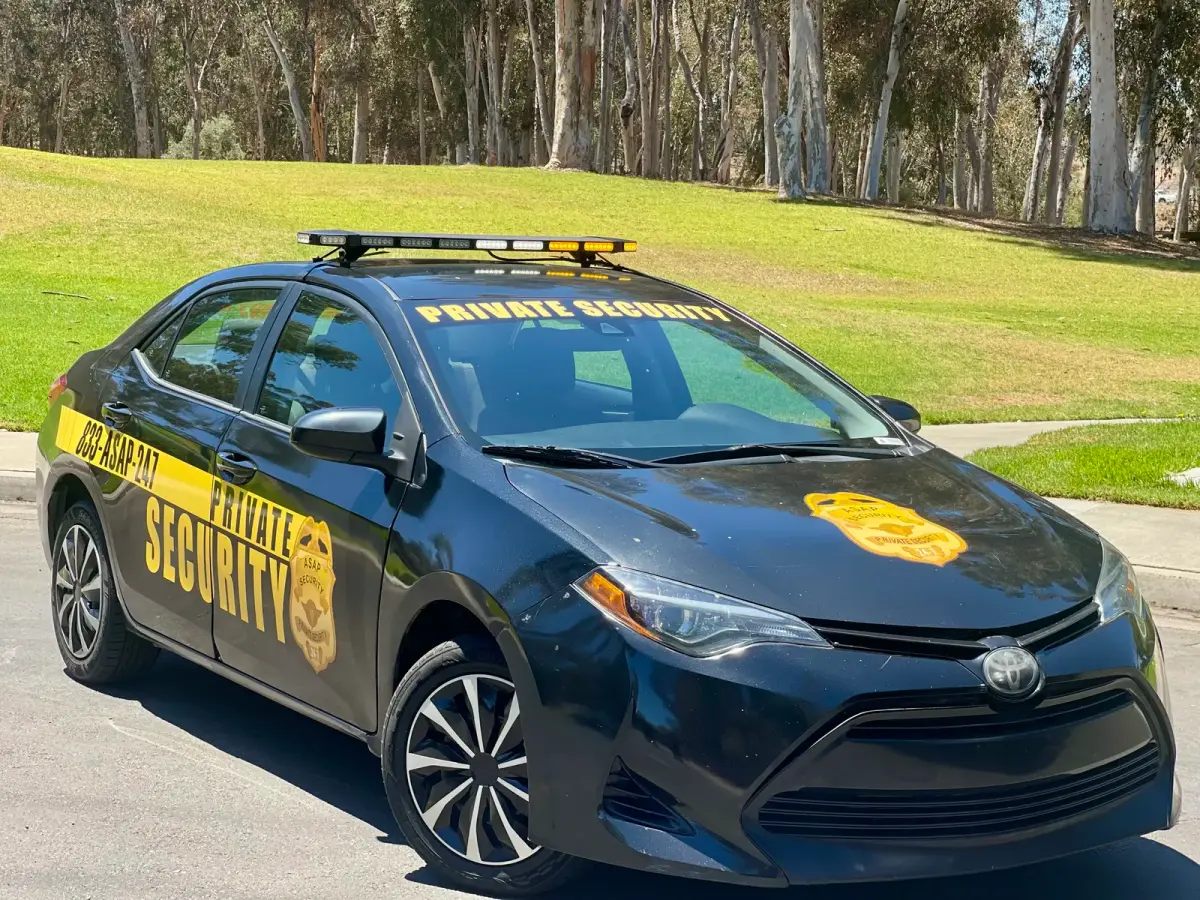
Call (833) 272-7247 to discuss a property or event
Frequently asked questions
Is executive protection only for public figures?
No. The relevant question is whether a person has a defined exposure that calls for personal protection, not whether that person is famous. A qualified assessment should consider the situation rather than treating a title or public profile alone as proof that a detail is needed.
Can a building security guard replace executive protection?
No. A site guard is assigned to defined property or event duties. Executive protection centers on an individual and may involve movement between locations. An organization may need both forms of planning, but it should assign each role clearly and use providers whose capabilities match the work.
Does one concerning incident automatically mean a permanent detail is needed?
No. Document and assess the incident in context. A short-term plan, site changes, event-specific measures, or another response may be more proportionate. The right option depends on the facts, exposure, and intended outcome.
What if the concern is at a workplace rather than around a person?
Start with site conditions: access, operating hours, visitor procedures, incident patterns, and the response expected from on-site personnel. A guard, patrol, camera system, or improved procedure may fit a site-centered need better than a personal detail.
How should you make the decision?
Executive protection may be worthwhile when a credible, person-specific risk and a clearly defined assignment justify the resources involved. It may be unnecessary or mismatched when the concern is really about a property, event, or general uncertainty. Document the concern, compare relevant options, verify provider scope, and set a review point so the plan can change as circumstances change. For facility and event guarding in Southern California, contact ASAP Security to discuss the site-focused services it provides.
