
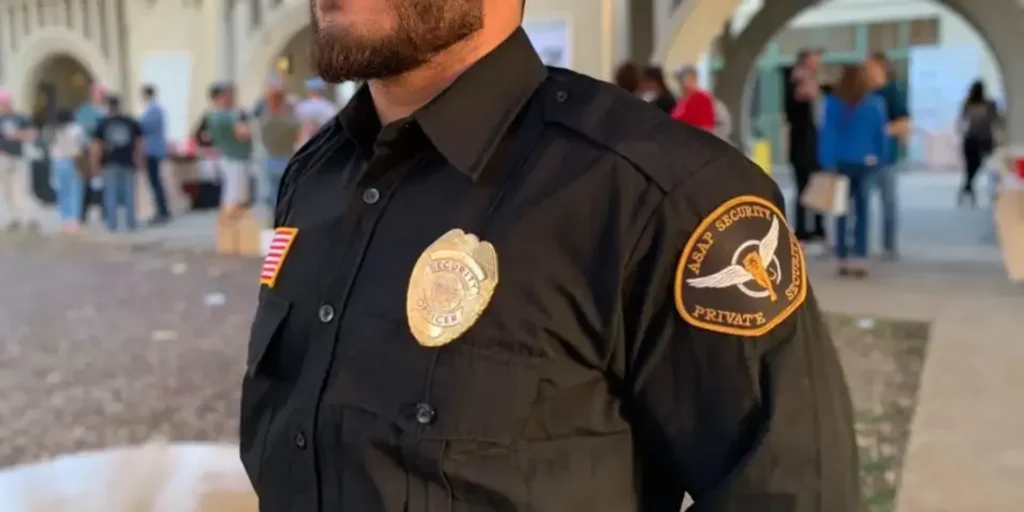
Car rental facility security guards can help businesses manage vehicle access, observe activity across busy lots, and support a more orderly customer experience. The right plan begins with the facility’s operating pattern, rather than simply the number of vehicles on the lot. Consider how customers, employees, transporters, and visitors enter the property, then match coverage and procedures to those conditions.
Request a facility security consultation
Call (833) 272-7247 to discuss car rental facility coverage.
What makes car rental facility security guards different at a rental facility?
A rental operation combines a vehicle lot with a customer-facing service point. Cars may be parked close together, moved throughout the day, returned after hours, or staged for cleaning and maintenance. At the same time, people arrive to collect keys, return vehicles, ask questions, or meet a rental representative. These overlapping activities create a different set of practical concerns from a conventional office or storage yard.
The exact risk picture depends on the property. A compact urban location may need clear oversight at a single entrance and a small number of customer spaces. A larger location may have multiple vehicle rows, a perimeter gate, service areas, separate return lanes, and activity at different hours. Some sites share a lot or building with other businesses. A useful coverage plan reflects the layout and routine of the actual location.
Guards provide a human presence and can observe, communicate, document, and follow site instructions. They do not replace sound key-control processes, lighting, cameras, insurance, or employee procedures. Instead, a well-defined guard post can connect those parts of a site’s security approach: someone is present to notice conditions, follow an agreed response path, and record relevant activity.
Which risks and operating needs should managers assess?
Start by looking at the facility as it operates over a full day and week. Walk the property at opening, during the busiest customer period, at closing, and after hours if access is permitted. Ask employees what regularly slows service or creates uncertainty. The aim is not to assume that every site faces the same threat. It is to identify where clear observation, access procedures, or timely escalation could help.
Vehicle movement and lot visibility
Map vehicle entrances, exits, parking rows, return lanes, and any narrow areas where cars or pedestrians cross. Note where parked vehicles, landscaping, buildings, or delivery activity limit sight lines. A guard’s post should allow useful observation without obstructing safe vehicle movement or customer service. If the lot is too large for one stationary position to see key areas, consider whether defined foot patrols or scheduled checks are appropriate.
Clarify who may move a vehicle and how that authorization is confirmed. Guards should not be expected to determine ownership or release a vehicle based on guesswork. The client should set the approved procedure, including who can verify a rental record, authorize a key release, or resolve a discrepancy. The guard’s role can then be limited to observing, reporting, and contacting the designated employee when a situation does not match the procedure.
Customer, employee, and visitor access
Identify the routes customers should use, where visitors should wait, and which spaces are restricted to employees or approved vendors. If a location has a service counter, key area, vehicle staging zone, or maintenance space, define the boundary in plain language. The guard should know how to give directions, when to ask a visitor to check in, and whom to contact if someone requests access to a restricted area.
Good access procedures should feel clear rather than confrontational. Signs, entrance layout, and staff instructions can reduce confusion before a guard needs to intervene. Managers should also decide how the guard will handle a person who is upset, has a service complaint, or disputes an access decision. A calm referral to the appropriate rental representative is often more useful than asking a guard to resolve a business transaction.
After-hours returns and property conditions
Document how vehicles are returned outside normal counter hours, where keys are placed, and which areas remain accessible. Confirm whether customers can enter the lot, use a drop box, or approach a building after closing. A guard should understand the authorized process and know what to do if a person appears to be using a different route or trying to enter an area that should be closed.
Also review lighting, gates, fencing, and camera coverage during an evening walk-through. A camera can help record or monitor a view, while an on-site guard can respond to conditions and communicate with people. Neither function should be assumed to replace the other. For locations considering a technology layer, review the scope of CCTV system installation alongside guard duties, sight lines, and escalation procedures.
Customer service and safe circulation
Rental facilities can have periods of concentrated arrivals and departures. Ask whether a guard may need to direct traffic, help keep pedestrian paths clear, or contact a supervisor when queues extend into a vehicle route. Set the boundary of those duties in advance. Traffic direction should follow the property’s instructions and applicable rules; the guard should not be left to invent a circulation plan on the spot.
Consider the experience visitors should have at the entrance. A visible, approachable officer can provide directions and remind people where to check in, while remaining attentive to the site. Where the facility operates in a larger commercial property, a consistent approach to entrances and common areas may also matter. See the overview of commercial security services for related coverage considerations.
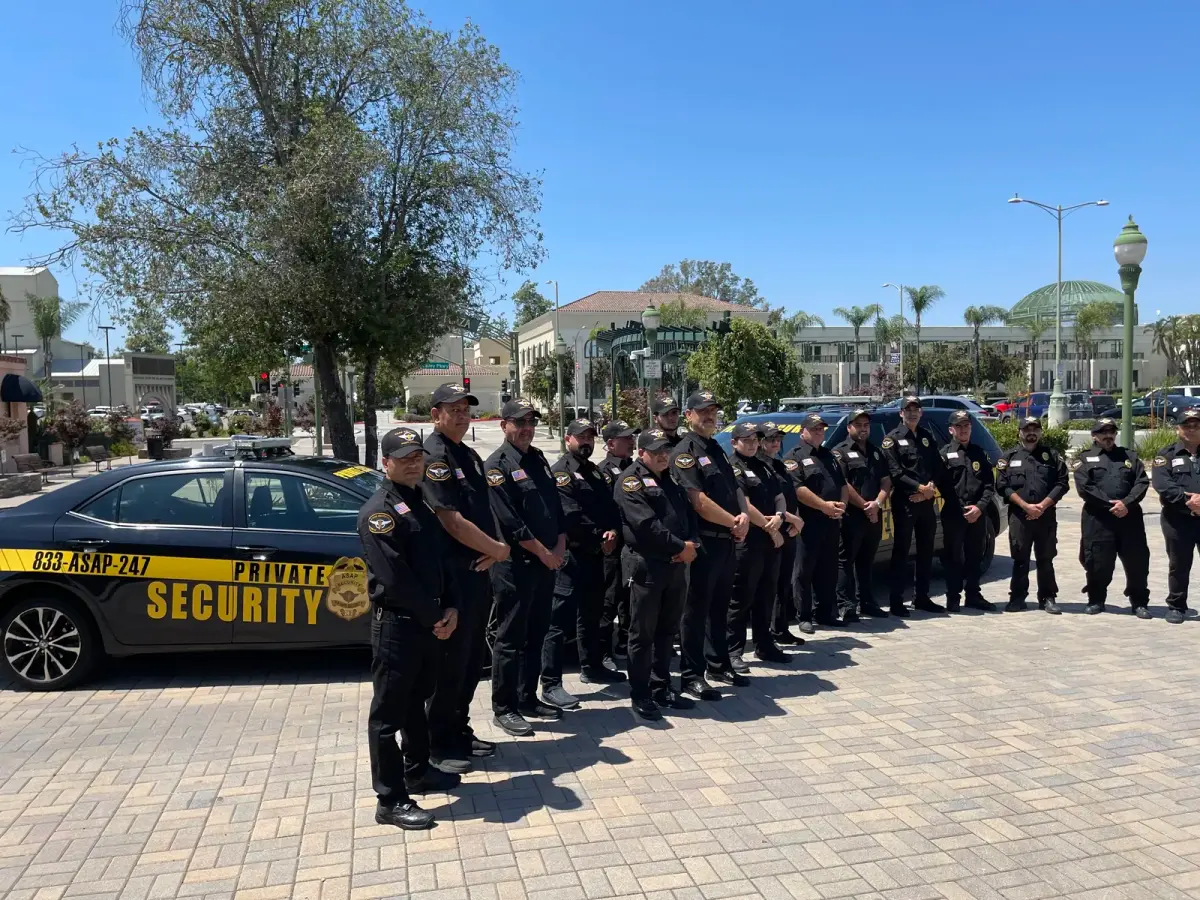
What coverage model fits the facility?
Coverage should follow the site’s operating needs, the visibility required, and the tasks the client wants performed. A single post may suit a compact property with one main entrance and clear procedures. A larger or more active operation may need a combination of a fixed presence and patrols. For a short-term surge, such as a high-volume period or a special event, a time-limited plan may be more suitable than extending the same schedule year-round.
Use this comparison as a starting point for a site review. It is not a universal staffing formula; site layout, activity, and client procedures determine what is practical.
| Coverage approach | May fit when | Plan and clarify |
|---|---|---|
| Fixed post | The entrance, customer area, or key access point needs a consistent visible presence. | Post location, access instructions, hours, escalation contacts, and what the officer can observe from the position. |
| Foot patrols | Vehicle rows, perimeter areas, or multiple points need periodic observation. | Route, check frequency, areas that must remain accessible, and how completed checks are recorded. |
| Fixed post plus patrols | The site needs an entrance presence as well as routine checks away from the post. | How patrols are scheduled, who remains at the post, and which duties take priority during customer surges. |
| Time-specific coverage | Activity or exposure is concentrated at opening, closing, late returns, or selected days. | Start and end times, handoff process, after-hours contacts, and how a schedule change is approved. |
When deciding among these options, define the outcome you want before choosing a schedule. For example, a manager may want a staffed entrance during return hours, routine checks of a far vehicle row, or a documented presence during a period when employees close the site. Those are different operational objectives. The written scope should name each task and say how the guard reports completion or an exception.
Mobile patrols can provide periodic checks across more than one area, but they are not the same as a guard continuously stationed at a customer entrance. Likewise, a fixed post does not automatically provide visibility around every corner of a large lot. Discuss the trade-offs openly, including what is not covered, so the selected approach is realistic. More information on security patrol services can help frame questions about routes and site checks.
How should managers define duties for car rental facility security guards?
Give the provider written, site-specific instructions before coverage begins. Clear duties help the guard understand the assignment and help managers evaluate whether the service is being delivered as intended. Avoid broad directions such as “watch the lot” without describing priority areas, permitted actions, and reporting expectations.
- Post and boundaries: Identify the approved work area, entrances, restricted zones, and any locations the guard must not enter.
- Access steps: Explain how to direct customers and visitors, when to request a check-in, and how to contact the employee authorized to approve access.
- Vehicle-related limits: State whether the guard may direct traffic, observe returns, or report an irregularity. Specify who alone can authorize vehicle movement or key release.
- Patrol route: List the areas to check, any route restrictions, and the approved method for documenting a completed check.
- Escalation: Provide names or roles, current contact methods, and the threshold for calling a supervisor, emergency services, or the client’s designated lead.
- Incident documentation: Explain what facts to record, who receives the report, and how quickly an urgent issue should be communicated.
- Shift handoff: Describe how open issues, unusual conditions, and access changes are passed to the next person or client contact.
Write instructions in direct language. “Contact the duty manager if the gate will not secure” is easier to follow than “handle gate problems.” Separate routine observations from emergency actions, and keep contact details current. If a responsibility changes, update the written instruction and make sure the people who need it receive the revision.
Agree on the limits of the role, too. A guard should not be treated as a rental agent, mechanic, key custodian, or substitute for an employee authorization process unless those duties are specifically appropriate, permitted, and documented. Clear boundaries reduce confusion for customers and protect the integrity of the facility’s own operating procedures.
What reporting and oversight should the client expect?
Reporting turns a visible presence into information a manager can review. Before service begins, agree on what a daily activity report should contain: date and time, post or route, completed checks, notable observations, and action taken or contact made. For an incident, establish how the guard will report promptly and what details belong in the follow-up record.
Reports should be factual and useful. A record might state that an entrance was found unsecured at a particular time, that the designated contact was notified, and what instruction followed. It should avoid speculation about a person’s intent. Set a process for correcting an incomplete entry, preserving relevant records, and bringing recurring site conditions to a manager’s attention.
Ask how coverage completion can be reviewed, how urgent communications reach the client, and who will respond to a question about a report. ASAP Security Guards uses GPS-tracked Daily Activity Reporting (DAR) and has 24/7 live human dispatch. Confirm how those tools and contacts apply to the proposed assignment, what the client receives, and which issues require a direct call rather than a routine report.
For general workforce context, the U.S. Bureau of Labor Statistics publishes state-level location quotient maps for security guards and a corresponding area-level map. These are occupational distribution resources, not a measure of a particular provider’s availability or the coverage a specific rental site needs. Use a site assessment and a direct discussion of the proposed post to evaluate that fit.
Call (833) 272-7247 to review reporting and site coverage needs.
How can a buyer evaluate a security provider?
Compare the proposed plan, not only the headline schedule. A useful provider conversation should make the service understandable before the start date: who coordinates the assignment, what the guard is expected to do, what information is reported, and how the client can raise a concern. Ask for answers that relate to the actual facility rather than relying on generic promises.
- Describe the site clearly. Share a basic property map, operating hours, vehicle entrances, customer flow, after-hours process, and areas that need attention. Identify any shared boundaries or access arrangements.
- Ask for a site-specific scope. Confirm the post, patrol area, schedule, duties, exclusions, and communication path. Make sure the scope reflects the difference between an entrance presence and checks of distant vehicle rows.
- Review accountability. Ask what the regular activity report covers, who reviews it, and how urgent issues are raised. Confirm whether checks and incidents can be reviewed in a practical, consistent format.
- Discuss training and preparation. Ask how officers are briefed on the property, customer interactions, site rules, and escalation instructions. The provider should understand the assignment’s limits as well as its priorities.
- Confirm operational communication. Find out who is available when the client needs to clarify a procedure or report a change. For an assignment with overnight coverage, ask how after-hours communication works.
- Check service fit and credentials. Review relevant service information and ask how the provider’s documented qualifications apply to the proposed work. The company background and Southern California service-area information are useful starting points for that conversation.
- Agree on review points. Set a date to discuss the first period of service, reporting quality, operating changes, and any adjustment to the post instructions. Make changes through a clear approval process.
Do not treat a checklist as a substitute for verifying the scope and terms of service. Ask who is responsible for equipment, keys, access credentials, incident notification, and updates to site instructions. If cameras are part of the plan, confirm who monitors them, which views are available, and how camera observations connect to on-site response. For continuously monitored camera options, see 24/7 CCTV monitoring and discuss how the technology would complement the guard’s duties without blurring responsibilities.
How do guards and cameras complement each other?
Cameras and on-site personnel serve different purposes. Cameras can provide a view of selected areas and help preserve visual information, depending on placement, system operation, and monitoring arrangements. A guard can observe conditions in person, speak with people, follow an access procedure, and notify the designated contact. The best combination depends on blind spots, the site’s hours, and the actions expected when something unusual occurs.
Start by identifying the questions technology should answer: Which entrances need a view? Are vehicle return areas visible? Who reviews an alert or recording? How is a camera outage reported? Then identify where a person is needed to communicate, guide visitors, or perform a site check. Avoid assuming that installing cameras automatically creates a response plan; specify who receives alerts and what they should do next.
For managers evaluating more than one Southern California property, use consistent core procedures where possible while recording each site’s differences. A common report format can make review easier, but the route, access rules, operating hours, and escalation contacts should remain property-specific. A smaller location may not need the same physical post or technology as a larger site.
What should a practical rollout include?
Prepare the operation before the first shift. A short, structured setup can prevent misunderstandings and make early review more useful.
- Walk the site with the provider and identify boundaries, entrances, vehicle rows, employee areas, and customer routes.
- Share the approved operating instructions, contact list, access rules, and after-hours return process.
- Set the coverage schedule, post location, patrol expectations, and priorities when customer activity increases.
- Review how the guard communicates an urgent concern and how routine activity is recorded.
- Tell employees what the guard’s role is and which questions or exceptions should go to a rental representative.
- Schedule a review after coverage begins to discuss observed conditions and correct unclear instructions.
During the review, compare the original goals with what is happening. Are the intended areas being observed? Do reports describe the checks managers need to understand? Are customers receiving clear directions? Has a gate, return procedure, or business hour changed? Update instructions as the operation changes, and make sure both the client and provider are working from the same current version.
For coverage across San Diego, Riverside, Orange, or Los Angeles County, discuss the facility address, service hours, and practical requirements directly. The security services overview provides another point of reference for a conversation about physical guarding. A site-specific consultation can help translate the facility’s needs into a defined scope and schedule.
Request a quote for your rental facility
Call (833) 272-7247 to discuss a site-specific security plan.
Frequently asked questions
What duties can car rental facility security guards perform?
Duties depend on the written assignment. They may include maintaining a visible post, observing entrances and vehicle areas, conducting defined patrols, directing visitors to the proper contact, documenting activity, and escalating concerns under the client’s instructions. The client should define limits around vehicle movement, keys, customer transactions, and restricted areas.
Should a rental facility use a fixed post or patrols?
A fixed post can provide a consistent presence at an entrance or customer area. Patrols can provide periodic checks of specified areas. A property with both needs may consider a combined plan, but the schedule and priorities should account for whether the post remains covered during each patrol. The appropriate approach depends on the layout and operating pattern.
Can a guard replace cameras or an access-control system?
No single measure answers every site need. Cameras can provide views of selected locations, access-control procedures define who may enter, and guards provide an on-site human presence with observation and communication duties. Managers should decide how each part works with the others and who responds when a system or procedure needs attention.
What information should a manager provide before service begins?
Provide the property layout, operating hours, approved entrances, restricted areas, customer and after-hours procedures, designated contacts, patrol priorities, and escalation instructions. Explain how activity and incidents should be recorded. Walk through the site together so the written scope matches real conditions.
How can a manager know whether the coverage is working?
Review whether the agreed post and checks are being completed, whether reports are clear and timely, and whether communication follows the escalation plan. Revisit the scope when vehicle flow, hours, access arrangements, or site layout changes. A regular client-provider review helps identify needed adjustments before unclear practices become routine.
Car rental facility security works best when duties, access rules, reporting, and communication are defined around the property’s actual operation. Start with a site walk-through and a clear scope, then review the plan as the facility changes.
