
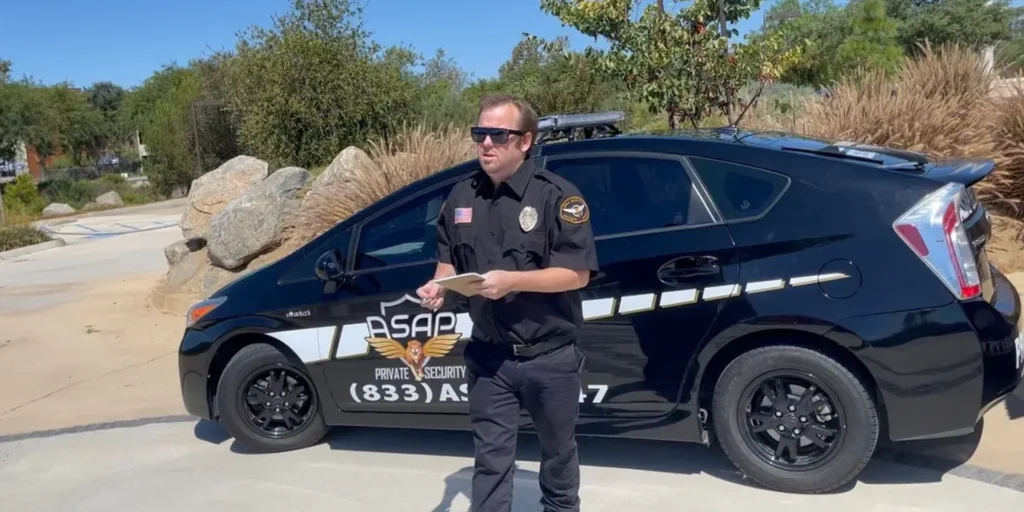
An open gatehouse or an inconsistent patrol route can create security gaps in a private neighborhood. Gates, cameras, and resident access devices are useful, but they do not replace trained people who can make decisions at the entrance and across the property. For an HOA board, choosing the best security companies for gated communities means evaluating the complete operating model, not just the hourly rate.
Call (833) 272-7247 for a gated community security assessment.
The best security companies for gated communities combine reliable gatehouse access control, mobile patrol coverage, clear HOA protocols, accountable reporting, and professional resident service. Before signing an agreement, confirm active BSIS licensing, relevant residential experience, liability insurance. Bilingual coverage when needed, and a plan that matches the community’s entrances, streets, amenities, and schedule.
There is no single security package that fits every neighborhood. A smaller community with one controlled entrance may need a dedicated gate officer during peak traffic. A large property with multiple entrances, perimeter walls, parks, or pools may need both fixed access control and mobile patrols. The right provider begins with the community’s risks and daily routines, then builds coverage around them.
Why Gated Communities Need Professional Security
A gate is a control point, not a complete security plan
Gated communities are designed to limit access, but the gate only works when entry procedures are consistent. Tailgating, unverified guests, contractor traffic, deliveries, propped-open gates, and equipment failures can all create openings. Residents also expect the entrance to remain efficient and courteous. A guard must enforce the community’s rules without turning every visitor interaction into a disruption.
HOA boards should also consider what happens away from the entrance. A gatehouse officer cannot see every street, walkway, parking area, pool, or rear boundary at the same time. Residents may report noise complaints, suspicious activity, parking problems, property damage, or a broken light. A complete plan gives staff a defined way to document and escalate those issues.
Security should support the residential lifestyle
Residential security is different from an aggressive, one-size-fits-all deployment. Officers represent the community whenever they speak with a homeowner, visitor, vendor, or emergency responder. Professional appearance, calm communication, and consistent application of the rules matter because security should protect the neighborhood while preserving a welcoming atmosphere.
Security is a deterrent and a risk-management service. No responsible company can promise that crime will never occur. The more useful question is whether the provider makes unauthorized activity harder, improves visibility, responds appropriately, and gives the HOA the information it needs to correct weak points.
Use design and people together
Crime Prevention Through Environmental Design, or CPTED, provides a useful framework for reviewing a property. UCLA’s site security guidance describes natural surveillance as placing physical features, activities, and people to maximize visibility. It also describes access control as guiding movement through entrances, exits, fencing, landscaping, and lighting.
These principles work best when the physical environment and the security team support each other. The goal is not to make a community feel fortified. It is to improve visibility, establish clear boundaries, encourage legitimate activity, and make suspicious behavior easier to notice and report. A provider that understands this balance can contribute more than a uniform at the gate.
What to Look For in the Best Security Companies for Gated Communities
Use the following checklist when comparing proposals. Ask each company to explain how it would apply the item to your actual property, rather than accepting a generic list of services.
1. Active BSIS licensing and background screening
In California, the Bureau of Security and Investigative Services is the state authority associated with private security guard licensing. Ask how the company verifies that officers assigned to your property hold active credentials and how it handles ongoing compliance. Also ask about background screening, references, drug testing where applicable, and training records. The person at the gate may interact with residents, children, vendors, and emergency personnel, so vetting is a foundational requirement.
2. Demonstrated HOA and residential experience
Commercial patrol experience does not automatically prove that a provider understands residential access rules. Ask whether the company has handled guest lists, contractor access, visitor records, resident disputes, package or delivery traffic, parking rules, amenity areas, and quiet-hour complaints. An experienced HOA partner should be comfortable working from written post orders and updating them when the board changes a policy.
3. Coverage designed for the property
A proposal should identify posts, hours, patrol routes, relief coverage, supervisor checks, and the response process for missed coverage. Ask how the plan changes during holidays, community events, construction, major deliveries, or a temporary gate outage. A low-cost proposal that leaves the main entrance uncovered or relies on vague drive-through promises may not provide meaningful protection.
4. Liability insurance and clear responsibility
Request proof of current general liability insurance and confirm the policy limits and certificate details with the appropriate advisor. The HOA should understand which responsibilities remain with the association, which belong to the security company, and how incidents are documented. Insurance does not replace good procedures, but a properly licensed and insured provider is a basic screening requirement.
5. Bilingual officers when the community needs them
English and Spanish language capability can improve communication at a busy gate and during an incident. Bilingual officers may be able to explain access rules, answer resident questions, communicate with vendors, and reduce misunderstandings. Ask whether bilingual coverage is consistently available for the proposed shifts or only offered when a particular officer happens to be working.
6. Useful reports, not just a signature in a logbook
Daily Activity Reports should tell the property manager what happened during a shift. Ask to see a sample report. It should make it easy to review visitor issues, patrol activity, hazards, gate or lighting problems, resident concerns, and incidents that need follow-up. A report that only says “all clear” gives the board little information for improving the security plan.
| Evaluation area | Questions for the provider | What a strong answer includes |
|---|---|---|
| Licensing | Are assigned officers actively licensed and screened? | Credential verification, screening standards, and current records. |
| HOA experience | How do you manage residents, guests, vendors, and post orders? | Examples of residential procedures and supervisor oversight. |
| Coverage | What happens at the gate and throughout the property? | Defined posts, patrol routes, relief plans, and escalation steps. |
| Insurance | Can you provide current liability documentation? | Verifiable coverage and clear division of responsibilities. |
| Communication | How are residents and managers kept informed? | Professional service, bilingual availability when needed, and timely reports. |
| Accountability | How can the HOA confirm that coverage occurred? | Detailed Daily Activity Reports and an accessible management process. |
Patrol vs. Gatehouse Coverage: Which Guard Post Does Your Community Need?
When a fixed gatehouse officer makes sense
A dedicated gatehouse officer is most useful when the community needs consistent control at a primary entrance. The officer can follow resident and guest procedures, verify visitor information, coordinate with homeowners, manage vendors, and record unusual activity. A fixed post also creates a visible, familiar presence for residents and visitors.
The HOA should define the officer’s authority carefully. Post orders might cover visitor verification, delivery procedures, emergency notifications, gate equipment failures, traffic flow, and when to contact a supervisor or public safety agency. Good procedures help the officer remain consistent while avoiding unnecessary conflict.
When mobile patrols add value
Mobile patrols extend visibility beyond the entrance. Officers can check streets, perimeter areas, parking zones, common amenities, lighting, and other locations that a stationary gatehouse cannot observe. Patrols can be scheduled around the property’s risk profile and may be especially valuable for large communities or neighborhoods with multiple access points.
Patrol officers can also respond to calls about suspicious activity, noise, parking, open gates, or property damage. The provider should explain how patrol activity is recorded and how a gatehouse officer, dispatcher, supervisor, and property manager communicate when an issue occurs.
Why a blended model is often stronger
Many communities benefit from combining fixed and mobile coverage. The gatehouse controls the main point of entry while patrol officers check the areas that cannot be seen from that post. The two functions can support each other. For example, a gate officer may direct a patrol unit to investigate a vehicle or location. While a patrol officer may report a damaged fence or malfunctioning light that affects entrance security.
ASAP Security Guards provides both dedicated gatehouse access control and mobile patrol units. The appropriate balance depends on the community’s size, layout, traffic patterns, hours, budget, and board priorities. Ask the provider to explain what the coverage model does not cover, too. Clear limitations are more useful than broad promises.
Call (833) 272-7247 to compare gatehouse and mobile patrol options.
Access Control and Technology That Strengthen Gated Community Security
Start with the flow of people and vehicles
Access control should make authorized entry straightforward and unauthorized entry more difficult. Review every entrance, exit, pedestrian path, service road, visitor lane, and emergency access route. The plan should account for residents, guests, contractors, delivery drivers, service providers, and first responders. A guard should know what to do when a resident forgets a credential, a visitor is not on the list, or the gate stops working.
Technology can support these decisions through cameras, access credentials, intercoms, visitor-management tools, license-plate systems, and gate controls. However, technology is only as useful as the procedures around it. Someone must monitor alerts, respond to equipment failures, protect access data, and explain exceptions to residents.
Apply natural surveillance principles
Natural surveillance is stronger when lighting, landscaping, camera placement, and patrol routes create clear lines of sight. Trimmed vegetation, working fixtures, and visible common areas can reduce hiding places. Cameras should be positioned for a defined purpose, and their coverage should be reviewed after landscaping or construction changes.
Physical upkeep is part of security. A broken gate, dark walkway, damaged fence, or unclear sign can create both a safety issue and an opportunity for unauthorized access. Daily reports should identify these conditions so the HOA can assign repairs and confirm completion.
Protect the resident experience
A security system should not create unnecessary delays or confusion. The provider should help the HOA set expectations for visitor approvals, contractor access, deliveries, temporary credentials, and after-hours calls. Clear communication is especially important when a new procedure is introduced. Residents are more likely to follow rules that are easy to understand and applied consistently.
When reviewing a technology proposal, ask who owns the equipment, who maintains it, how access records are handled, and what happens if a system is offline. These details help the board compare actual operating resilience instead of comparing feature lists.
Reporting and Communication: What Property Managers Should Expect
Daily Activity Reports create operational visibility
Security reporting gives an HOA more than a record of attendance. Detailed Daily Activity Reports can document visitor and vehicle concerns, patrol checks, hazards, equipment issues, resident requests, suspicious activity, and incidents that require follow-up. Reports help managers identify patterns, such as repeated gate problems or lighting failures in the same area.
Ask how quickly reports are delivered, who reviews them, and how urgent issues are escalated. A report should be specific enough that a manager who was not on site can understand what happened, what the officer did, and what remains open. If the provider uses GPS or other tracking tools, ask how those tools support accountability without replacing professional judgment.
Post orders should be clear and current
Post orders translate the HOA’s expectations into daily actions. They should address entry procedures, visitor handling, patrol locations, emergency contacts, incident reporting, confidentiality, and the limits of an officer’s authority. The company should review those instructions with its officers and update them when the property or board policies change.
Consistency matters. A guard who applies a policy differently from one shift to the next can create resident frustration and weaken access control. Supervisors should inspect the post, coach officers, review reports, and communicate recurring issues to the property manager.
Bilingual communication for resident relations
Security staff are often the first point of contact for residents, visitors, and vendors. Calm, respectful communication can prevent a minor disagreement from becoming a larger incident. Bilingual English and Spanish officers can improve communication in diverse communities and help ensure that important access or safety instructions are understood.
The best provider gives the HOA a clear management contact, an escalation path for urgent issues, and a regular way to review performance. The board should know whom to call when coverage changes, a resident raises a concern, or a report identifies a recurring property problem.
Why ASAP Security Guards Is the Southern California Choice
ASAP Security Guards serves Southern California with professional security services designed around the client’s property and operating needs. For HOA boards, the relevant question is not simply whether a company can provide a uniformed officer. It is whether the provider can build a dependable residential plan, communicate with residents, and remain accountable to management.
Experience with residential access and patrol protocols
ASAP has experience managing complex residential access requirements and HOA-specific patrol protocols. That experience supports a practical conversation about guest traffic, vendor entry, gatehouse procedures, patrol routes, community amenities, and the balance between vigilance and a welcoming residential environment.
ASAP can provide dedicated gatehouse access control and mobile patrol units. The team can help an HOA evaluate whether it needs one coverage type or a blended model. The plan should be based on the community’s layout, schedule, entrances, traffic, and areas that need regular visibility.
Licensed, screened, and insured personnel
According to the customer’s service standards, ASAP officers hold active BSIS licenses and undergo rigorous background checks. ASAP is also fully licensed and carries comprehensive general liability coverage. An HOA should still request current documentation during its normal vendor review, but these standards give the board clear criteria for evaluating the provider.
Accountability that helps managers make decisions
ASAP provides detailed Daily Activity Reports for property managers. Clear reporting lets the HOA review what happened during each shift, follow up on hazards, and make informed changes to post orders or property conditions. Bilingual English and Spanish officers are also available when a community needs broader communication support.
To learn more about residential coverage, review the residential security guard company service page. HOAs can also explore mobile patrol services for gated communities when they need more visibility beyond the gatehouse.
How an HOA Can Compare Security Proposals
Once the board has its checklist, compare proposals on operating detail rather than slogans. Give each provider the same basic information about entrances, hours, traffic, amenities, known incidents, resident expectations, and reporting needs. Then ask each company to explain its recommended coverage.
- Map the property. Identify every entrance, exit, pedestrian route, perimeter section, common area, and location where visibility is limited.
- Define the service goals. Decide whether the priority is visitor management, patrol visibility, resident reassurance, incident response, asset protection, or a combination.
- Review the personnel standards. Confirm BSIS licensing, screening, training, supervision, relief coverage, and bilingual availability if needed.
- Compare the coverage model. Look for specific gatehouse posts, patrol routes, schedules, response steps, and procedures for missed or changed coverage.
- Review the reporting sample. Make sure the Daily Activity Report shows meaningful activity and identifies issues that require action.
- Confirm insurance and responsibilities. Request current liability documentation and clarify what the security company, HOA, manager, and residents each handle.
- Set a review cadence. Establish how the provider and board will evaluate reports, adjust post orders, address complaints, and measure service quality.
A strong proposal should make the plan understandable to the board and the residents who will interact with it. If a provider cannot describe how its officers will handle everyday situations, ask for more detail before moving forward.
Frequently Asked Questions
What should an HOA ask security companies before signing a contract?
Ask about active BSIS licensing, background screening, HOA experience, insurance, post orders, patrol routes, gatehouse procedures, supervisor checks, reporting, response escalation, relief coverage, and bilingual officers if needed. Request a sample Daily Activity Report and ask how the company will adapt the plan when the community changes.
Is a gatehouse officer enough for a gated community?
It depends on the property’s size, layout, entrances, perimeter, amenities, traffic, and risk profile. A gatehouse officer can manage a primary access point, but a fixed post cannot observe every street or common area. Many larger communities benefit from combining gatehouse access control with mobile patrols.
Why does BSIS licensing matter when choosing a security provider?
BSIS licensing is an important California credentialing check for private security personnel. An HOA should confirm that assigned officers have active licenses and should ask how the provider handles screening, training, supervision, and compliance. Licensing is one part of a broader vendor review that also includes insurance, experience, and accountability.
Do gated communities benefit from bilingual security officers?
Yes, when residents, guests, vendors, or staff communicate in both English and Spanish. Bilingual officers can explain access rules, answer questions, and communicate during an incident more clearly. Ask whether bilingual coverage is available consistently for the shifts in your proposal.
How can an HOA tell whether a security company is performing?
Review detailed Daily Activity Reports, supervisor inspections, patrol records, incident follow-up, response times, resident feedback, and unresolved property issues. The board should have a regular meeting or report review with the provider. Effective oversight turns security data into practical improvements.
Secure Your Gated Community With a Better-Fit Plan
The right security provider helps an HOA protect access points, improve visibility, communicate with residents, and respond to issues with consistent procedures. Start with the checklist, compare the actual coverage model, and choose a partner that can support the community as its needs change.
Call (833) 272-7247 to schedule a gated community security assessment with ASAP Security Guards.
