

Bank security guards are one part of a broader branch protection plan. Financial institutions must balance visible deterrence, customer service, employee safety, access control, cash-area protection, and a measured response to incidents. The strongest plan is not the most dramatic one. It is the plan that matches the branch’s risk profile, operating hours, layout, staffing, and regulatory responsibilities.
Talk with ASAP Security Guards about a branch security plan. Call (833) 272-7247 for a consultation.
What should a bank security program protect?
A bank security program should protect people, property, information, and normal operations while supporting a calm customer experience. That means looking beyond the teller line to entrances, waiting areas, ATMs, employee-only doors, delivery points, parking areas, and the procedures staff follow when something seems wrong.
For institutions covered by specific federal banking rules, the written security program and designated security responsibilities remain the foundation. 12 CFR 326.3 describes a security program for certain insured nonmember banks, while 12 CFR 208.61 addresses security procedures for state member banks. A financial institution should confirm the rules that apply to its charter, regulator, and locations with its compliance team or counsel.
Bank security guards do not replace that program. A trained officer can help carry out the branch’s documented procedures, observe conditions, manage access, communicate with dispatch, document incidents, and coordinate with emergency services when appropriate. The provider should work from the institution’s policies rather than inventing procedures at the post.
How does visible deterrence support branch safety?
Visible deterrence is the practical effect of a professional security presence that is easy to identify, positioned thoughtfully, and integrated with the branch team. It can signal that the property is monitored, give customers a clear point of contact, and help staff address concerns before they become a larger disruption.
A guard’s placement matters. The officer may be stationed near a public entrance, move through customer areas, monitor exterior approaches, or rotate between defined checkpoints. The assignment should preserve sightlines and customer access without creating unnecessary congestion. Uniform standards, professional communication, and consistent post orders are as important as the physical presence.
Visibility should also be consistent with the institution’s customer experience. A bank serves people who may be anxious about money, identity, or an unfamiliar process. Officers should be approachable, calm, and prepared to give simple directions. Their role is to support a safe environment, not to treat every customer as a threat.

Which access-control duties can guards support?
Access control at a financial institution is more than checking a badge. It is the disciplined management of who may enter a space, when they may enter, and what happens when a person or request does not match the branch’s procedure. Bank security guards can provide an in-person layer that complements locks, cameras, alarms, and employee controls.
- Observe public entrances and employee-only access points.
- Direct visitors, vendors, and contractors to the correct check-in process.
- Monitor scheduled deliveries and service activity without handling sensitive banking materials.
- Identify doors that are propped open or areas that do not match post orders.
- Support opening and closing routines defined by the institution.
- Report unusual activity to the designated branch contact or dispatch center.
These duties should be specific to the branch. A provider should receive clear instructions about restricted areas, visitor handling, deliveries, emergency contacts, and escalation thresholds. Guards should not be asked to make financial decisions, access customer accounts, handle cash outside authorized procedures, or perform duties that belong to bank employees.
How can bank security guards support customer and employee safety?
Customer and employee safety improves when people know what to expect during routine activity and when a concern is handled without unnecessary escalation. A guard can welcome visitors, observe conditions, help maintain orderly movement, and notify the right person when a situation needs management attention.
Good coverage emphasizes communication and de-escalation. Officers should know how to listen, create space, request support, and follow the branch’s instructions for disruptive or distressed behavior. They should also understand when to disengage and contact supervisors or emergency services. No guard presence can guarantee that an incident will not occur, so the goal is preparedness, early recognition, and a controlled response.
The branch should define how security staff coordinate with tellers, managers, facilities teams, alarm monitoring, and law enforcement. Short pre-shift briefings can cover changes in hours, construction, known maintenance activity, special events, or other conditions that affect the post. Clear communication reduces confusion without exposing sensitive operational details.
Call (833) 272-7247 to discuss trained bank security guards for your financial institution.
What should cash-area protection include?
Cash-area protection should combine physical presence, restricted access, employee procedures, technology, and careful documentation. A guard’s job is not to replace the bank’s cash controls. It is to help observe the environment, support access rules, identify irregular conditions, and escalate concerns through the approved chain of command.
Important planning questions include:
- Which areas are public, employee-only, or restricted?
- Who is authorized to enter cash-handling or secure operational areas?
- How are deliveries, maintenance visits, and vendor access verified?
- What should a guard do if a door, camera, alarm, or lighting condition appears abnormal?
- Who receives the initial notification, and who is the backup contact?
- How are observations recorded without exposing customer information?
Security staff should avoid collecting unnecessary personal information and should follow the institution’s privacy and data-handling requirements. Daily Activity Reports can document time, location, observations, and actions taken, but reports should use the minimum information necessary for an operational record.
How should a branch plan for incident response?
Incident response is the bridge between noticing a concern and restoring safe operations. A practical plan defines who communicates, who makes decisions, what the officer observes, when emergency services are contacted, and how the event is documented afterward. The plan should be rehearsed at a level that does not disclose sensitive vulnerabilities.
- Recognize and assess: Observe the condition, protect immediate safety, and avoid unnecessary confrontation.
- Communicate: Notify the branch contact, dispatch center, or emergency services according to the written procedure.
- Control the environment: Use approved instructions to create distance, guide people, or restrict access when appropriate.
- Coordinate: Share relevant facts with responding personnel and follow the branch’s direction.
- Document: Record time, location, observations, notifications, and actions in an objective report.
- Review: Identify training, staffing, facility, or procedure changes that could improve readiness.
Reports should separate what the officer directly observed from what someone else reported. They should avoid speculation, inflammatory language, and unnecessary customer details. A consistent reporting process helps branch leadership review patterns and communicate with the provider.
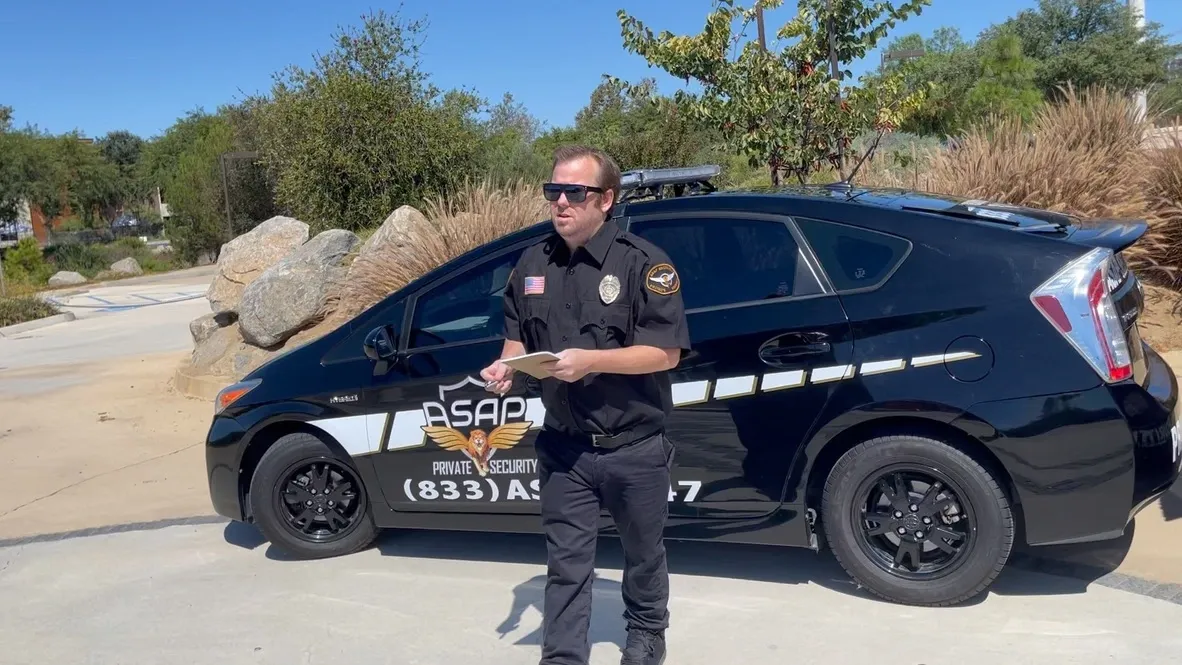
Should a financial institution choose armed or unarmed coverage?
The armed-versus-unarmed decision should follow a documented risk assessment, not a blanket rule. Banks and financial institutions have different locations, hours, asset profiles, customer traffic, surrounding conditions, and existing controls. Some branches may need an unarmed officer focused on access, observation, and customer support. Others may require the additional deterrence and response capability of licensed armed coverage.
| Consideration | Unarmed coverage may fit when | Armed coverage may fit when |
|---|---|---|
| Primary objective | Access control, customer assistance, observation, and reporting are central. | The assessed environment calls for a higher level of deterrence and response capability. |
| Customer experience | A calm, approachable presence is the priority for a lower-risk branch. | The institution can support a professional armed presence without disrupting service. |
| Existing controls | Alarms, cameras, procedures, and response partners already address higher-risk conditions. | The security plan identifies a credible need for additional on-site capability. |
| Governance | Post orders define observation and escalation responsibilities. | Licensing, firearms permits, training, insurance, and supervision are verified. |
ASAP Security Guards provides armed security services in San Diego for financial institutions and other higher-risk environments. A responsible consultation should explain why a coverage model is recommended, what the officer will and will not do, and how the assignment fits the bank’s existing security program.
What should banks ask a security provider?
Bank leaders should compare providers on operational fit, documentation, supervision, training, and communication rather than relying on a generic promise of protection. The provider should be able to explain how it will learn the branch’s procedures, staff the post, handle absences, and communicate with the designated bank contact.
- Is the company properly licensed and insured for the proposed assignment?
- How are officers screened, trained, supervised, and briefed before deployment?
- Can the provider support armed, unarmed, mobile, or mixed coverage when the assessment calls for it?
- How does dispatch handle schedule changes, missed check-ins, and urgent notifications?
- What information appears in daily activity and incident reports?
- How does the provider protect sensitive customer and facility information?
- How are replacement officers qualified when the regular officer is unavailable?
- What review process is used to adjust coverage when branch conditions change?
For multi-location institutions, ask how the provider maintains consistent standards across branches while adapting to local conditions. A regional provider may also support adjacent needs through mobile security patrols or broader 24-hour security coverage, depending on the site plan.
Before you select a coverage model, call (833) 272-7247 to request a consultation with ASAP Security Guards.
FAQs about bank security guards
What do bank security guards do?
Bank security guards may support visible deterrence, access control, customer and employee safety, observation, post orders, incident communication, and objective reporting. Their exact duties should be defined by the financial institution’s written security plan and assignment instructions.
Are bank security guards always armed?
No. The choice depends on the branch’s risk assessment, applicable law, internal policy, existing controls, and the provider’s licensing and training. Some institutions use unarmed officers for access and observation, while others select licensed armed coverage for higher-risk conditions.
Can a security guard replace a bank’s security program?
No. A guard is one operational layer within a broader program that can include policies, alarms, cameras, locks, employee training, access controls, emergency contacts, and regulatory oversight. The bank remains responsible for maintaining the program that applies to its institution.
How can guards help protect customers and employees?
Guards can provide a professional point of contact, observe conditions, support orderly access, communicate concerns, and follow approved escalation procedures. Training in communication and de-escalation can help officers respond calmly while recognizing when to request supervisory or emergency assistance.
What should be included in a bank security guard contract?
The agreement should define the locations, hours, coverage model, post orders, supervision, reporting, communication channels, replacement procedures, training expectations, privacy requirements, and review process. It should also state that security services support risk management but do not guarantee that a crime or incident will never occur.
