

It’s a common misconception to think all security personnel are the same. The difference between an unarmed guard and a licensed armed officer is vast, involving specialized training that goes far beyond a basic certification. So, while the answer to “can security guards carry guns?” is yes, it comes with major qualifications. In California, an armed guard must pass a demanding firearms course, a psychological screening, and continuous re-qualification tests. They operate under a strict legal framework that defines their authority. This article will clarify what sets a professional armed officer apart and why their elite training is essential for your protection.
Are Security Guards Allowed to Carry Guns?
Are Security Guards Allowed to Carry Guns?
There are more stringent training classes and screenings in place for armed security guards. Many companies opt for unarmed security guards- perhaps not wanting to present a harsh brand to customers, or looking to follow rules for local gun-free zones (e.g. in some malls).
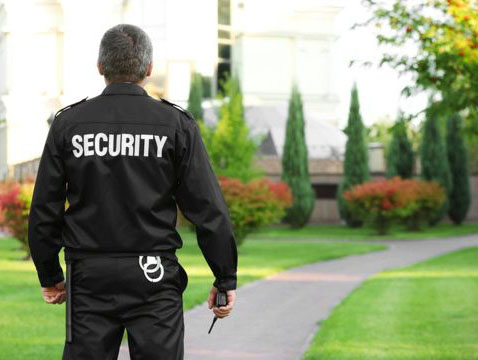
However, those security guards allowed to carry guns are very highly trained for customized security needs. To get an idea of the high level of training standard set in place for armed guards, just take a look at the California requirements for security guards, available online. While The State of California, Department of Consumer Affairs, Bureau of Security and Investigative Services manual has strict requirements for all aspects of any security guard jobs, their expectations for armed security guards are more detailed, with stricter screening criteria and more training requirements. The Firearms Training Manual portion of these California standards specifies exactly what is needed to become an armed security guard in California. These strict training requirements range anywhere from thorough understanding of the use of firearms to de-escalation strategies to analyzing civil and criminal case studies.
ASAP Security closely follows all of this necessary training specified by California so their armed security guards can obtain the required firearms qualification cards. In addition, ASAP Security has its security officer candidates go through extensive drug, background, and credit check screening. Since many of ASAP Security’s licensed officers are former military or law enforcement personnel, they have that additional background of extensive training and discipline.
ASAP Security, following these California standards, teaches their armed security guards extensively in the maintenance, transport, and use of weapons in their work. In addition, guard candidates must know the moral and legal aspects in the use of weaponry, as required in the California manual. ASAP Security guards are also schooled in the avoidance of deadly force, the principles of de-escalation, visual and verbal communication, physical control levels, and the civil and criminal liabilities resulting in cases of shooting incidents. The use of other non-lethal weapons- such as a baton, stun gun/taser, and pepper spray- is also studied. In thoroughly understanding the correct use of weaponry, the avoidance of deadly force, and de-escalation techniques, a trained armed security guard has all the tools to correctly assess various situations so as to promptly respond in the best possible way on behalf of their client.
Per California’s Bureau of Security and Investigative Services manual, ASAP Security’s armed officers professionally fulfill their job duties based on the security guard code to PROTECT people and property, PREVENT incidents before they happen, and OBSERVE AND REPORT any incidents or offenses that do take place.
There are many businesses that choose the option of armed security guards to achieve the highest level of defense possible- to protect events, properties, workplaces, data, or personnel. Businesses that often choose armed security guards are:
Specific Licensing and Training Requirements
When you decide to hire an armed guard, you’re making a significant choice about how to protect your property and people. It’s a decision that comes with a great deal of responsibility, not just for the security provider, but for you as well. That’s why the licensing and training requirements for armed personnel are so incredibly stringent. These aren’t just bureaucratic hurdles to jump through; they are essential safeguards designed to ensure that the person entrusted with a firearm is competent, stable, and professional. Understanding these standards helps you vet potential security partners and appreciate the caliber of officer you’re getting.
Here in California, the requirements are among the strictest in the nation, setting a high benchmark for excellence. A properly licensed armed guard has undergone extensive classroom education, practical firearms training, and thorough background checks. This rigorous process is designed to produce officers who can effectively de-escalate a situation but are also fully prepared to act decisively when necessary. Knowing that your security team meets and exceeds these state-mandated requirements protects you from liability and, more importantly, provides genuine peace of mind that your assets are in capable hands.
The California Standard: Guard Card and Firearms Permit
In California, an armed guard can’t simply show up with a firearm. They must earn two distinct credentials from the Bureau of Security and Investigative Services (BSIS): the Guard Card, which is the basic license for any security professional, and a specialized Firearms Permit. This two-part system ensures a guard has both the foundational security knowledge and the specific, advanced training required to carry a weapon responsibly. This isn’t a simple weekend course; it’s a demanding process designed to filter for only the most suitable candidates. Let’s break down what goes into getting these critical qualifications.
Initial Certification Process
To legally carry a firearm as a security guard in California, an individual must navigate a multi-layered qualification process. It starts with completing the foundational Guard Card training. Only after that can they proceed to the mandatory 14-hour firearms course, which combines classroom instruction on law and ethics with hands-on time at the shooting range. To pass, candidates must ace both a written exam and a shooting proficiency test. On top of all that, a comprehensive background check, complete with fingerprinting, is required to ensure there are no disqualifying criminal or personal histories. This ensures every armed security guard has been thoroughly vetted and trained before they ever set foot on your property.
Mandatory Psychological Screening
Technical skill with a firearm is only half the equation; the other half is temperament and sound judgment. That’s why rigorous psychological and background screenings are a non-negotiable part of the process. These checks often include drug tests, criminal history reviews, and even credit checks to verify an individual’s reliability and trustworthiness. At ASAP Security, we believe the right mindset is just as critical as technical proficiency. Many of our licensed officers come from military and law enforcement backgrounds, bringing a proven history of discipline and experience operating under pressure. They have already passed extensive psychological evaluations in their previous careers, providing an extra layer of confidence for our clients.
Maintaining Proficiency: Annual Re-qualification
A firearms permit isn’t a one-and-done achievement. Marksmanship and tactical knowledge are perishable skills that require constant upkeep to remain sharp. To address this, California and most other states mandate that armed guards re-qualify with their firearms every year. This process involves returning to the shooting range to demonstrate continued proficiency and often includes refresher courses on use-of-force policies, de-escalation techniques, and any recent changes in the law. This commitment to ongoing education ensures the officer protecting your business is operating with current knowledge and finely-tuned skills, which is absolutely essential for high-stakes environments like corporate security.
State-by-State Variations
While California’s standards provide a great example of a robust system, it’s crucial to remember that security regulations are not one-size-fits-all across the country. The specific laws and training requirements for armed guards can vary significantly from one state to another. However, a few core principles are nearly universal. Almost every jurisdiction requires armed guards to obtain special licenses and permits, which invariably involve thorough background checks that include fingerprinting and drug screening. This is where partnering with an experienced security provider becomes invaluable. A professional agency understands the local and state regulations, ensuring your team of private security guards is not just effective, but fully compliant, taking the legal risk and guesswork off your plate.
Legal Authority and Its Limitations
One of the biggest points of confusion is understanding what an armed security guard can and cannot legally do. It’s easy to see a uniform and a firearm and assume their authority is similar to that of a police officer, but that’s not the case. Security guards are private citizens, and their powers are clearly defined and limited. Knowing these boundaries is essential for any property manager or business owner. It helps you set realistic expectations and understand the vital role a professional security officer plays within the legal framework. Their job is to protect your specific assets and people, operating within a strict set of rules that prioritize safety and de-escalation.
Distinguishing Guards from Law Enforcement
The most important distinction to make is that security guards in California are not police officers. They are private citizens employed to protect a specific person or property. While they undergo rigorous training, especially if armed, they do not have the same powers of arrest or authority as sworn law enforcement. Their primary role is to deter, observe, and report. Think of them as the first line of defense, responsible for maintaining a safe environment on your property. If a situation escalates beyond their legal capacity, their training dictates that they contact local police for assistance. This clear separation of duties ensures that all actions taken are lawful and appropriate.
Jurisdiction Confined to the Property
A security guard’s legal authority is strictly limited to the physical boundaries of the property they are hired to protect. This means their power to act is valid only while they are on your company’s campus, your residential community’s grounds, or within your event venue. They cannot pursue a suspect down the street or enforce rules on public property adjacent to your site. This geographical limitation is a fundamental aspect of their role. For anyone managing a hotel, manufacturing facility, or school, this underscores the importance of a comprehensive security plan that includes clear instructions and communication protocols for incidents that might move beyond the property line.
Rules on Searching Individuals and Property
When it comes to personal searches, a security guard’s hands are mostly tied. They cannot search a person, their bags, or their vehicle without explicit consent. If an individual refuses a search, the guard’s recourse is limited. They can deny that person entry to the property or, if they have reasonable suspicion of a crime, they can detain the individual and call the police. However, they cannot conduct the search themselves. This rule protects individual rights while still allowing guards to control access and maintain security, a critical balance for businesses that need to screen visitors without violating their privacy.
Regulations for Carrying and Using Firearms
For a security guard to carry a firearm, they must navigate a maze of strict regulations that go far beyond basic ownership laws. These rules are designed to ensure that armed guards are highly trained, responsible, and accountable for their actions. The decision to use armed security is a significant one, and the legal framework reflects that gravity. From when and where they can carry their weapon to the immense scrutiny they face if they ever have to use it, every aspect is tightly controlled. These regulations provide peace of mind to clients, ensuring that the individuals protecting their assets are operating at the highest level of professionalism and legal compliance.
On-Duty vs. Off-Duty Carry Protocols
An armed guard’s firearm is a tool for their job, not a personal accessory. The law is very clear on this. In California, a guard can only carry their firearm while they are actively on duty, wearing a distinct and approved uniform, and working at a job site where their employer has authorized armed security. They cannot carry their weapon while commuting to work or running errands after their shift. These strict protocols ensure that the presence of an armed guard is always official and directly tied to their professional responsibilities, preventing any misuse or misrepresentation of their authority when they are off the clock.
The Aftermath of Discharging a Weapon
Discharging a firearm is the most serious action a security guard can take, and the consequences are immediate and severe. If a guard uses their weapon on duty, it triggers a multi-layered investigation involving the police, the state licensing board (BSIS), and the security company itself. This intense review examines every detail of the incident to determine if the use of force was justified. The guard could face criminal charges, the loss of their license, and termination of their employment. This level of accountability ensures that firearms are used only as an absolute last resort, reinforcing the industry’s focus on de-escalation and conflict avoidance.
Standard Equipment: Firearms and Ammunition
The equipment an armed guard carries is just as regulated as their training and authority. Not just any firearm or type of ammunition is acceptable; everything must meet specific standards set by state regulations and company policies. This standardization ensures reliability, safety, and appropriateness for a civilian security role. For business owners and property managers, understanding the typical equipment helps paint a clearer picture of what an armed guard brings to the table. Professional security firms like ASAP Security ensure every officer is equipped with well-maintained, approved gear that is suitable for protecting environments ranging from corporate offices to large outdoor events.
Commonly Used Handguns
The firearms carried by armed security guards are typically modern, reliable semi-automatic pistols, similar to those used by law enforcement agencies. You’ll often see models like the Glock 17, SIG Sauer P226, or Beretta 92FS. These handguns are chosen for their proven track record of performance, safety features, and ease of use under pressure. The focus is on practicality and effectiveness, not intimidation. A professional guard is trained to be proficient with their specific firearm, ensuring they can operate it safely and accurately if a critical situation ever arises, providing a dependable layer of protection for your personnel and property.
When Long Guns Are Necessary
While handguns are standard, some situations may call for the use of long guns like shotguns or rifles. This is far less common and is typically reserved for high-risk environments or assignments requiring a greater defensive capability, such as protecting critical infrastructure or providing executive security in specific threat scenarios. Many states, including California, permit security guards to carry long guns, but it almost always requires additional, specialized certification and qualification for that specific weapon type. This ensures that only guards with advanced training are deployed in situations that demand a higher level of armed response.
Ammunition Guidelines
Just as the firearms are regulated, so is the ammunition. There are strict rules about the types of bullets an armed guard can carry. Specialty rounds, such as armor-piercing or explosive projectiles, are generally prohibited for private security use. The focus is on using standard, effective ammunition that is designed to stop a threat while minimizing the risk of over-penetration, which could endanger bystanders. These regulations ensure that the ammunition used is appropriate for a civilian environment and aligns with the defensive, rather than offensive, nature of a security guard’s role.
Company-Provided vs. Personal Weapons
Security companies handle firearm provisioning in one of two ways. Some agencies provide their officers with company-owned and issued firearms. This approach ensures all equipment is standardized, tracked, and maintained by the company. Other companies allow guards to use their own personal weapons, but only after a rigorous approval process. The firearm must be a specific, approved model, legally registered to the guard, and subject to regular inspection. Regardless of who owns the weapon, a professional company will always require that the guard has demonstrated proficiency and completed all necessary training with that exact firearm.
Have Questions? Let’s Talk About Your Security Needs.
We are proud of our stellar customer service record. Call ASAP Security at 1-833-272-7247
Frequently Asked Questions
What’s the difference between an armed guard’s authority and a police officer’s? This is a great question because the distinction is critical. A security guard, even when armed, is a private citizen whose authority is limited to the specific property they are hired to protect. Their main role is to deter crime, observe, and report. Police officers, on the other hand, are public servants with broad legal powers to enforce laws, make arrests, and conduct investigations anywhere within their jurisdiction. Think of an armed guard as your property’s dedicated first line of defense, trained to handle situations until law enforcement arrives if needed.
How do I know an armed guard is mentally prepared for such a serious responsibility? Your peace of mind is everything, which is why the screening process is so intense. In California, every candidate for a firearms permit must pass a mandatory psychological evaluation. This assessment helps ensure they have the right temperament, judgment, and stability to handle the pressure of carrying a weapon. At ASAP Security, we often hire individuals with prior military or law enforcement experience, meaning they have already passed similar rigorous screenings and have a proven track record of operating professionally under stress.
What happens if a guard uses their firearm on my property? The use of a firearm is the most serious action a guard can take, and it triggers an immediate and comprehensive response. The incident is investigated by multiple parties, including local law enforcement and the California Bureau of Security and Investigative Services (BSIS). Our company also conducts its own internal review. This intense scrutiny ensures that force is only ever used as a last resort when absolutely necessary, holding the officer accountable and protecting you from liability.
Are your armed guards allowed to carry their firearms when they’re off duty? No, they are not. State regulations are very clear on this point. An armed guard’s permit only allows them to carry a firearm while they are actively on duty, wearing their approved uniform, and at their assigned post. The weapon is a tool for the job, and its use is strictly confined to their professional responsibilities.
Why can’t a guard just search someone they think is suspicious? Security guards must operate within the law, which includes respecting individual rights. They cannot conduct a search of a person or their belongings without getting clear consent first. If someone refuses a search, the guard can deny them entry to the property. If the guard has a reasonable suspicion that a crime has been committed, their training directs them to detain the individual and contact the police, who have the legal authority to conduct a search.
Key Takeaways
- Armed guards require specialized state-mandated credentials: To legally carry a firearm, a security officer must pass a multi-layered process including a basic Guard Card, an advanced Firearms Permit, psychological evaluations, and annual proficiency tests.
- An armed guard’s authority differs from law enforcement: Security personnel are private citizens whose jurisdiction is limited to the property they are assigned to protect; their primary role is to deter threats and observe situations, not to make arrests or conduct searches like police officers.
- Strict regulations govern firearm use and equipment: An officer can only carry their weapon while on duty and in uniform, and the types of firearms and ammunition are standardized for safety. Discharging a weapon triggers an immediate, multi-agency investigation to ensure the use of force was justified.
Related Articles
- Security Guard Requirements in California: Training & Steps | ASAP Security Guards
- School Security Guards in California: Hiring Guide & Requirements | ASAP Security Guards
- Security Guards and Firearms: Who Can Carry Guns? | ASAP Security Guards