

San Diego commercial property managers face a threat landscape where preparation determines the outcome of a crisis. Recent local incidents at corporate centers and religious hubs show the urgent need for strong security protocols that protect property and lives. This safety responsibility is now a core part of professional facility management for all properties across Southern California.
Call (833) 272-7247 today to schedule a free on-site security assessment for your San Diego commercial property.
Active shooter response and mitigation for San Diego commercial properties requires layered security that combines physical audits, guard deployment, and tenant coordination. Trained security officers, access control systems, and emergency planning reduce risk before an event occurs.
Developing a comprehensive active shooter response plan is only one part of a professional safety strategy for facility directors. Property managers must also understand the local risk factors and regulations that drive the need for high-level protection in multi-tenant office buildings. This guide provides the specific steps needed to secure your commercial building today.
Active Shooter Response And Mitigation: Why San Diego Commercial Properties Need Active Shooter Mitigation
San Diego is a major hub for global trade and travel. Its unique location near the border and the busy Port of San Diego creates a complex safety landscape. These factors mean commercial property managers must look beyond basic plans. They need a focused approach to active shooter response and mitigation to protect their people and assets.
Active shooter mitigation for San Diego commercial properties means proactively identifying vulnerabilities through security audits, controlling access points, and deploying trained guards before an incident occurs. This preventive approach reduces risk and fulfills the legal duty of care property owners owe their tenants.
Local risks and incident trends
Major transit lines and high-density office zones make local buildings more vulnerable to threats. In May 2026, a shooter attacked the Islamic Center of San Diego. This event reminds us that local sites face real risks. Managers must identify threats that are specific to their business environment to stay safe. The FBI reports that commerce-area buildings continue to be frequent targets in active shooter events, which reinforces the need for San Diego property managers to take preventive action.
Property managers in the city face more than just physical risks. They also deal with major legal and financial exposure. High-standard security coverage is vital to mitigate liabilities and protect the value of the site. A local incident can cause long-term brand damage and significant legal costs if the building is not adequately prepared.
Response plans versus mitigation strategies
Most businesses have a basic emergency plan. But a true strategy for active shooter response and mitigation goes deeper. It focuses on stopping an event before it starts or reducing the harm if one happens. This includes site audits, improved door locks, and clear protocols for guards. You can find more details in our active shooter response guide for businesses.
Mitigation differs fundamentally from response. Mitigation prevents or reduces threats through proactive measures like physical security audits and guard deployment. Response activates during a crisis with Run-Hide-Fight protocols and law enforcement coordination. Effective commercial safety requires both layers working together.
Mitigation also means working with local police and first responders. The DHS emphasizes that integrated guidance is key to helping people survive these incidents. By establishing these coordination links now, you ensure a faster and more effective response during a crisis.
Building-wide safety for multi-tenant sites
Multi-tenant office buildings in San Diego face a unique challenge. One floor might house a small tech startup, while another contains a medical clinic. This tenant mix makes it difficult to maintain a secure perimeter. Managers need to establish clear protocols that all tenants follow, creating a united front that makes the entire building a harder target for a potential shooter.
Facility managers must also decide when to deploy more advanced security measures. Some sites will need to mitigate severe threats by hiring guards with specialized training. Professional security teams can spot behavioral red flags that others might miss. This proactive stance is the most effective way to keep a commercial site safe.
Understanding Active Shooter Mitigation vs. Response
Property managers in San Diego must understand the distinction between mitigation and response. Mitigation is the proactive work you do before an event starts. It aims to stop a threat or lower its impact. Response is what people do once a crisis begins. A safe building needs both parts working together. While most training focuses on what to do during an incident, mitigation is often what saves the most lives in a commercial space.
| Aspect | Mitigation | Response |
|---|---|---|
| Timing | Before an event | During an event |
| Goal | Stop or reduce the threat | Survive the threat |
| Key actions | Audits, access control, guard patrols, threat assessment | Run Hide Fight, evacuation, lockdown, first aid |
| Tools | Cameras, locks, GPS tracking, DAR systems | Alerts, two-way radios, emergency plans |
| Staff role | Report red flags, follow access rules | Follow evacuation routes, help others, call 911 |
| Outcome goal | Prevent the attack or limit access | Save lives, contain the threat |
The role of mitigation in commercial safety
Mitigation starts with a comprehensive assessment of your property. You identify weak points and address them before anyone can exploit them. This includes facility hardening and threat assessments. In San Diego office buildings, this might mean upgrading locks or installing cameras that cover every entry point. Using a GPS-tracked DAR system helps keep guards on consistent patrol routes. This real-time oversight deters bad actors from targeting your site.
Deterrence is a major component of mitigation. When potential threats observe active security measures, they are less likely to act. Mitigation also includes forming a collaborative planning team to identify building-specific risks. This team evaluates the building layout and establishes entry protocols. By stopping a threat at the door, you may never need to activate your response plan.
How response plans protect lives during a crisis
When mitigation fails, your response plan must take over immediately. The most widely adopted framework is the FBI’s Run, Hide, Fight protocol. This provides individuals with clear decision points when they hear gunfire: run if there is a safe escape route. Hide in a secure location if escape is impossible, and fight only as a last resort to save lives. Having these steps internalized prevents paralysis during a high-stress event.
An effective response plan also focuses on communication with law enforcement. You must provide clear situational data the moment officers arrive. This involves integrated guidance to help teams move through the building efficiently. In large San Diego office towers or retail centers, this information helps police locate the threat quickly. Response is about speed and clear decisions.
Conducting a Physical Security Audit for Your Commercial Property
Why audits matter for San Diego property managers
Commercial buildings are busy environments where people come and go at all hours, making it difficult to track every individual. A physical security audit helps you identify vulnerabilities before a crisis occurs. It is a foundational component of active shooter response and mitigation. By evaluating your property now, you can implement fixes that may save lives later.
A physical security audit for San Diego commercial properties examines access points, locks, lighting, alarm systems, guard patrol routes, and communication protocols to identify vulnerabilities. The goal is to eliminate weak points that a potential shooter could exploit. Regular audits form the foundation of any active shooter mitigation strategy.
A thorough audit is not a one-person job. You need a team that knows the building well to examine every corner of the property: the lobby, the parking structure, loading docks, stairwells, and all exit routes. Every building is unique. Some have extensive glass storefronts. Others have multi-level underground parking. Your mitigation strategy must fit your exact space and local conditions.
- Form a cross-functional planning team. Include building engineers, tenant representatives, local law enforcement liaisons, and security experts. Collaboration uncovers perspectives that a single manager would miss.
- Identify location-specific threats and vulnerabilities. Evaluate the building layout, tenant mix, nearby transit hubs, and neighborhood crime patterns. San Diego properties near the port or major transit corridors face distinct risks.
- Inspect all entry points, locks, and lighting. Test every exterior door, loading bay, and window lock. Verify that badge readers and keypad systems function properly. Well-lit parking areas and pathways eliminate hiding spots.
- Review alert systems and communication protocols. Confirm that mass notification systems reach every floor and tenant. Test public address systems and text alert platforms quarterly to ensure reliability.
- Evaluate guard patrol routes and coverage patterns. Review where officers walk, how frequently they visit each zone, and whether high-risk areas receive adequate coverage. GPS-tracked patrol systems provide verifiable data.
- Document findings and update the plan regularly. Maintain a written log of audit results, remediation actions taken, and timelines. Revisit the plan at least annually or after any significant building modification.
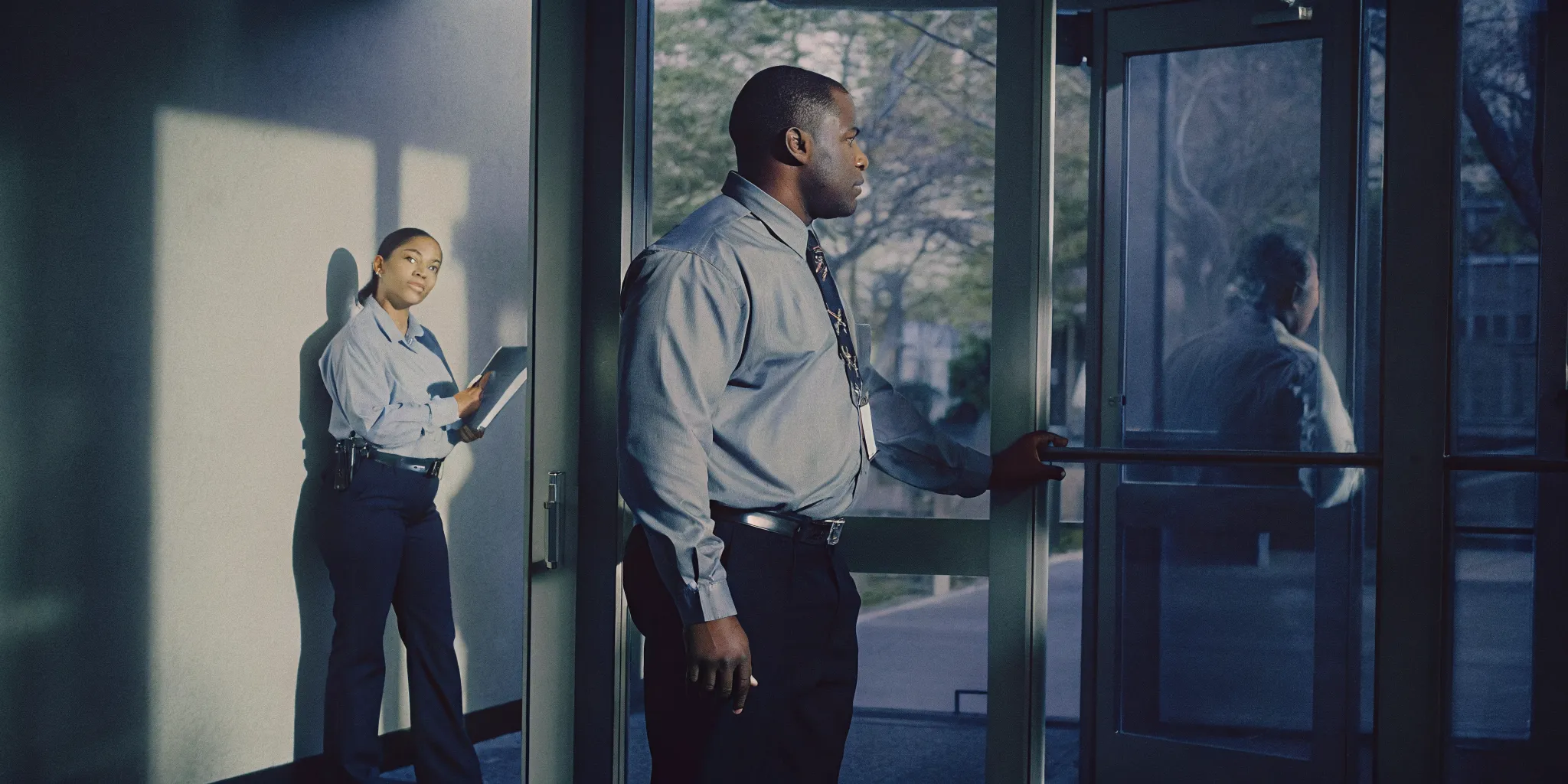
Using technology for better security
Technology works best alongside trained armed security in San Diego for high-risk commercial environments.
Modern tools make audits and daily operations significantly more effective. Facility managers now use digital platforms to track their security teams in real time. ASAP Security Guards employs a Daily Activity Reporting system that uses GPS to monitor guard patrols and provide verifiable data on coverage. This technology ensures that every zone of your property is checked according to schedule.
San Diego properties are often expansive. A single complex may span multiple floors or several buildings within a business park. Manually tracking guard movements across this footprint is impractical. Digital reporting gives you an accurate picture of what is happening on your site at all times. When a guard discovers a security issue such as a broken lock or propped door, they can report it instantly through the system. This speed of communication is essential for effective active shooter response and mitigation.
How Do Security Guards Reduce Active Shooter Risks?
Visible security guards are one of the most effective tools for active shooter response and mitigation. When a trained guard is on site, they do more than monitor entry points. They create a hardened target that can deter or disrupt a threat before it escalates. This presence is particularly valuable for San Diego office towers and retail centers where property managers must balance accessibility with security.
Visible deterrence and mobile patrols
Visible guards serve as a powerful deterrent against both opportunistic crime and premeditated attacks. ASAP Security Guards deploys mobile patrol units to cover large commercial properties. These mobile patrols provide tenants and visitors with a visible sense of security while actively monitoring the premises. Guards use GPS-tracked systems to maintain consistent patrol patterns and ensure comprehensive coverage.
An intelligently designed patrol plan makes it difficult for a potential threat to identify weak spots. Constant movement and high visibility are key deterrent factors. When guards vary their patrol routes unpredictably, they maintain a dynamic security presence that is harder to circumvent. This approach is central to an effective active shooter response and mitigation strategy.
Armed versus unarmed security guards
The choice between armed and unarmed guards depends on the risk profile of your property. Armed guards are typically deployed at high-risk facilities or venues that handle large public gatherings. Property managers should mitigate severe threats by selecting the appropriate level of force for their specific situation. Armed guards provide an immediate response capability that can neutralize a threat in seconds.
Unarmed guards remain a critical component of commercial security. They typically manage access control, monitor surveillance feeds, and serve as the eyes and ears of the building. Both guard types operate in coordination with a 24/7 human dispatch center. This connectivity ensures that backup or law enforcement can be summoned instantly when needed.
Veteran leadership and rapid response
Training quality determines how effectively guards perform during a crisis. ASAP Security Guards is led by military and law enforcement veterans who bring tactical expertise to commercial security operations. Officers are trained to identify behavioral indicators of potential threats and coordinate with first responders. They act as the critical bridge between the building and law enforcement during an active incident.
Rapid response saves lives. Guards are trained to guide occupants to safety and manage scene control until police arrive. They possess detailed knowledge of the building layout, which helps responding officers locate threats more quickly. By having a well-rehearsed plan and professionally trained staff, San Diego businesses can substantially reduce the risk of casualties during an active shooter event.
Coordinating Multi-Tenant Office Building Preparedness
Coordinated planning is stronger with corporate security services for San Diego that align tenants, property teams, and response procedures.
Managing an office tower in downtown San Diego presents unique security challenges. Multi-tenant buildings house dozens of different businesses under one roof. This makes active shooter response and mitigation far more complex than in a single-occupant facility. Each tenant may have its own security protocols, but a threat to any one of them is a threat to all. You must bridge these gaps to protect every occupant.
The scale of the threat is reflected in the data. The FBI’s 2023 active shooter report documented 48 active shooter incidents in the United States, with a significant portion occurring in commerce-related environments. The Bureau of Labor Statistics reported 740 workplace homicides in 2022. These statistics underscore why building owners must take proactive measures. Under the OSHA General Duty Clause, property owners may face liability if they fail to address known workplace violence risks. In a shared building, your security plan is only as strong as the weakest link.
Team planning for shared spaces
Effective security starts with forming a collaborative planning team. This group should include building management, security leads, and representatives from each tenant organization. You cannot develop a comprehensive plan in isolation. You need to understand how each tenant operates in order to identify gaps in your security coverage. In San Diego high-rises, this means evaluating shared lobby access, elevator banks, and common area protocols. Each tenant should align its internal emergency plan with the building-wide strategy.
Multi-tenant building security requires unified planning across all occupants. Security teams must coordinate shared access points, emergency communication systems, and evacuation procedures with each tenant. Regular drills involving all building occupants build muscle memory and ensure that every person knows their role during an active shooter event.
Shared emergency plans must be simple and actionable. They should address how to secure common areas including fitness centers, cafeterias, and conference facilities. Safe rally points outside the building must be designated at sufficient distance to protect evacuees from potential hazards. A plan that occupants have never practiced is merely a document. Regular drills involving every tenant build the muscle memory needed for effective response.
Communication and tracking across tenants
Communication is the most significant challenge in a multi-tenant building. During a crisis, you need a system that reaches every occupant simultaneously. Implement a mass notification platform that alerts all building occupants, not just office managers or security personnel. This system must deliver clear, real-time updates about the nature and location of the threat. Rapid, transparent communication helps contain panic and enables safe movement.
Tracking occupant locations during an emergency is equally critical. In buildings housing thousands of people, you need technology to support situational awareness. Security teams use GPS-tracked Daily Activity Reporting systems to maintain mobile awareness across the property. This real-time data helps building managers know where guards are positioned during a lockdown and verify that specific zones have been cleared.
Working with San Diego first responders
When law enforcement arrives at a San Diego commercial property, they need actionable information immediately. Your security team serves as the liaison between the building and responding officers. Effective coordination requires a calm leader who can provide critical data: building maps and floor plans. Live camera feeds when available, the last known location of the threat, and an estimate of occupants still inside the building. This information helps police move decisively and save lives.
First responders also need to know the location of rally points, medical kits, and utility shutoffs. Modern security plans incorporate military-learned principles for casualty care. Bleeding control and basic first aid skills are now standard components of a well-rounded active shooter response training program. By integrating these elements, San Diego property managers demonstrate a comprehensive commitment to occupant safety.

Training and Drills: Building Organizational Readiness
Even the most sophisticated security infrastructure is only as effective as the people operating it. Training turns plans into action. For San Diego commercial properties, a well-trained workforce is the difference between controlled response and dangerous chaos during an active shooter event.
Essential training components for commercial properties
An effective training program covers multiple competency areas. Property managers should ensure that all occupants receive baseline instruction that prepares them to act decisively.
- Run-Hide-Fight awareness. Every building occupant should understand the three survival options and when each is appropriate. Reinforce this training with visual aids posted in common areas.
- Lockdown procedures. Train staff on how to secure their workspace quickly, including barricading doors and silencing mobile devices.
- Emergency communication protocols. Ensure all occupants know how to receive alerts and which communication channels to monitor during an incident.
- First aid and bleeding control. Provide basic trauma training so occupants can assist injured individuals before medical help arrives. The Department of Homeland Security’s Stop the Bleed campaign offers accessible training resources.
- Law enforcement interaction. Educate occupants on what to expect when police arrive, including how to follow officer commands and avoid being misidentified as a threat.
Drill frequency and coordination
Regular drills transform theoretical knowledge into instinctive action. Industry best practices recommend conducting full-building exercises at least twice per year, with tabletop exercises quarterly. Drills should involve every tenant and include coordination with local law enforcement when possible. After each drill, conduct a debrief to identify gaps and refine procedures. Tracking participation and performance over time helps property managers demonstrate due diligence and continuous improvement.
Frequently Asked Questions About Active Shooter Mitigation
What is the difference between active shooter response and mitigation?
Mitigation refers to proactive measures taken before an event to prevent or reduce its impact, such as security audits, access control, and guard deployment. Response covers the actions taken during an active shooter event, including Run-Hide-Fight protocols and law enforcement coordination. Commercial properties need both layers working together for comprehensive safety.
How often should I conduct a physical security audit for my commercial property?
Industry best practices recommend a comprehensive security audit at least annually, with quarterly walkthroughs to check access points, lighting, and patrol coverage. More frequent audits may be warranted after significant building modifications, changes in tenant mix, or following security incidents in the local area.
What role do security guards play in active shooter mitigation?
Security guards provide visible deterrence that discourages potential attackers, monitor access points to prevent unauthorized entry, and serve as the first line of defense during an incident. Trained guards also coordinate with law enforcement, guide evacuations, and provide critical situational awareness during a crisis.
Should my San Diego commercial property use armed or unarmed security guards?
The decision depends on your property’s risk profile, tenant population, and location. High-risk facilities such as government buildings, financial institutions, and properties near major transit hubs may benefit from armed guards. Lower-risk office properties often meet their security needs with unarmed guards who manage access control and surveillance. A professional security assessment can help determine the appropriate deployment for your specific property.
What legal obligations do commercial property owners have for active shooter preparedness?
Under the OSHA General Duty Clause, property owners must provide a workplace free from recognized hazards, which courts have interpreted to include workplace violence risks. Additionally, California civil law imposes a duty of care on commercial property owners to protect visitors from foreseeable harm. Demonstrating proactive security measures through documented audits and training programs helps fulfill these legal obligations.
How can technology improve active shooter response and mitigation?
Technology enhances both mitigation and response. GPS-tracked patrol systems ensure comprehensive guard coverage. Mass notification platforms deliver instant alerts to all building occupants. Surveillance systems with real-time monitoring help security teams identify threats early. Access control systems prevent unauthorized entry. Integrating these tools creates a layered security ecosystem that strengthens your overall safety posture.
Schedule Your San Diego Commercial Property Security Assessment
Active shooter response and mitigation is not a one-time project. It is an ongoing commitment that requires regular evaluation, updated training, and professional security partnerships. San Diego commercial property managers who invest in layered security strategies protect their tenants, safeguard their assets, and demonstrate the due diligence that California law requires.
ASAP Security Guards brings SCOPUS-certified personnel, GPS-tracked Daily Activity Reporting, bilingual officers, and veteran-led leadership to every commercial property we serve. We are licensed and insured throughout Southern California, serving Los Angeles, San Diego, Orange County, Riverside, San Bernardino, and Ventura.
Call (833) 272-7247 to schedule a free on-site security consultation and physical audit for your commercial property.
