
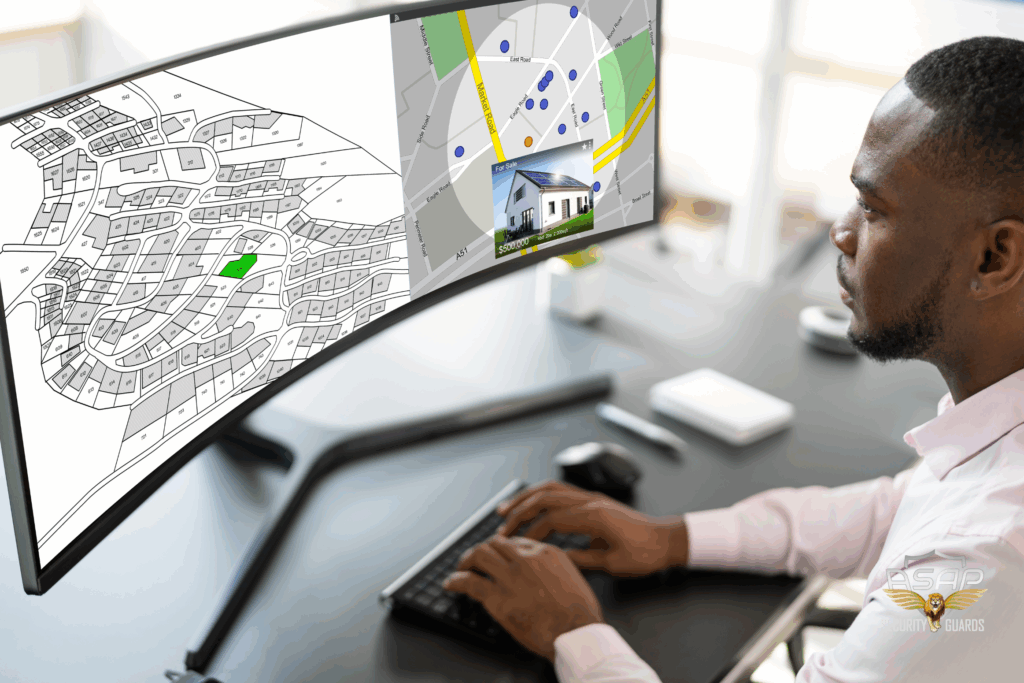
We use data to make smarter decisions in every other part of business, so why should security be any different? Old-fashioned paper logs are static records of the past, offering little to no insight for future planning. They tell you something happened, but they don’t help you prevent it from happening again. A digital dar security report turns daily activities into actionable intelligence. By tracking patterns and identifying recurring issues, you can proactively address vulnerabilities. This article explains how moving from paper to digital transforms your security reporting from a simple logbook into a strategic tool that helps you make data-driven improvements to your property’s safety.
DAR Reports vs. Traditional Guard Logs: What’s the Difference
Written by Rafi Kalliny
For business owners and safety decision-makers in San Diego, especially those overseeing commercial buildings, hospitals, warehouses, or industrial sites, access to real-time, reliable security documentation is essential. The method used to track and report security activities directly impacts the ability to respond to incidents, maintain regulatory compliance, and build trust with stakeholders.
ASAP Security has fully integrated a digital Daily Activity Report (DAR) system into its security guard operations to ensure transparency, accountability, and efficiency. This reporting system allows security guards to log detailed notes, upload time-stamped photos, and check in at assigned locations using GPS. The result is a clear, verifiable record of all on-site activity that clients can review and rely on. DARs not only improve communication and oversight but also help elevate the overall standard of security service provided.
Traditional Security Logs: Limited, Manual, Unverified
For decades, handwritten security guard logs were the standard across the industry. These physical notebooks were typically kept at entry points or command centers, where security guards manually documented patrol times, visitor activity, and on-site incidents. While this method served its purpose in the past, it presents serious limitations in modern security environments.
Some of the key drawbacks of handwritten logs include:
- Inconsistent or vague reporting: Entries often vary depending on the individual security guard’s writing style, level of detail, or interpretation of events.
- Fake reports: Unreliable security companies can easily fake the reports.
- Gaps caused by human error: Missed entries, illegible handwriting, or forgotten incidents can lead to incomplete or inaccurate records.
- No real-time access or visibility: Security managers and property owners are left without immediate insight into on-site activity during a shift.
- Physical vulnerability: Paper logs can be lost, smudged, damaged, or even tampered with, leaving no dependable backup.
Perhaps most concerning, traditional logs offer no reliable way to confirm whether a patrol was completed, whether an incident was handled promptly, or whether the report was written during the event or hours later. In industries where compliance, liability protection, and accountability are critical, these limitations introduce risk that cannot be ignored.

What Makes a DAR Security Report Different?
ASAP Security’s digital Daily Activity Report (DAR) system addresses the shortcomings of traditional paper-only reporting by using a real-time, GPS-enabled platform to log all security activity as it occurs. Every patrol, checkpoint, observation, and incident is recorded with precise detail to ensure transparency and accuracy.
Each entry includes:
- A time-stamp to confirm exactly when the activity took place
- A geo-tag to verify the security guard’s physical location
- Supporting photos or videos, when applicable, to document conditions or incidents clearly
Security clients across the San Diego region benefit from instant access to these reports. There is no need to wait until the end of a shift or sort through handwritten notes after an incident. Whether onsite or remote, clients can monitor security updates in real time.
For a warehouse manager facing after-hours access concerns or a hospital administrator responsible for maintaining regulatory records, this level of visibility is not just helpful. It is critical to maintain safety, compliance, and operational control.
Why DARs Are More Than Just a Logbook
A Daily Activity Report (DAR) is far more than a simple replacement for a paper logbook. It’s a dynamic, multi-functional tool that provides immense value to property managers, business owners, and security teams alike. While a traditional log might tell you if a guard was present, a comprehensive DAR gives you a detailed narrative of the entire shift. It transforms security from a passive presence into an active, transparent, and accountable operation. This detailed reporting provides a clear window into the daily efforts made to keep your property safe, serving as a tool for legal protection, performance evaluation, and proactive risk management. For anyone managing a commercial building, manufacturing facility, or residential community, understanding the full scope of a DAR is key to appreciating the value of a modern security partnership.
Serving as Legal Documentation
In the event of an incident, from a slip-and-fall to a break-in, a detailed DAR serves as critical legal documentation. Each entry is a time-stamped, verifiable record of a security officer’s actions and observations throughout their shift. It documents when patrols were conducted, what doors were checked, and any unusual activity that was noted. This objective information can be invaluable in liability cases, providing a clear and factual account of the security measures in place at the time of an event. Rather than relying on memory or incomplete notes, you have a professional report that outlines every key detail, protecting your organization by demonstrating due diligence and proper protocol.
Evaluating Officer Performance
As a client, you deserve to know that you’re receiving the high level of service you’re paying for. DARs offer a transparent way to evaluate officer performance and ensure that security protocols are being followed consistently. By reviewing the daily reports, you and the security management team can see a clear picture of an officer’s diligence. The reports detail everything from patrol logs and equipment checks to visitor interactions and incident responses. This data helps security providers maintain high standards, identify areas for additional training, and ensure that every officer on your property is performing their duties effectively and professionally.
Protecting Your Assets and Our Officers
Comprehensive reporting protects everyone involved. For property owners, DARs provide peace of mind that their assets are being actively monitored and secured. The detailed logs confirm that patrols are being completed and that potential issues are being identified and reported promptly. At the same time, these reports protect the security officers themselves. An accurate and complete DAR serves as proof that an officer fulfilled their duties correctly, shielding them and the security company from potential liability or false claims. This mutual protection fosters a relationship built on trust and accountability, which is the foundation of any successful security program.
Key Components of a Comprehensive Security Report
Not all security reports are created equal. The effectiveness of a DAR depends entirely on the quality and completeness of the information it contains. A truly comprehensive report moves beyond simple check-ins to create a full operational picture of your property’s security status during a shift. It should be detailed, easy to understand, and cover all critical aspects of the security operation. At ASAP Security, our digital DARs are designed to capture every essential piece of information, ensuring you have a complete and accurate record at your fingertips. Key components include detailed shift information, equipment status, visitor logs, maintenance reports, and a summary of proactive security measures taken.
Shift and Officer Details
Every security report should begin with the fundamentals of accountability. This foundational section clearly identifies the security officers on duty, their specific assignments or posts, and the exact start and end times of their shifts. This information establishes a clear chain of responsibility for everything that occurs during that period. Knowing who was where and when is the first step in creating a reliable and professional security record. It ensures that there are no gaps in coverage and provides a clear point of contact if any questions arise about a specific event or observation from that shift.
Equipment Status Checks
A security officer’s effectiveness is directly tied to the tools they use. That’s why a thorough DAR includes a section for equipment status checks. Before starting a patrol, officers should inspect all their gear—including radios, flashlights, body cameras, and patrol vehicles—to ensure everything is in proper working order. Any malfunctions or issues are immediately noted in the report. This practice guarantees that your security team is always fully prepared to respond to any situation and allows for prompt repair or replacement of faulty equipment, preventing potential security lapses before they can occur.
Visitor and Contractor Logs
Controlling who comes and goes is a primary function of many security details, especially in corporate environments or private communities. A comprehensive DAR includes a meticulous log of all non-resident or non-employee visitors. This log captures essential information such as the visitor’s name, their company, the reason for their visit, and their exact times of entry and exit. This detailed tracking provides a clear record of everyone who has accessed the property, which is crucial for security audits, incident investigations, and maintaining overall site safety. It’s a simple but powerful tool for managing access and enhancing security.
Maintenance and Safety Issues
Security officers are often the first to notice potential safety hazards or maintenance issues on a property. Because they are constantly patrolling the area, they can spot things like broken lights in a parking lot, a leaky pipe in a hallway, or a door that fails to lock securely. A dedicated section in the DAR allows officers to report these observations immediately, often with accompanying photos. This proactive reporting helps property managers address small problems before they escalate into larger, more costly issues or potential liabilities, making the security team a valuable partner in overall facility management.
Proactive Security Actions
Effective security is about prevention, not just reaction. A great DAR doesn’t just document incidents; it highlights the routine actions taken to prevent them from happening in the first place. This section details the proactive measures completed during a shift, such as conducting regular security patrols, physically checking doors and access points, and performing safety inspections. Documenting these preventative tasks demonstrates the constant diligence of your security team and provides a clear record of the ongoing efforts to maintain a safe and secure environment for your employees, residents, or customers.
Greater Transparency For Stronger Partnerships
The most significant advantage of ASAP Security’s digital DAR system compared to handwritten logs is the level of transparency it provides. With real-time digital reporting, clients gain direct visibility into their security operations.
Through a secure client dashboard, users can:
- Review entries remotely without needing to be on-site
- Verify when and where security guards completed each patrol using time-stamped, geo-tagged data
- Access detailed incident reports that include photos or videos when appropriate
- Monitor performance over time and identify trends or recurring issues
This level of visibility builds trust. Company leaders and site managers can confirm that contracted security services are being delivered as agreed. In the event of a compliance audit or a question from upper management, the records are clear, organized, and readily accessible.
Get In Touch
Our staff of Security Guard professionals is ready to hear from you!

Better Data Leads To Smarter Security
Traditional handwritten security logs are static records. They capture past events but offer little value when it comes to planning for the future.
ASAP Security’s DAR system transforms daily activity into data-driven insights. This information helps identify patterns, strengthen weak points, and support continuous improvement. Over time, the system can reveal:
- Recurring vulnerabilities, such as a specific door left unsecured on the same night each week
- High-risk areas where incidents occur more frequently
- Visitor traffic trends by time of day or shift
- Repeated maintenance issues, such as malfunctioning gates or lights
With this level of insight, ASAP Security can collaborate with clients to refine and improve security strategies proactively, not just respond when something goes wrong.
Higher Quality Security Reports
Some may assume that going digital adds complexity for security guards in the field. That is not the case with ASAP Security.
Our DAR system is built for ease of use and efficiency. Security guards use mobile devices to quickly log activities, upload photos, and respond to prompts that align with each site’s specific priorities. There is no guesswork involved and no risk of forgetting key details.
Because every entry is time-tracked and standardized, the result is clear, complete, and reliable reporting. Unlike handwritten notes that may be vague or delayed, our reports provide accurate documentation that supports better decision-making and accountability.
How to Write a High-Quality Security Report
A security report is more than just a log of events; it’s a legal document that reflects the professionalism of the security team and provides critical information for property managers and business owners. Whether it’s a routine daily activity report (DAR) or a detailed incident report, the quality of the writing directly impacts its usefulness. At ASAP Security, we train our officers to treat every report as a vital component of the security services we provide. Following a few key principles ensures every report is clear, accurate, and valuable, serving as a reliable record for operational review, liability protection, and strategic planning.
Be Factual and Specific
The foundation of any good security report is objectivity. Reports should be based on facts and direct observations, not assumptions or feelings. Vague entries create confusion and leave too much room for interpretation. Instead of writing, “A suspicious person was seen,” a high-quality report provides concrete details: “At 10:30 PM, a male individual, approximately 6’2″ with a red jacket and dark pants, was observed loitering near the west-side loading dock for 15 minutes.” This level of specificity gives a clear picture of the situation and provides actionable information for anyone who reads the report later. This attention to detail is a cornerstone of effective corporate security services, where accuracy is essential for protecting assets.
Use Clear, Simple Language
Security reports need to be easily understood by a wide range of people, including property managers, law enforcement officers, and legal teams. Avoid using technical jargon, slang, or overly complex sentence structures. The goal is to communicate information as clearly and concisely as possible. Simple, direct language ensures that the facts of an event are not lost in confusing wording. A report that is difficult to read can cause delays in response or lead to misunderstandings about what occurred. Clear communication is a skill we emphasize in our training, ensuring our reports are as effective as our on-site presence.
Write in the Third Person
Writing in the third person (e.g., “The officer observed…” instead of “I saw…”) helps maintain a professional and objective tone. This practice removes personal bias from the report and focuses the reader’s attention on the events themselves. For example, instead of writing, “I thought the person was trying to break the lock,” an officer should document the observable actions: “The individual was seen inserting an unknown object into the keyhole of the front door.” This approach sticks to verifiable facts and avoids speculation, which is crucial for creating a credible document that can be used for official purposes. It’s a professional standard that ensures every report is impartial and reliable.
Document Everything Thoroughly
A common mistake in security reporting is omitting activities that seem minor or routine. However, a comprehensive report includes everything that happens during a shift, from routine patrols and door checks to noting maintenance issues like a flickering light in a hallway. This thoroughness creates a complete operational record and can be invaluable for identifying patterns or demonstrating due diligence. For instance, logging every checkpoint during mobile security patrols provides verifiable proof that all areas were monitored. This detailed documentation not only protects the client from liability but also holds the security team accountable, ensuring no detail is overlooked.
Why Data Matters for Commercial, Healthcare, and Industrial Site Security
Every industry we serve, including warehouses, manufacturing facilities, hospitals, and healthcare campuses, has specific reporting needs. However, the core priorities remain consistent across the board. Our security clients in San Diego depend on:
- Accurate and defensible documentation that supports compliance and internal protocols
- Verifiable proof of presence and patrol completion to ensure accountability
- Quick access to records during emergencies, investigations, or audits
In hospitals, this might involve logging compliance with patient safety protocols or documenting attempted unauthorized access. In industrial environments, it could mean recording equipment checks or identifying environmental hazards observed during a foot patrol.
With ASAP Security’s DAR system, clients are not just covering their legal and procedural requirements. They are using real-time data to strengthen security operations and reduce exposure to risk.
Get In Touch
Our staff of Security professionals is ready to hear from you!
The Value of a Digital-First Security Partner
At ASAP Security, we do more than place security guards on-site. We deliver a modern, accountable, and professional security service in San Diego, supported by technology, training, and trust.
Our digital Daily Activity Report (DAR) system is a key part of that commitment. It enhances compliance, improves transparency, and provides a clear, time-stamped record of how our team protects each property and the people connected to it.
For businesses still relying on handwritten logs, now is the time to upgrade. Discover how digital security reporting can improve oversight, strengthen documentation, and give your operation the tools it needs to stay ahead. Contact ASAP Security to learn how we can help.
Need better reporting and real-time oversight for your facility?
📞 Call ASAP Security or Contact Us to schedule a site assessment today.
Advanced Features of Modern Reporting Systems
Today’s digital reporting platforms go far beyond simply replacing paper logs. They are equipped with sophisticated features designed to make security operations more efficient, transparent, and reliable. These tools empower both security officers and clients with better information and greater control.
Offline Capability
Security needs don’t stop when the Wi-Fi does. For properties like sprawling manufacturing facilities, underground parking garages, or large residential communities, consistent connectivity isn’t always a given. That’s why leading digital reporting systems are designed with offline capabilities. Guards can document patrols, log incidents, and take photos even without an active internet connection. The system securely stores the data on their device and automatically syncs it once they’re back in an area with service. This ensures there are no gaps in reporting, providing a complete and uninterrupted record of all on-site activity, regardless of location.
Automated Client Notifications
Staying informed shouldn’t require you to constantly check a dashboard or wait for a morning email. Modern DAR systems take the work out of staying updated by providing automated client notifications. You can receive daily activity summaries, shift reports, and immediate alerts for incidents directly in your inbox. This means critical information reaches you as it happens, allowing you and your team to respond quickly and effectively. It’s a simple feature that creates a powerful sense of awareness and control over your property’s security, fostering a transparent and communicative partnership with your security provider.
Custom Branding
Professionalism extends to every detail, including documentation. Advanced reporting platforms allow for custom branding, meaning every report you receive can feature your security partner’s name and logo. While it may seem like a small touch, it reinforces the professional image of the security team and solidifies the partnership. It presents a unified front and ensures that all documentation, whether for internal review or for third-party audits, is clean, official, and easily identifiable. This level of polish reflects the high standards of a quality security service.
Speech-to-Text Functionality
Clear, detailed reports are essential, but typing on a mobile device can be cumbersome for an officer on an active patrol. Speech-to-text functionality solves this problem by allowing guards to dictate their observations directly into the report. This not only speeds up the reporting process but also encourages more thorough and descriptive entries. An officer can document nuanced details about a situation in real-time without having to stop and type, leading to richer, more accurate information for you. It’s a practical tool that improves efficiency for the guard and delivers higher-quality insights to the client.
Beyond the Report: The Importance of Follow-Up
A detailed report is a powerful tool, but its true value is realized only when it leads to action. The data gathered in a DAR isn’t just for record-keeping; it’s a roadmap for improving your site’s security. When a report flags a recurring issue, like a faulty lock or a pattern of suspicious activity in a specific area, it’s an opportunity for proactive intervention. At ASAP Security, we see these reports as conversation starters. We work with our clients to review the data, identify trends, and implement solutions. This collaborative follow-up is what turns information into protection. It shows a shared commitment to corporate security and ensures that potential vulnerabilities are addressed before they can become serious problems.
Ready to Improve Your Security Reporting?
We are proud of our stellar customer service record. Call ASAP Security at 1-833-272-7247
About the author: Rafi Kalliny is the CEO of ASAP Security and has worked in the security guard industry since 2013. He leads the company with a focus on professionalism, training, and client trust, making ASAP one of San Diego’s most respected security guard providers.
Frequently Asked Questions
How do I access these digital reports? You can review all security activity through a secure client dashboard. This means you can log in from your computer or phone, wherever you are, to see real-time updates, review past reports, and view any photos or videos submitted by the officers. There’s no need to be on-site or wait for a physical logbook to be handed off at the end of a shift.
What happens if the internet or cell service is unreliable on my property? That’s a great question and a common concern for larger properties or those with underground areas. Our reporting system is designed to work offline. Officers can complete their reports, take photos, and log all their activities without an active connection. The app saves everything securely on their device and automatically uploads the information as soon as they are back in an area with service, ensuring no gaps in your records.
How does a digital report actually make my property safer than a paper one? A digital report transforms security from a passive observation to an active, verifiable process. Instead of just hoping a patrol was done, a geo-tagged and time-stamped entry proves it. If an incident occurs, a report with photos provides clear, indisputable documentation that can be used for legal or insurance purposes. This level of detail and accountability ensures protocols are followed and gives you a true, factual record of the efforts made to keep your site secure.
Is this system difficult for your security officers to learn and use? Not at all. We use a system that is intuitive and built for efficiency. Our officers can log entries quickly using their mobile devices, and features like speech-to-text allow them to dictate detailed observations without stopping to type. This actually makes it easier for them to create more thorough and accurate reports than they could with a pen and paper, which means you get higher-quality information.
Beyond daily updates, what is the long-term value of collecting all this data? The long-term value is in turning information into a strategy. Over time, the data from these reports can reveal patterns you would never see with paper logs. For example, we might identify a specific gate that is consistently left unsecured or notice a rise in activity in one area of your property. This allows us to work with you to proactively address vulnerabilities and refine the security plan, preventing potential issues before they become real problems.
Key Takeaways
- Digital reporting builds trust and accountability: Unlike paper logs, digital Daily Activity Reports (DARs) use verifiable data like GPS, time-stamps, and photos to confirm all security actions, giving you a transparent and accurate record of on-site activity.
- Use security data to prevent future incidents: By tracking patterns and recurring issues documented in DARs, you can move from a reactive to a proactive security posture, addressing vulnerabilities before they lead to a problem.
- A great report is more than a simple log: A well-written DAR serves multiple critical functions, acting as legal documentation in case of an incident, a tool for evaluating officer performance, and a way to flag maintenance needs for your facility.
Related Articles
- Digital DAR Reports: Smarter Security Guard Reporting | ASAP Security Guards
- How DAR Enhances Daily Security Guard Reporting | ASAP Security
- What Is a Security Guardian? A Simple Guide | ASAP Security Guards
- What Do Overnight Security Guards Actually Do? | ASAP Security Guards
- Security Guard Company Selection Guide: Key Factors | ASAP Security Guards