

Auto repair shop security guards can help owners and managers address risks that change between business hours and overnight. A repair facility may have customer vehicles, keys, tools, parts, service bays, and several access points to manage. The right plan starts with the site, its operating hours, and the problems a guard is expected to help prevent or report.
Request a security consultation
Call (833) 272-7247 to discuss your facility’s security needs.
What should an auto repair shop security plan address?
A shop’s security plan should reflect how the property is used, not just its square footage. A compact neighborhood garage with one service entrance has different access needs from a large collision center with outdoor vehicle storage, several bays, and a parts area. Start by listing the assets and activities that matter most to your operation.
- Vehicles: Customer cars awaiting service, vehicles in progress, and inventory kept on the lot.
- Keys and records: Key cabinets, work orders, customer information, and other materials that should not be casually accessible.
- Tools and parts: Portable equipment, diagnostic devices, tires, batteries, catalytic converters, and high-value components.
- People: Employees, customers, delivery drivers, vendors, and anyone arriving outside normal service hours.
- Building and yard: Doors, gates, windows, service bays, storage areas, lighting, and the perimeter.
- Business continuity: The ability to open on time, understand overnight activity, and respond to a concern without relying on guesswork.
This inventory is not a substitute for a formal risk assessment. It is a practical first step that helps you describe what needs attention and where security procedures should be clear. The CDC’s Collision Auto Repair Safety Study examines chemical, physical, and ergonomic exposures in collision repair work. That research concerns worker safety rather than guarding, but it reinforces why a facility plan should account for the actual work environment and its distinct areas.
Separate valuable assets from routine activity
Not every part of the site needs the same level of attention. For example, the reception area may be busy during the day but empty at night, while parked customer vehicles and secured key storage remain relevant after closing. A delivery entrance may see short periods of activity that do not justify continuous observation, yet it still needs a defined check-in process. Write down the asset, when it is exposed, and the task that could reduce uncertainty around it.
It can help to describe a typical day in time blocks. Note when employees arrive, when customers collect vehicles, when parts deliveries usually occur, when the last technician leaves, and when the lot becomes quiet. This timeline reveals the transitions that may need coverage. It also prevents a common planning mistake: choosing hours based only on the shop’s posted opening schedule even though vehicles remain on site after the doors close.
Where are the most important access points?
Walk the property as if you were arriving at different times and for different reasons. Consider the customer entrance during business hours, the employee entrance before opening, the delivery route, and the way a person could approach the lot after closing. Record what each entrance leads to and who should be able to use it.
Map the facility in practical zones
Divide the site into zones rather than treating the entire property as one undifferentiated space. A simple map can mark public areas, staff-only work areas, storage, vehicle staging, and outdoor parking. Note which doors connect the zones. This makes it easier to decide where access checks, scheduled rounds, or a fixed post would be useful.
- Customer-facing area: Reception, waiting space, and the route from the entrance to the service desk.
- Repair area: Bays, lifts, tool storage, and work-in-progress locations.
- Vehicle staging: Areas holding vehicles before service, during repairs, or after work is complete.
- Restricted areas: Parts rooms, offices, key storage, records, and equipment rooms.
- Exterior: Gates, fence lines, parking areas, delivery points, and locations with limited visibility.
For each zone, ask what is supposed to happen, who is authorized to be there, and what should prompt a call to a supervisor or manager. Keep the answers specific. “Watch the lot” is not as useful as “check the customer vehicle rows and the side gate on each scheduled round, and report an open gate or an unfamiliar person attempting to enter a restricted area.”
Walk the route at the times the assignment would cover, not only in daylight. Note whether landscaping, parked vehicles, or stored equipment blocks a line of sight. Check whether a guard can travel between areas without crossing active work zones or disrupting vehicle movement. Mark safe, authorized routes and identify areas that should not be entered without an employee. If the property has multiple buildings, state whether the assignment includes each one or only named locations.
Then validate the map with the people who use the site. A service manager may know that a side door is used for parts deliveries, while a technician may know that a particular bay stays active later than the others. Those details change the practical meaning of “restricted” or “closed.” Use the walk-through to resolve conflicts before turning the map into post instructions.
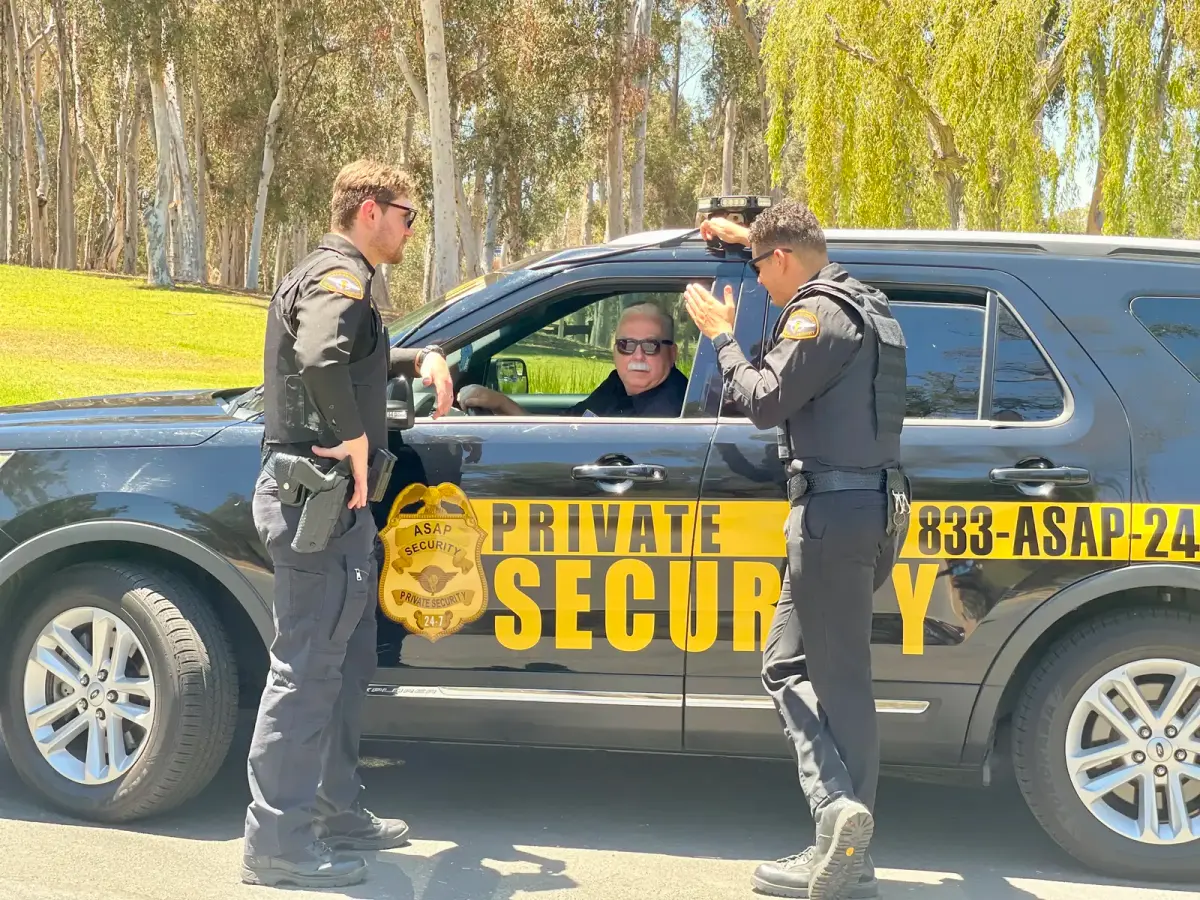
Which security coverage might fit an auto repair facility?
Coverage can use a standing guard, mobile patrol, electronic systems, or a combination. Each option addresses different needs. The useful comparison is not simply which one is least expensive; it is whether the arrangement can perform the tasks your site needs at the times those tasks matter.
| Coverage option | Often useful for | Questions to resolve |
|---|---|---|
| On-site guard | Facilities needing a visible presence, access checks, visitor direction, or regular observation of a busy site. | What hours and post location are needed? Which duties are permitted? How will relief and shift handoffs work? |
| Mobile patrol | Periodic checks of a property, gate, exterior, or vehicle area when continuous on-site coverage is not the primary need. | How often should patrols occur? Which checkpoints and conditions should be documented? |
| CCTV system and monitoring | Sites seeking camera coverage of selected areas, with monitoring needs considered separately from guard duties. | Which views are useful? Who reviews an alert, and what response process follows? |
| Combined plan | Facilities where a guard presence and technology serve complementary purposes. | How do people, procedures, cameras, and escalation contacts work together? |
A camera can provide a view of an area, but it does not physically check a gate or speak with someone at the entrance. A guard can observe and communicate, but a poorly defined post may leave a blind spot or an unclear response. Think of each measure as part of a process. Identify the task, the person responsible, the information they need, and what should happen next.
For example, a small garage that closes at a consistent time may first need a clear closing check and scheduled exterior patrols. A larger collision site with vehicles stored in separate rows may need more regular presence at the lot and agreed rounds across named zones. A business handling late vehicle pickups may need a plan for expected arrivals, rather than treating every after-hours visitor as an exception. Compare options against these concrete operating conditions.
If cameras are part of the discussion, review the available CCTV system information and 24/7 CCTV monitoring information. Confirm which service fits the site and how it relates to any on-site guarding. CCTV system installation and monitoring are delivered through partner Visbly CCTV System Inc.; its California Contractor License No. 1157633 applies to the partner’s work.
Some operators also consider whether scheduled security patrol services could address exterior checks when a continuous post is not the primary need. A patrol schedule should still name the checkpoints, the conditions to observe, and the contact who receives an exception report. Ask how a proposed route accounts for the actual layout and whether the patrol frequency matches the periods of concern.
How should managers define a guard’s duties?
Write down the duties before asking providers to propose coverage. Clear instructions help a provider understand the assignment and give the guard a workable routine. They also make it easier for managers to determine whether the service is meeting the facility’s needs.
A site-specific duty list may cover:
- Checking in with the designated manager and receiving updates at the start of a shift.
- Observing designated entrances, gates, and vehicle areas during agreed coverage hours.
- Following the site’s visitor, delivery, and contractor check-in process.
- Conducting scheduled rounds of named areas, where appropriate to the post.
- Reporting doors or gates found unsecured, unusual activity, or property conditions that need attention.
- Contacting the appropriate manager or emergency responder according to written escalation instructions.
- Recording patrols, incidents, and handoff details in the agreed reporting format.
Do not assume that one generic set of instructions will fit every location. A collision center may have changing vehicle movements and restricted repair bays. A small service garage may have a single entrance and a narrow closing routine. The post should name the actual areas and procedures, while leaving room for professional judgment when an unexpected situation arises.
Establish boundaries, too. Specify which doors a guard may use, what areas are off-limits, who can authorize exceptions, and what the guard should do if an employee requests a change. Decide how the shop will handle vehicle keys, customer information, and any sensitive records. Security personnel should follow the facility’s procedures and applicable law; they should not be asked to perform mechanical work, handle customer property without authorization, or make decisions outside the defined assignment.
Turn broad expectations into observable instructions
Replace vague directions with instructions that can be understood and reviewed. “Be alert” does not identify a place, a frequency, or a response. A more useful instruction names the checkpoint, the condition to notice, and the reporting path. For instance, a manager might specify that the guard checks whether the side gate is secured during each scheduled exterior round, records the result, and calls the designated manager if it cannot be secured.
Make priorities explicit when duties compete. If a delivery arrives while the guard is conducting an exterior round, the instructions should state whether the guard is to return to the entrance, contact an employee, or follow another approved step. Similarly, explain what happens if a customer arrives to collect a vehicle after the office closes. The goal is not to script every possible event; it is to give the guard a reliable decision path for routine exceptions.
Define how the assignment changes during unusual operating days. A holiday schedule, inventory count, construction work, or an extended repair may affect access and staffing. Decide who gives the update, how far in advance it should arrive, and how the guard acknowledges receipt. Keep a current version of the instructions available and identify the manager authorized to approve changes.
What information helps you compare providers?
When speaking with potential providers, share the same basic site information with each one. This makes responses easier to compare and can surface important assumptions before an agreement begins. You do not need to disclose sensitive access details in an initial conversation. Start with an accurate overview and arrange a secure site discussion as appropriate.
- Describe the site. Include the facility type, general layout, operating hours, number of entrances, outdoor storage, and whether the location is standalone or part of a larger property.
- Explain the concern. State what has prompted the review: access management, after-hours visibility, overnight vehicle storage, repeated unsecured doors, or another specific issue. Separate observed facts from assumptions.
- Define the schedule. Identify the days and time periods when coverage may be needed. Note opening, closing, deliveries, and periods when the property is empty.
- Prioritize duties. List essential tasks separately from optional ones. Ask the provider to explain how the proposed coverage would handle each priority.
- Ask about supervision and communication. Who receives a report? How are missed check-ins or incidents escalated? What contact is available outside normal business hours?
- Clarify documentation. Ask what activity and incident information is recorded, how it is shared, and how a manager can review it.
- Review the operating details. Confirm post instructions, start date, schedule changes, site orientation, relief arrangements, and the process for raising a concern.
- Compare the same scope. Review the proposed hours, tasks, patrol frequency, technology, exclusions, and assumptions side by side. Ask for clarification if proposals use different definitions.
Ask providers to explain how they would handle a few realistic situations. What would happen if a delivery arrives at an unstaffed entrance? How would an unsecured gate be reported? Who would be contacted if someone asks to retrieve a vehicle outside the normal pickup process? The answers reveal whether a proposal is tied to the location or simply repeats a general service description.
Relevant experience is worth discussing, but ask for concrete examples of how a provider would approach your facility rather than relying on broad claims. Look for a clear process for site familiarization, communication, incident documentation, and quality review. If you are also reviewing armed security services in Southern California, explain the site conditions and ask the provider to discuss whether that option is appropriate. The decision should be based on the facility’s needs and a careful review, not an assumption that more force automatically means better coverage.
Clarify what a quote includes and what it assumes. Ask whether the stated coverage covers the required days and hours, how schedule adjustments are requested, and which duties are outside the proposed scope. If a provider describes patrols, request the expected timing and reporting details. If it describes a fixed post, ask what areas the guard can reasonably observe from that location and how breaks or relief are handled.
Review basic service communication before committing. Identify the day-to-day contact, the after-hours contact, and the person who can approve a change to instructions. Decide how quickly an urgent issue should be escalated and how routine questions should be sent. A straightforward communication plan helps the shop and provider address small problems before they become recurring confusion.
Call (833) 272-7247 to talk through your site and schedule.
How can a guard support opening and closing routines?
The start and end of a business day create predictable transitions. Employees arrive, doors are opened, vehicles move, and deliveries may occur. At closing, staff leave, keys are secured, and the property shifts to a different access pattern. A guard’s role should fit these routines without interrupting normal work.
For opening, managers can define which entrance employees should use, how a visitor or delivery is handled before the office opens, and who should be contacted if a problem is found. For closing, make clear who confirms that the site is ready to secure, which areas require observation, and how an unresolved issue is handed off. A guard should not be expected to improvise a checklist that management has not approved.
Build a practical opening and closing sequence with the people responsible for the facility. For opening, specify when an employee takes control of the site, which entrances are authorized, and how an unexpected condition is passed to the manager. For closing, identify who confirms that the last work activity is complete, how late customer pickups are handled, and who receives notice if a door or gate cannot be secured. These are management decisions; the guard’s duties should support the approved process rather than replace it.
Changes in the routine should be communicated. For example, a late vehicle pickup, an early parts delivery, a contractor visit, or a temporary gate repair may change who is expected on site. Decide who can authorize those changes and how the guard receives the update. A simple, consistent communication path reduces confusion and makes exceptions easier to document.
Consider a late pickup as a simple scenario. The shop can tell the guard in advance the vehicle, expected arrival window, and employee authorized to complete the handoff. If the person or timing differs, the guard should know whom to contact rather than making a judgment about releasing a vehicle. The same approach works for a parts delivery: identify expected deliveries, the receiving contact, and where the driver should wait while confirmation is obtained.
A guard’s presence does not remove the need for staff to follow key-control and vehicle-release procedures. Decide who may access keys, who verifies a customer pickup, and what information should not be shared in public areas. Explain the process to employees so that no one assumes the guard can authorize access to a car, tool room, office, or customer record. Consistent boundaries protect both the customer experience and the assignment’s clarity.
How do reporting and technology fit into the plan?
Good reporting helps managers understand what happened during a shift. Agree on what information is useful: time and location, the condition observed, action taken, who was notified, and whether follow-up remains. The goal is a record that supports a decision, not a long narrative that obscures the important facts.
GPS-tracked Daily Activity Reporting can make patrol activity easier to review. ASAP Security Guards provides GPS-tracked DAR reporting and 24/7 live human dispatch. When evaluating any provider, ask to see an example of the type of report available and clarify who can access it. Establish whether managers expect routine summaries, immediate incident notifications, or both. Learn more about digital activity reporting and guard logs when comparing how records can support oversight.
Technology works best when its limits are understood. Cameras may help observe a selected view, while a reporting system documents activity. Neither replaces clear site instructions, a reliable escalation contact, or a manager who reviews issues and follows through. Match the technology to a defined requirement, such as visibility at a specific entrance or a record of scheduled rounds. Avoid adding tools without deciding who will use the information and what action it should prompt.

Choose reports that support follow-through
Before coverage begins, agree on the difference between a routine observation and an urgent incident. A routine report might note that a gate was secure at a scheduled check. A report requiring follow-up might describe a damaged light or a door that did not latch. An urgent concern may require immediate contact under the agreed escalation procedure. Specify who receives each type of message, by what method, and what the guard should do if the first contact does not respond.
Managers should review reports often enough to catch repeated issues. A single note about a gate left open may call for a repair or reminder. Repeated notes at the same location could point to a faulty latch, confusing responsibility, or an instruction that does not fit how the shop operates. Use records to ask a specific follow-up question and assign an owner for the next step. The guard can document the observation; the facility manager decides what corrective action is appropriate.
Keep reporting proportionate. A useful incident entry is factual and chronological: where and when something occurred, what was observed, what action followed, and who was notified. Avoid speculation about motives or including unnecessary customer information. Establish where reports are stored, which managers can access them, and how open follow-up items are tracked from one shift to the next.
What should the first weeks of coverage include?
Plan a deliberate start rather than treating the first shift as a complete handoff. Before service begins, identify the site contact, confirm the schedule, review the guard’s post instructions, and walk through the relevant areas. Share only the access information necessary for the assignment and establish how updates will be delivered.
During the initial period, schedule brief check-ins with the provider and the manager responsible for the location. Use those conversations to answer practical questions: Are the post instructions clear? Are scheduled rounds compatible with operations? Are reports arriving in the expected format? Have deliveries, customer pickups, or shift changes exposed a gap in the routine?
When a concern appears, separate an isolated event from a recurring pattern. Record the date, location, relevant details, and the action taken. Then decide whether the response should be a revised instruction, a schedule adjustment, a facilities repair, a change in access procedure, or a discussion with the provider. A guard can identify and report conditions, but facility management remains responsible for decisions about the property and its operating procedures.
A short review at the end of the first few weeks can keep a workable plan from becoming stale. Compare the duties that were agreed upon with the reports and manager observations. Check whether the schedule covers the periods that mattered, whether handoffs were clear, and whether exceptions were resolved by the right person. If an assumption proved wrong, update the instructions and make sure everyone who needs the change receives it.
For a location operating overnight or across multiple shifts, review continuity as well as individual activity. Confirm that the incoming guard receives relevant unresolved items, that management knows who is responsible for follow-up, and that a temporary change does not silently become permanent. A recurring check-in gives the site a simple way to resolve mismatches between written duties and day-to-day operations.
For a broader overview of how continuous coverage is structured, managers can compare this site’s needs with the considerations in 24-hour security guard duties and coverage. That is a reference point, not a reason to assume every repair shop needs round-the-clock staffing. Start with the hours when a defined task or exposure exists, then evaluate whether continuous coverage, scheduled visits, or another arrangement addresses that need.
Request a price quote and consultation when you are ready to discuss a specific schedule and scope. Bring your site map, the hours you are considering, and a short list of priority duties so the conversation can focus on your actual operating conditions.
Call (833) 272-7247 to review your facility’s coverage options.
Frequently asked questions
Can one guard cover the shop, lot, and service bays?
That depends on the facility’s layout, coverage hours, assigned duties, and the amount of activity. A single post may not allow continuous observation of separated areas. Map the site and prioritize tasks with the provider so the coverage plan is realistic. Clarify which tasks take priority when the guard cannot be in two places at once.
Should a repair facility choose an on-site guard or mobile patrol?
Choose based on the task. A fixed on-site presence may suit a facility that needs regular access interaction or continuous observation at a defined point. Mobile patrol may suit periodic checks of a property. Some sites may consider a combined plan. Compare the responsibilities and timing, not just the labels.
Does CCTV replace an on-site guard?
Not automatically. A camera provides a view of selected areas, while an on-site guard can be physically present and communicate with people. Decide what response is needed when a concern is observed, then choose measures that can support that response. Assign a person to review alerts and explain the next step in advance.
What details should be in the post instructions?
Include the assignment’s purpose, covered areas, schedule, access procedures, visitor and delivery steps, reporting expectations, escalation contacts, and handoff process. Identify restricted areas and explain how authorized exceptions are communicated. Add the approved process for late vehicle pickups and unexpected deliveries if those occur at the site.
How can managers tell whether the plan is working?
Review whether agreed duties are being completed and documented, whether reports reach the right people, whether exceptions are handled consistently, and whether the original site concerns are receiving attention. Use specific observations to refine the plan with the provider. Also check whether the assigned hours and duties still reflect the shop’s actual schedule.
Auto repair shop security guards are most useful when their assignment is specific, realistic, and connected to the facility’s daily procedures. Map the site, set clear priorities, and compare coverage options against those needs before you decide on a plan.
